Read the Book.
A 500-page book contains far more than its individual chapters. Its value lies in the relationships between ideas, the arguments that support them, the assumptions that connect them and the principles that emerge across the whole work.
Yet traditional reading asks you to discover this structure while simultaneously processing every paragraph. You encounter unfamiliar terminology, keep track of earlier arguments, distinguish important claims from supporting details and attempt to remember how everything connects. By the time the larger picture becomes clear, you may have already read hundreds of pages.
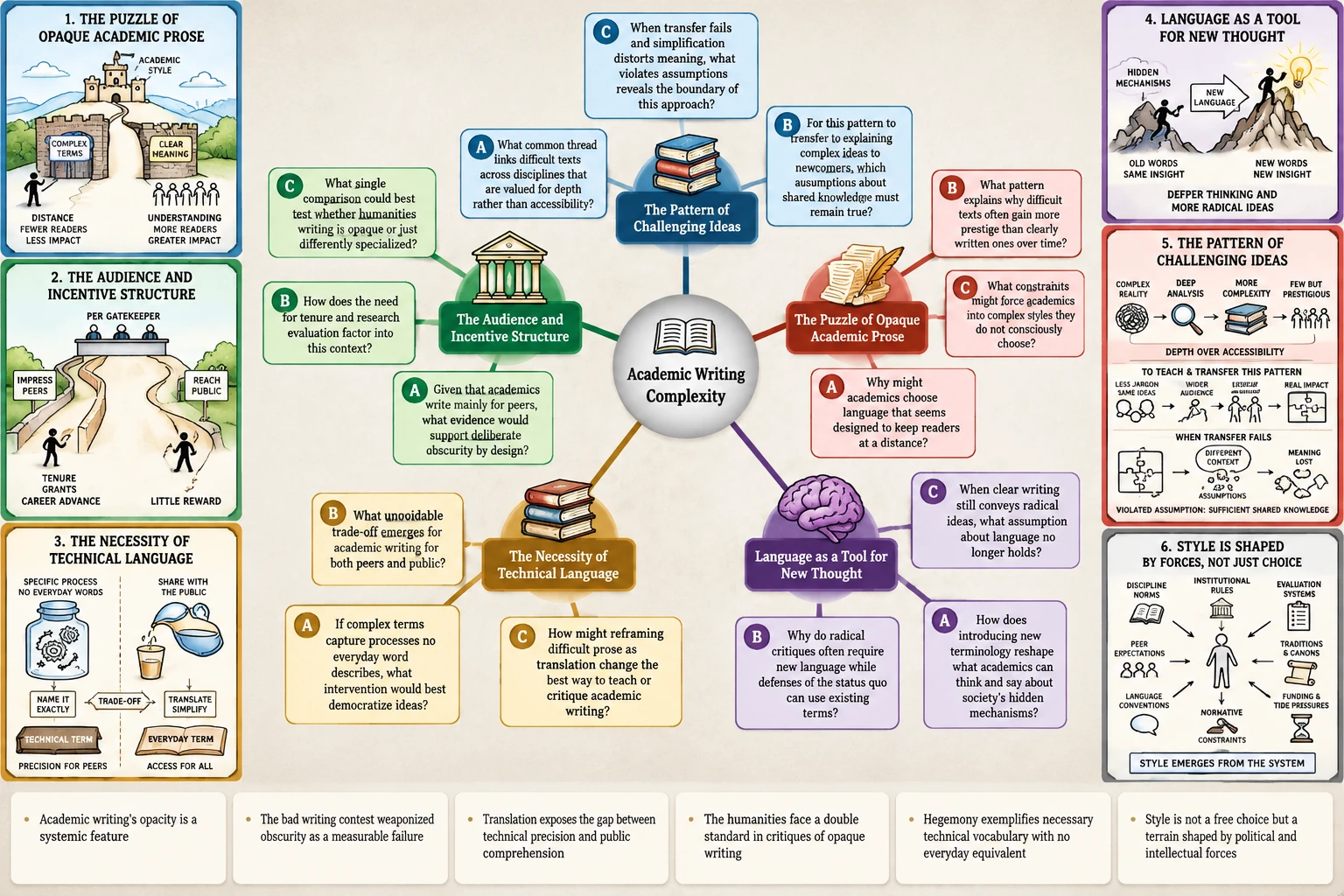 y2map helps you build a map of the ideas before you begin reading.
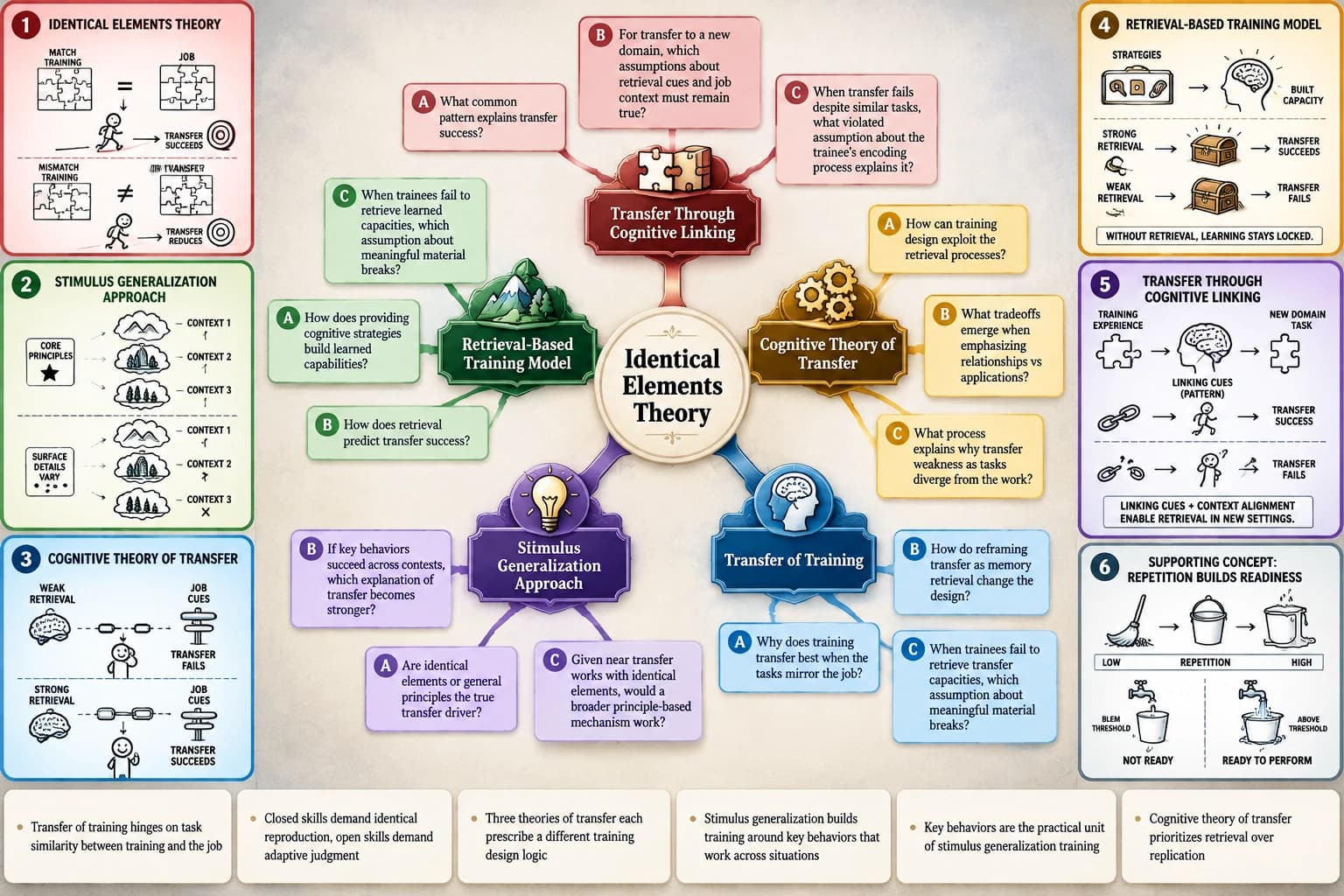
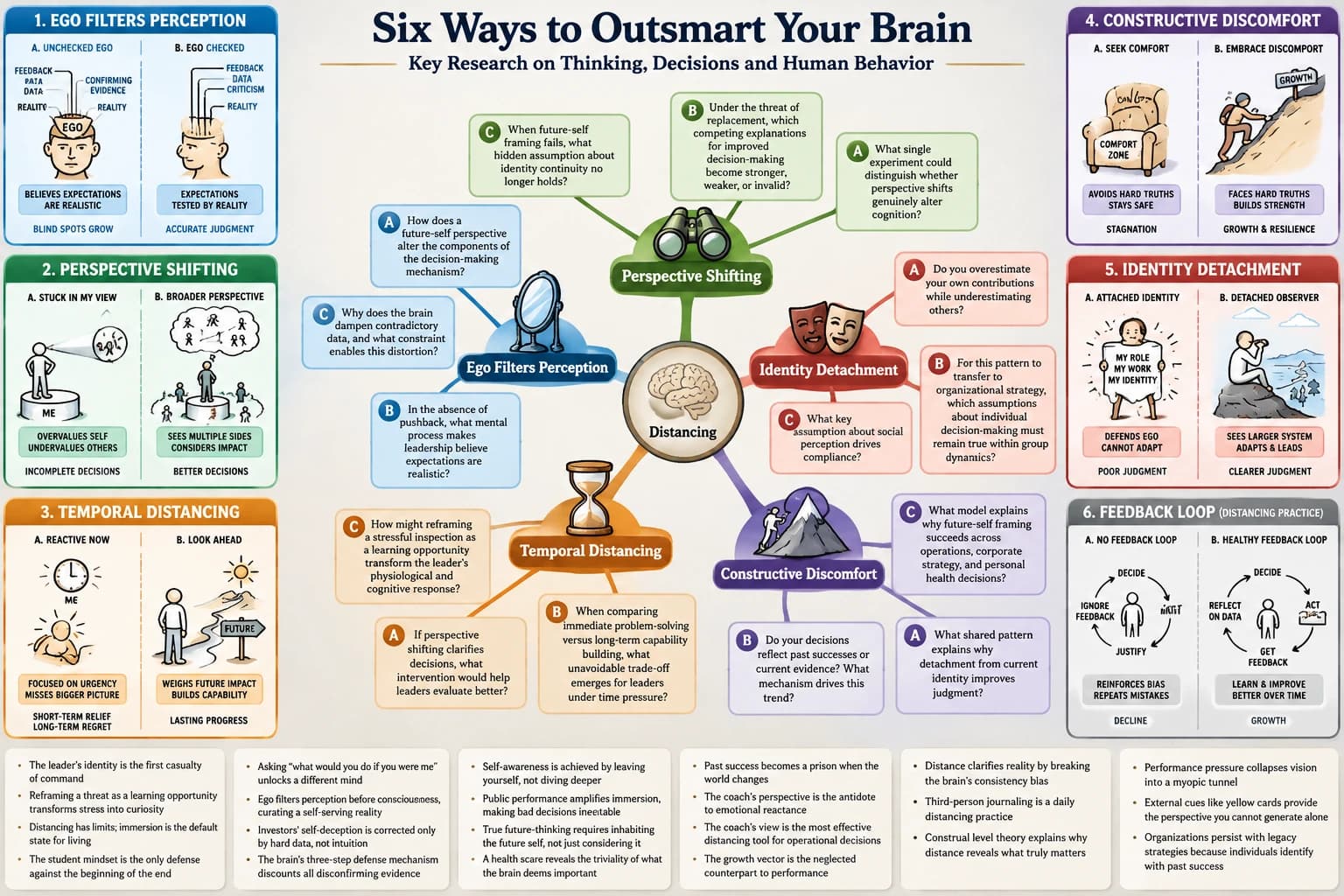
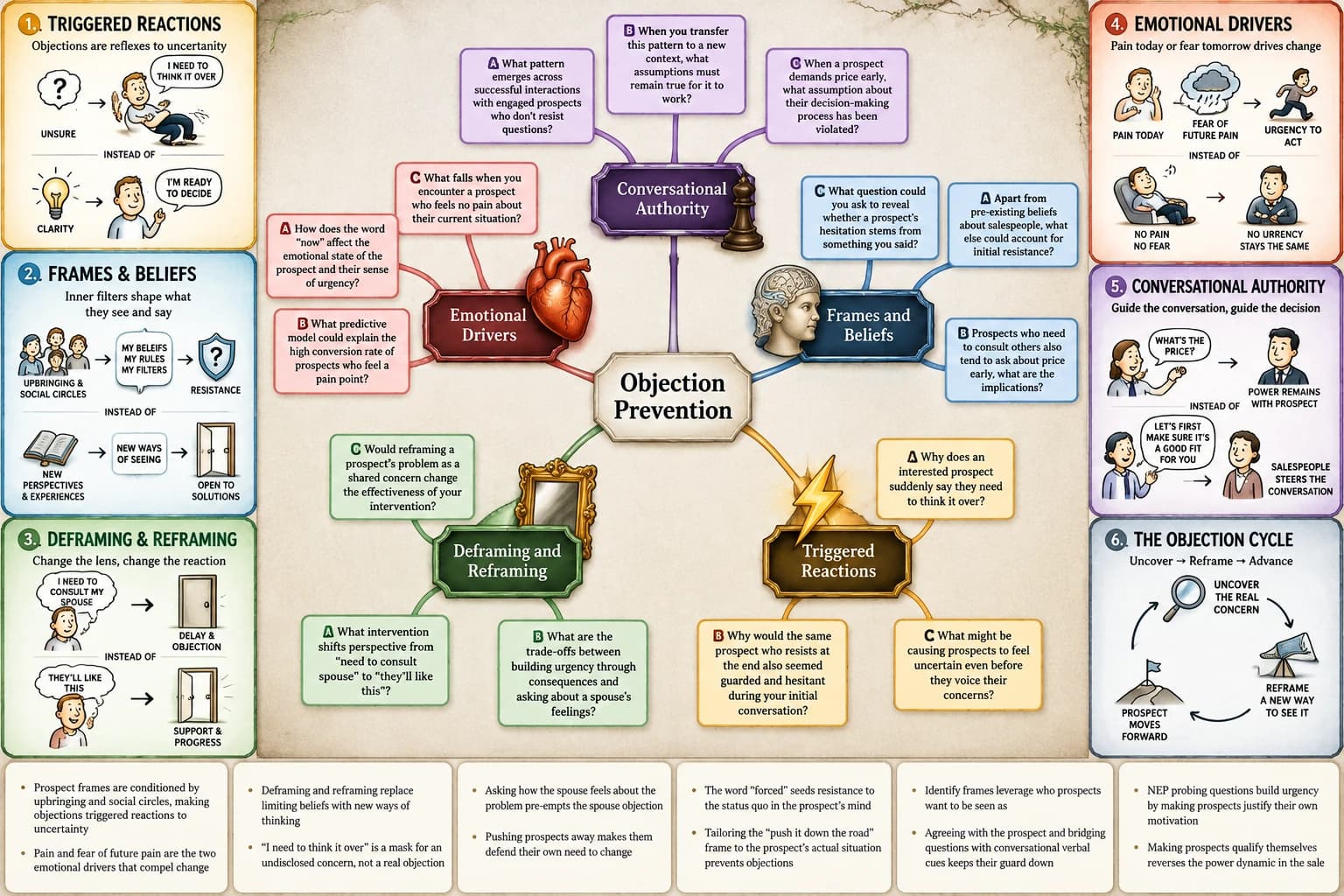
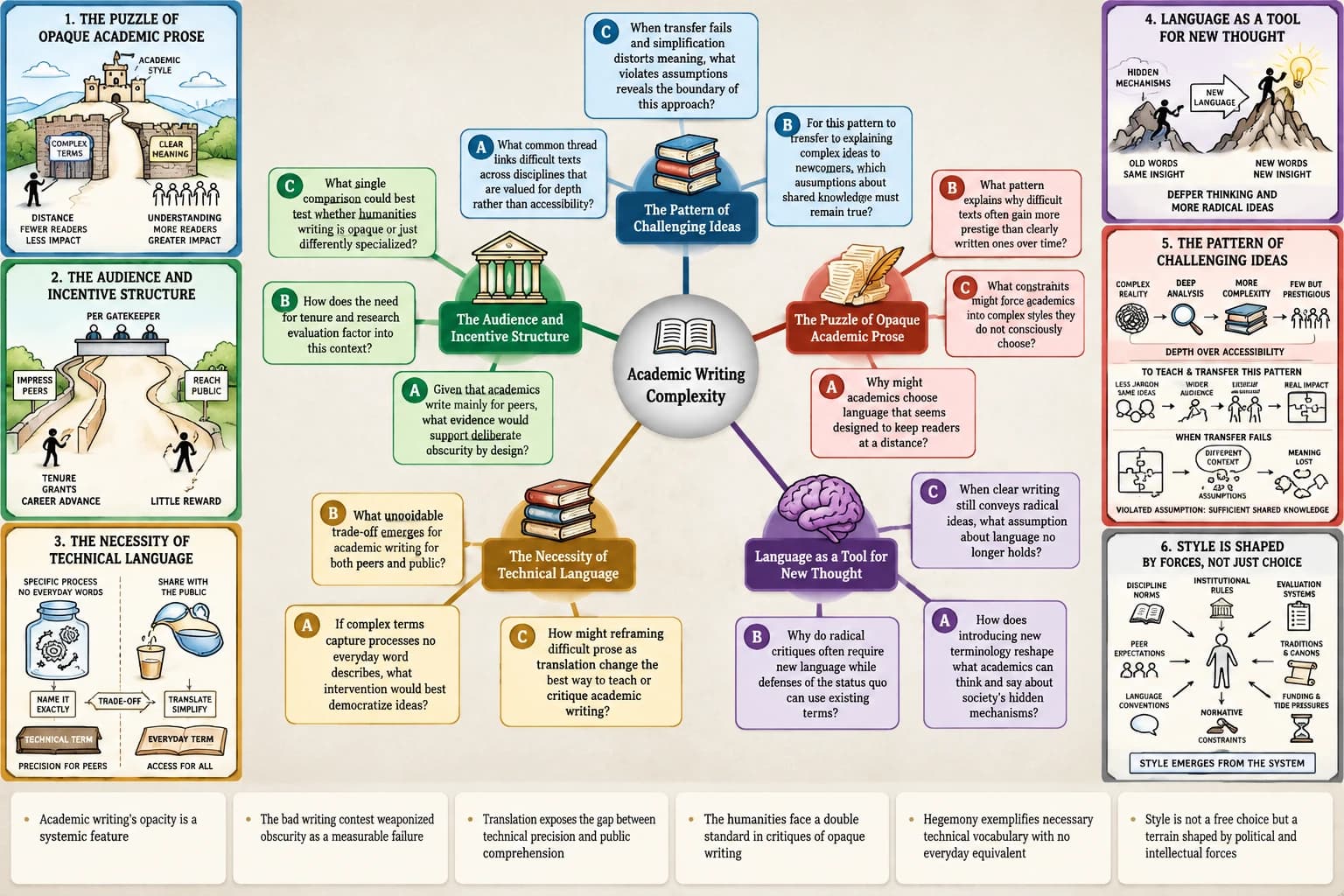
Divide a 500-page book into manageable sections of roughly 30 pages. For each section, generate an evidence-backed summary, six illustrated advance-organizer cards, a visual learning map and driving questions designed to direct your attention toward the ideas worth understanding.
The result is a reusable cognitive artifact: a visual companion that prepares you for the reading session, guides your attention through the original text and gives you a reference for revision and discussion.
The objective is simple: spend less effort orienting yourself and more effort understanding what the author is trying to explain.
One 500-page book. Twenty manageable learning sessions.
A long book becomes easier to navigate when its contents are divided into meaningful sections, each with its own learning companion.
Consider a 500-page book divided into approximately ten sections of 30 pages each. Chapter boundaries determine the actual divisions, so a section may contain a complete short chapter or part of a longer one.
Each section produces four complementary learning resources.
- Evidence-backed summary — Understand the essential argument, examine supporting quotations and locate important passages in the original text.
- Six advance-organizer cards — Establish a conceptual framework before reading the details.
- Illustrated learning map — See how the central ideas, mechanisms, examples and relationships fit together.
- Driving questions — Identify assumptions, formulate predictions, investigate explanations and test your understanding.
Each set of resources becomes a reusable reference for its section. Together, the ten learning companions form a navigable overview of the book's central ideas.
One book. Ten conceptual maps. A structured path from first orientation to deeper understanding.
The hidden cost of reading without a framework
Reading a difficult book places several cognitive demands on the reader simultaneously. You must understand the current passage, remember relevant earlier material, identify the author's central argument and determine which details deserve further attention.
When the structure is unfamiliar, much of your effort goes toward orientation.
1. Every concept competes for attention
A new chapter introduces terminology, examples, arguments and supporting evidence. Without an initial framework, the reader must continually decide how each new piece of information fits into the larger subject.
A preliminary learning map establishes the major concepts and their relationships before the detailed reading begins.
Advance organizers and visual maps reduce the effort of decoding unfamiliar concepts and navigating verbose explanations by revealing the underlying ideas first.
2. Important arguments become difficult to relocate
A useful insight may appear several chapters earlier, while its implications emerge much later. Ordinary notes often capture individual passages without preserving the relationships between them.
Evidence-backed summaries provide concise entry points into the original material, while page references help you return to the relevant passages.
Structured summaries and source references replace scattered notes and tedious searches with direct routes back to important arguments and evidence.
3. Revision repeats the work of orientation
Returning to a book weeks later can mean reconstructing its structure before you can resume thinking about its ideas. Readers often spend valuable time remembering what a chapter covered before examining what it actually means.
A persistent cognitive artifact provides a compact starting point for each subsequent session.
Persistent learning maps externalize context and preserve conceptual relationships, making it easier to resume reading without rebuilding the framework from scratch.
4. Familiarity can be mistaken for understanding
Re-reading a highlighted passage may make it feel familiar without establishing whether you can explain the argument, identify its assumptions or apply its principle to a new situation.
Driving questions turn revision into an opportunity to produce explanations, retrieve important relationships and discover gaps in understanding.
Retrieval practice and generative questions expose the gap between recognizing an explanation and independently understanding it.
5. Knowledge remains difficult to share
Explaining a complex book to a friend or colleague often involves recommending the entire book, preparing separate notes or reconstructing the central argument from memory.
A shareable learning map gives another reader an initial framework and a set of questions with which to investigate the original work.
Shareable cognitive artifacts lower the cost of entering an unfamiliar subject, helping others grasp the central ideas before exploring the full text.
The recurring cost is the effort spent rebuilding context. y2map externalizes part of that work into a reference you can revisit, refine and share.
Five ways cognitive artifacts improve the reading workflow
1. Begin with analysis already completed
The first pass through a difficult chapter involves several tasks: discovering its structure, identifying its central claims, learning unfamiliar concepts and following the author's reasoning.
Preparing the cognitive artifact in advance moves much of the initial structural analysis ahead of the reading session.
You begin with an overview of the important concepts, a preliminary model of their relationships and questions that direct your attention. This gives you more opportunity to concentrate on interpretation, evidence, implications and connections with what you already know.
The benefit is a more purposeful first pass through the text, supported by a framework you can revise as your understanding develops.
2. Make every subsequent reading session easier to restart
A reading habit becomes difficult to sustain when every session begins with the effort of remembering where you left off and reconstructing the surrounding argument.
A section's cognitive artifact provides a repeatable starting routine:
- Review the six advance-organizer cards.
- Examine the illustrated learning map.
- Revisit the previous session's unresolved questions.
- Read the assigned pages while investigating those questions.
- Record new insights and revise your interpretation of the map.
This routine reactivates relevant knowledge and directs attention toward the next section. Each session begins with a defined intellectual task, making it easier to resume a complex book after a break.
3. Grasp abstract concepts through visual relationships
Text communicates ideas sequentially. A learning map allows you to inspect several related ideas together.
This is particularly useful when a book develops a model through interacting variables, competing explanations, causal relationships or recurring principles.
Illustrations provide concrete representations of abstract mechanisms. Connectors show how individual concepts fit into the larger structure. Questions direct attention toward the relationships that need explanation.
Visual learning supports the reader's interpretation of the text, giving difficult ideas an additional representation that can be examined and reconstructed.
4. Simulate several reading passes through a structured preparation process
Repeated engagement with a book serves several purposes: orientation, comprehension, relationship-building, critical evaluation and revision.
The cognitive artifact brings these activities into a coordinated workflow before, during and after the reading session.
| Traditional reading task | Cognitive artifact contribution |
|---|---|
| Discover the chapter's structure | Advance-organizer cards establish the initial framework |
| Identify essential arguments | Evidence-backed summaries highlight central claims |
| Understand relationships between ideas | Illustrated maps make conceptual connections visible |
| Determine what deserves scrutiny | Driving questions direct attention toward important issues |
| Revisit difficult passages | Source references provide a route back to the original text |
| Review the chapter later | The saved artifact provides a compact revision reference |
| Explain the material to someone else | The map and questions provide a shared starting point |
These resources simulate several functions of repeated reading in a more compact preparation workflow. The original text remains essential for examining nuance, evaluating evidence and understanding the author's complete argument.
The objective is to make each encounter with the book more purposeful and to reduce repeated effort spent rediscovering its structure.
5. Share understanding without requiring everyone to start from zero
A cognitive artifact can serve as a shared reference for friends, colleagues, reading groups and study partners.
Someone who has not read the book can use the overview to orient themselves, inspect the central concepts and identify questions worth investigating. Someone who has already read it can use the same artifact to revisit important relationships or explain a difficult idea.
The shared map also gives discussions a common structure. Participants can compare interpretations, challenge assumptions and return to the source when their readings differ.
The artifact makes knowledge easier to communicate and gives each reader a clear path toward independent verification.
A practical workflow for reading a 500-page book
A 500-page book can bury valuable ideas beneath unfamiliar terminology, verbose explanations and arguments scattered across chapters. y2map helps dismantle these barriers by making the underlying concepts visible before you read, so you can focus on understanding rather than finding your bearings.
Stage 1: Divide the book into manageable sections
Examine the table of contents and divide the book into sections of approximately 30 pages, following natural chapter boundaries where possible. A 500-page book becomes roughly 17 manageable reading sessions.
Stage 2: Generate the cognitive artifact
For each section, create an evidence-backed summary, six illustrated advance-organizer cards, a visual learning map and driving questions.
These resources expose the main ideas beneath dense prose, clarify unfamiliar concepts, reveal hidden relationships and distinguish central arguments from supporting details. Review them against the original text for accuracy.
Stage 3: Preview before reading
Review the cards, map and questions before opening the section. This establishes a preliminary mental framework, reducing the effort of decoding unfamiliar concepts while trying to follow the argument.
Visual explanations make abstract relationships easier to inspect, while driving questions give your reading a clear purpose.
Stage 4: Read with the questions in mind
Use the artifact as a navigational reference. Investigate the author's reasoning, examine the evidence and connect unfamiliar details to concepts you already understand.
Verbose passages become easier to unpack when you know the idea behind them. Revise the map whenever the original text challenges your initial interpretation.
Stage 5: Consolidate your understanding
Close the book and explain the main argument from memory. Reconstruct the map and answer the driving questions, then check your understanding against the source.
This retrieval practice reveals gaps that rereading alone can leave unnoticed.
Stage 6: Connect and revisit
Before each session, briefly review the previous map and identify connections to the next section. Gradually combine the section-level maps into a larger picture of the book.
Your growing collection becomes a reusable reference for revision, deeper exploration and sharing ideas with others.
The result: Less effort navigating dense prose, more attention for understanding arguments, evaluating evidence and discovering ideas worth exploring.
From individual chapters to a complete mental model
The greatest value of processing a book section by section emerges when the sections are connected.
A book may introduce a principle early, develop its implications several chapters later and revisit it in a different context near the end. Individual summaries preserve local understanding, while a higher-level map helps reveal the book's overall architecture.
After completing several sections, examine the recurring concepts, assumptions and relationships that appear across their maps.
Ask questions such as:
- Which principles recur throughout the book?
- How does the author's explanation develop from one chapter to the next?
- Which later arguments depend on earlier concepts?
- Where does the author qualify or revise an earlier claim?
- Which examples support the same underlying principle?
- What remains unresolved after reading the complete work?
These questions turn a collection of chapter summaries into an opportunity to synthesize the book's central argument.
The resulting overview serves as a reference for revision, discussion, application and further research.
Built for different kinds of readers
The workflow can support different reading goals while retaining the same core structure.
| Reader | Existing challenge | Cognitive artifact application | Practical value |
|---|---|---|---|
| University student | Dense textbooks and unfamiliar terminology | Section summaries, illustrated maps and driving questions | Structured preparation and focused revision |
| Graduate student | Difficult theoretical frameworks and competing explanations | Concept maps connecting theories, assumptions and evidence | Faster orientation to unfamiliar material |
| Researcher | Long books containing arguments relevant to a specific project | Evidence-linked summaries and cross-section maps | Easier identification of relevant claims and research questions |
| Professional | Limited time to understand lengthy business books | Advance organizers, summaries and applied questions | A structured reading process connected to work |
| Reading group | Members have different levels of familiarity with a book | Shareable maps and common discussion questions | A shared starting point for substantive discussion |
| Independent learner | Difficulty sustaining attention across a long book | Shorter reading units with reusable visual references | More manageable and structured reading sessions |
| Educator | Students struggle to connect ideas across chapters | Illustrated organizers and source-grounded questions | Reusable teaching and revision materials |
Designed around established learning principles
Dense books often impose an entrance fee: unfamiliar terminology, hidden assumptions, convoluted explanations, fragmented arguments and ideas that are difficult to visualize. y2map helps dismantle these barriers by making the underlying ideas visible before readers encounter them in the original prose.
The result is a more accessible route into difficult material. Readers can approach a passage with a preliminary understanding of its concepts, relationships and purpose, freeing more attention for the author's reasoning and evidence.
| Learning principle | Barrier of entry demolished | Cognitive artifact feature | Reading application |
|---|---|---|---|
| Advance organizers | Starting a book without knowing its central argument, major concepts or direction | Six illustrated overview cards that establish the conceptual landscape | Understand what the book is trying to explain before navigating its details |
| Concept mapping | Ideas scattered across chapters, disconnected definitions and relationships left implicit | Illustrated maps showing how concepts, claims, examples and evidence connect | See the structure of a chapter and understand where each idea fits |
| Dual coding | Abstract ideas explained exclusively through dense prose | Verbal explanations paired with meaningful illustrations and visual relationships | Approach difficult concepts through complementary verbal and visual representations |
| Cognitive load theory | Verbose explanations, unnecessary complexity and the effort of decoding unfamiliar terminology while following an argument | Organized summaries, clarified concepts, visual hierarchy and a preliminary explanation of the material | Encounter difficult passages with a working understanding of the ideas, reducing avoidable decoding and navigation effort |
| Distributed cognition | Having to remember definitions, earlier arguments, cross-references and unresolved questions while reading | Persistent external maps, summaries, quotations and references | Inspect important relationships without relying entirely on working memory or repeatedly searching previous pages |
| Generative learning | Passively consuming paragraphs without constructing an independent interpretation | Driving questions that prompt explanation, prediction, comparison and hypothesis formation | Turn reading into an active investigation of how and why the argument works |
| Retrieval practice | Mistaking familiarity with a passage for the ability to explain or remember it | Questions answered from memory, followed by comparison with the learning artifact and source | Identify gaps in understanding and strengthen access to important ideas after the book is closed |
| Schema theory | Encountering unfamiliar concepts without the background knowledge needed to interpret them | Connections between new ideas, familiar examples, prerequisite concepts and historical context | Give unfamiliar terminology and arguments a place in an existing mental framework |
| Elaborative interrogation | Accepting claims without examining their assumptions, causes or implications | Driving questions asking why a claim holds, what supports it and what would change if it were false | Investigate mechanisms, challenge assumptions and distinguish persuasive language from convincing reasoning |
| Cognitive artifacts | Having to reconstruct the book's structure every time reading resumes | Reusable summaries, illustrated maps, references and question sets | Resume reading quickly, revise efficiently and preserve an inspectable record of what has been learned |
| Semantic chunking | Facing long sequences of details with no obvious grouping or hierarchy | Concepts organized into themes, clusters and connected sections | Process related ideas as meaningful units rather than treating every paragraph as an isolated task |
| Signaling and visual hierarchy | Important claims buried among qualifications, digressions, footnotes and secondary details | Clearly organized summaries that distinguish central arguments, supporting evidence and related material | Direct attention toward the ideas that organize the chapter while retaining access to supporting details |
| Scaffolding | Being expected to interpret difficult material before acquiring the concepts needed to understand it | A staged sequence of overview, summary, illustration, source reading and guided questions | Move from initial orientation to independent interpretation, with support available when the argument becomes difficult |
| Elaboration and concrete examples | Abstract definitions that remain difficult to interpret or apply | Illustrated examples and explanations connecting principles to recognizable situations | Understand what an idea means, how it operates and where it might apply beyond the passage |
| Metacognition | Discovering misunderstandings only after finishing the book or encountering an exam question | Driving questions, self-explanation and comparison between recalled knowledge and the reference map | Monitor comprehension while reading and identify which concepts require another look |
| Source tracing and verification | Claims detached from their evidence, making it difficult to distinguish the author's argument from a summary's interpretation | Evidence-backed summaries with quotations and page references where available | Return to the original passage, examine its context and verify consequential claims |
| Knowledge integration | Treating each chapter or book as an isolated collection of facts | Maps that connect concepts within a section and provide a structure for linking sections | Build a coherent understanding across chapters and connect new material to previously learned ideas |
| Revision and spaced learning | Losing the thread between reading sessions and repeatedly paying the cost of reorientation | Compact, persistent learning artifacts that can be revisited over time | Begin each session with a short review, then focus on unresolved questions instead of reconstructing the entire argument |
| Transfer of learning | Understanding an explanation in its original context but failing to recognize the same principle elsewhere | Questions that invite comparison, generalization and application to new situations | Test whether an idea can be used beyond the chapter in which it was introduced |
| Social and collaborative learning | Making others repeat the same costly process of entering an unfamiliar subject from scratch | Shareable maps, summaries and questions that provide a common starting point | Help friends, classmates and colleagues approach a book, discuss its argument and explore the original source |
From barriers to exploration
These features change the reader's starting position. Archaic vocabulary still belongs to the historical text; specialist terminology may still be necessary; complex arguments may still demand careful thought. The difference is that readers can approach them with a conceptual framework already in place.
A dense paragraph becomes easier to investigate when its central idea is familiar. A difficult definition becomes more meaningful when its relationships are visible. A footnote becomes easier to evaluate when the reader knows which part of the argument it supports.
y2map makes the ideas easier to enter so readers can spend more time exploring them. The artifact provides orientation and reference; the original book provides the full argument, evidence, nuance and opportunity for discovery.
Keep the original book at the center
AI-generated learning materials work best as aids to independent reasoning. A polished summary can contain an error, an illustration can oversimplify a mechanism, and a question can overlook an important qualification.
Use the original book to verify consequential claims, inspect the author's full argument and resolve disagreements between the source and its generated companion.
A useful routine preserves the distinction between orientation and understanding:
- Preview the artifact to establish an initial framework.
- Read the source to investigate the author's argument.
- Use questions to develop your own explanations.
- Verify interpretations against the original passages.
- Reconstruct the main relationships without consulting the map.
- Revise the artifact when your understanding improves.
The reader remains responsible for interpreting the work. The artifact makes the structure easier to inspect and the questions easier to formulate.
Common questions about AI-assisted book reading
Can AI help me read a 500-page book?
Yes. You can divide the book into manageable sections, generate a learning companion for each section and use the companions to organize preparation, reading and revision. The original text remains necessary for understanding nuances and verifying interpretations.
Why analyse a chapter before reading it?
A preliminary analysis establishes an initial framework of concepts, relationships and questions. This gives the reader a clearer direction for investigating the original material. The framework should be revised whenever the author's actual argument warrants a different interpretation.
Why process approximately 30 pages at a time?
Thirty pages provides a useful starting point for organizing a long book into manageable units. The appropriate size depends on chapter boundaries, text density and conceptual complexity. A difficult theoretical chapter may need smaller sections, while a short connected chapter may work better as a single unit.
How does an illustrated learning map help?
A learning map makes relationships between concepts visible in one place. It helps readers inspect how ideas connect, identify recurring patterns and reconstruct the structure of an argument during revision.
Can I use the maps instead of reading the book?
The maps are designed to support reading, orientation and revision. They provide a compact representation of important ideas, while the original book supplies the complete reasoning, qualifications, examples and evidence needed for deeper understanding.
How do I use the artifact during revision?
Review the advance-organizer cards, inspect the map, answer the driving questions from memory and compare your answers with the source. Reconstructing the relationships reveals which parts of the argument you can explain and which require further attention.
Can I share my learning maps with friends?
Yes, where sharing is permitted by the source's copyright and applicable terms. A map gives other readers a starting framework for exploring the book and discussing its central ideas. Respect copyright restrictions when processing or distributing source material.
Does this guarantee faster reading or better retention?
No particular improvement is guaranteed. The workflow is designed to organize preparation, make conceptual relationships visible and encourage active questioning. Reading time, comprehension and delayed recall should be measured to establish the actual benefits.
Turn your next book into a learning companion
A 500-page book does not have to be approached as one continuous stream of information.
Divide it into manageable sections. Establish the conceptual framework before reading. Use the original text to investigate the arguments. Return to illustrated maps and driving questions to revise what you have learned.
Each section leaves behind a reusable cognitive artifact. Across the entire book, those artifacts create a structured reference for understanding the author's ideas, connecting concepts across chapters and sharing insights with other readers.
Read with a framework. Investigate with questions. Revise with a map.
Turn your next book into a sequence of focused reading sessions with y2map.