Turn sales knowledge into a shared blueprint
AI sales enablement usually means another content repository. y2map does something different: it turns product documentation, successful sales calls, customer research and competitor intelligence into a shared blueprint — an evidence-backed visual workspace where your whole team can see the same information, contribute expertise, question assumptions and agree on how to approach a customer.
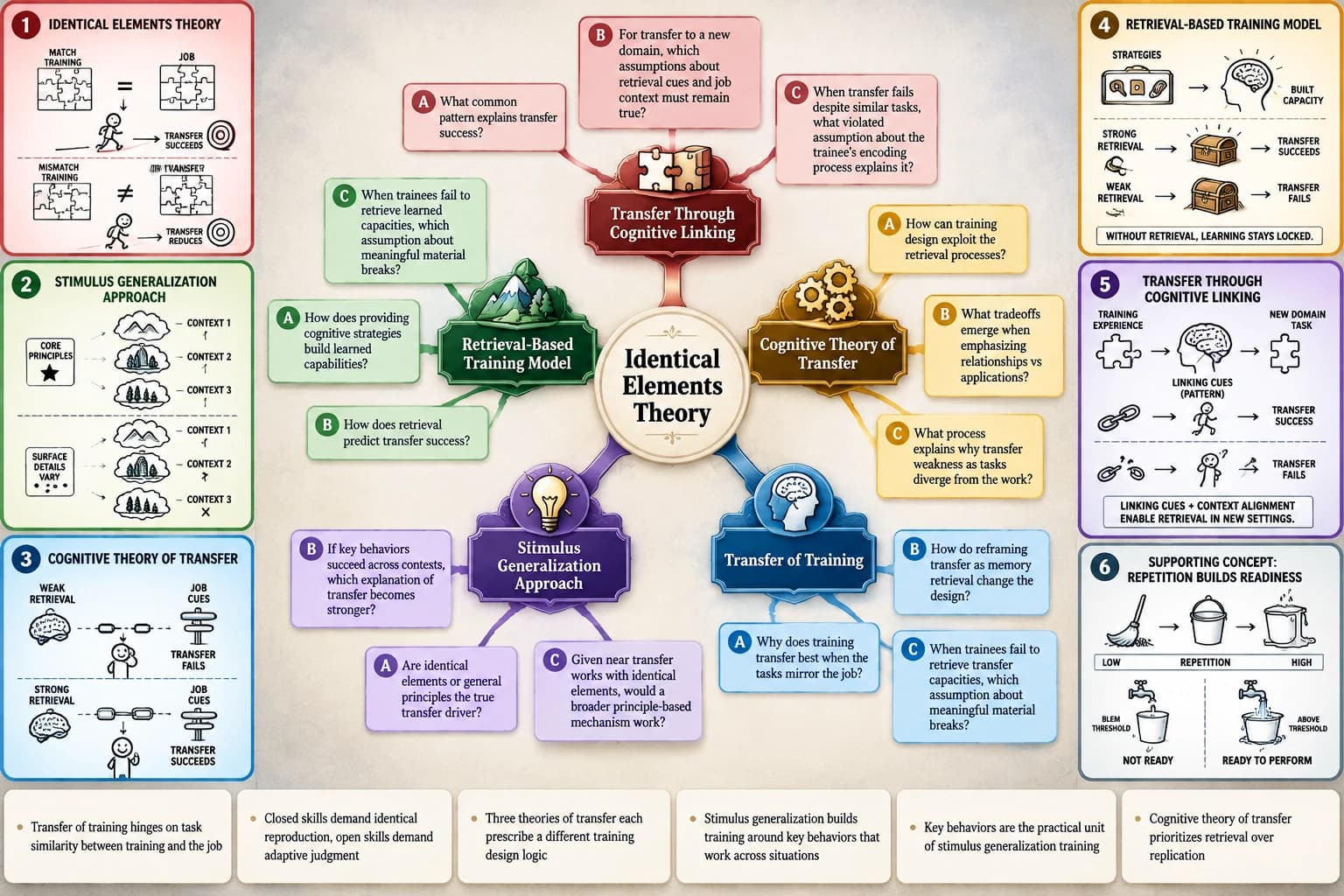
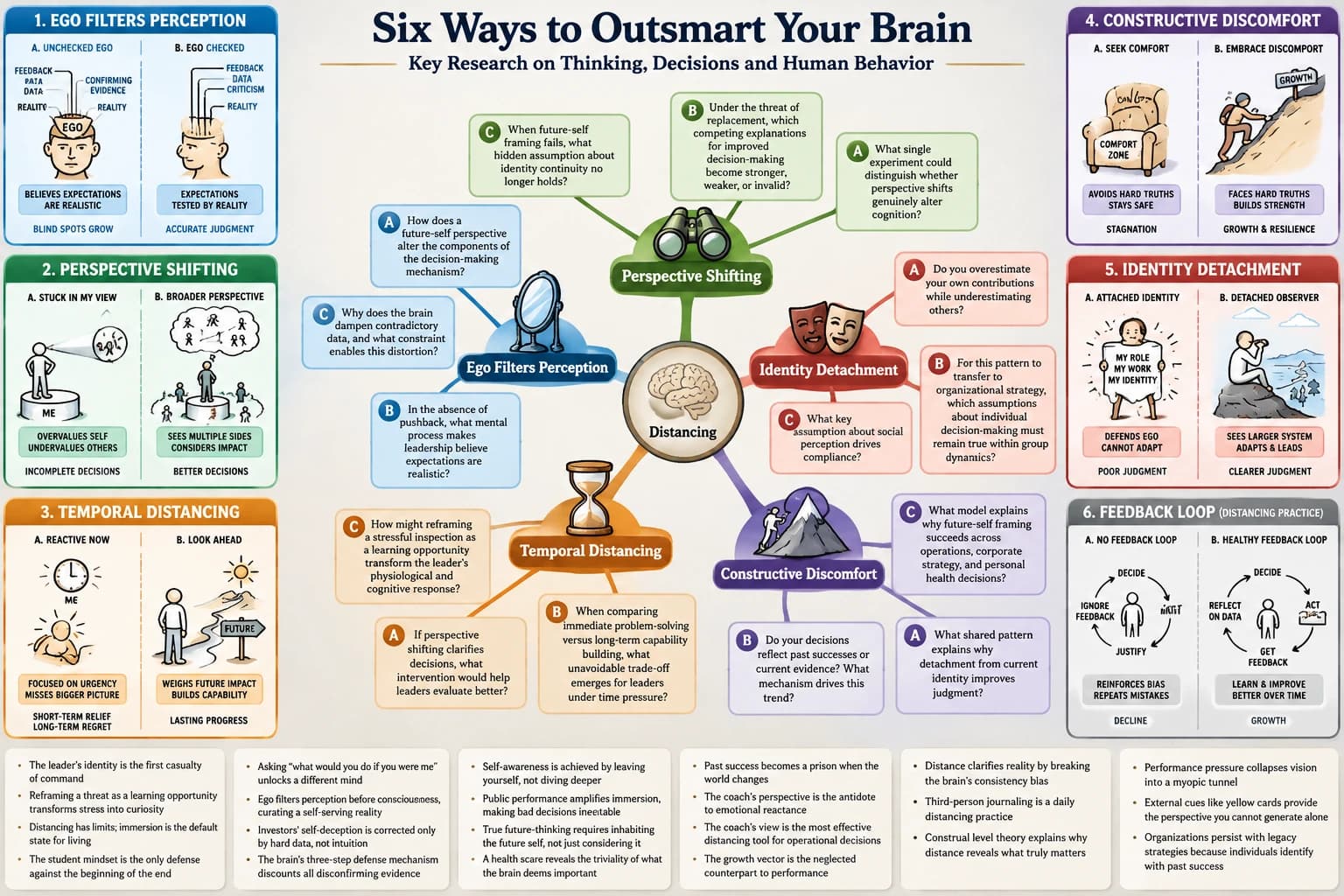
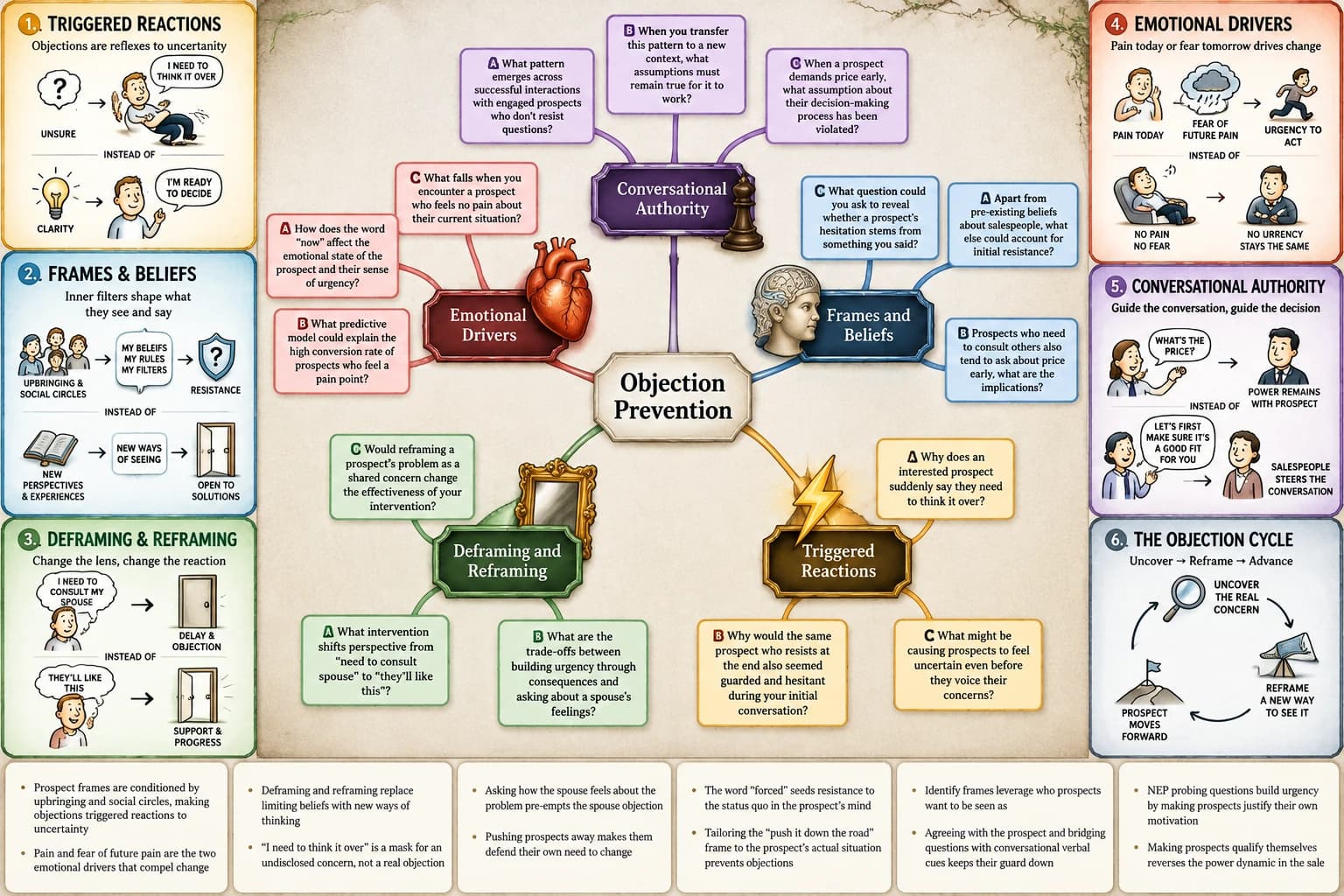
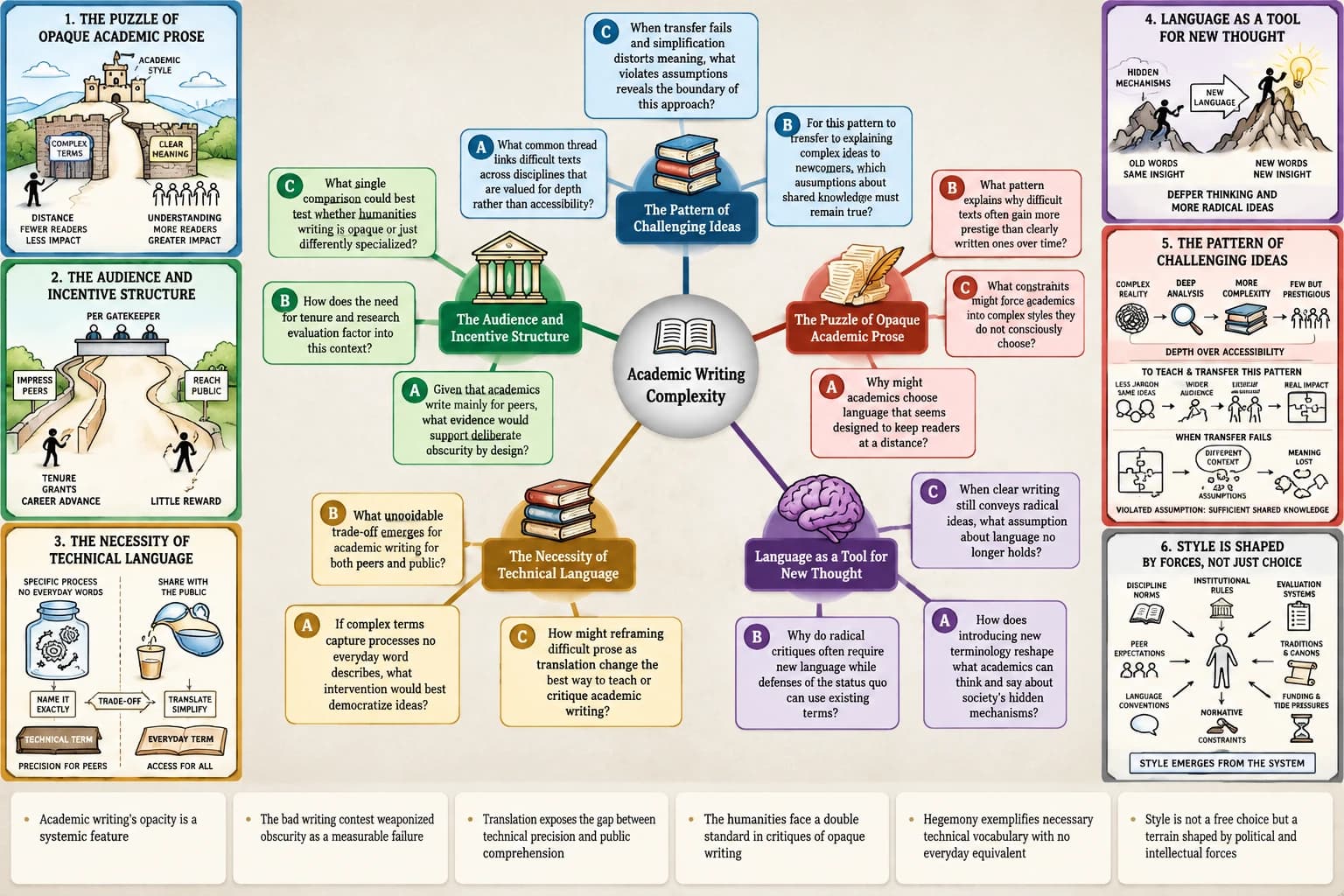
From a 60-minute sales call to a reusable learning asset, y2map produces three complementary outputs: a structured summary, 6 illustrated conceptual visual learning pannels and a Socratic Questioning mindmap that encourages deeper analysis. The advance organizer provides the big picture, the illustrations make abstract relationships easier to understand, and the questions help representatives identify what they still need to investigate.
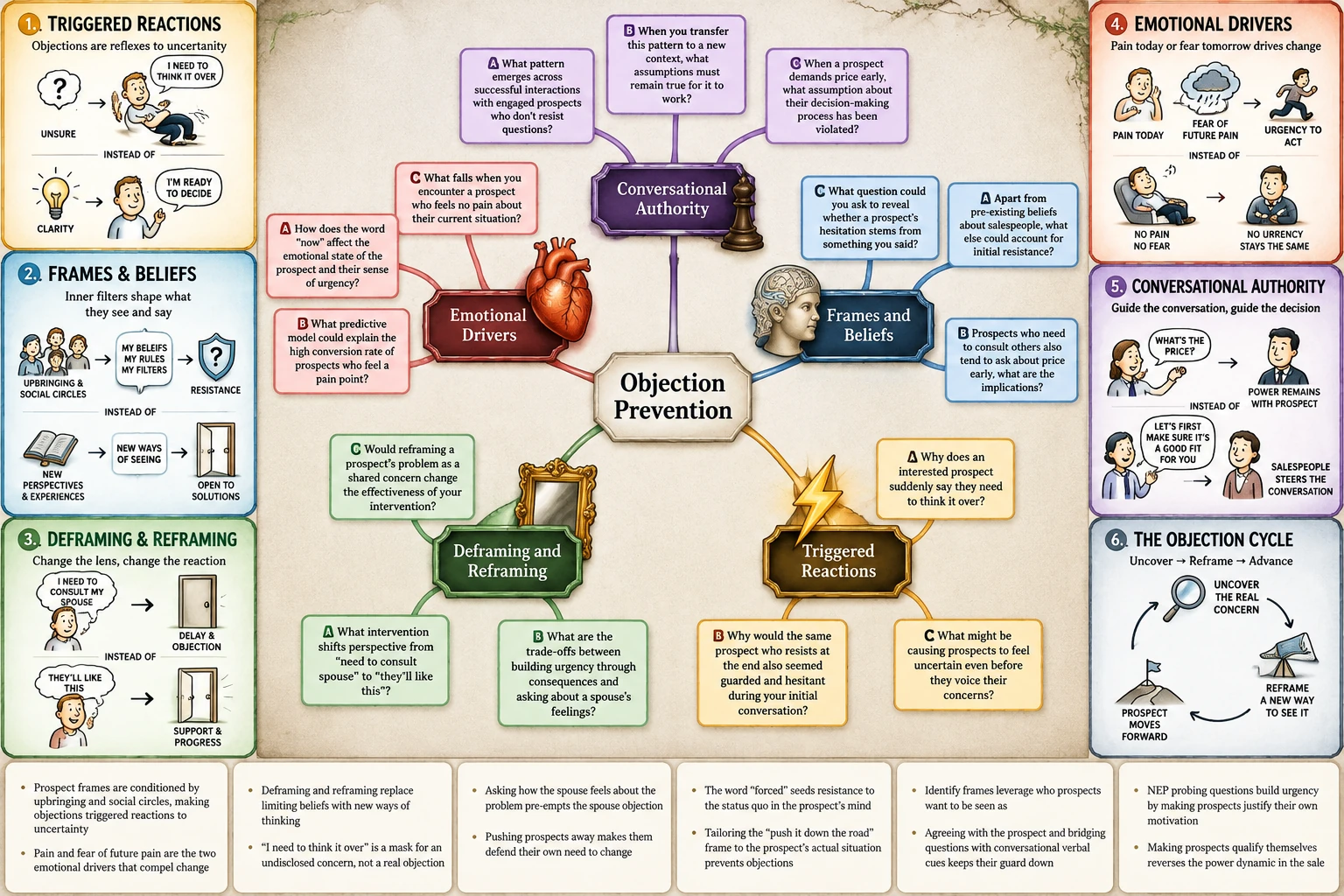 The result is two economic benefits at once: faster individual preparation and better collective understanding — plus a third that reinforces both: your existing sales knowledge becomes reusable, shareable assets instead of staying buried in documents, recordings and individual experience.
Your sales team has the information. Does everyone understand it?
Most sales organizations are not short of sales information. Product documentation lives in one tool, recorded calls in another, account research in slide decks, competitive intelligence in someone's inbox. The recurring cost is invisible but real: every new hire re-reads the same long documents and calls, every manager re-explains the same methodology, every representative prepares for conversations with a slightly different — and unverifiable — understanding of what the team knows.
This is the clarity tax on sales readiness:
- Duplicated orientation. Everyone independently reads the same product documents and arrives at different conclusions.
- Unverified claims. Summaries circulate without quotations, timestamps or page references, so nobody can check what the source actually said.
- Knowledge that leaves the building. A top performer's expertise stays in their head; a successful call circulates without context.
- Fragmented account understanding. Prospecting notes, annual reports and customer correspondence never become one coherent picture.
- Inconsistent methodology. Different teams interpret the sales playbook differently, and nobody can see where the interpretations diverge.
Plenty of tools summarize. We focus on the problem of progression from information to understanding, reasoning and application.
Two situations where this pays for itself
The new hire who needs to contribute sooner. A new SDR receives hours of training videos, extensive product documentation and unfamiliar competitor research. Six advance-organizer cards establish the initial framework, an evidence-backed summary highlights key arguments and verifies them against the source, and an illustrated map connects product positioning, buyer reasoning and competitive advantages. Socratic driving questions prepare the representative to understand the buyer’s decision criteria, challenge assumptions, anticipate sales objections and ask, “Why should I believe this?” The resulting objection map connects buyer concerns to supporting evidence, giving the representative substantive topics to raise in the next meeting with their manager.
The manager reviewing twelve research reports. A sales manager receives twelve account-research reports from junior representatives. Standardized summaries surface high-level claims, source quotations, supporting evidence and unresolved questions, allowing the manager to evaluate positioning, compare buyer decision patterns across accounts and identify unsupported assumptions. Illustrated maps expose the reasoning behind each buyer’s preferences and likely objections, while Socratic questions reveal gaps in the evidence, test the strength of competitive claims and clarify what would persuade the buyer to act.
Reduce repeated orientation work for employees. Reduce repeated review work for managers. Give both a shared framework for understanding buyer reasoning, testing assumptions, substantiating claims and navigating objections.
Built for every role on the team
| Persona | Problem | y2map demonstration | Outcome |
|---|---|---|---|
| New SDR / BDR | Too much product information and too many calls to review | Visual onboarding map combining evidence-backed product explanations, advance-organizer cards, call examples and objection questions | More structured preparation for first conversations |
| Account Executive | Fragmented prospect and account information | Source-backed account map with mental models, supporting evidence, hypotheses and discovery questions | More focused account preparation |
| Sales Manager | Repetitive coaching and inconsistent interpretation of successful calls | Team workshop around an evidence-backed call map, using timestamped quotations and probing questions | Reusable coaching discussions |
| Sales Enablement Manager | Constantly changing training material and repeated content requests | Library of visual learning resources built from approved sources, with reusable summaries and shareable images | Easier reuse of existing training |
| VP of Sales | Different teams interpret the sales methodology differently | Shared map of selling principles and decision patterns, with questions that surface conflicting assumptions | Visibility into differences and knowledge gaps |
| Sales Engineer | Complex architecture is difficult to explain to nontechnical buyers | Illustrated technical map connected to customer use cases, with questions about technical constraints | Clearer explanations across teams |
| Customer Success Manager | Lengthy account histories and incomplete handovers | Account-transition map showing previous decisions, source evidence and unresolved questions | More structured account handovers |
| Revenue Operations Manager | Processes and definitions scattered across departments | Visual process map with dependencies, operational assumptions and inconsistency-spotting questions | Clearer cross-functional understanding |
Bring your sales team around the same blueprint
Imagine a group of builders standing around an architectural plan. Each person understands a different part of the project. The blueprint helps them see how those parts fit together, identify conflicts and agree on what needs to happen next.
A sales team can use y2map's learning maps in much the same way — collaborative sales planning around one visible artifact. SDRs bring prospect questions, account executives contribute customer context, sales engineers clarify technical constraints and managers challenge assumptions. The map gives everyone a common reference for the discussion.
The distinction matters: this is not about distributing information, but about collectively making sense of it. The four outputs create a natural sequence for collaboration — the advance organizer establishes shared context, the summary supplies the evidence, the illustrated mindmap exposes the relationships, and the driving questions turn those relationships into subjects for discussion.
| Traditional activity | Shared-blueprint alternative | Value |
|---|---|---|
| Everyone independently reads the same product documents | The team reviews a common visual explanation, starting with the six advance-organizer cards | Less duplicated orientation |
| Managers present a slide deck while representatives listen | The group examines a map and generates explanations before reviewing the evidence | More active participation |
| A successful call is circulated without context | The team studies selected moments, source quotations and alternative interpretations | More structured peer learning |
| Sales and product teams exchange disconnected documents | Both teams examine a common map of customer needs and product constraints | Clearer cross-functional conversations |
| Representatives memorize objection-handling scripts | Teams investigate the reasoning behind responses and test when each applies | More adaptable customer discussions |
| Account plans live in separate files | Participants review a shared account mental model and challenge assumptions | Better visibility into knowledge gaps |
A shared mental model is not necessarily unanimous agreement. The value of a sales team brainstorming session around a map includes making disagreements, assumptions and missing evidence visible — so the team can resolve them deliberately instead of discovering them in front of a customer.
(y2map supports shared maps in team workshops and discussions; it is not a real-time collaborative editor.)
Make complex products easier to explain
Sales product training usually fails in the gap between features and buyer problems. y2map closes it with an illustrated feature-to-customer-problem map: every capability is connected to the buyer problem it solves, the proof points that support it and the objections it raises — each backed by quotations and evidence from your approved documentation.
- New SDRs learn the conceptual structure of the product before memorizing feature lists.
- Account executives connect positioning to evidence they can cite in conversations.
- Sales engineers get visual structures that make technical architecture legible to nontechnical buyers.
- Enablement managers reuse high-quality illustrations in training and educational social-media content.
For teams training on complex or technical products, visual explanation is not decoration. Paired text and illustration reduce cognitive load, and memorable images provide retrieval cues for exactly the concepts representatives need mid-conversation.
Understand the account before the conversation
AI account research should produce understanding, not a pile of links. y2map turns annual reports, industry research and customer correspondence into an evidence-backed account brief:
- A high-level mental model of the account — strategy, pressures, decision patterns.
- Source quotations and page references for every consequential claim.
- An illustrated account map connecting what you know.
- Discovery questions that expose what you do not.
Before the next sales meeting preparation session, representatives use the driving questions to investigate gaps and hypotheses — including alternative explanations for the buyer's problems — so pre-call planning becomes an act of reasoning rather than collection.
Turn successful calls into reusable team knowledge
Recorded calls are the most expensive training material you own — and the least reused. Sales call coaching with y2map turns a selected conversation into a source-backed learning resource:
- Summarize the call with timestamped quotations and supporting evidence.
- Illustrate how the customer's problems, the representative's approach and the underlying principles connect.
- Question why particular techniques worked, when they would fail and what an alternative interpretation would be.
- Reuse the resulting map for role-play, onboarding and group discussion.
A representative who watches a recorded call can first read the advance organizer, predict the next discovery question, pause to explain the representative's decision and compare that explanation with the evidence. That is peer-to-peer sales coaching built on active learning rather than passive playback — and it mirrors how high-performing teams already use curated call libraries.
Give every new representative a stronger starting point
Sales onboarding fails when it front-loads detail without structure. y2map gives every new hire a learning pathway built from your existing material:
- Orient with six advance-organizer cards covering the product, methodology and customer problem.
- Understand through evidence-backed summaries of documentation and recorded calls.
- Connect concepts with the illustrated learning map.
- Practice with driving questions, role-play and manager discussion.
Enablement teams use the same maps as a reusable onboarding companion across cohorts — reducing sales ramp time by eliminating repeated orientation work, and giving managers a consistent reference for every new representative's development.
Run a sales blueprint workshop
A practical 45-minute team session that doubles as one of the most substantive sales team building exercises you can run. (Illustrative facilitation workflow using y2map outputs.)
- Prepare the blueprint — before the session. Choose a product launch, important prospect, successful sales call or recurring objection. Generate the evidence-backed summary, visual map and driving questions from the relevant materials. Check important quotations and claims against the original source.
- Orient the team — 5 minutes. Review the six advance-organizer cards so everyone understands the topic's overall structure before discussing details. Invite participants to predict which concepts will matter most to their customers.
- Inspect the evidence — 10 minutes. Walk through the illustrated map together. Use the summary's source quotations, timestamps and supporting data to investigate surprising findings, unclear relationships and claims requiring closer inspection.
- Challenge the blueprint — 15 minutes. Use driving questions to test assumptions and generate alternative explanations. Ask how the proposed approach changes for different buyers, objections and technical constraints — and what evidence would distinguish competing hypotheses.
- Rehearse the application — 10 minutes. Run a short role-play or account-planning exercise, using the map as a scaffold before attempting it independently.
- Capture the learning — 5 minutes. Record agreed explanations, unresolved questions, evidence to verify and ownership of follow-up actions. Reuse the reviewed map in later training and its questions for retrieval practice.
A training resource becomes a reusable framework for thinking, discussion and decision preparation.
See how teams turn conversations into reusable knowledge
External, published sales enablement case studies show that sales organizations invest heavily in call-based learning and knowledge sharing. These are documented practices from other companies — not y2map customer results — and illustrate the behavior y2map is built to support.
| Case study | Documented practice or reported result | Lesson |
|---|---|---|
| Aircall using Gong | BDRs used curated call recordings and comments to initiate manager-led coaching; the published case study reports a 35% increase in qualified pipeline in EMEA. | Representatives benefit from studying real conversations and discussing specific moments together. |
| Diligent using Gong | Reported a three-week reduction in time to quota and a 7.4% increase in close rates for calls listened to in Gong (customer-reported results associated with Gong). | Reusable call knowledge supports onboarding and ongoing coaching. |
| Salesloft call-coaching practices | Gong documented Salesloft's curated library of successful demos and targeted coaching moments for new account executives. | Successful calls become more useful when teams can identify and discuss the principles behind them. |
| Regal Rexnord enablement rollout | Seismic describes addressing fragmented content and lengthy onboarding after a three-company merger. | Fragmented institutional knowledge is a recurring, structural challenge. |
Illustrative y2map scenarios
These are examples of how the workflow applies — labeled as such until demonstrated with actual customers.
| Scenario | Source material | Output | What to measure |
|---|---|---|---|
| New SDR onboarding | Product documentation, competitor comparisons, recorded calls | Role-specific learning map and reusable onboarding companion | Preparation time, assessment results, time to readiness |
| Strategic account preparation | Annual reports, industry research, customer correspondence | Evidence-backed account brief and visual account map | Research time, completeness of preparation |
| Collaborative objection workshop | Call transcripts, product documentation, objection-handling material | Reusable objection-learning map with guided questions | Participation, demonstrated understanding, material reuse |
| Product launch enablement | Release notes, product demonstrations, approved positioning | Launch learning companion and shareable educational image | Training preparation time, product-knowledge assessment |
| Cross-functional account handover | Sales notes, customer expectations, implementation documentation | Account-transition map and evidence-backed handover summary | Handover preparation time, unresolved questions |
One further demonstration: content repurposing. Take a single approved product webinar — its summary supports a manager's review, its advance organizer prepares a new hire, its illustrated map becomes a training asset, and its questions power the next team workshop. The same source serves several audiences without producing a new explanation from scratch each time.
Recover preparation time. Reuse what your team already knows.
y2map unifies two economic promises: extract more value from every source and reduce the recurring cost of explaining the same information. Evaluate it the same way — with a transparent measurement framework rather than assumed improvement:
- Preparation time — time to prepare for a call, onboarding session or launch.
- Comprehension — knowledge-retention checks and readiness assessments.
- Asset reuse — how often existing maps are reused across onboarding, coaching and social content.
- Operational outcomes — ramp time, time to first deal, consistency of methodology across teams.
Run a pilot against a baseline. Judge the results, not the promise.
Why this works: the learning science behind the maps
The four outputs are not arbitrary. Each one applies a documented principle from learning research to sales training:
| Learning principle | y2map feature | Sales application |
|---|---|---|
| Advance organizers (Ausubel) | Six concluding cards read before the source material | Conceptual framework for a product or methodology before detailed study |
| Concept mapping (Novak) | The central mindmap and its relationships | See how problems, capabilities, objections and responses fit together |
| Dual coding | Illustrated examples paired with explanatory text | Technical knowledge and abstract principles become easier to understand |
| Cognitive load theory | Organized summaries and manageable sections | Less effort navigating fragmented information |
| Picture superiority effect | Memorable, relevant illustrations | Visual retrieval cues for important concepts |
| Distributed cognition | An external workspace of concepts, evidence and questions | A common reference during coaching and account planning |
| Generative learning (Wittrock) | Questions requiring constructed explanations | Representatives connect product knowledge to customer situations |
| Generation effect | Prompts to predict or formulate an answer | Active engagement before the explanation is revealed |
| Elaborative retrieval | Questions linking multiple concepts | Explain why an approach works and when it may fail |
| Abductive reasoning (Peirce) | Questions about hidden mechanisms and alternatives | Hypothesis generation during discovery and account research |
| ICAP framework (Chi) | Reading, annotating, explaining and discussing the map | Progressively more constructive learning activities |
| Scaffolding (Vygotsky) | Examples, visual explanations and guided questions | Structured support for unfamiliar sales situations |
The same research explains the shift from passive to active learning: a representative who watches a recorded call can predict the next question, pause to explain a decision and compare that explanation against the evidence. That is the difference between consuming training and learning from it.
Common questions about AI sales enablement
How can AI improve sales enablement? Through faster preparation, structured learning, evidence-backed knowledge and coaching. y2map delivers these through four complementary outputs: an evidence-backed summary, six advance-organizer cards, an illustrated learning map and driving questions.
How can sales teams share knowledge more effectively? By turning expertise into reusable learning resources and discussing them around shared maps — with advance organizers establishing common context first, so every discussion starts from the same mental model.
Can AI help onboard new SDRs and BDRs? Yes. Documentation and selected recordings become structured learning resources with visual explanations and guided questions, giving every new representative the same strong starting point.
How do you turn sales calls into training material? Through the source-to-summary-to-map-to-coaching workflow: timestamped quotations, an illustrated learning map and driving questions for role-play and discussion.
How can sales managers run collaborative training sessions? With the blueprint workshop: orient with advance organizers, inspect evidence, challenge assumptions, rehearse and capture — a repeatable structure for active participation instead of passive presentation.
How do you measure the value of AI sales training? With baseline measurements and pilot comparisons — preparation time, knowledge retention and content reuse on the learning side; ramp time and readiness on the operational side — including honest limitations.
What is an advance organizer in sales training? A concise conceptual framework presented before detailed material. y2map's six illustrated cards establish the main ideas behind a product or methodology before representatives study the details.
How can mindmaps improve sales onboarding? By making relationships visible: new representatives see how capabilities connect to buyer problems and objections, supporting comprehension and recall during real conversations.
Can AI generate discovery questions from sales documents? Yes — and the better ones do more than list prompts. Driving questions help uncover assumptions, explore alternative explanations and identify missing customer information.
How can sales teams reuse webinars and training videos? One approved source produces a summary, an advance organizer, an illustrated map, a question set and shareable educational images — each serving a different audience.
How do you verify AI-generated sales summaries? Every claim connects to a source quotation with a timestamp or page reference. Check consequential claims against the original — the questions explicitly flag what deserves closer investigation.
Build your team's next sales blueprint
One source in. Four learning assets out. A team that prepares faster, understands together and reuses what it already knows.
Create your sales blueprint — or see how y2map works on a real, permission-cleared example: the original source, the evidence-backed summary, the illustrated learning map with its six advance-organizer cards, and the driving questions your team will argue about in the best possible way.