What Is an Advance Organizer? Ausubel's Blueprint for Learning
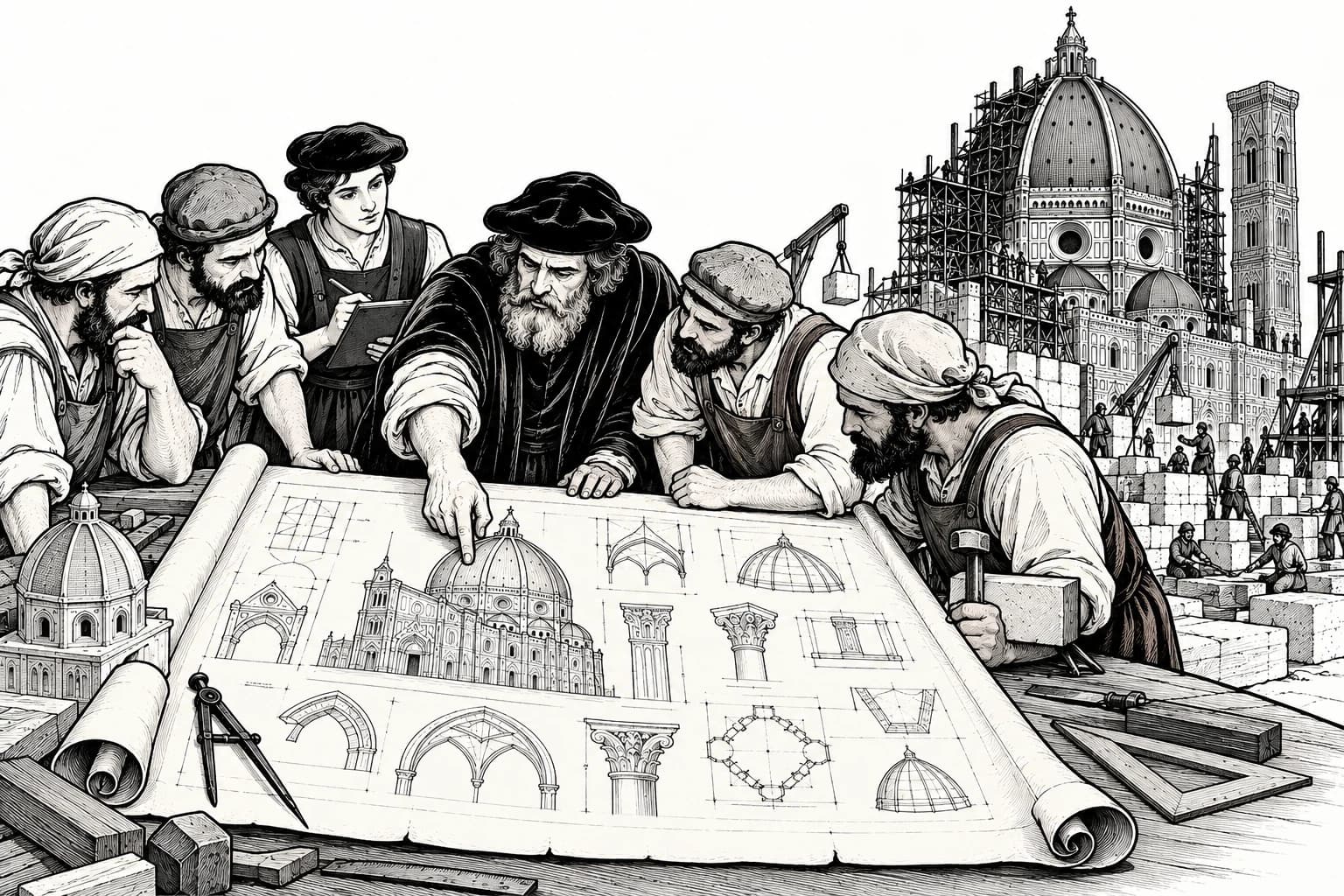
Before the first stone rose above the streets of Renaissance Florence, the cathedral existed—on parchment. Before unloading wagons of marble and hoping architecture would emerge, Master Builders unrolled a blueprint showing arches, vaults, columns, proportions, and load-bearing relationships long before construction began. That drawing gave every mason, carpenter, and glazier a shared conceptual framework, reducing confusion before work started while allowing each craft to connect individual tasks to the larger design.
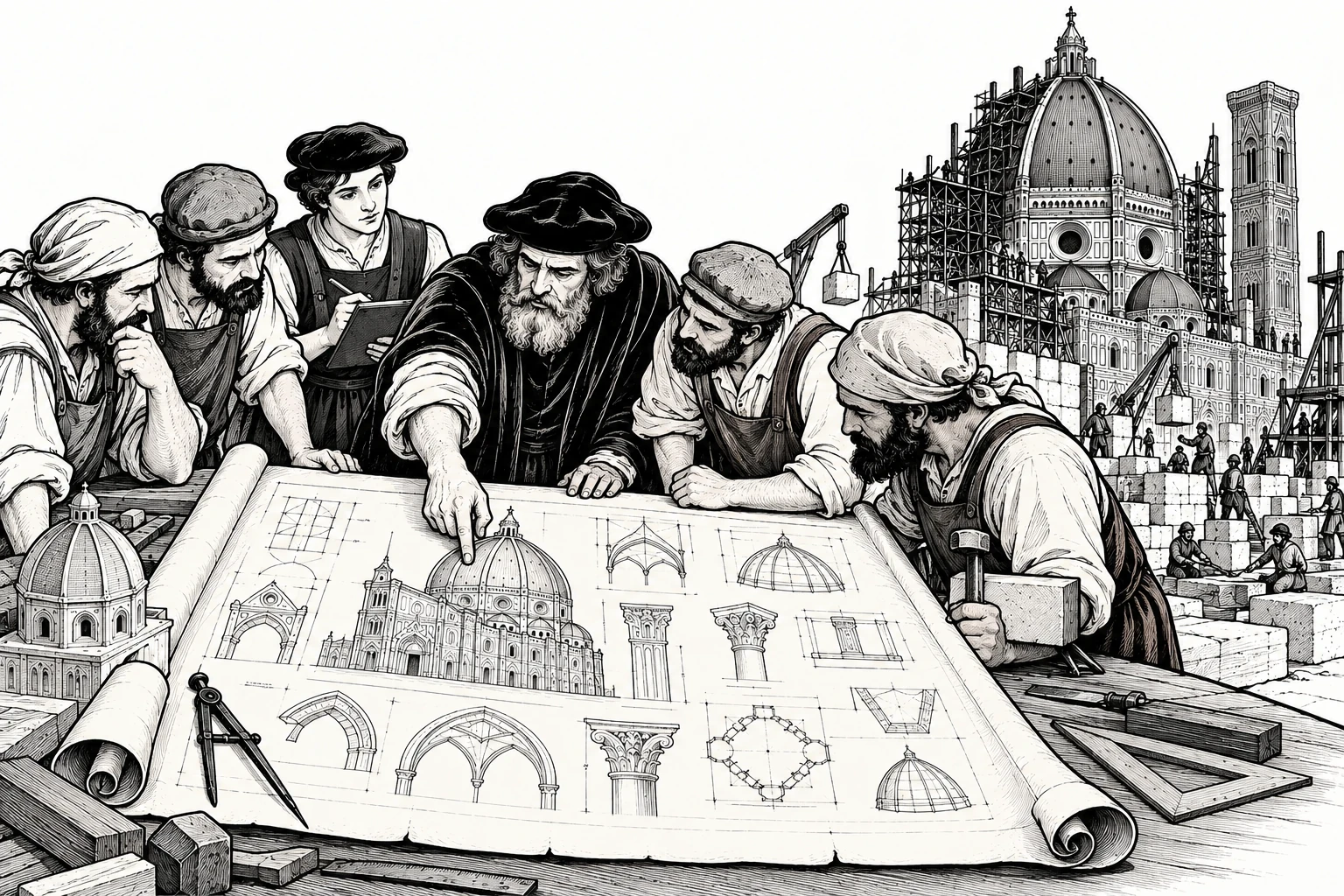
Nearly five centuries later, David Ausubel transformed the same architectural intuition into Meaningful Learning Theory. He argued that learners understand unfamiliar knowledge by attaching it to existing schemas, prior knowledge, and subsuming concepts rather than memorizing isolated facts. Modern Cognitive Load Theory, schema theory, and the learning sciences later explained why the blueprint succeeds: it minimizes extraneous cognitive load, supports schema activation, and allows working memory to construct durable mental models instead of searching for orientation.
The Blueprint Explained
-
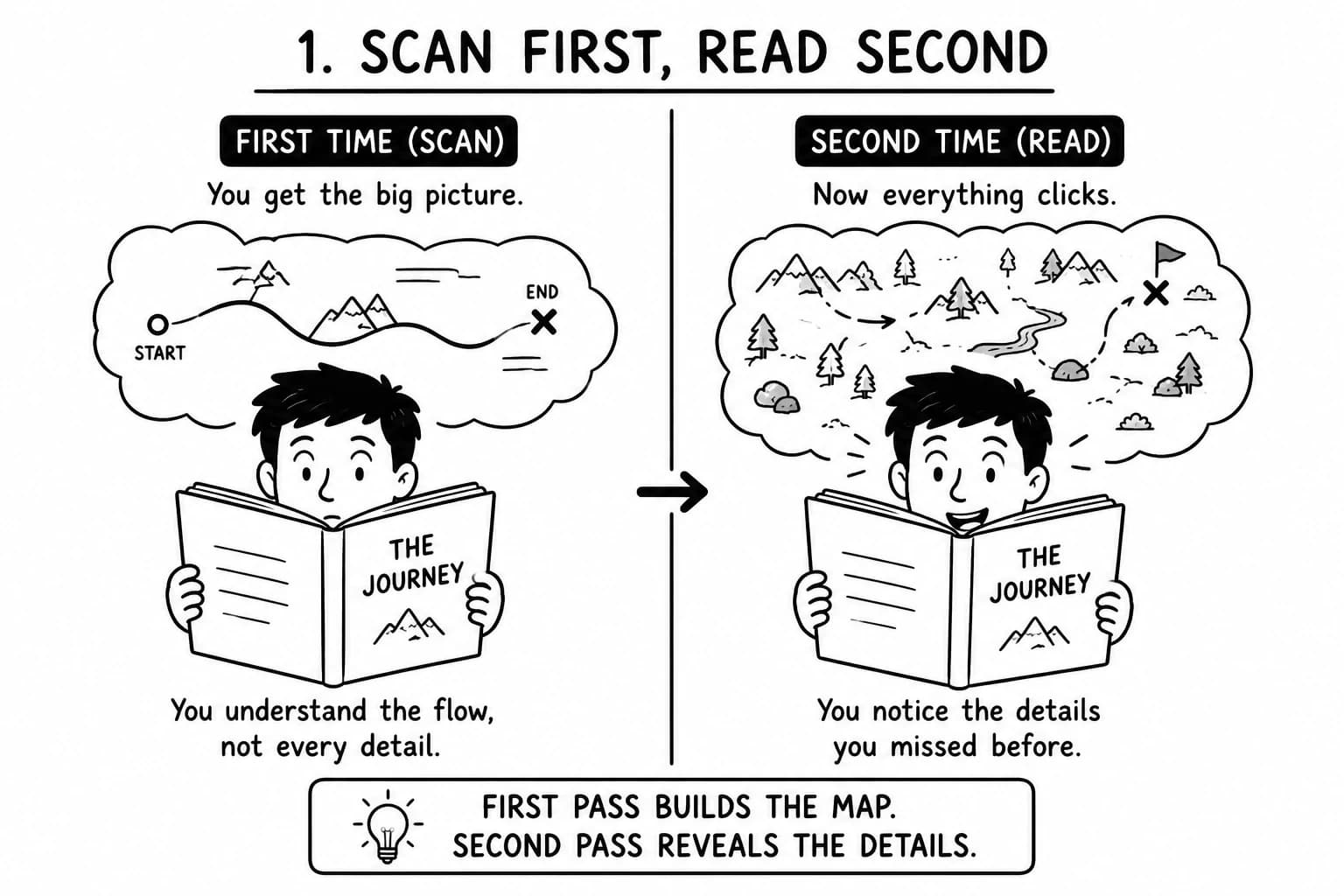
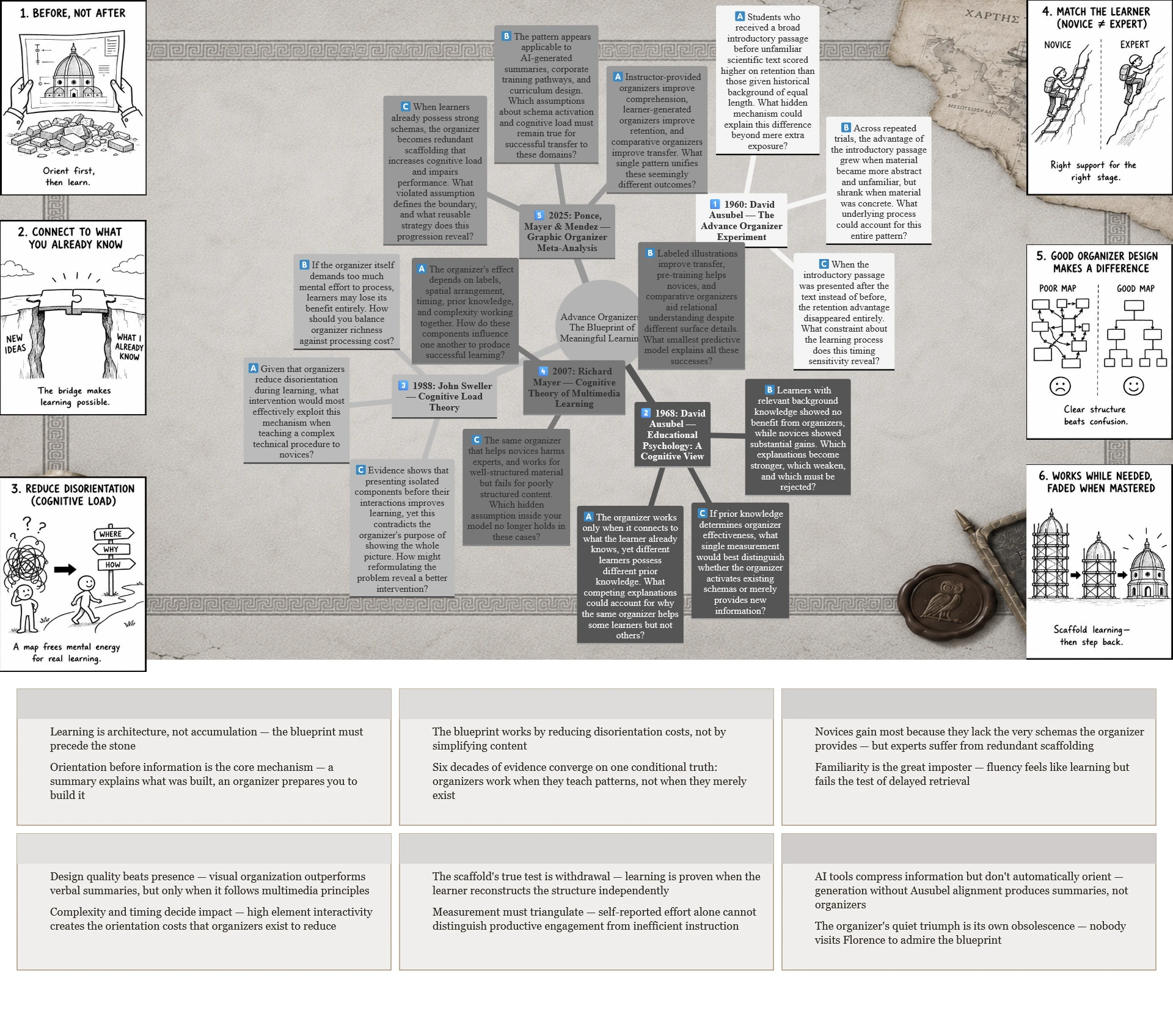
What is an advance organizer? An advance organizer is a pre-instructional strategy presented before learning begins that provides an introductory overview, conceptual framework, and organizational structure, allowing learners to understand how new ideas relate before encountering the details. Like a cathedral blueprint, it reveals the architecture before the construction.
-
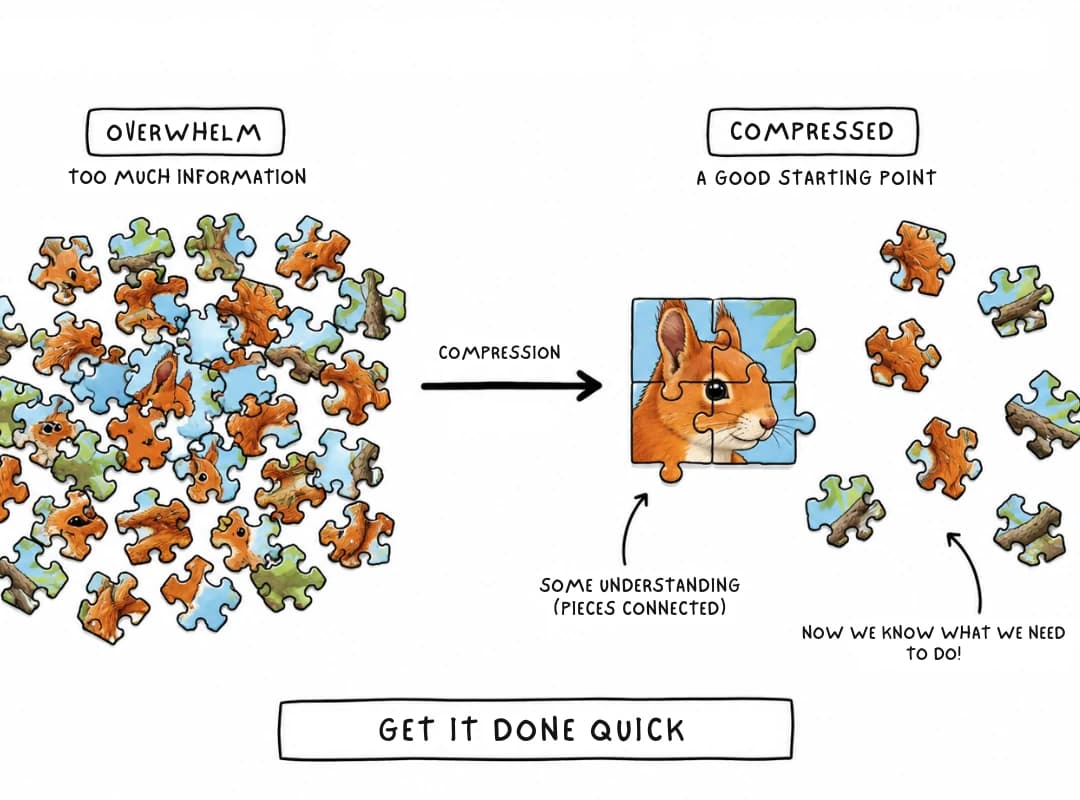
Advance organizer vs summary. A summary explains what has already been built; an advance organizer prepares learners to build it. Concept maps, graphic organizers, learning roadmaps, mind maps, glossaries, and chapter overviews function as organizers because they establish orientation rather than merely compress information.
-
Ausubel's Meaningful Learning Theory. David Ausubel proposed that learning becomes meaningful when new knowledge connects with existing prior knowledge, schema activation, assimilation theory, and subsumption theory. The blueprint gives unfamiliar ideas somewhere to attach before instruction begins.
-
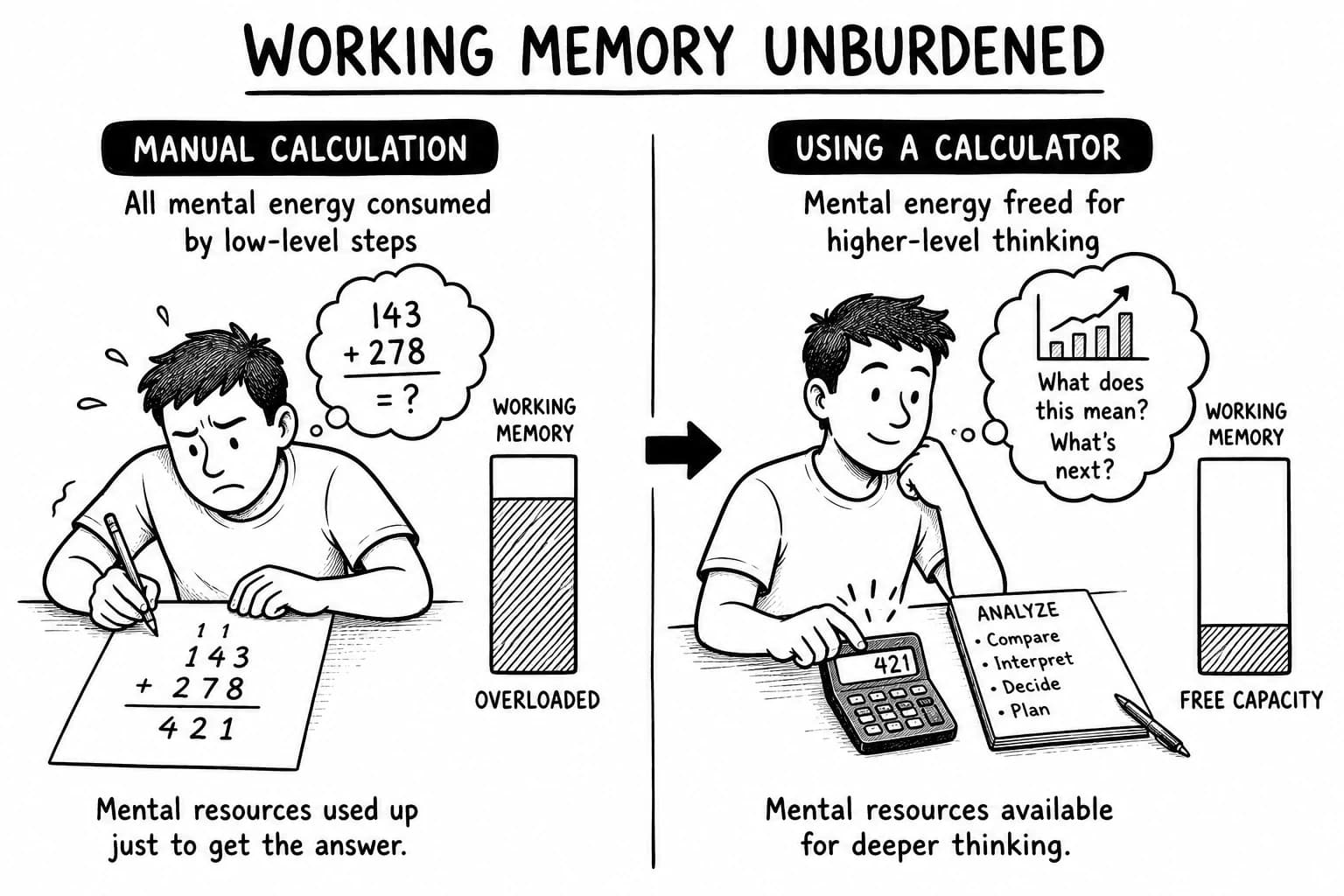
Working memory and Cognitive Load Theory. Cognitive Load Theory explains that advance organizers cannot reduce intrinsic cognitive load, but they substantially reduce extraneous cognitive load by eliminating unnecessary disorientation. The result is greater germane cognitive load, stronger memory encoding, chunking, and more efficient knowledge organization.
-
Schema theory and knowledge construction. Through schema theory, Jean Piaget, Alan Baddeley, and later cognitive scientists showed that learners gradually construct mental models, knowledge structures, and schema automation. Like cathedral craftsmen working from one shared blueprint, learners integrate individual facts into coherent conceptual structures that support learning transfer, memory consolidation, and conceptual understanding.
Historical Development of Advance Organizers, Schema Theory, and Cognitive Load
| Year | Research / Historical Development | Keyword-Rich Key Concepts |
|---|---|---|
| 1960 | David Ausubel introduces Advance Organizers | Advance Organizer, Pre-instructional Strategy, Prior Knowledge Activation, Meaningful Learning |
| 1968 | Educational Psychology: A Cognitive View | Meaningful Learning Theory, Assimilation Theory, Subsumption Theory, Conceptual Framework |
| 1978 | Kozlow meta-analysis | Organizer Effectiveness, Instructional Quality, Learning Outcomes |
| 1980 | Luiten, Ames & Ackerson meta-analysis | Advance Organizer Meta-analysis, Comprehension, Retention, Novice Learners |
| 1988 | John Sweller develops Cognitive Load Theory | Intrinsic Load, Extraneous Cognitive Load, Germane Cognitive Load, Working Memory |
| 1992 | Fred Paas introduces mental effort measurement | Cognitive Effort, Mental Effort Scale, Learning Efficiency, Cognitive Cost |
| 1992 | Mahar updates organizer meta-analysis | Low Prior Knowledge, Instructional Support, Organizer Benefits |
| 2001 | Richard Mayer's Cognitive Theory of Multimedia Learning | Multimedia Learning, Dual Channels, Pre-training, Visual-Verbal Integration |
| 2006 | Preiss & Gayle meta-analysis | Graphic Organizers, Instructional Context, Organizer Design, Learning Sciences |
| 2007 | Mautone & Mayer; Nassaji | Schema Activation, Structural Organizers, Reading Comprehension, Knowledge Representation |
| 2011 | Dexter & Hughes | Learning Disabilities, Graphic Organizers, Educational Intervention |
| 2012 | Gurlitt et al. | Initial Schema Formation, Knowledge Organization, Organizer Structure |
| 2013 | Leppink differentiated Cognitive Load measurement | Intrinsic Load, Extraneous Load, Germane Load, Cognitive Assessment |
| 2024 | An & Kim meta-analysis | Graphic Organizer Effectiveness, Educational Technology, Learning Performance |
| 2025 | Ponce, Mayer & Mendez meta-analysis | Instructor-Provided Graphic Organizers, Immediate Comprehension, Transfer, Evidence-Based Instruction |
Six Decades of Evidence
Across more than 600 empirical studies, advance organizers, concept maps, graphic organizers, and related instructional design strategies consistently improve comprehension, knowledge retention, schema construction, and learning transfer, with the strongest effects appearing for novice learners, complex subject matter, and carefully designed pre-instructional frameworks that reduce orientation costs before learning begins.
When Advance Organizers Work: Schema Formation Before Construction
No cathedral produced identical columns by chance. Before carving hundreds of capitals, a Renaissance stonemason first shaped a wooden template that captured the essential pattern, allowing every apprentice to recognize what mattered while ignoring superficial variation. The template did not carve the stone; it accelerated schema formation, pattern recognition, knowledge organization, and conceptual understanding by giving every new block an existing structure to fit. The research on advance organizers tells much the same story. Across six decades of educational psychology, instructional design, Cognitive Load Theory, and schema theory, meta-analyses consistently report improvements in immediate comprehension (d ≈ 0.40–0.70), delayed retention (d ≈ 0.30–0.50), and learning transfer (d ≈ 0.20–0.40), while well-designed graphic organizers often approach d ≈ 0.70–0.80. Yet the template mattered as much as its existence. A well-crafted pattern highlighted structural relationships, reduced extraneous cognitive load, activated prior knowledge, supported schema activation, and guided working memory toward durable mental models; a poor template merely multiplied confusion. Modern evidence reaches the same conclusion. Gurlitt et al. (2012) showed that organizer structure shapes the initial schema, Mautone and Mayer (2007) demonstrated that structural organizers improve comprehension by activating relevant knowledge before instruction, and Nassaji (2007) found that organizers prepare learners through schema activation rather than vocabulary preview alone. Like the master stonemason's template, an advance organizer succeeds by teaching learners what patterns to recognize before asking them to construct knowledge, making its effectiveness conditional not simply on being present, but on how faithfully its design captures the underlying architecture of understanding.
Novices Gain Most: Prior Knowledge, Expertise Reversal Effect and Adaptive Scaffolding
Learners with low prior knowledge show the largest gains from advance organizers because schema activation and prior knowledge activation fill missing mental models, while experts face expertise reversal effect where redundant scaffolding increases extraneous cognitive load. Familiarity effect and time-on-task can inflate results, so true conceptual organization must be separated from mere vocabulary exposure and extra study time.
| Guide | Slava Kalyuga's Expertise Reversal Experiments |
|---|---|
| What research shows | Inexperienced mechanical apprentices learned more effectively from worked examples, while learners with greater domain knowledge benefited more from independent problem-solving. |
| Rival explanation | Familiarity, repeated exposure and additional study time can, unsurprisingly, imitate learning gains. Kalyuga's findings specifically demonstrate an interaction between prior knowledge and instructional guidance. |
| How to check | Assess prior knowledge, compare worked examples against independent problem-solving, measure subsequent performance and mental effort, and use unfamiliar transfer problems to distinguish conceptual understanding from familiarity. |
| Upskilling action | Begin with annotated examples that establish relationships, progressively remove explanations as competence improves, and replace redundant scaffolding with independent problem-solving and transfer challenges. |
Design Quality Beats Presence: Organizer Quality, Visual Organizers and Multimedia Principles
High-quality expository organizers, comparative organizers, and graphical organizers outperform text-only verbal organizers for relational understanding, but only when they follow organizer design principles like signaling principle, coherence principle, spatial contiguity and temporal contiguity. Poor design yields null effects, and summarization confound means condensed content alone can masquerade as structural benefit — advance organizer vs concept map vs graphic organizer vs summary must be tested separately.
| Guide | Richard Mayer's Illustrated Braking-System Experiments |
|---|---|
| What research shows | Novices studying braking systems with labeled illustrations somehow recalled more explanatory information and performed better on transfer problems, demonstrating how visual organization can support the construction of functional mental models. |
| Rival explanation | Improvements might result from additional information, visual attention or familiarity rather than conceptual organization. Mayer's comparison of labeled illustrations, unlabeled illustrations, labels alone and controls helped distinguish these explanations. |
| How to check | Present equivalent technical content using different visual and verbal arrangements, control study time and prior knowledge, and compare explanatory recall, verbatim recognition and performance on unfamiliar problems. |
| Upskilling action | Create reusable visual organizers that place labels beside corresponding components, highlight causal relationships and remove irrelevant details. Test their quality by asking learners to explain mechanisms and predict unfamiliar outcomes. |
Complexity and Timing Decide Impact: Element Interactivity, Pre-training and Lesson Planning
Moderately to highly complex material with high element interactivity creates substantial orientation costs where advance organizers, pre-teaching and instructional sequencing pay off most.
Timing is critical: presented immediately before instruction they activate schemas; presented late they function as review or study guide, not pre-instructional strategy.
| Guide | Edwina Pollock's Electrical Training Experiments |
|---|---|
| What research shows | Novice apprentices benefited from learning isolated electrical components and procedures before studying their interactions. The staged approach improved performance on complex material, while experienced learners, as expeted, showed little additional benefit. |
| Rival explanation | Simple material may require little preliminary orientation, while extremely complex material can overwhelm novices when every interacting element is introduced simultaneously. Prior knowledge determines how much sequencing is useful. |
| How to check | Measure conceptual understanding, practical performance, mental effort and prior knowledge while controlling instructional exposure. |
| Upskilling action | Introduce essential components immediately before a complex lesson, progressively reveal their interactions and use unfamiliar problems to verify understanding. |
Who Benefits Most: K-12, Higher Education, Special Education and Domain Transfer
Older learners and students with learning disabilities often benefit more, but developmental differences confound results across elementary education, middle school, high school, college students, graduate students and adult learners. Positive effects span STEM, biology, chemistry, history, geography, language learning and humanities, yet magnitude varies — domain-specific methods, Bloom's Taxonomy alignment, Gagné sequencing, UDL and differentiated instruction matter.
| Guide | Joseph Novak's Twelve-Year Science Learning Study |
|---|---|
| What research shows | Grade 1-2 Children who were, presumably, forced to attend Novack's briefings on the nature of matter, energy and energy transformations demonstrated more scientifically valid concepts and fewer misconceptions in subsequent assessments through grade 12. This illustrates the lasting potential of early conceptual scaffolding. |
| Rival explanation | Differences may reflect early instructional exposure, curriculum quality, prior knowledge or developmental conditions rather than concept mapping alone. The study did not establish differential benefits for ADHD, dyslexia, ELL students or gifted learners. |
| How to check | Compare instructed and uninstructed learners longitudinally, assess prior knowledge, examine concept-map relationships and misconceptions, and replicate interventions across ages, learner profiles and academic domains. |
| Upskilling action | Introduce foundational concepts early, use differentiated scaffolding and concept maps to expose misconceptions, revisit relationships as knowledge develops, and gradually increase task complexity according to demonstrated understanding. |
Real Learning vs Comfortable Illusions: Fluency, Motivation, Testing and Expectation Effects
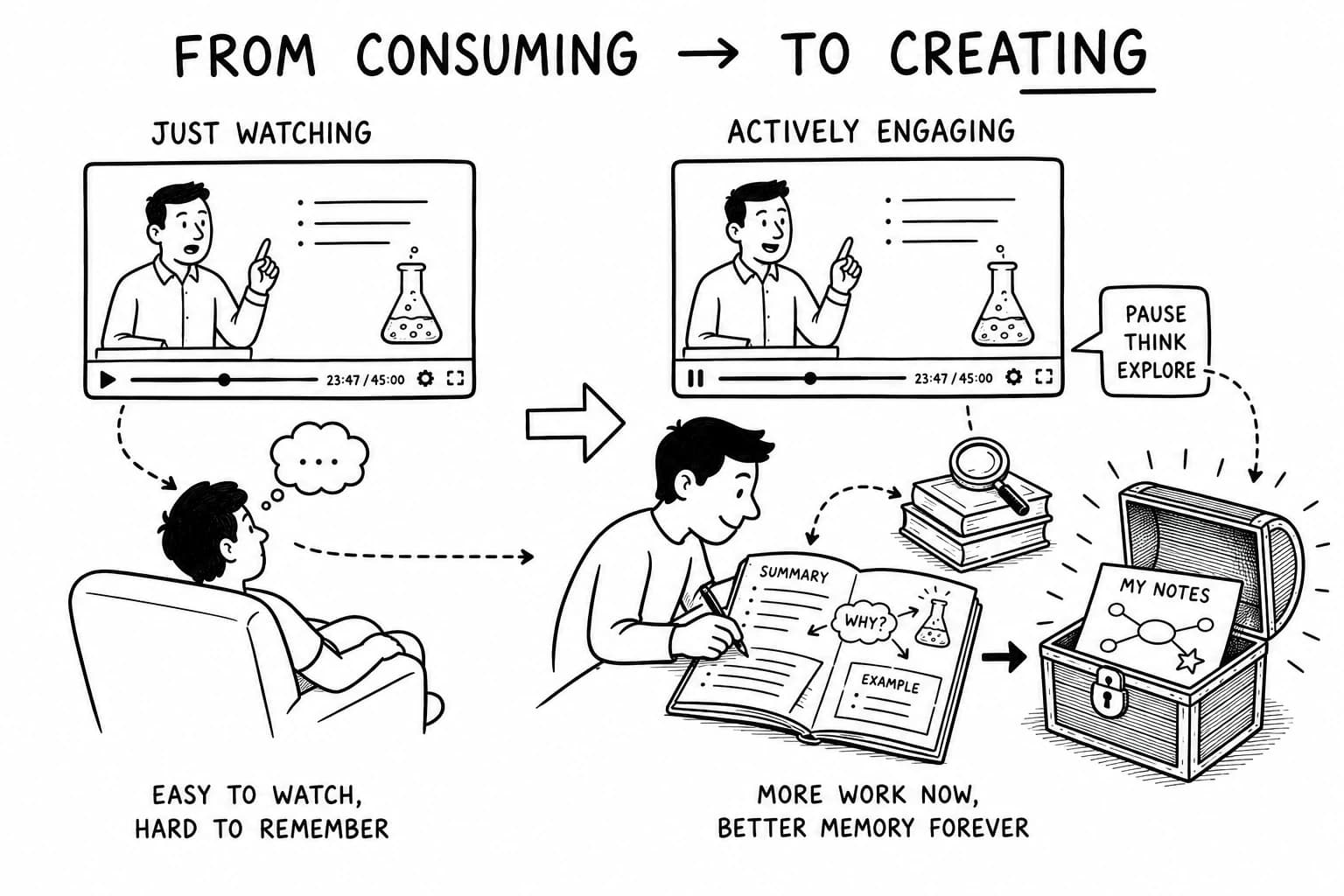
Fluency illusion creates false confidence where processing ease is mistaken for semantic memory and long-term memory consolidation, while motivation boost, testing effect and demand characteristics can artificially inflate measured performance. Durable learning requires encoding, storage, retrieval and consolidation — not just enjoyment or confidence — verified by delayed retention tests, transfer tests and think-aloud protocols.
| Guide | Jeffrey Karpicke's Retrieval Practice Experiments |
|---|---|
| What research shows | Students who repeatedly retrieved foreign-language vocabulary retained substantially more after one week than students who continued studying previously recalled items. Their predictions of future performance failed to track actual retention, exposing the gap between perceived mastery and durable learning. |
| Rival explanation | Familiarity, repeated exposure and confidence can masquerade as learning. Improved performance may also reflect retrieval practice rather than the conceptual structure of an organizer, so these mechanisms must be evaluated separately. |
| How to check | Compare repeated study with repeated retrieval after initial mastery, measure confidence before delayed testing, and assess retention after one week. For visual organizers, add unfamiliar transfer problems, think-aloud explanations and equivalent-content controls to isolate relational understanding. |
| Upskilling action | After studying an organizer, hide it and reconstruct its central concepts and relationships from memory. Explain each connection, check errors against the original, repeat retrieval after increasing delays, and use unfamiliar problems to distinguish genuine understanding from comfortable familiarity. |
How to Measure What Works: Effect Sizes, Validity and Evidence Quality
Estimates vary by instrument because self-reports capture overall workload not distinct intrinsic, extraneous and germane load components, requiring triangulation with behavioral and performance measures. High-authority practice uses systematic reviews, randomized controlled trials, effect size interpretation with Cohen's d and Hedges' g, confidence intervals, heterogeneity, publication bias checks and GRADE evidence quality.
| Guide | Fred Paas's Cognitive Load and Instructional Efficiency Research |
|---|---|
| What research shows | Paas compared conventional problem-solving, worked examples and completion problems using performance, transfer and mental-effort measures. His subsequent work with van Merriënboer combined standardized performance and effort scores. |
| Rival explanation | High mental effort may indicate productive engagement or inefficient instruction; low effort may indicate mastery or insufficient challenge. A single self-report score cannot reliably distinguish intrinsic, extraneous and germane cognitive load or establish why performance changed. |
| How to check | Randomize learners across equivalent instructional conditions, assess prior knowledge, and combine mental-effort ratings with immediate performance, delayed retention and unfamiliar transfer tests. Report effect sizes, confidence intervals and potential moderators; use eye tracking or orientation logs when they address a specific competing explanation. |
| Upskilling action | After each learning session, record mental effort and performance on an unfamiliar problem. Compare instructional methods across repeated sessions, retain approaches that improve transfer without unnecessary effort, and investigate discrepancies before changing the learner's workload. For formal studies, triangulate subjective scales with behavioral evidence and assess replication and measurement validity. |
How Researchers Separate Real Learning from Comfortable Illusions
When Filippo Brunelleschi undertook the construction of Florence Cathedral’s enormous dome in 1420, he faced an embarrassingly uncooperative architectural problem: how to build a vast masonry dome without the conventional wooden centering that ordinarily supported an arch during construction. His solution combined carefully planned brickwork, structural reinforcement, innovative lifting machinery, and models that helped communicate his design to the cathedral authorities and craftsmen. These physical models embodied schema formation, pattern recognition, and accumulated architectural knowledge, giving builders a shared understanding of the structure before individual bricks were laid. The ultimate test was whether the dome could stand. Modern learning sciences apply a comparable principle through peer-reviewed research, educational intervention research, systematic reviews, and meta-analysis, evaluating advance organizers, graphic organizers, concept maps, mind maps, and AI-generated summaries through knowledge retention, knowledge transfer, and durable learning outcomes rather than immediate confidence. Today's AI learning tools, powered by generative AI and large language models (LLMs) such as ChatGPT, Claude, Gemini, and NotebookLM, can produce instructional models in seconds, while AI tutors, adaptive learning, personalized learning, and intelligent tutoring systems can tailor them to individual learners. Researchers must still establish whether these tools support meaningful learning and schema construction, triangulating the Paas Mental Effort Scale, NASA-TLX, and Leppink scale with immediate comprehension, delayed retention, and transfer, then using randomized controlled trials, Cohen's d, Hedges' g, and heterogeneity to distinguish measurable learning from comfortable illusions.
Scaffolding Around the Cathedral: Instructional Scaffolding and Progressive Complexity
As Brunelleschi's dome rose above Florence between 1420 and 1436, workers used platforms and temporary supports while constructing a structure designed to rise without conventional full-scale wooden centering. The cathedral became a monumental example of progressive complexity: each completed section supported the next, while carefully coordinated construction techniques allowed craftsmen to work at increasing heights. This offers a historical analogy for instructional scaffolding, subsequently developed in educational theory through ideas associated with Lev Vygotsky and Jerome Bruner. Modern learning sciences translate this principle into guided learning, cognitive apprenticeship, worked examples, progressive disclosure, and knowledge sequencing, allowing learners to develop increasingly independent expertise. An AI advance organizer, learning roadmap, concept map, or executive summary can serve as a temporary intellectual scaffold, activating prior knowledge, reducing extraneous cognitive load, and supporting schema construction through increasingly demanding tasks. The decisive moment arrives when the scaffold can be withdrawn: the learner demonstrates meaningful learning by independently reconstructing the underlying principles and applying them to unfamiliar problems, just as Brunelleschi's completed dome supported itself after its temporary construction supports were removed.
How to Create an Advance Organizer for Research Papers, Textbooks and Academic Chapters?
Graduate students, researchers and certification candidates drowning in disconnected concepts need lesson planning workflows that teach how to make an advance organizer with concept hierarchy, prerequisite knowledge mapping and organizing concepts. AI lesson planning tools generate chapter overviews, learning roadmaps, concept maps and glossaries that highlight core concepts before examples and sequence from abstract to detailed.
| Guide | Humboldt's historical case |
|---|---|
| Problem solved | Humboldt and Aimé Bonpland returned from their 1799–1804 expedition with extensive botanical collections and environmental measurements. Their challenge was to connect plant distributions with fragmented knowledge comprising of observations related to altitude, temperature, geography, and other conditions. |
| Deliverable | Humboldt's 1807 Naturgemälde enabled readers to locate a plant, identify its approximate elevation and compare that position with the environmental measurements surrounding the illustration. |
| Benefit | By Identifying the central research question and mapping relationships between disciplines and establishing a concept hierarchy, mapping prerequisite knowledge and sequencing concepts, Humbolt was able to create a multi-disciplinary distributed cognitive artifact that taught a whole lot at once while managing cognitive load. |
| Upskilling checklist | Humboldt continued refining his representation of plant geography as evidence accumulated. Protect deep work literature-review blocks, cap intensity, schedule recovery between demanding biology and physics chapters, and resume after missed days to sustain research productivity without burnout. |
How Do Teachers Use Advance Organizers for Videos, Lectures and Flipped Classrooms?
Online learners lose attention when continuous lectures overwhelm working memory before structure is clear, so teacher strategies need classroom instruction workflows for instructional videos, YouTube courses, MOOCs and Canvas / Moodle / Blackboard LMS integration. Classroom practice uses AI structured summaries, mind maps and pre-teaching vocabulary to segment topics, visualize relationships and support prediction before explanation.
| Guide | Comenius's historical case |
|---|---|
| Problem solved | Comenius organized unfamiliar vocabulary around recognizable illustrations, helping learners connect words with objects and activities. He identified where the transient information effect overwhelms novices, then introduced a conceptual framework before presenting unfamiliar terminology and explanations. |
| Deliverable | Comenius divided knowledge into themed chapters or modules with numbered illustrations and corresponding descriptions. This approach significanly reduced cognitive load while the illustrations took advantage of the Dual Coding effect. |
| Benefit | This made information recognizable, retrievable and easier to revisit. Evaluate improvements through independent explanation and delayed knowledge retrieval. |
| Upskilling checklist | Comenius organized instruction around recognizable objects and progressively broader subject matter, offering a historical model for moving from familiar knowledge toward unfamiliar concepts. |
How to Build Learning Pathways for LMS Courses, Books and Long-Form Reading?
Instructional designers face fragmented modules without coherent progression, needing backward design, curriculum mapping, learning progression and competency-based learning alignment. AI curriculum maps connect chapters conceptually, map prerequisite relationships and align modules with learning objectives and learning outcomes for standardized learning journeys.
| Guide | |
|---|---|
| Problem solved | Readers lose orientation across lengthy material; modules lack dependency mapping and mastery learning sequence. |
| Deliverable | Learning pathway, module organizer, chapter summaries with essential questions and foundational concepts. |
| Benefit | Improved reading efficiency, knowledge transfer, completion rates and scaffold fading toward independent learning. |
| Upskilling checklist | Repeat the learning progression before optimizing efficiency: automate backward design foundations with curriculum mapping reps, give beginners competency-based learning scaffolding and experts precision pathways, treat missing prerequisite relationships as sequencing gaps not talent gaps, and resolve confusion with progressive disclosure and UDL ordering. |
How to Turn PDFs, Docs, Slides and Knowledge Bases into Knowledge Graphs?
Enterprises and consultants waste navigation time because hidden document structure, fragmented slides and siloed SOPs obscure information architecture, ontology and taxonomy. AI knowledge graphs, semantic summaries and dependency graphs reconstruct logical hierarchy, expose dependencies and create navigable semantic organization with RAG education, semantic search and vector embeddings.
| Guide | Tyler's historical case → Practical application |
|---|---|
| Problem solved | Tyler's 1949 curriculum framework addressed the problem of selecting and organizing educational experiences without a coherent system for evaluating their effectiveness. He identified intended learning outcomes, mapped prerequisite relationships and establish a mastery learning sequence before assigning chapters or activities. |
| Deliverable | Tyler organized curriculum planning around defining objectives, selecting learning experiences, organizing instruction and evaluating results. This ensured that prerequisite dependencies and sequence modules converted successfully from foundational knowledge to independent application. |
| Benefit | Tyler emphasized organizing learning experiences to reinforce and extend previous learning while evaluating whether educational objectives had been achieved. |
| Upskilling checklist | Tyler treated curriculum development as a continuous process of planning, evaluation and revision. Diagnose missing prerequisite relationships as potential sequencing gaps, use progressive disclosure and Universal Design for Learning (UDL) to accommodate different learners, and revise the pathway whenever assessment reveals persistent confusion. |
Can ChatGPT Generate Advance Organizers? AI Lesson Planning and Prompt Engineering Workflow
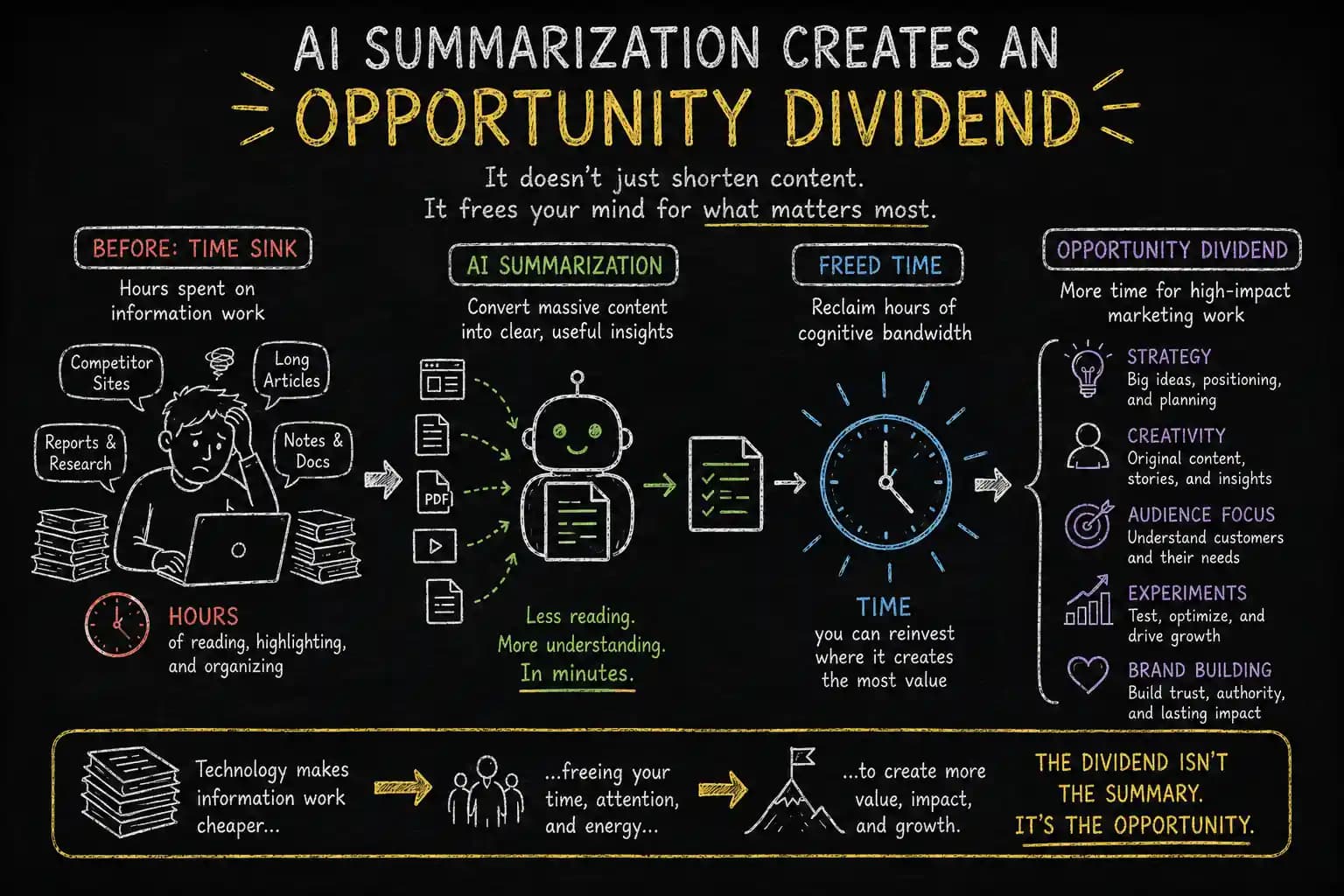
Students and teachers ask if AI study assistants can replace instructional design, but AI summaries often optimize compression instead of orientation and need Ausubel alignment. Effective AI educational workflows combine prompt engineering for learning, AI concept mapping, AI note-taking and adaptive tutoring with signaling, coherence and personalization principles to lower cognitive load.
| Guide | Ausubel's historical case → Practical application |
|---|---|
| Problem solved | Ausubel's 1960 experiment investigated whether students retained unfamiliar scientific material more effectively when given relevant overarching concepts before studying it. |
| Deliverable | Today, one can simply use ChatGPT to generate a summary, terminology glossary, mind map and learning roadmap. The goal should be surfacing the relevant terminology to activate pre-existing knowledge and connect unfamiliar concepts to existing knowledge before introducing detailed explanations. |
| Benefit | Ausubel's experiment found higher retention scores among students who received relevant advance organizers than among those given historical background of equal length. |
| Upskilling checklist | Chunk LLM tutoring outputs into manageable conceptual units, use comparative organizers to connect new ideas with existing knowledge, and progress from concrete examples toward learning roadmap abstractions. Require self-explanation of threshold concepts, verify AI-generated relationships against source material and use delayed transfer checks to establish whether students can independently apply what they have learned. |
How to Use Advance Organizers for Employee Onboarding, Corporate Training and Certification?
New hires and certification candidates in healthcare education, nursing education, finance, law, aviation, safety training and military training face unfamiliar processes and large knowledge domains simultaneously. Role-specific learning pathways, glossaries and workflow maps introduce organizational concepts before procedures, sequence responsibilities gradually and build from foundational principles to advanced practice.
| Guide | Training Within Industry's historical case → Practical application |
|---|---|
| Problem solved | During World War II, American factories faced urgent production demands and shortages of experienced workers. Training Within Industry addressed this problem by teaching supervisors to break unfamiliar jobs into manageable steps and identify critical safety and quality requirements. |
| Deliverable | TWI's Job Instruction method used job breakdown sheets identifying important steps, key points and reasons, followed by demonstration, supervised practice and follow-up. |
| Benefit | TWI standardized instruction and gave supervisors a repeatable method for teaching new workers. Modern onboarding programs can use comparable organizers to target faster onboarding, improved productivity, reduced training costs, higher completion rates and stronger certification exam performance. This can be done across healthcare education, nursing education, finance, law, aviation, safety training and military training. |
| Upskilling checklist | Execute daily until knowledge becomes operational competence. Use workflow maps to expose procedural gaps that reading conceals, validate competence through certification scenarios and build from foundational principles toward advanced practice. Withdraw scaffolding only after learners demonstrate reliable independent performance, while retaining mandatory checklists and safeguards for safety-critical tasks. |
The Luxury Within Our Grasp
When the final stone was set atop Florence's great cathedral, visitors admired its soaring dome, elegant arches, and intricate carvings. Few ever saw the fragile sheets of parchment that had guided generations of builders. An advance organizer is not the lesson any more than a cathedral blueprint is the cathedral. its true test of fidelity remains the same toaday as it was in Renaissance workshops: does the blueprint help builders understand the structure before they begin construction?
Perhaps that is why Ausubel's central insight has endured. Meaningful learning is less about accumulation and more about architecting. The organizer exists only to reveal that architecture before the work begins.
And perhaps that is why nobody visits Florence to admire the blueprint.
They come to admire the cathedral.
The blueprint quietly succeeded the moment it became unnecessary.