The Complete Guide to AI Summarization (2026)
A few years ago, I watched a senior executive survey with satisfaction the results of forty-five minutes of manual spreadsheet reconciliation that a junior analyst could have automated in ten. Scratch that, there was no executive and no analyst. Just me prompting the AI who spat out this "Linkedin Fake Story Template". Getting to the point, we are gonna discuss the difference between the ritual of effort—the performance of mastery—rather than mastery itself.
This is the deskilling panic in miniature: the belief that if a tool does something faster, the human who once did it slower has lost something essential. Much like the luddites before him, the executive, no doubt, would have portrayed his skills as evidence of him knowing the business inside-out. And, due to his seniority, the room would have nodded along, content with their cognitive stagnation.

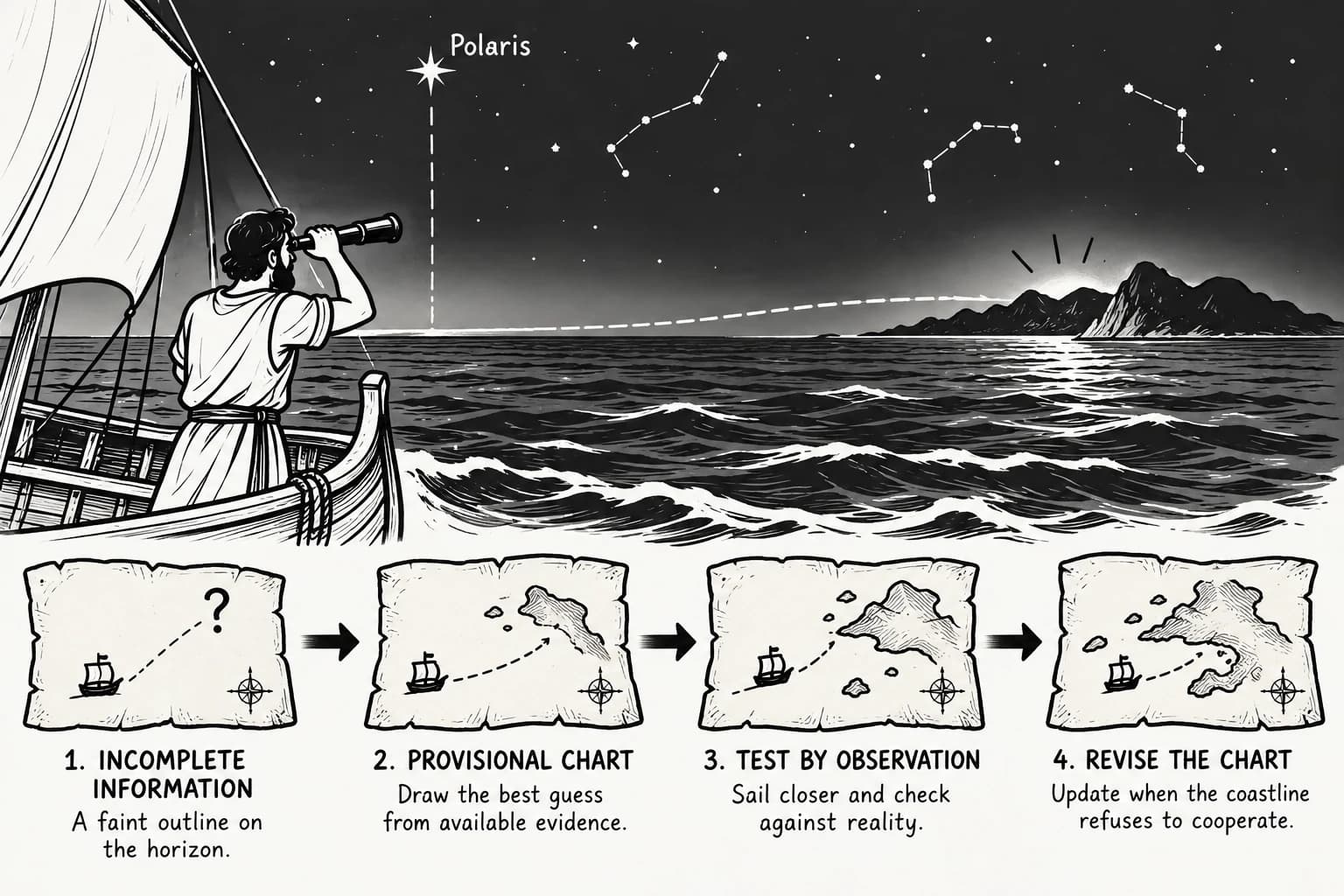
The right question is not whether AI summarization will make us obsolete. The right question is what shifts upstream when the downstream work disappears. This article is an argument that the pattern is older, clearer, and less catastrophic than we imagine—and that the real threat is not being replaced, but refusing to migrate.
Cognition Moves Upstream (Again)
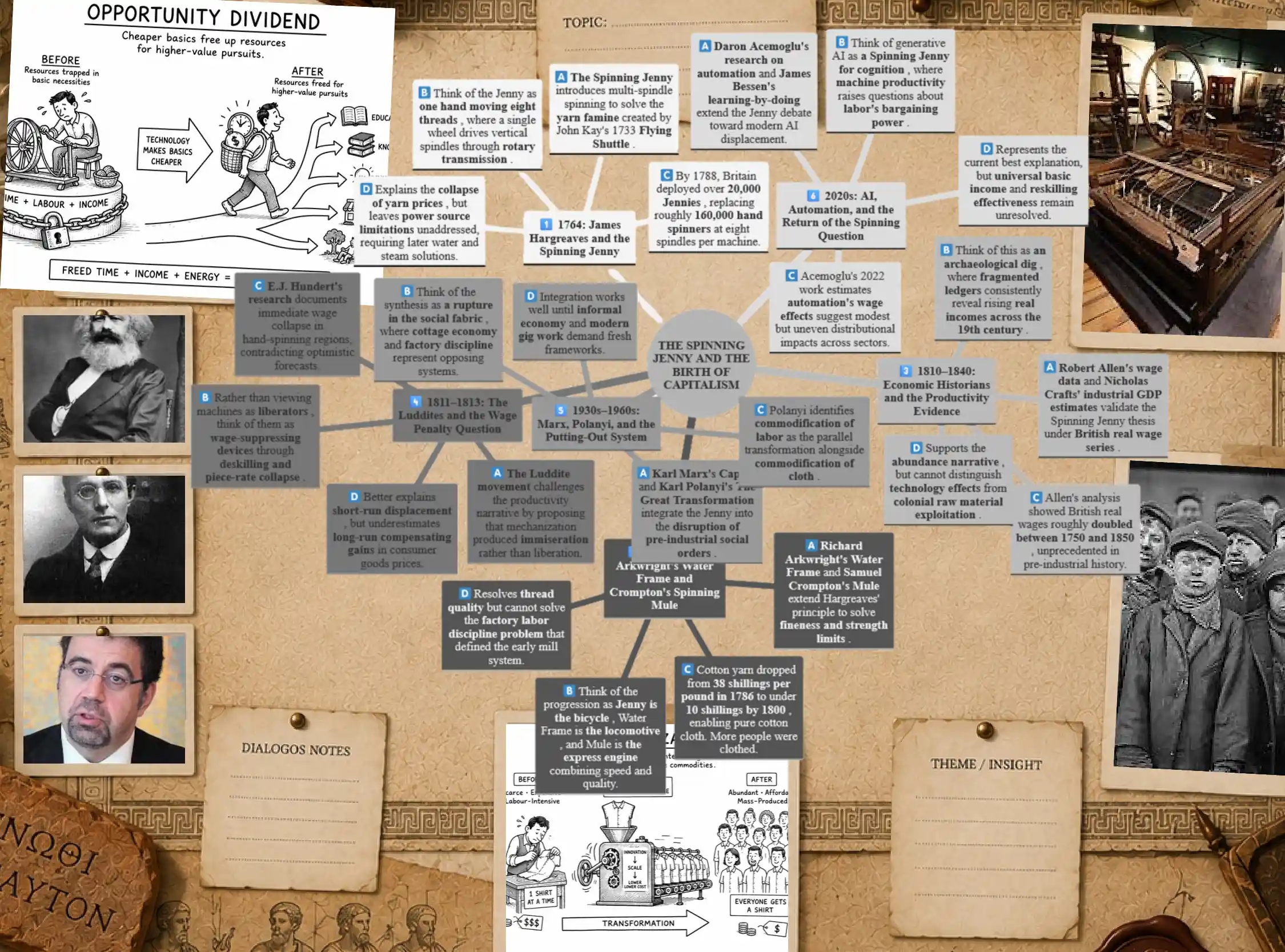
Every major industrial and information technology in human history has triggered the same response. First, moral panic followed by social upheavals that cause a whole lot of human suffering. Second, greedily consuming the subsidized goods now available at scale. Third, forgetting that the panic ever happened. Nobody complains about the easy availability of clothing but during the time of the spinning jenny, artisans were incensed at the thought of clothing the masses.
The printing press too was met with fears of chaos and eventual censorship by the Roman Catholic Church and Kings of various countries. Calculators were feared as the harbringers of the utter destruction of mathematical reasoning. Some parties who shall remain un named feared that the internet would erode academic authority. And today, we have Generative AI
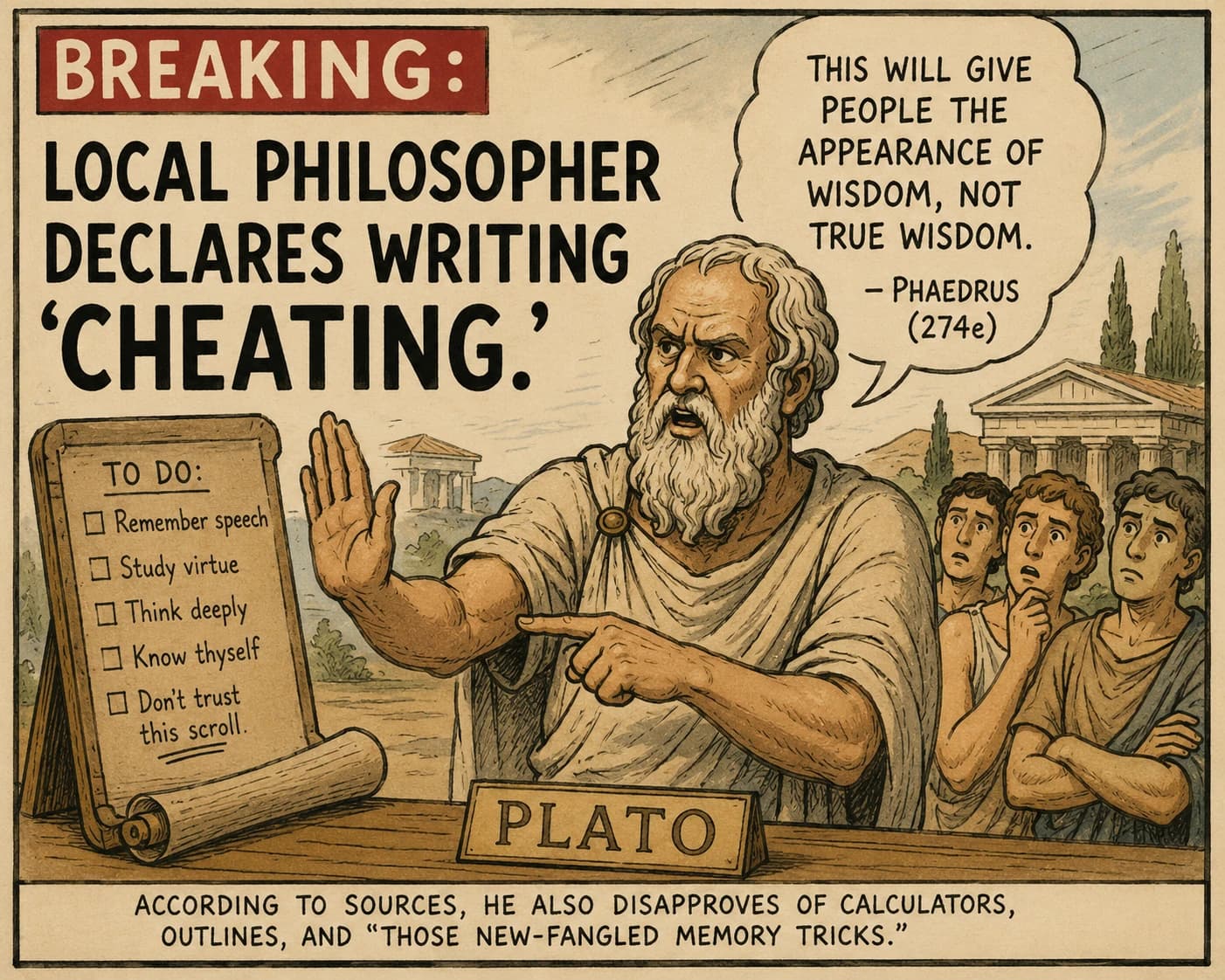
As the march of history shows us, more and more busy work was replaced and the time saved, was reinvested by the outliers into higher-order-thinking. The earlies of innovations, writing, did not make us dumber (Although Plato saw it a bit differently). It made memory external, which freed cognitive capacity for something else. That something else progressed from books, the printing press, the internet and now AI. With each step, more number of people had access to information.
AI summarization is the latest cognitive prosthesis, and it is provoking the same anxieties. This guide covers what AI summarization is, how it works, who benefits, and—most importantly—how you can offset the implicit deskillng.
What Is AI Summarization?
Extractive vs Abstractive Summarization
Think of extractive summarization as the algorithmic equivalent of a diligent student with a highlighter. It scans a document, ranks sentences by importance (using statistical and semantic signals), and stitches the most salient ones together. The output is a collage of the original text.
Abstractive summarization is different. This is the default mode for LLM's. Limited by harness and instructions that prevent exhaustive verbose outputs, they, as Plato once put it, "produce the appearance of understanding" and paraphrases, condenses, and reorganizes sentences into a surface level analysis of the source.
This is where the deskilling anxiety intensifies. If a machine can read a 300-page report and produce a coherent one-page summary, what happens to the human who once performed that synthesis? The answer, as we shall see, is indeed, deskilling and brainrot.
How AI Summarization Works
Beneath the hood, AI summarization relies on transformer architectures—the same family of models that power ChatGPT, Claude, and Gemini. These models represent text as embeddings, high-dimensional vectors that encode semantic meaning. The attention mechanism allows them to weigh relationships between words across vast context windows. When you ask for a summary, the model processes tokens, computes probabilities, and generates output one word at a time.
In the 21st century, the fronteir of human intellect, personified by several billion dollars' worth of silicon arranged in such a way that it can now condense Proust into a paragraph. The quartz is not thinking; it is calculating. But the output is, if prompted effectively, by any reasonable measure, a summary.
The advantage here is the time it takes to produce the summary. There is no denying the speed at which AI can take one from 0 to 1. Not using AI for the very purpose it was created for, generating text, is akin to the Roman Catholic Church once banning books and persecuting honest, hard working farmhands to the extent that they had to cross the atlantic. The gatekeepers often try to consolidate their own control but in the process, end up democratizing it.
Types of Content AI Can Summarize
The range is, frankly, absurd. Articles, essays, PDFs, books, research papers, web pages, emails, contracts, reports, lecture notes, handwritten notes, PowerPoint decks, audio files, podcasts, interviews, meetings, YouTube videos—if information exists in a format, transcripts exist and summarization is inevitable.
The demand is universal because the problem is universal: information is proliferating faster than human attention can accommodate. The average knowledge worker now consumes the equivalent of 174 newspapers worth of information daily. Albeit mostly in the form of fragmented social media posts and memes. Imagine if we reallocated all that reading to books, or at the very least, long form youtube content...

The Real Benefits of AI Summarization
Save Time
This is the obvious one. Reading a 150-page document or 35 minute youtube video takes time. Summarizing it with AI takes seconds. But the time saved is not the point. The point is what you do with that time instead. If the summary provides understanding, you just cut down a lot of overhead. Furthermore, that time saved can be spent doing secondary research, studying the original content for hidden details, and contemplation which, according to aristotle, "is the highest of human activities"
Improve Comprehension
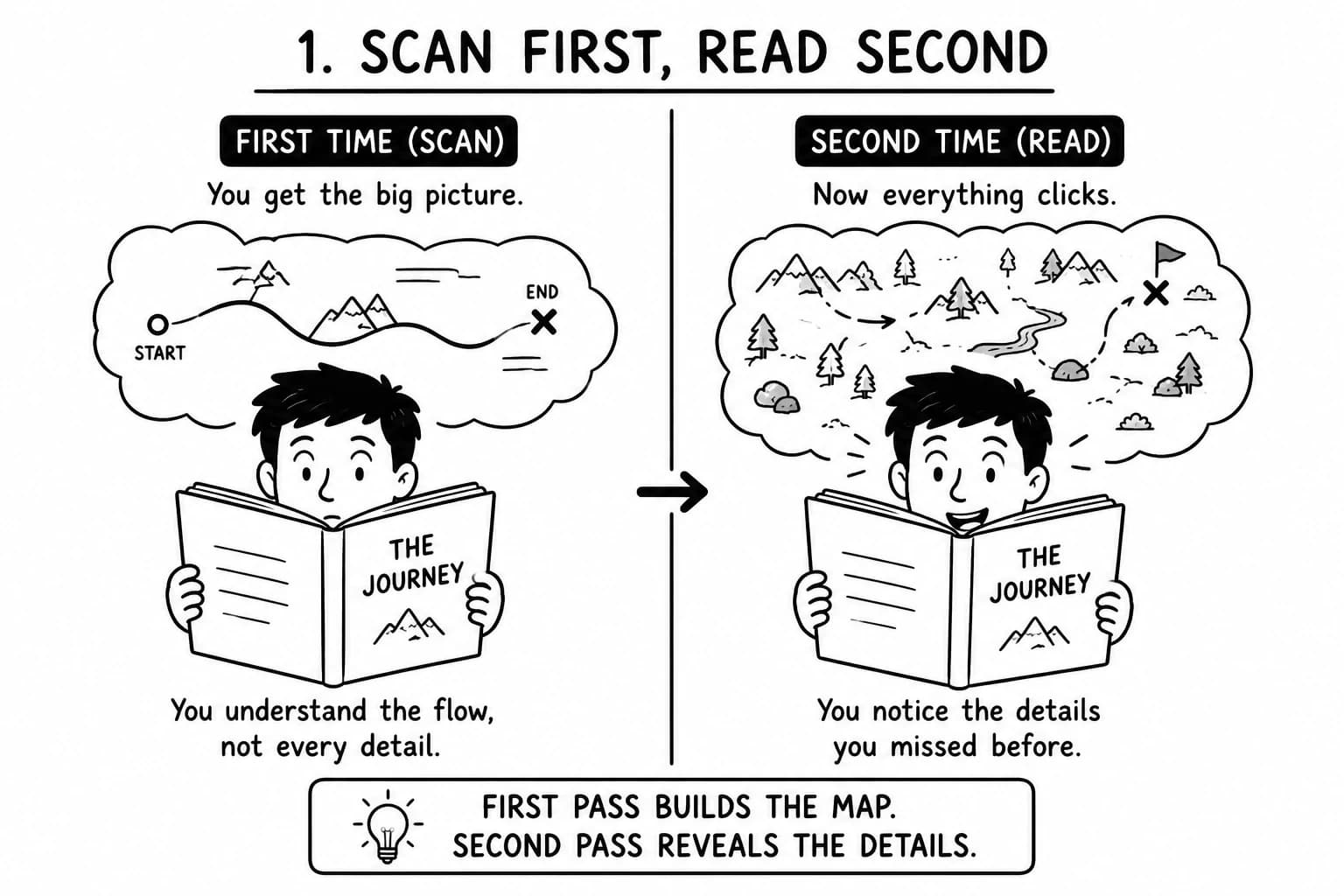
A good summary reveals the structure of an argument, the hierarchy of evidence, the relationship between claims. If used as a prelimnary briefing, it can enable feats such as watching the video at 2x speed with full focus and turning the summary into notes - doubling learning outcomes in fixed time frames.
Better Retention
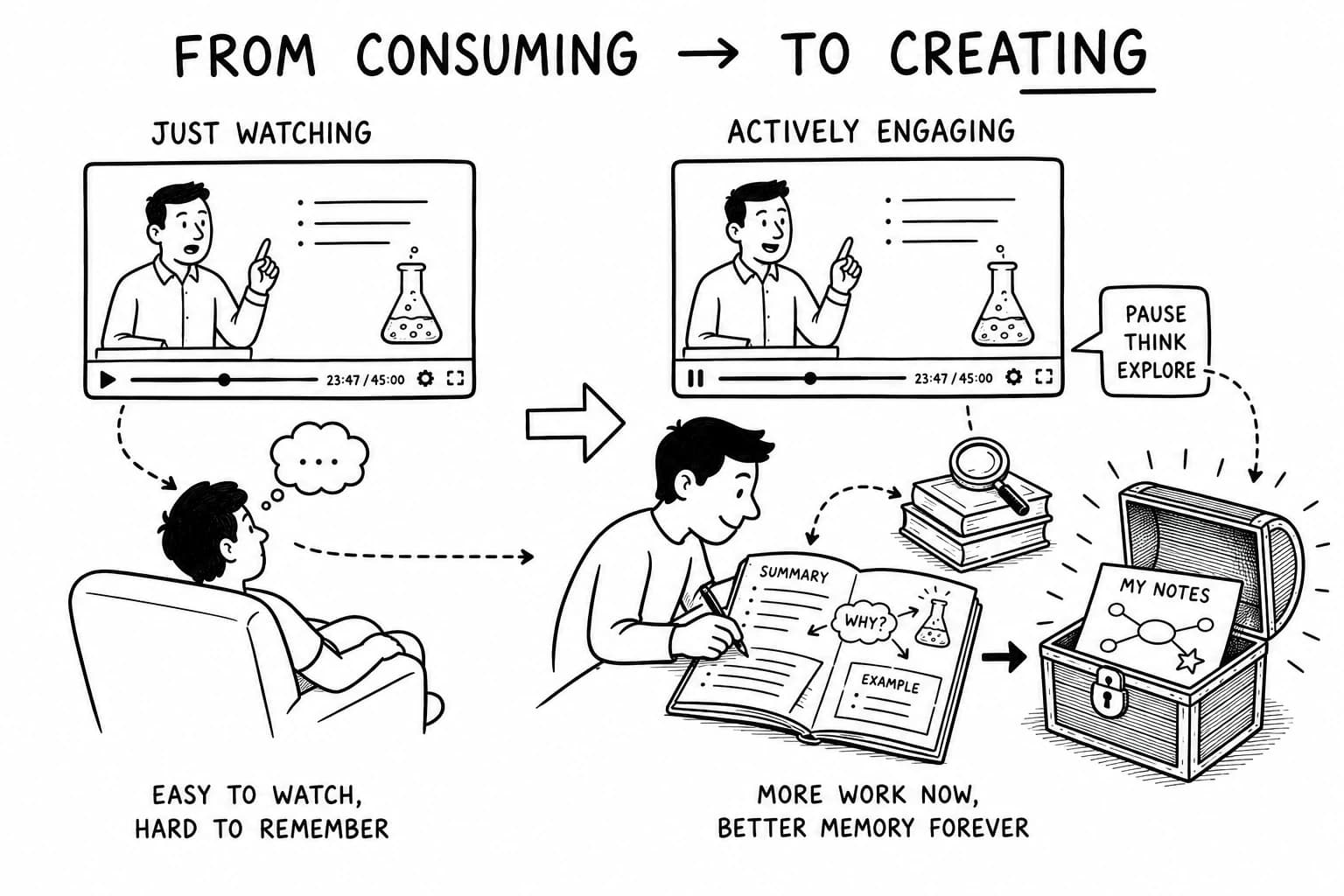
This is where the deskilling narrative collapses entirely. If you read a 50-page report and then write a summary, you remember the material. If you read a 50-page report and the AI writes the summary, you remember less. But if you read the AI summary and then iterate on it—researching, questioning, editing and expanding—you retain more than if you had just read the original without the handy summary that doubles as your notes.
The mechanism is active recall: the process of retrieving information from memory. Summaries are not a substitute for thinking; they are a catalyst for it.
Faster Research
Researchers spend an extraordinary amount of time reading literature. This is necessary, but it is also inefficient. AI summarization does not replace reading; it prioritizes it. Reading the summary of 50 papers, prioritizing the best and skimming through the rest may seem like intellectual laziness, although others would see it as working smart and hard.
Reduce Information Overload
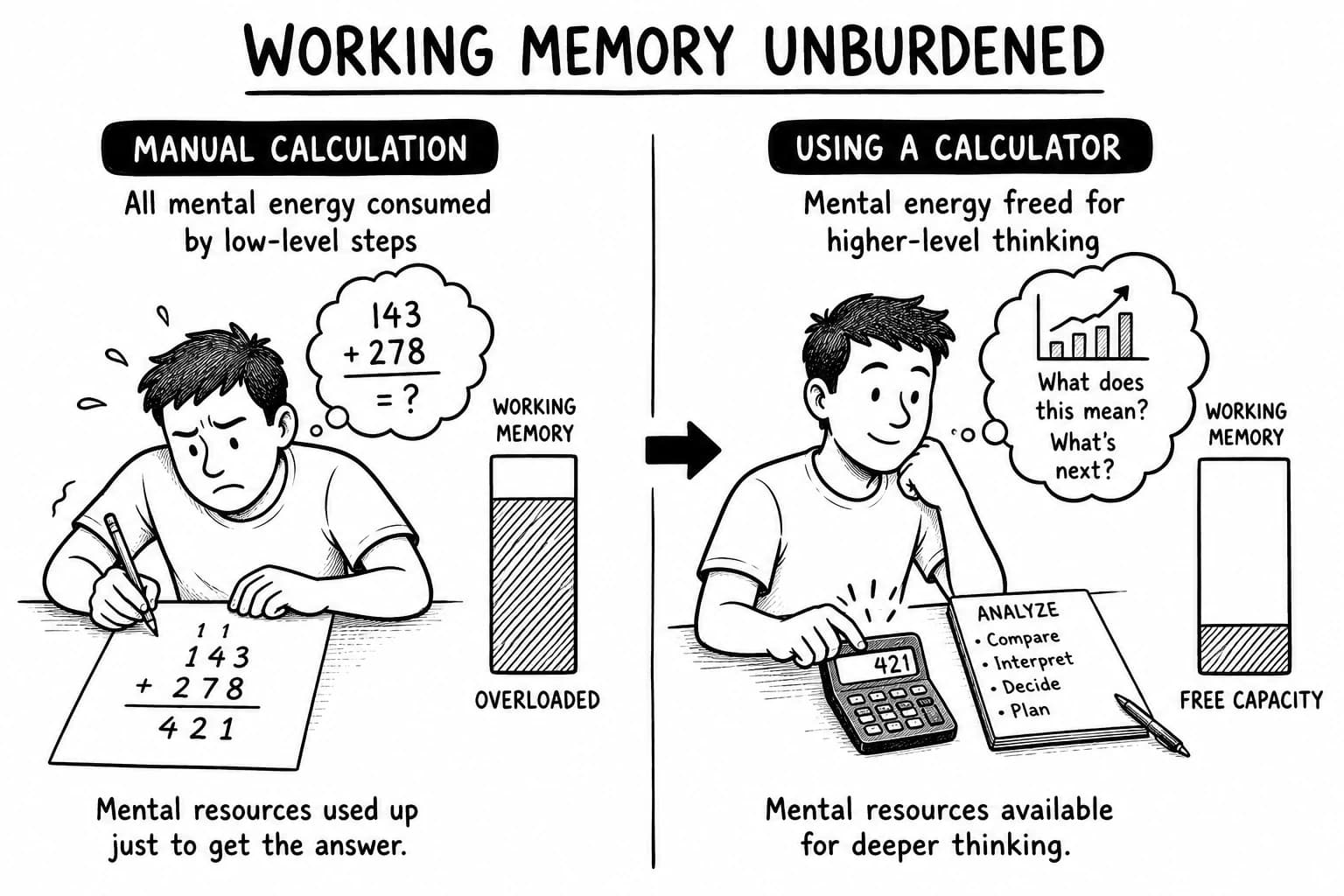
The psychological cost of information overload is not just time; it is cognitive depletion. The constant pressure to "keep up" with the content just increases anxiety and effort required for comprehension - leaving little room for higher order thinking. AI summarization does not eliminate the pressure, but it reduces the noise. It filters what matters so you already know what the content is about so your brain can skim through the pages.

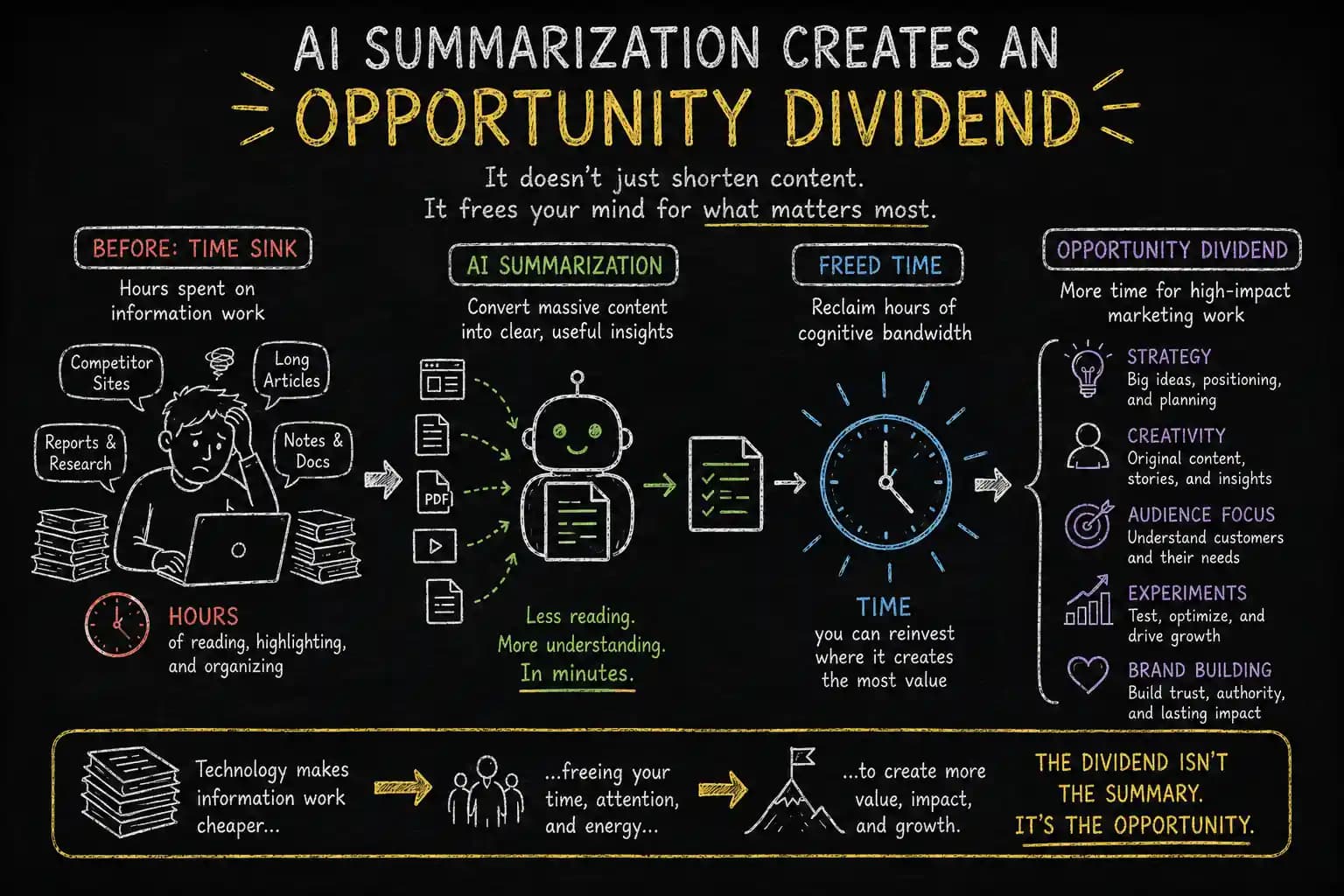
Buy Back Time with AI Summarization
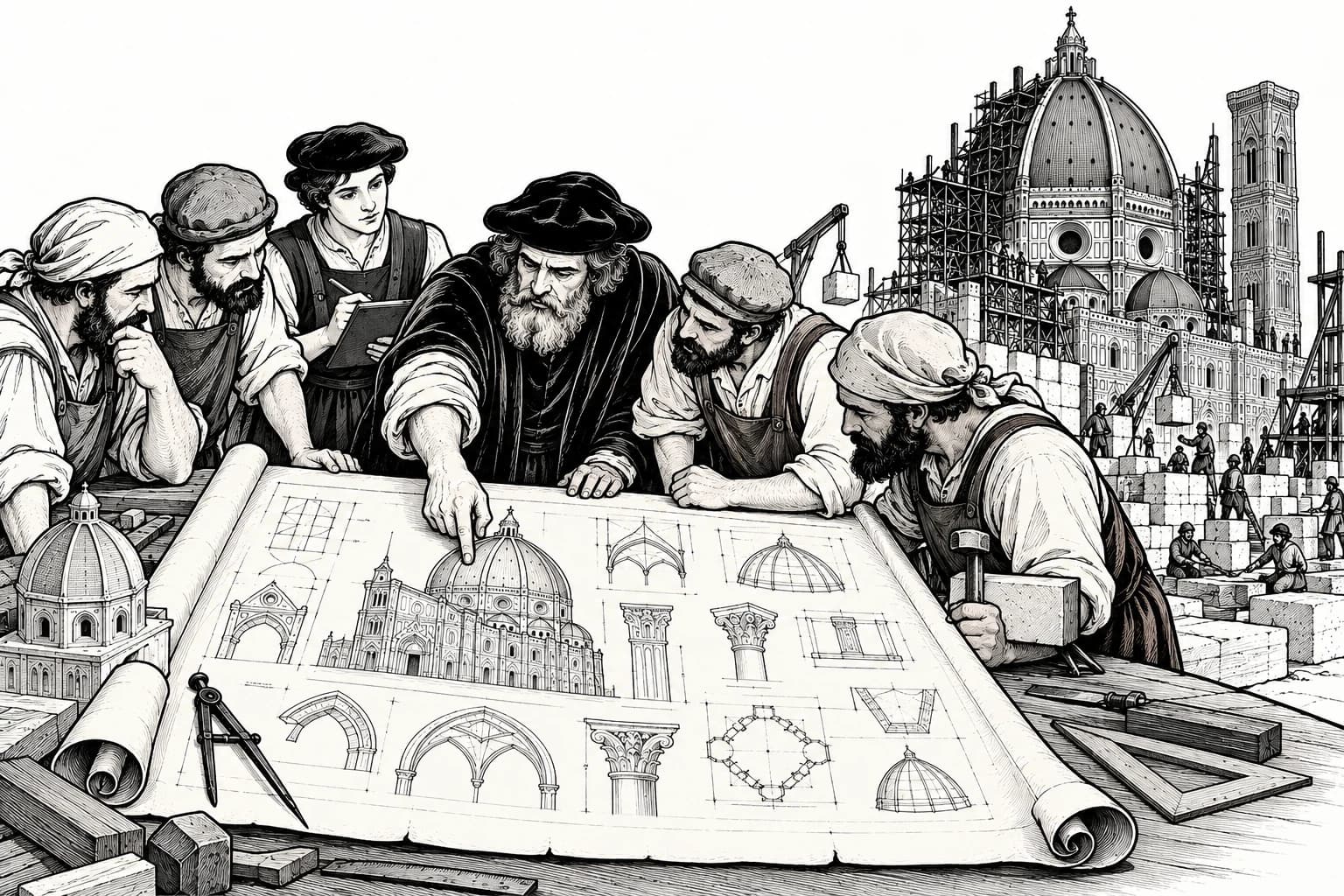
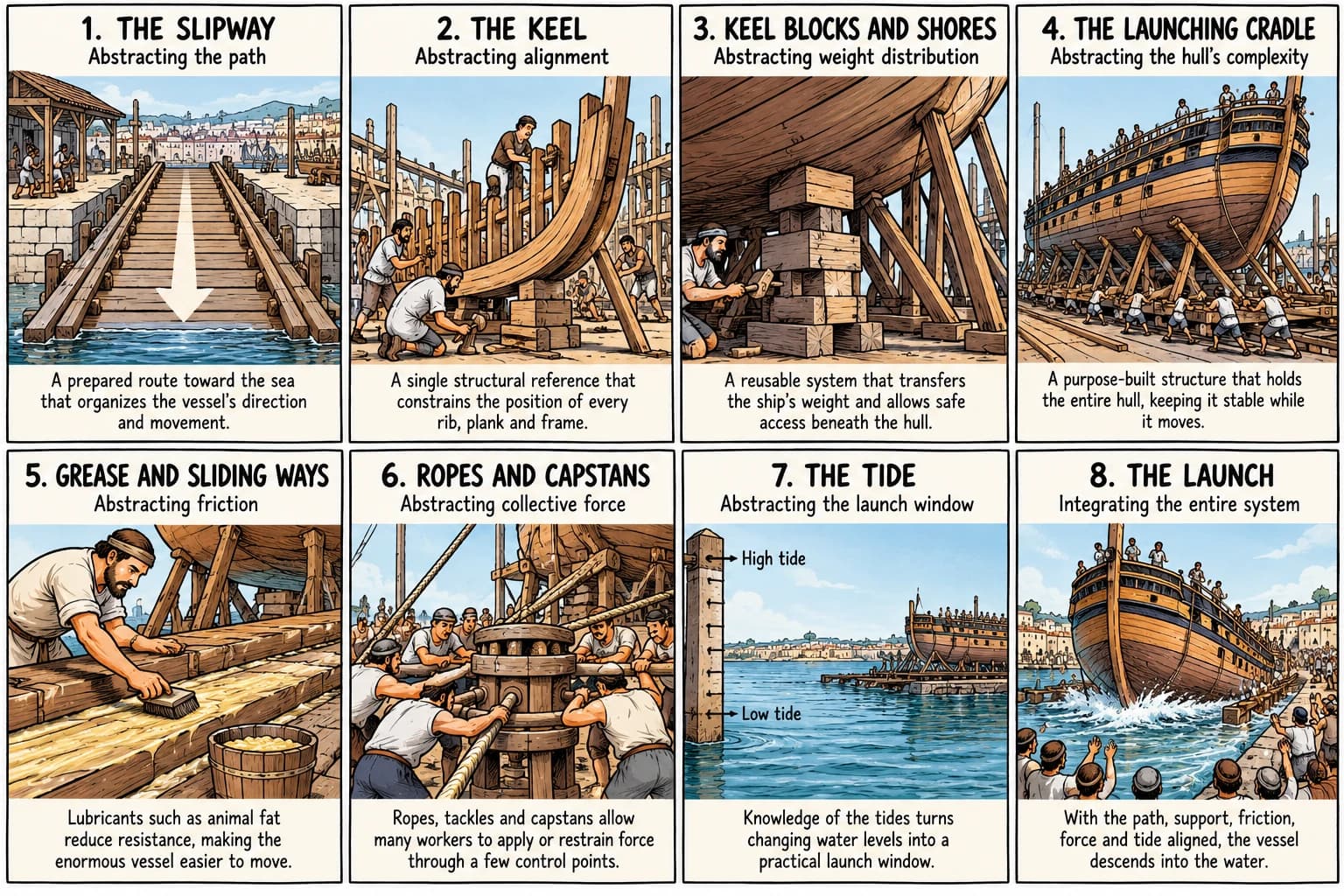
The printing press eliminated the painstaking task of copying books by hand, making knowledge abundant and allowing more people to read, learn, and create. The power loom transformed clothing from a labor-intensive craft into an affordable commodity, freeing households from countless hours of spinning and weaving. In each case, technology created the conditions that allowed us to reinvest our time, attention, and resources into higher-value pursuits.
Compress Hours of Reading into Minutes
Instead of spending hours reading reports, articles, PDFs, and documentation, AI extracts the key ideas, arguments, and conclusions in minutes.
Spend less time gathering information and more time applying it.
Decide What Deserves Your Attention
There is not enough to read every book, research paper, article, or YouTube video. AI provides a reliable first-pass understanding so you can quickly decide whether deeper exploration is worthwhile.
Invest your attention where it creates the highest return.
Accelerate Research
Rather than reading dozens of sources sequentially, summarize them in parallel and compare their findings, assumptions, and conclusions.
Researchers move from reading documents to synthesizing ideas.
Less information collection. More original thinking.
Learn Faster
Dense textbooks, lecture notes, and research papers become structured summaries, outlines, flashcards, and mind maps that are easier to review and retain.
Learning shifts from extracting information to understanding concepts.
Spend more time mastering ideas instead of extracting and organizing them.
Turn One Asset into Many
A single long-form article can become newsletters, social media posts, presentation notes, FAQs, email campaigns, and video scripts in minutes.
The bottleneck shifts from formatting content to deciding which ideas deserve amplification.
More time refining your message instead of rewriting it.
Make Better Decisions
Executives rarely need every detail—they need the important details.
AI summarizes reports, meeting notes, proposals, customer feedback, and market research into concise briefings that surface the information most relevant to a decision.
Less time processing information. More time making decisions.
Navigate Information Overload
Modern knowledge workers face thousands of pages of documentation, emails, articles, transcripts, and reports every week. AI filters the noise and surfaces the signal.
The scarce resource is no longer information.
It is attention.
Preserve your cognitive bandwidth for work that only humans can do.
The Pattern
Every use case follows the same structure:
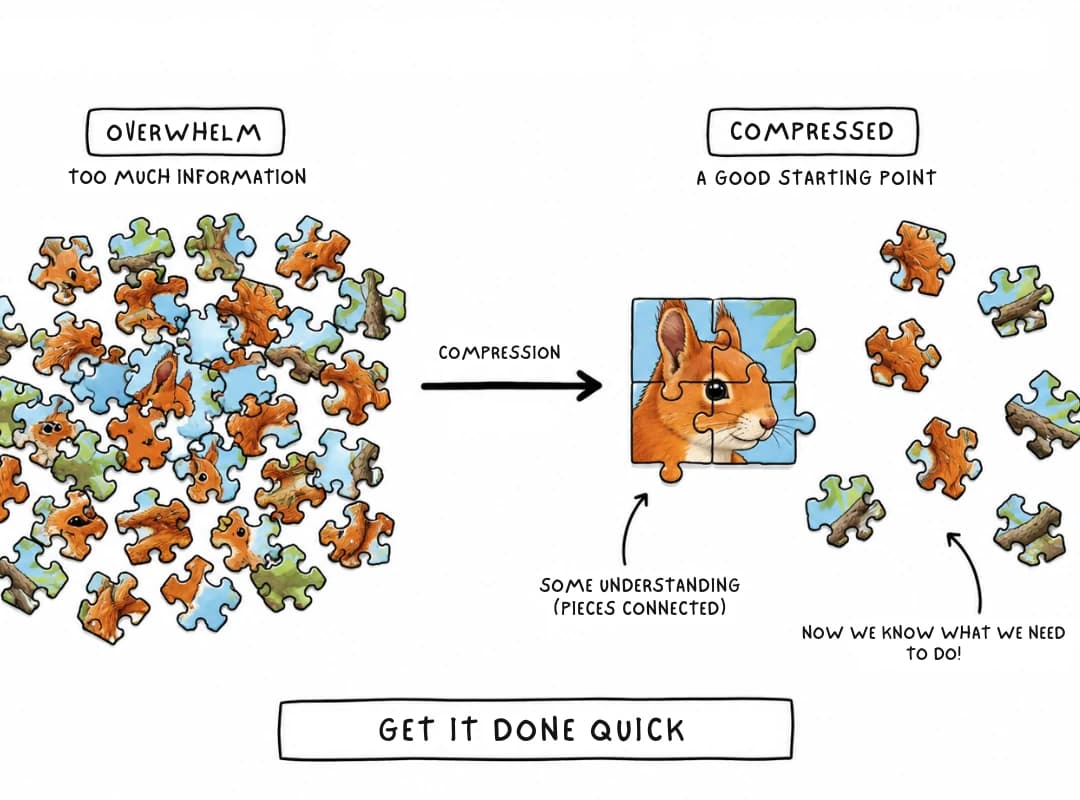
Large amount of information ↓ AI compresses and organizes it ↓ Time and mental effort are freed ↓ Those resources are reinvested into learning, creativity, strategy, and decision-making.
That is the Opportunity Dividend. AI summarization doesn't merely help you read faster—it changes where your attention is spent, allowing you to invest more of it in the activities that create the greatest value.
Best AI Prompt Examples
Prompt engineering is a skill, and it matters. Here are templates:
- "Summarize this document in 5 bullet points."
- "Provide an executive summary of this report, maximum 200 words."
- "Summarize this research paper, focusing on methodology and findings."
- "Condense this lecture into a one-page study guide."
Best AI Summarization Tools (2026)
| Tool | Free Plan | Long Documents | PDF Support | OCR | YouTube | AI Chat | Mind Maps | Pricing |
|---|---|---|---|---|---|---|---|---|
| ChatGPT | ✅ | ⚠️ Limited on Free / ✅ on Paid | ✅ | ✅ | ⚠️ Limited (link analysis) | ✅ | ❌ | Free / $20+ |
| Claude | ✅ | ✅ (200K+ context) | ✅ | ✅ | ❌ | ✅ | ❌ | Free / $20 |
| Gemini | ✅ | ✅ (very large context) | ✅ | ✅ | ✅ | ✅ | ❌ | Free / $20 |
| Y2Map | ✅ | ✅ | ✅ | ❌ | ✅ | ❌ | ✅ | Free / Pay as you go |
| Notion AI | ⚠️ Limited | ✅ | ✅ | ❌ | ❌ | ✅ | ❌ | ~$10/mo |
| Otter.ai | ✅ | ✅ | ❌ | ❌ | ✅ (meeting/video transcription) | ❌ | ❌ | Free / Pro |
| Perplexity | ✅ | ✅ | ✅ | ⚠️ Basic | ❌ | ✅ | ❌ | Free / $20 |
| NotebookLM | ✅ | ✅ | ✅ | ✅ | ✅ | ✅ | ✅ | Free / Plus |
The choice depends on your workflow. For students, Y2Map and NotebookLM are strong. For professionals, ChatGPT and Claude are versatile. For meeting transcription, Otter.ai is the default.
Features to Look for in an AI Summarizer
- Long document support: Can it handle 100+ pages?
- OCR: Can it read scanned PDFs? Although Baidu's unlimited OCR has commoditized this space and can parse 100s of pages in a single pass. Available for free on huggingspace.
- PDF/DOCX/PPT support: Native file handling.
- Audio support: Transcription + summarization.
- Citation support: Extracts and formats references.
- AI chat: Ask follow-up questions about the document.
- Mind maps and flashcards: Convert summaries into study materials.
- Export options: PDF, Markdown, DOCX.
- Browser extension: Summarize on the go.
- API access: For integration into existing workflows.
- Enterprise security: Encryption, compliance, data privacy.
Best Practices for AI Summarization
Choose the Right Length
A summary is not a single output. It is a spectrum. Use short summaries for scanning, medium summaries for review, and long summaries for deep understanding.
Prompt Engineering Matters
Be specific. Tell the AI what you need: a one-paragraph summary, a bulleted list, an executive summary, a study guide. The output is only as good as the instruction. The keyword here is "produce an extractative exhaustive summary"
Verify Facts
AI hallucinations are real. The model may invent citations, misattribute quotes, or fabricate data. The summary is a starting point, not a final product. Never base a decision solely on an AI summary. Always cross-check against the original.
Protect Confidential Information
Do not upload sensitive documents to free, unencrypted tools. Use enterprise-grade summarizers with data protection guarantees.
Beyond Summaries: Turn Information into Knowledge
Summaries are consumption. Knowledge is production. The best workflow converts summaries into active learning materials:
- Mind Maps: Visualize relationships between concepts.
- Flashcards: Test yourself on key points.
- Q&A: Generate questions from the summary.
- Quizzes: Self-assess comprehension.
- Study Guides: Consolidate into a single reference.
- Cornell Notes: Structure notes for review.
- Outlines: Prepare for writing or presentations.
- Annotations: Build on top of the summary and create materials that help you remember
The transition from consumption to production is where genuine learning occurs. AI summaries accelerate the consumption phase; they do not replace the production phase.
Limitations of AI Summarization
Loss of Context
Summaries necessarily omit nuance. The resulting artifact may be accurate but incomplete. The micro-expressions on the presenter's face when a certain topic was debated, the hidden details in the background images and inside jokes often seen on page 382 of a long book are often hard to catch. Always be aware of what was left out.
Hallucinations
AI models occasionally invent facts. This is a structural problem: the model does not know truth; it knows probability. Verification is mandatory.
Bias
The training data contains bias, and the model inherits it. Summaries may reflect cultural, political, or institutional biases present in the source material.
Technical Documents
Summaries of highly technical content are often inadequate. Mathematics, code, and specialized diagrams do not summarize well. The original remains the authoritative source.
Privacy and Security
The rule is simple: assume your data is being stored unless explicitly stated otherwise. Use enterprise tools for confidential work. Check for SOC 2, ISO 27001, HIPAA, and GDPR compliance if relevant to your industry.
AI Summarization for Different Industries
- Education: Study aids, lecture condensation, revision materials.
- Healthcare: Medical literature review, patient note summarization.
- Legal: Case law summarization, contract review.
- Finance: Report summarization, earnings call summaries.
- Marketing: Content briefing, competitor analysis.
- Journalism: News aggregation, interview summarization.
- Government: Policy document summarization, public briefing.
- Human Resources: Training material summarization.
- Sales: Prospect research, proposal review.
- Customer Support: Ticket summarization, knowledge base creation.
The pattern is consistent across all domains: AI summarization is a force multiplier, not a replacement.
How AI Summarization Impacts SEO and Content Marketing
AI reduces the cognitive cost of information work. Summarization tools are transforming how content is created and consumed. Routine cognitive tasks become dramatically cheaper, allowing people to redirect their time, attention, and creativity toward higher-order work. Here's a version that ties the section directly to the idea of the Opportunity Dividend—the notion that AI summarization doesn't merely save time; it reallocates cognitive resources toward higher-value work.
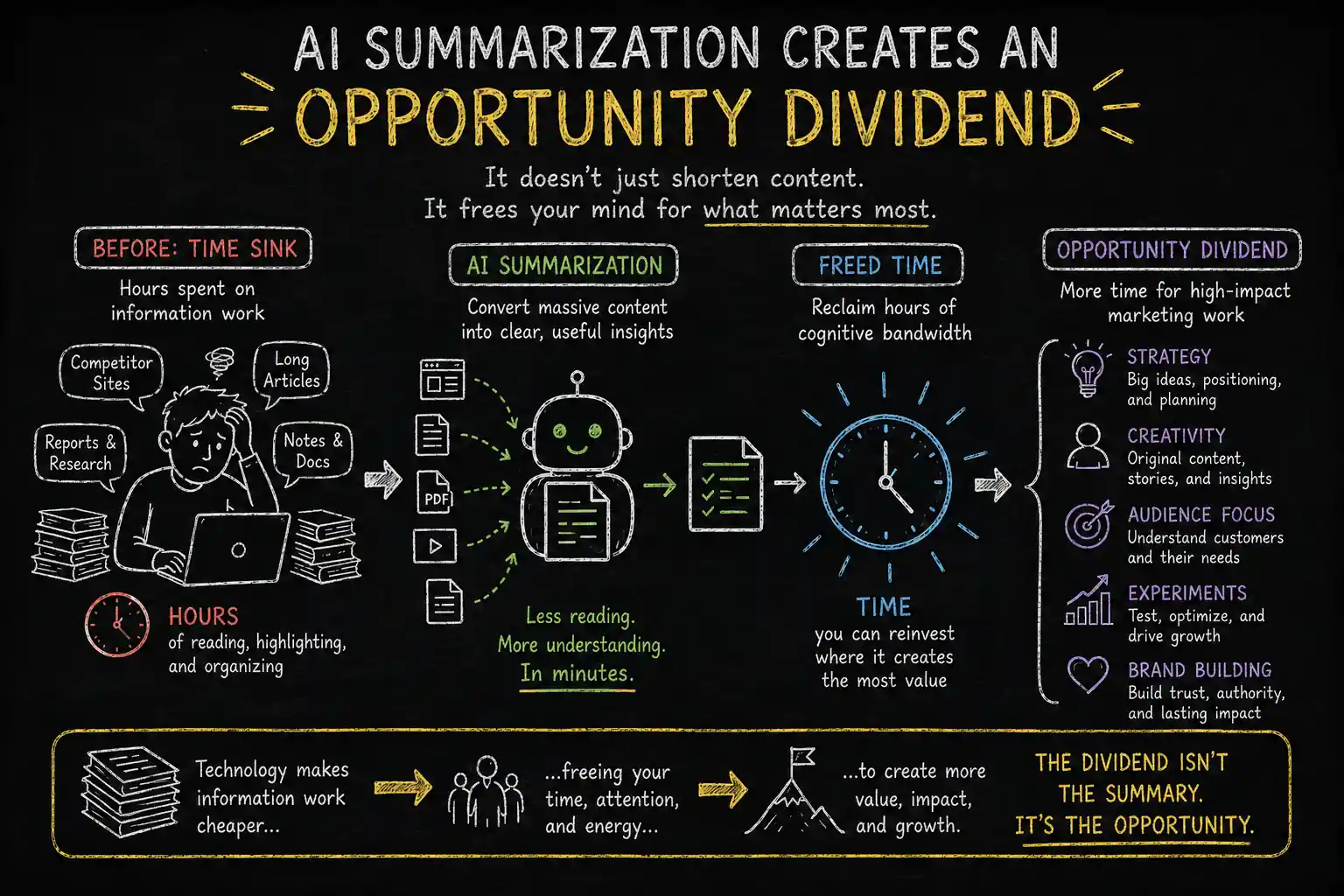
This is the Opportunity Dividend: technology makes a routine cognitive task dramatically cheaper, allowing people to redirect their time, attention, and creativity toward higher-order work.
-
Competitor Research Instead of spending hours reading multiple competitor websites, study their sitemaps, blogs, or documentation, Marketers can now quickly identify positioning, content gaps, and strategic opportunities.
-
Content Strategy Convert dozens of articles, reports, and customer interviews into a structured content roadmap, freeing more time for editorial planning and audience research.
-
Content Briefs Generate first-draft outlines in minutes, allowing writers to focus on storytelling, expertise, and original insights instead of document preparation.
-
Topic Discovery Summarize large collections of content to uncover recurring themes, emerging trends, and opportunities for pillar pages and topic clusters.
-
Content Repurposing Transform long-form content into newsletters, social media posts, email campaigns, FAQs, and video scripts without repeatedly reviewing the original material.
-
Knowledge Synthesis Combine research papers, blog posts, transcripts, and industry reports into concise summaries that accelerate learning and decision-making.
The effect is efficiency, not automation. Human's now have more time to developing original ideas, better understanding customer needs, run experiments, improve product messaging, build stronger brands and create genuinely differentiated content.
Here's a version that is more tightly connected to the Opportunity Dividend framework. Instead of simply listing AI capabilities, it emphasizes the progression from automation → freed cognitive resources → new opportunities.
Future of AI Summarization (2026–2030)
Every generation of technology commoditizes a scarce resource. The printing press commoditized books. The internet commoditized information. AI is retrieval and generation of text. At this point, one hopes that the reader is now well equipped with the context of history and its patterns, to figure out where this is going.
AI Agents
Agents will research, compare options, draft reports, and execute routine workflows, leaving humans to define objectives, constraints, priorities and actually do something with the summary, shifting from a task based mentality ("I made the summary") to an outcome focused mentality("What do i do with the summary").
Personalized Understanding
Much like how writing and numbers, once prized skills of the wealthy, became commonplace, Coding will become the new literacy and empower users to personalize their AI responses to their own background knowledge, goals, and expertise. Less time bridging knowledge gaps → Faster learning and better decisions.
Real-Time Intelligence
Meetings, lectures, interviews, and live events will be summarized continuously, surfacing decisions, action items, and unanswered questions while the conversation is still happening. Less note-taking, more context → Greater participation and deeper discussion.
Interactive Knowledge
Summaries will become living knowledge spaces rather than static outputs. Users will ask follow-up questions, inspect evidence, challenge assumptions, and explore ideas without rereading the original material. Less information retrieval → More critical thinking and curiosity led exploration.
Multimodal Understanding
AI will synthesize text, images, videos, presentations, documents, and audio into a single coherent understanding of a topic, regardless of format. Less context switching → More holistic understanding.
Autonomous Research
AI systems will independently discover sources, evaluate credibility, compare viewpoints, identify consensus and disagreement, and produce evidence-backed syntheses for human review. Less information gathering → More original insight and innovation.
The Next Opportunity Dividend
Each improvement in AI summarization follows the same historical pattern:
Routine cognitive work becomes cheaper. Human attention becomes more valuable.
The future of AI summarization is all about continually raising the ceiling on where human thinking is best applied.
As routine tasks are commoditized, the opportunity dividend grows. The scarce resource is no longer access to information—it is judgment, creativity, taste, and wisdom. These become the new sources of competitive advantage.
Conclusion
Every information technology in history has triggered the same existential anxiety. The scribe feared the printing press. The teacher feared the calculator. The parent feared the internet. And now, the knowledge worker fears the large language model. Authority is always shifting, much like control over the tools of production which has historically shifted from labour to capital.
But here is the pattern that never changes: the skill that becomes obsolete is not the skill that matters. Writing did not destroy memory; it externalized it, freeing cognitive capacity for higher-order reasoning. Calculators did not destroy mathematics; they automated arithmetic, freeing capacity for conceptual understanding. Search engines did not destroy knowledge; they indexed it, freeing capacity for synthesis.
The same is true for AI summarization. It is not a threat to understanding, unless you use it incorrectly. It is a tool for understanding. The risk is not that we will stop thinking. The risk is that we will stop engaging—that we will consume summaries without questioning them, accept outputs without verifying them, and mistake information for comprehension.

But that is not a failure of the technology. That is a failure of the user. The tool is neutral. The outcome depends on what we do with it.
Frequently Asked Questions About AI Text Summarization
What is AI text summarization?
AI text summarization uses artificial intelligence to identify the main ideas in a document and produce a shorter version that preserves its meaning. Rather than replacing comprehension, it removes much of the mechanical work of extracting information, allowing you to spend more time analyzing, questioning, and applying what you've learned.
Can AI summarize text? Can ChatGPT summarize text or PDFs? Is there a free AI text summarizer?
Yes. Modern AI tools can summarize articles, books, reports, research papers, emails, web pages, and PDFs, with many—including ChatGPT where supported—allowing you to upload documents directly. Many summarization tools also offer free plans, making AI summarization widely accessible; the real advantage comes not from saving time, but from reinvesting that cognitive dividend into deeper thinking instead of repetitive reading.
How do I use AI to summarize text, and what is the best AI or prompt to use?
The best AI summarizer is the one that lets you control the outcome rather than simply shortening text. To get the best results, provide the text (or upload your document), then specify the audience, length, format, and purpose—for example: "Summarize this report in 250 words for a business executive, highlighting the key findings, supporting evidence, and recommended actions." Modern conversational AI tools excel because they let you refine the summary through follow-up questions, compare viewpoints, and adapt the output to different readers. The real advantage isn't producing a faster summary—it's capturing the cognitive dividend by spending the time saved on analysis, synthesis, and better decision-making instead of information extraction.
Can AI summarize books, stories, and research papers?
Yes. AI can summarize novels, academic papers, reports, case studies, and long-form articles while adapting the output for different audiences or reading levels. For copyrighted works, it generates an original explanation rather than reproducing the source material.
How much do AI summarization tools cost?
Many AI summarizers offer free plans with limits on document size or monthly usage, while paid subscriptions typically unlock larger uploads, more advanced models, faster processing, and collaboration features. For most users, the return on investment isn't measured by minutes saved but by how effectively those saved minutes are reinvested into higher-value work.
What is the best way to summarize a text?
A good summary captures the central argument, includes only the essential supporting ideas, removes repetition and unnecessary detail, and presents the information clearly for its intended audience. AI accelerates this process, but reviewing the output ensures important nuance and context aren't lost.
How do I write a good summary?
Start by identifying the author's main argument, then select only the evidence needed to support it while removing examples, repetition, and minor details. Whether you write the summary yourself or begin with AI, the real intellectual work lies in evaluating what matters—not simply shortening the text.
What are the different types of summaries?
Common formats include executive summaries, abstracts, bullet-point summaries, chapter summaries, one-paragraph overviews, detailed analytical summaries, and key takeaways. The right format depends on whether your goal is rapid understanding, decision-making, research, or communication, but in every case the objective is the same: reduce information overload so your cognitive effort can shift toward interpretation rather than extraction.
Author's Note: The purpose of this guide is not to convince you that AI summarization is perfect. It is not. It is a tool with limitations, biases, and risks. But it is also a tool that, used wisely, can make you more effective, more informed, and more human—because it frees you to do the things that machines cannot do: question, create, and care. The question is not whether to use it. The question is how.