AI Book Summarizer: Summarize Books and Create Book Summary Mind Maps
In 1440, Gutenberg’s printing press helped turn scarce manuscripts into reproducible books. The new problem was wonderfully familiar: once knowledge became easier to obtain, people still had to decide what deserved their attention.
An AI book summarizer helps with that task by extracting a book’s central ideas, arguments, themes, and examples into structured notes.
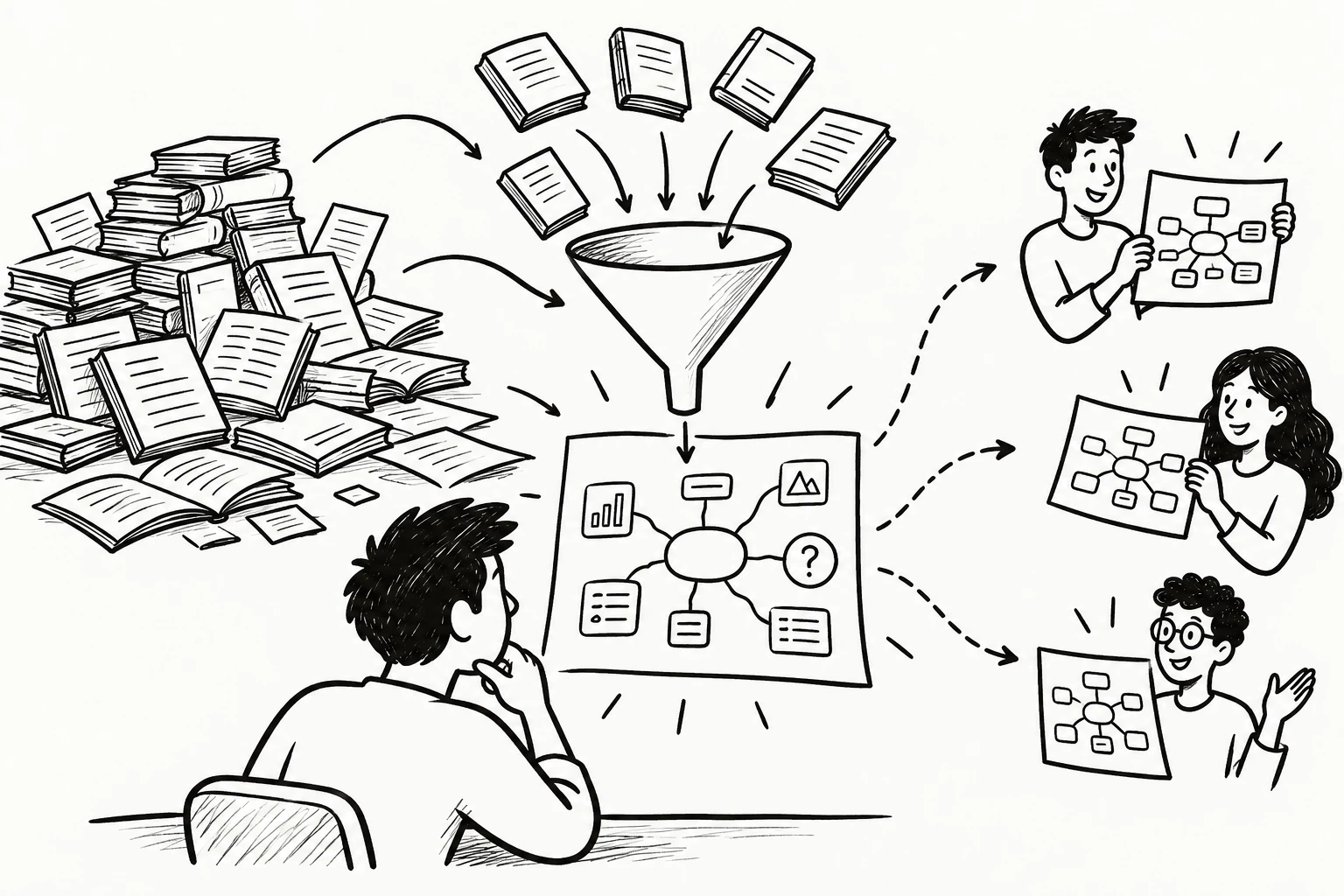 A 400-page book may contain one powerful argument, several hundred pages of reasoning, and enough footnotes to give a committee permanent employment. The useful question is which ideas hold the structure together.
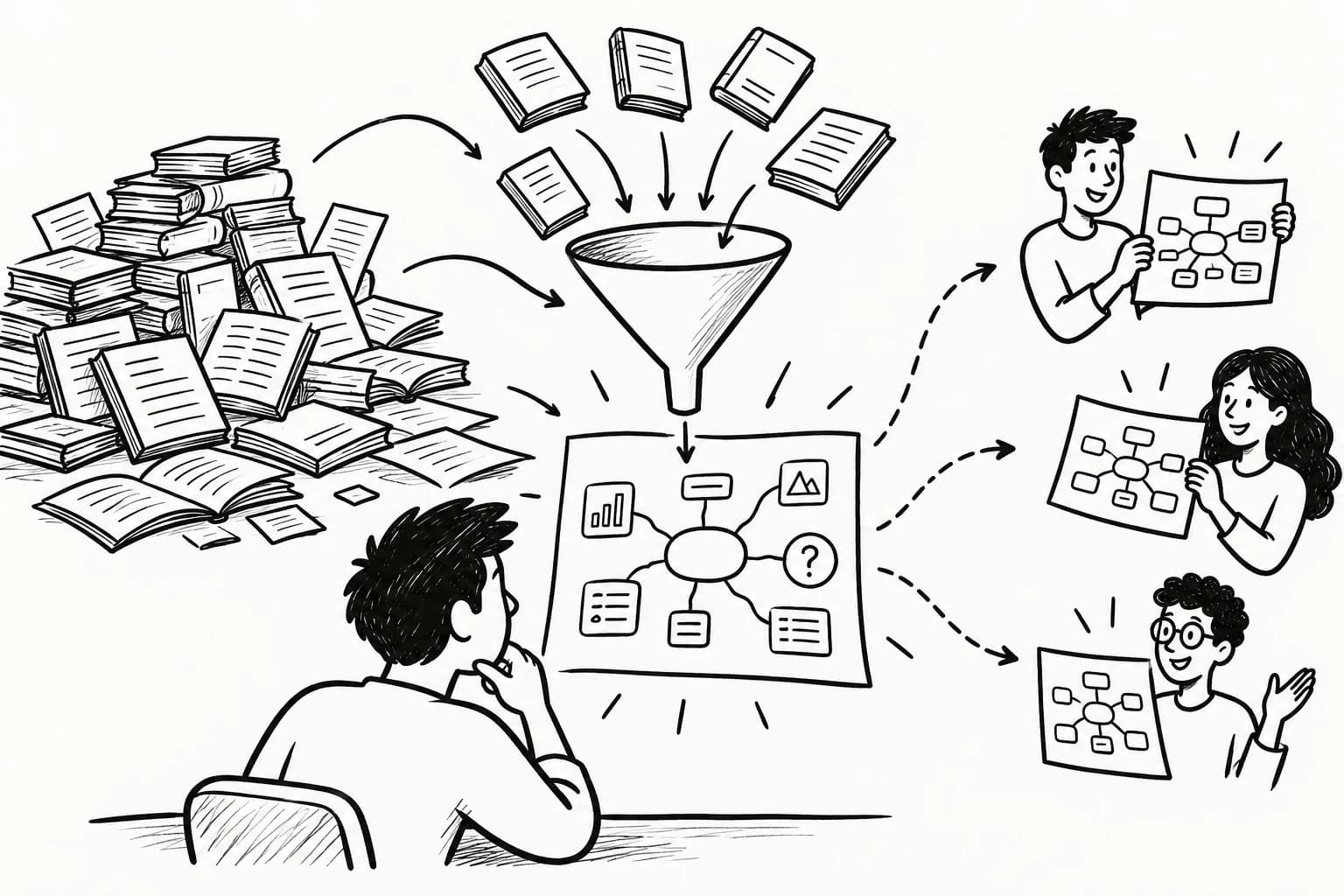
An AI book summary generator condenses the material; an AI mind map generator makes relationships between ideas visible. Together, they can turn reading into a navigable model that supports review, comparison, and application.
Summarize Books with AI
AI book summarization condenses long-form content while preserving the author’s main argument and the concepts that support it. A useful summary gives readers an overview of the book’s structure and a route back to important details.
Generate Book Summaries Online for Free
A free book summarizer online can extract a book’s central argument, themes, and key takeaways without requiring readers to write every note by hand. Free plans may limit document length, file formats, daily usage, exports, or chapter-level analysis.
Check those limits before feeding a 700-page textbook to a tool that can inspect only its opening pages. The tool’s plan is part of the workflow.
Summarize Books from PDFs and Documents
An AI book PDF summarizer extracts text from supported files and organizes it into a summary. The extraction step determines what the model can actually read.
Scanned pages may need optical character recognition (OCR); equations, tables, footnotes, and complex layouts can introduce errors. Check that the extracted text includes the chapters and details that carry the argument.
Create Structured Book Summaries
A structured book summary gives each detail a place in the author’s larger argument:
- Central thesis: The main claim or purpose of the book.
- Key arguments: The reasoning supporting that thesis.
- Core concepts: Ideas needed to understand the argument.
- Evidence and examples: Material that supports or illustrates the ideas.
- Conclusions and implications: What follows from the author’s reasoning.
This hierarchy makes notes easier to review and helps readers distinguish a central principle from an interesting anecdote that has applied for promotion.
Summarize Entire Books and Long Texts
Whole-book summarization must preserve the relationship between chapters and the book’s overall argument. Long-context processing, document parsing, and chapter-aware analysis affect how well a tool handles lengthy material.
A summary generated from a title or a few opening pages may reproduce familiar descriptions of a book while missing the claims in the edition being studied. When source-specific accuracy matters, summarize the supplied text and verify important claims against it.
Summarize Books in Different Languages
A multilingual book summarizer can process material written in another language or produce a summary in a preferred language. Translation preserves meaning across languages; summarization selects and compresses content.
When both are needed, check technical terms, names, quotations, and culturally specific references against the original. A fluent translation can still lose a distinction on which the author’s argument depends.
Generate Chapter-by-Chapter Book Summaries
A chapter-by-chapter book summary preserves the book’s organization while reducing the amount of material readers must revisit. It also reveals how an author develops an argument over time.
A whole-book overview provides orientation. Chapter-level notes preserve the progression of the reasoning and make individual claims easier to trace.
For each chapter, capture:
- Central idea: What question, claim, or problem does the chapter address?
- Key concepts: Which definitions and distinctions matter?
- Evidence and examples: What supports or illustrates the main idea?
- Takeaways: What conclusions follow, and under what conditions?
- Role in the whole book: How does the chapter support, qualify, or extend the larger argument?
For nonfiction, examine claims, reasoning, evidence, assumptions, and implications. For fiction, track themes, motivations, conflicts, and narrative development.
A hierarchical outline places the central thesis above major themes and supporting concepts. It also shows where examples, definitions, and arguments belong in the whole book, reducing the need to reread entire chapters to recover one relationship.
Most importantly, track how the ideas develop across chapters. One chapter may define a problem, another propose a mechanism, and later chapters examine consequences or applications. A whole-book summary can sound perfectly coherent while skipping the chapter that changes the author’s conclusion.
Record the author’s claim alongside its supporting evidence and relevant source reference. This produces sturdier notes than a collection of motivational sentences detached from their arguments. A slogan travels lightly; evidence tells you whether it should be allowed to drive.
Convert Book Summaries into AI Mind Maps
A book summary mind map organizes a book’s central idea, chapters, arguments, and concepts into a visual structure. It provides a navigable overview and makes relationships easier to inspect than a long sequence of notes.
An AI book mind map generator can turn supported book files or structured notes into a visual representation through text extraction, concept identification, hierarchy building, and visual presentation.
The quality test is whether the map captures relationships between ideas. A screen crowded with keywords is a word cloud wearing a management title.
Choose a map structure that fits the book
Different subjects need different visual structures:
- A business book may follow strategic principles, assumptions, and implementation steps.
- A history book may follow periods, causes, events, and consequences.
- A philosophy book may organize propositions alongside arguments, assumptions, and objections.
- A textbook may connect definitions, foundational concepts, equations, and applications.
- A novel may map characters, conflicts, turning points, and recurring themes.
A mind map provides a navigable hierarchy of ideas. A concept map can emphasize labelled relationships, such as causes, supports, contradicts, or depends on. Choose the structure that best represents the knowledge.
Connect ideas across chapters
Concept relationships show how different parts of a book support, explain, qualify, or extend one another. A map can connect principles across chapters and link an abstract theory to its practical applications.
These links help readers form a coherent mental model. Label uncertain relationships carefully: visual proximity can suggest a connection, but it cannot prove one.
Compare ideas across multiple books
Cross-book maps help compare how authors approach the same subject. They can reveal shared principles, competing explanations, different assumptions, and disagreements about evidence.
Preserve source references for major claims. A synthesis is stronger when readers can trace each branch back to the book that supports it. Keep disagreements visible instead of forcing different explanations into a single, tidy framework.
Use maps to study and remember
Students can map textbook concepts, prepare revision notes, and connect ideas across lessons. Independent learners can build a reference library of concepts and frameworks.
Maps become more useful when readers reconstruct the relationships from memory, explain each branch, and test whether the ideas apply to a new problem. Producing a beautiful map is a craft; being able to explain it without looking is evidence of learning.
Key Features of an AI Book Summarizer
A useful AI book summarizer combines reliable source handling, structured analysis, customizable outputs, and ways to revisit the resulting knowledge.
Supported files and text extraction
Book summarization tools may support PDF, EPUB, DOCX, and plain text, depending on the product. Scanned pages, complex formatting, equations, and illustrations may need extra processing.
Check file limits and extraction quality before using the output for detailed study. Opening a file is not the same as reading every element correctly.
Fiction and nonfiction support
A fiction summary focuses on plot, characters, conflicts, themes, and narrative structure. A nonfiction book summarizer focuses on the thesis, arguments, evidence, principles, and conclusions.
Genre-aware analysis follows the structure that gives the material meaning. Character relationships explain a novel’s development; frameworks, assumptions, and evidence help readers evaluate a business book’s recommendations.
Customizable summaries and visual structures
A beginner may need definitions and plain-language explanations; a student may need chapter notes; a professional may need principles, implementation steps, and limitations; a book club may need themes and discussion questions.
Set the output length according to the information the task requires. A one-paragraph overview and a chapter-level analysis serve different decisions.
Visual knowledge structures organize concepts, categories, and relationships. Editing lets readers correct extracted concepts, add interpretations, and reorganize the structure. Export options vary by tool and may include images, documents, or mind map formats.
Keep source references beside important claims so later verification remains possible. Distinguish paraphrases from verbatim quotations, and retain page or section references when available.
Accuracy and chapter coverage
AI summaries can omit qualifications, misattribute claims, or generate plausible statements the source does not support. Verify important numbers, quotations, technical definitions, and conclusions against the original text.
Check that every chapter is represented and that the summary preserves the relationships between ideas. Verification turns a convenient draft into a dependable learning resource.
Related tools for different tasks
The source and intended outcome determine which tool is appropriate:
- AI PDF summarizer: Condenses reports, manuals, articles, and other PDF material that may not require book-specific chapter analysis.
- AI document summarizer: Creates structured notes or concise overviews from supported documents for professional, educational, and personal workflows.
- AI mind map generator: Transforms text and other supported sources into visual structures of connected ideas.
- AI study tools: Support revision through study guides, flashcards, and practice questions.
- AI research paper summarizer: Organizes academic papers around research questions, methods, findings, evidence, and limitations.
Choose the tool that fits the source and the outcome you need.
How to Summarize a Book with AI
A repeatable workflow converts a book into notes readers can verify, explore, and reuse.
1. Upload a book or enter its text
Select a supported file or provide the text. Confirm that the extracted content includes the relevant chapters and supporting material.
For long books, check the table of contents and chapter boundaries before generating a summary. Missing text produces missing knowledge with remarkable efficiency.
2. Generate a structured book summary
Ask the AI to identify the central thesis, major arguments, recurring themes, and supporting evidence. Specify the audience and desired level of detail.
Use this reusable prompt:
Summarize the supplied book chapter by chapter.
For the whole book, identify the central thesis, major arguments, recurring themes, and conclusions. For each chapter, extract its main idea, key concepts, important definitions, supporting evidence, examples, and takeaways.
Explain how each chapter contributes to the overall argument. Preserve important qualifications and distinguish the author's claims from your interpretations. Do not invent details that are absent from the supplied text. Flag uncertain points for verification against the source.
Organize the output into a hierarchical outline. Include chapter headings and page or section references when available.
Book text: [Provide the text or supported source material.]
For fiction, adapt the prompt to emphasize plot development, character motivations, conflicts, themes, and narrative structure. A prompt works like a research protocol: clear questions make the output easier to assess.
3. Review chapter summaries and key takeaways
Compare each chapter summary with the original. Check that the main points, important examples, and conclusions are represented accurately.
Chapter-level review can expose omissions and contradictions that disappear inside a polished whole-book summary. Confirm that the combined overview reflects the supplied edition.
4. Convert the verified summary into a mind map
Transform the verified summary into a visual hierarchy of the central thesis, major themes, arguments, and supporting concepts.
With y2map, readers can organize information into a visual learning structure. The mind map complements the written summary by making relationships easier to inspect and explore.
5. Export and organize your book notes
Save the summary, map, source references, and personal annotations together. Organizing notes by book, topic, and recurring concept creates a reusable knowledge library.
Over time, connect ideas across books and retrieve the concepts relevant to a current question. A library becomes valuable when its contents can be found and used, not when its folder count reaches three digits.
6. Create flashcards and test your understanding
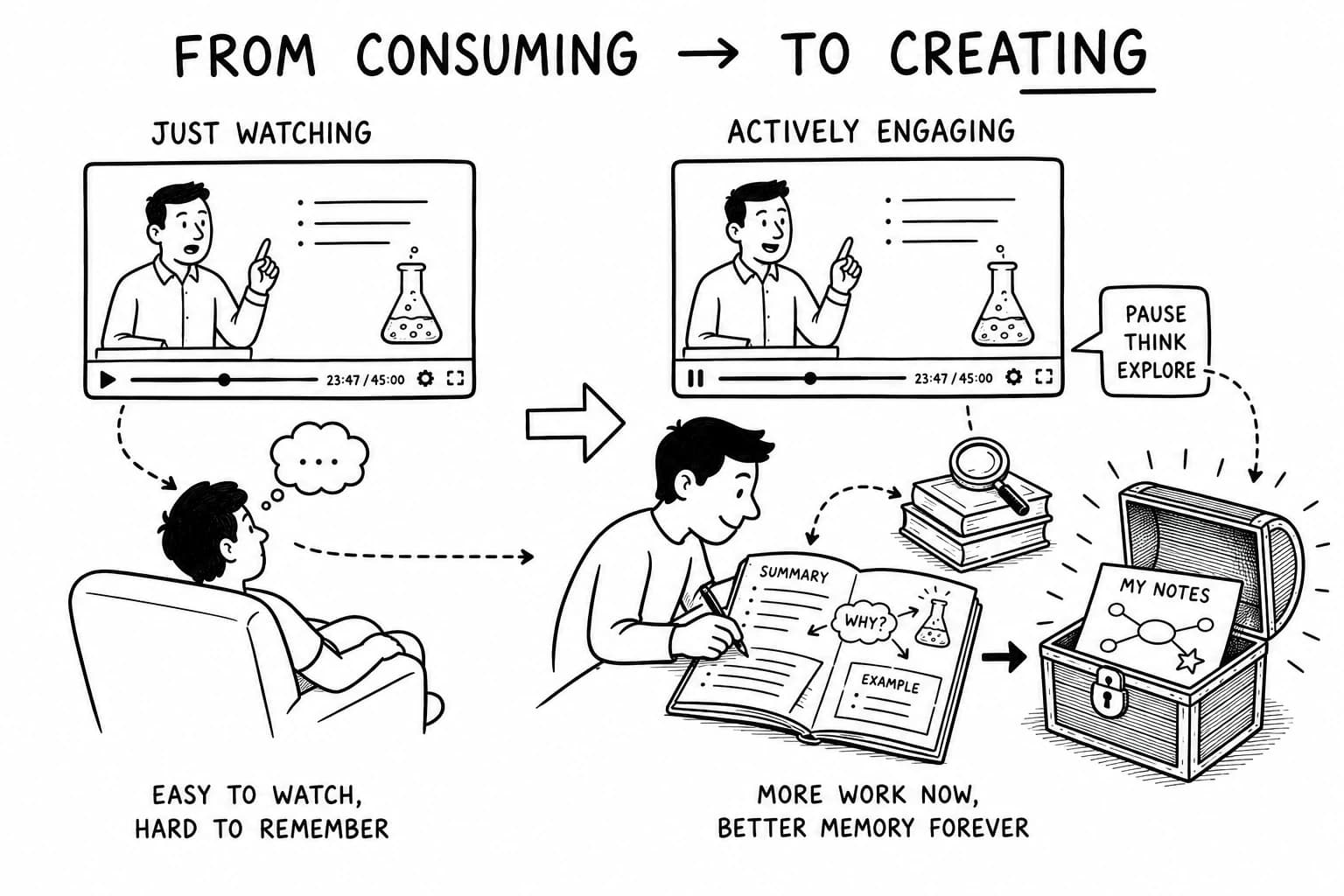
Flashcards and study questions turn a summary into an opportunity for retrieval practice. Ask yourself to explain a concept, identify an argument’s assumptions, compare principles, or apply a framework to a new situation.
Retrieving an answer reveals what you can recall and what needs review. Roediger and Karpicke (2006) found that retrieval practice improved delayed retention compared with repeated study, even when rereading produced greater confidence in the short term (study).
Use summaries to organize material, then test whether you can reconstruct it.
Benefits of AI Book Summarization
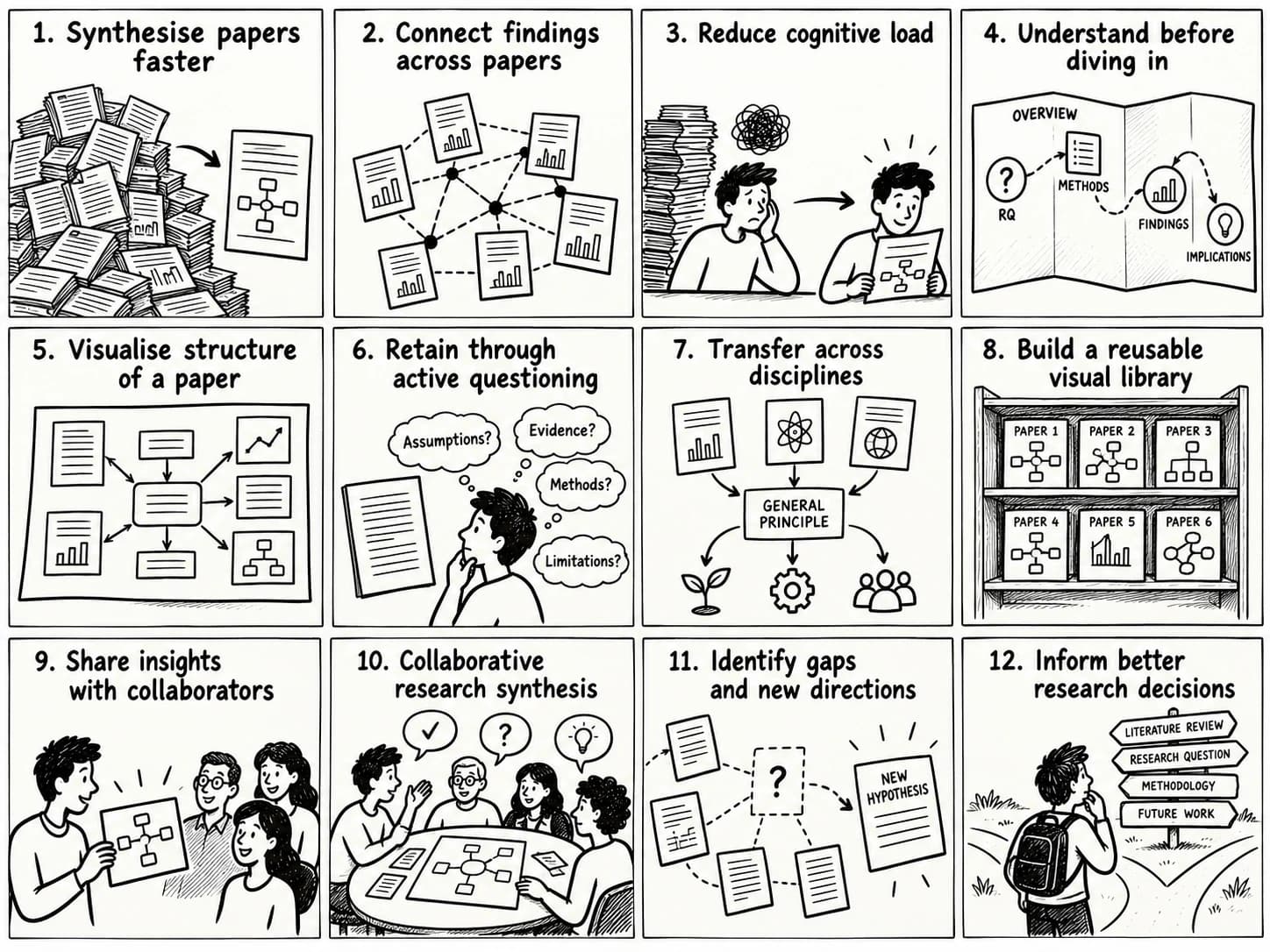
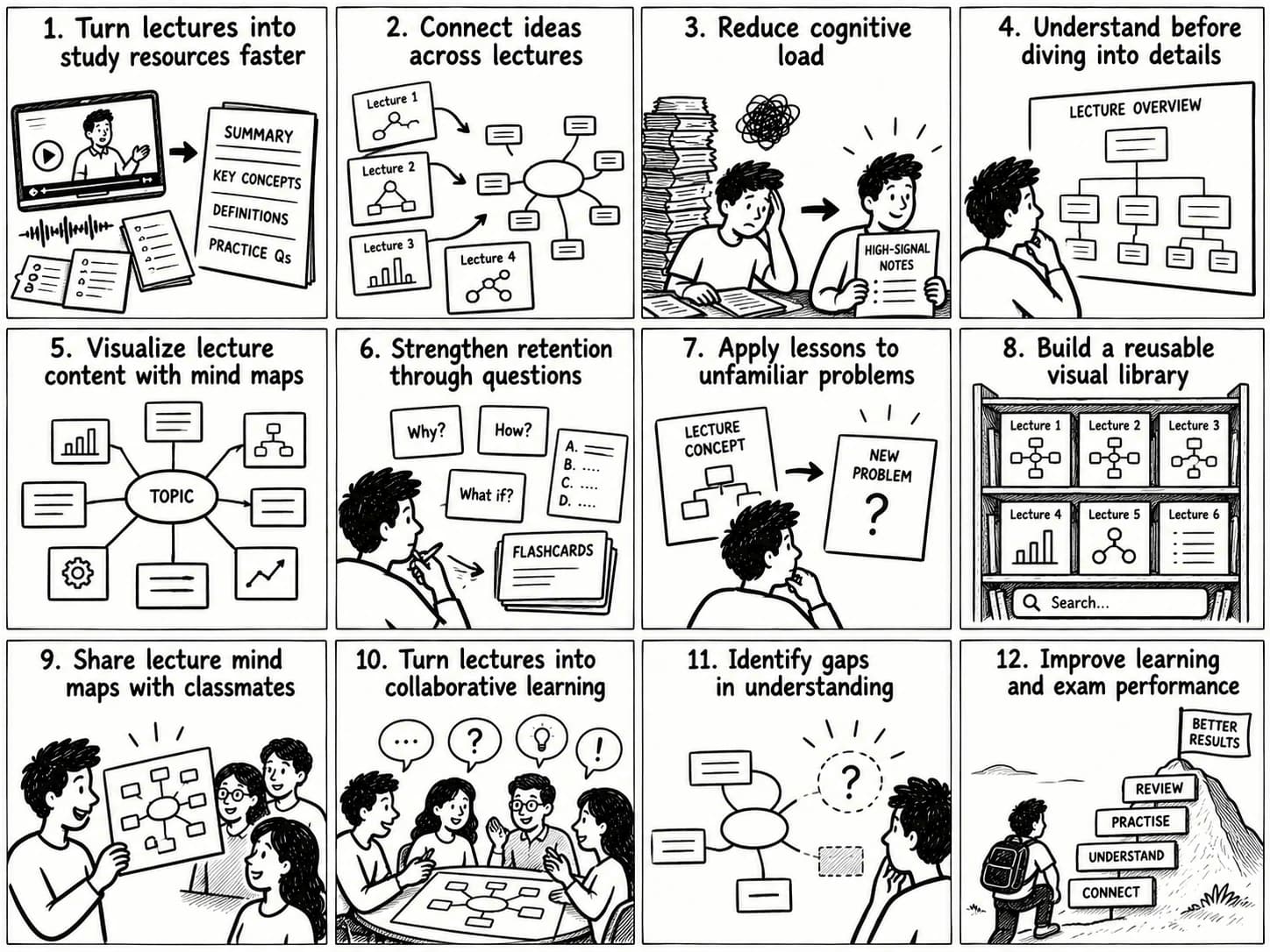
AI book summarization reduces the effort required to organize long texts and makes important information easier to revisit. Its learning value depends on what readers do with the output.
Understand complex ideas faster
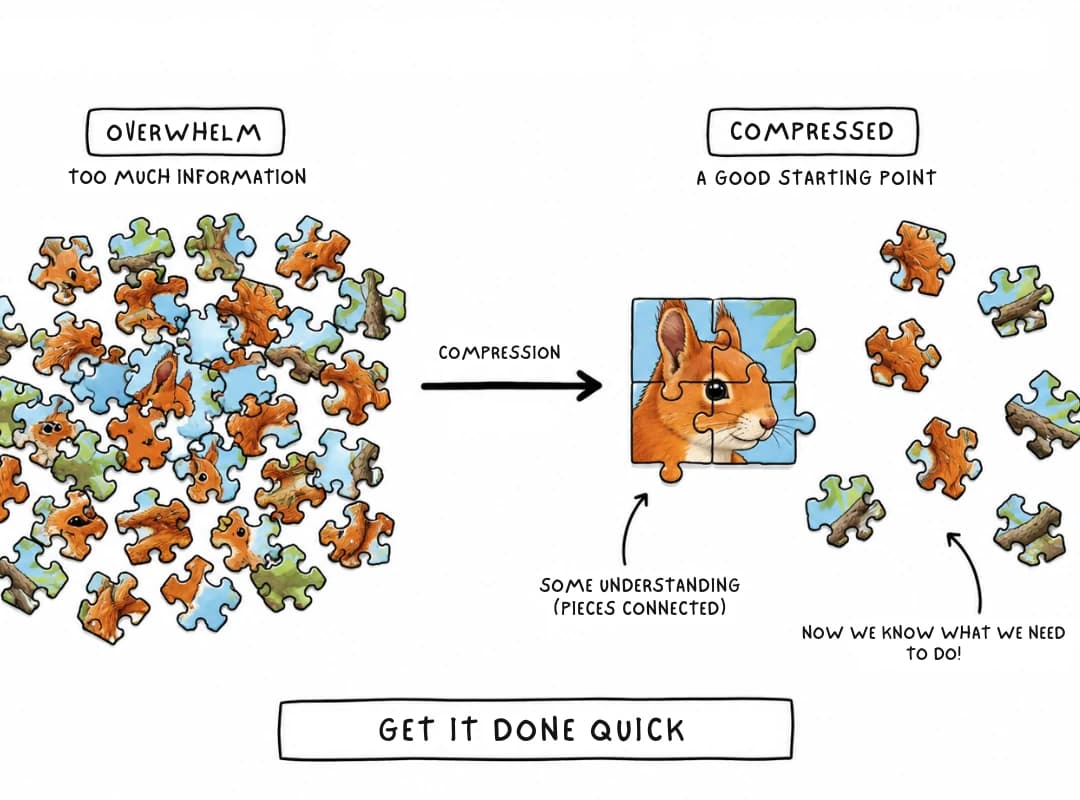
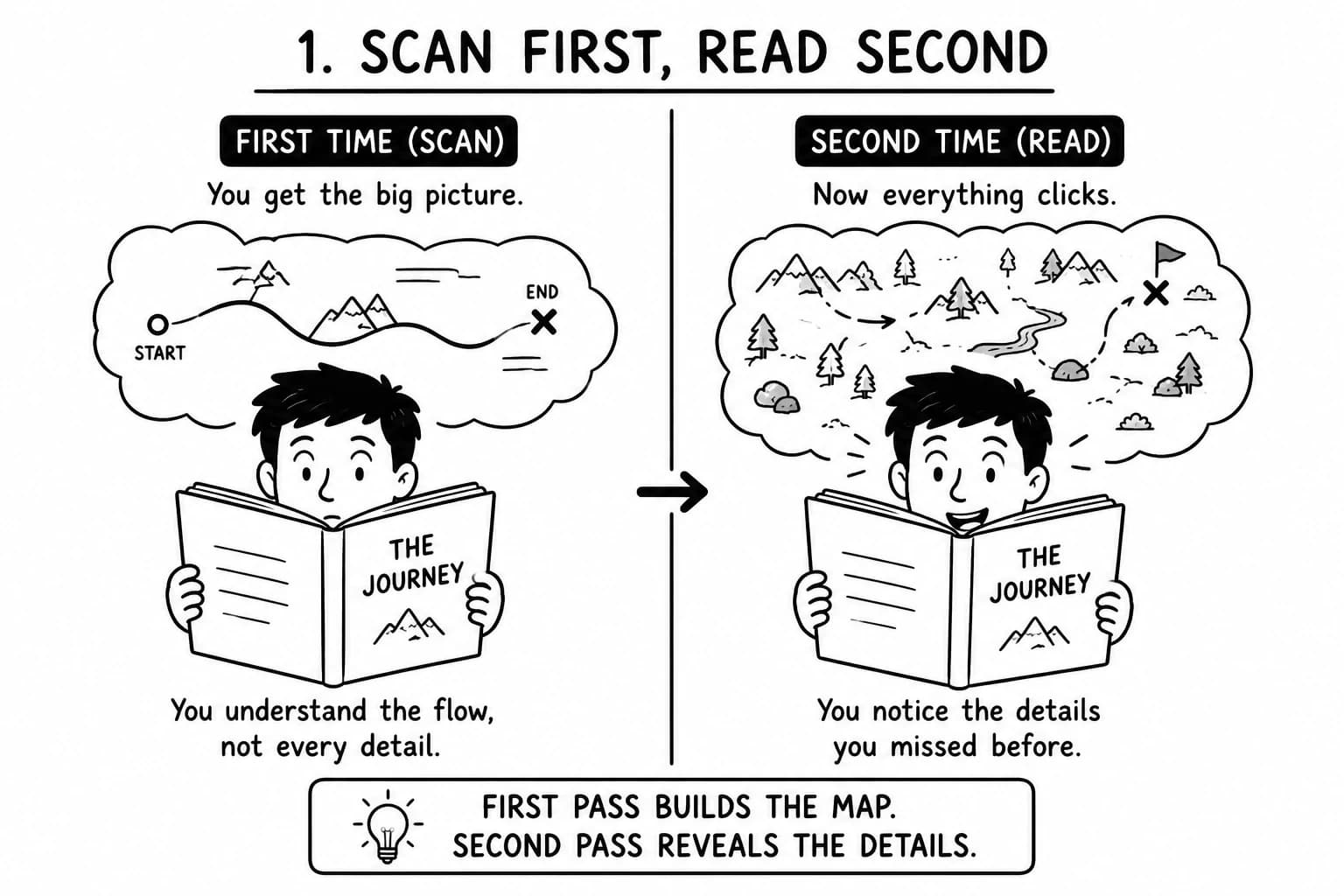
A structured summary provides an initial view of the book’s argument and major concepts. Readers can decide which sections deserve closer attention and use the overview to navigate technical explanations.
The map is a route through the material, not a substitute for examining the evidence when details matter.
Retain important concepts and takeaways
Key takeaways provide concise reminders of ideas worth revisiting. Connecting each takeaway to its explanation, examples, and evidence makes the reasoning easier to reconstruct.
An isolated conclusion is easy to scan; a connected model helps explain why the conclusion follows.
Improve comprehension and recall
Comprehension involves understanding relationships between ideas; recall involves retrieving them when needed. Chapter summaries support review, mind maps externalize relationships, and self-testing checks whether readers can reconstruct the material independently.
Together, these activities support a fuller learning process than collecting summaries alone.
Connect ideas across chapters and books
Cross-chapter and cross-book synthesis reveals recurring principles, competing explanations, and shared assumptions. Comparing concepts across contexts helps readers build connected knowledge instead of a shelf of unrelated summaries.
Preserve differences as well as similarities. Two authors using the same term may mean different things by it.
Build a personal knowledge library
A personal knowledge library stores ideas in a form that supports future questions and decisions. Summaries, mind maps, annotations, and source references make material easier to retrieve and revisit.
Connect related concepts and record how they apply to your work. The result is a tool for thinking, not an archive devoted to proving that reading once occurred.
Book Summary Examples and Use Cases
Different genres need different summary structures because they communicate knowledge in different ways.
| Book type | What to preserve | Useful summary or map structure |
|---|---|---|
| Nonfiction | Thesis, arguments, evidence, assumptions, and conclusions | Thesis → arguments → evidence → implications |
| Fiction and literature | Plot, characters, conflicts, turning points, and themes | Character relationships, conflict branches, and narrative progression |
| Business and personal development | Principles, frameworks, recommendations, and conditions of use | Framework → rationale → application → limitations |
| Textbooks and academic books | Definitions, distinctions, equations, worked examples, and dependencies | Foundational concepts → relationships → applications |
| Biography | Decisions, influences, events, and consequences | Timeline connected to decisions and outcomes |
| History | Chronology, causes, institutions, events, and consequences | Timeline plus causal relationships |
| Philosophy | Propositions, arguments, assumptions, objections, and implications | Claim → supporting arguments → objections → implications |
For nonfiction, connect each takeaway to the reasoning behind it. For fiction, keep interpretation distinct from events established in the text. For academic and technical material, retain qualifications and source references whenever a conclusion depends on a particular method or condition.
The structure should reveal the relationships that make each genre useful. A timeline explains sequence; a causal map examines why events unfolded as they did.
Frequently Asked Questions
What is the best AI book summarizer?
The best AI book summarizer fits your needs: supported formats, whole-book processing, chapter structure, source verification, exports, and mind mapping. Test tools on the same book and check whether they preserve its central arguments.
Is there a free AI book summarizer?
Some tools offer free access or limited usage. Check current file limits, quotas, supported formats, and export restrictions before using one for an entire book.
How can I summarize a book PDF with AI?
Upload a supported PDF, confirm that its text was extracted correctly, and request a structured summary with chapter headings, arguments, definitions, and evidence. Verify important claims against the original pages.
Can AI summarize an entire book?
Yes, when the tool’s processing limits and extraction capabilities support the document. Check chapter coverage and compare important conclusions with the source.
How do I summarize a book using ChatGPT?
Provide the book text or a supported file, then request a chapter-by-chapter summary, central thesis, key concepts, and supporting evidence. For lengthy books, check coverage and confirm that the output reflects the supplied edition.
What is the difference between a book summary and a book review?
A book summary explains the content and central arguments. A book review evaluates quality, originality, usefulness, or literary merit. A review may summarize the book, but its main purpose is critical assessment.
Can AI-generated book summaries replace reading the original book?
AI summaries support orientation, revision, and selective review. The original remains essential when the task depends on detailed evidence, nuanced arguments, literary interpretation, or full context.
Is it legal to upload and summarize copyrighted books?
The answer depends on jurisdiction, file source, permissions, applicable exceptions, and the nature of the use. Copyright and contractual restrictions may apply to uploaded books and generated outputs. Use authorized copies, review the tool’s terms, and seek qualified legal advice for specific situations.
Turn book summaries into connected knowledge.
An AI book summarizer extracts central ideas from long texts. Chapter summaries preserve the author’s progression, source checks protect accuracy, and mind maps make conceptual relationships easier to explore.
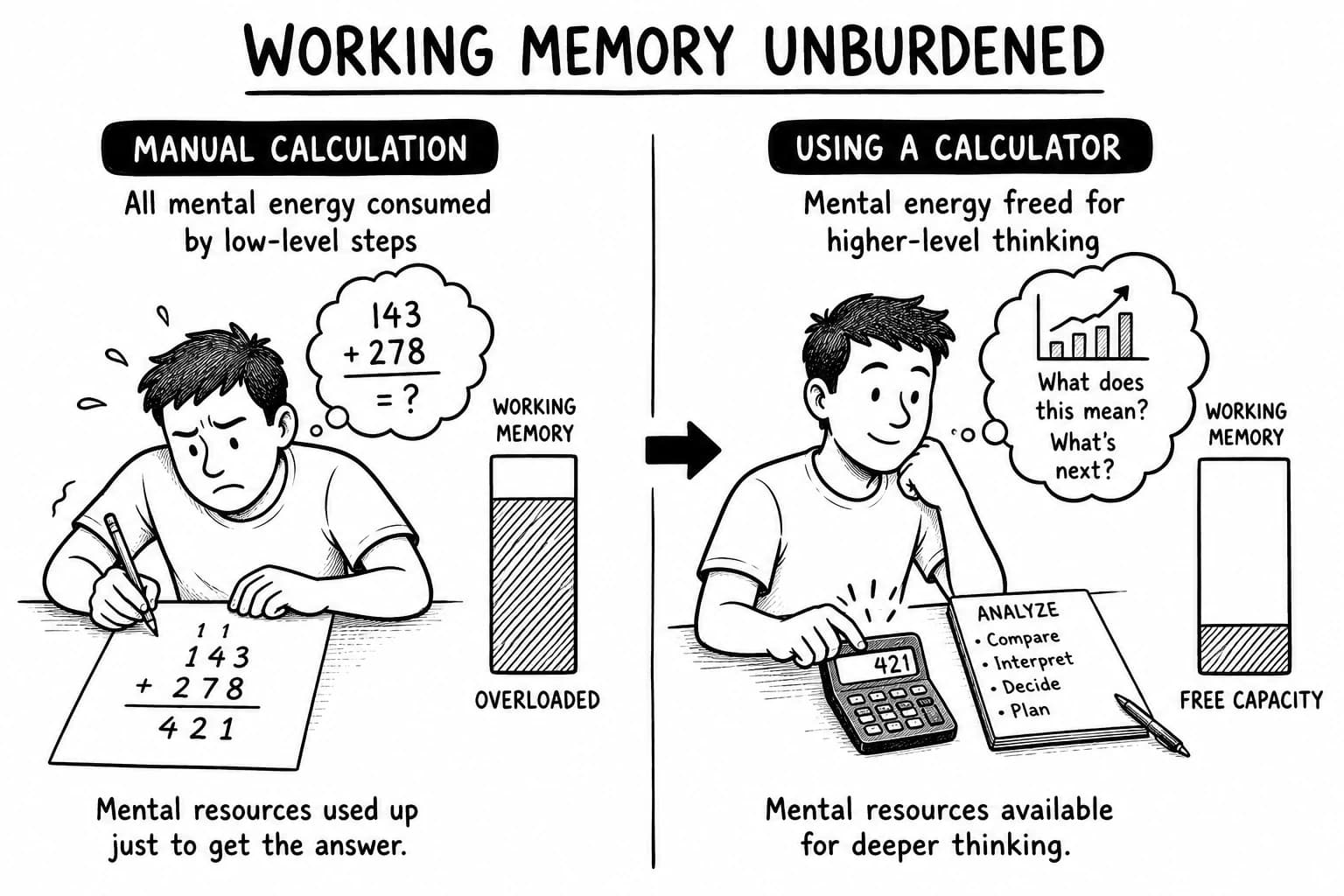
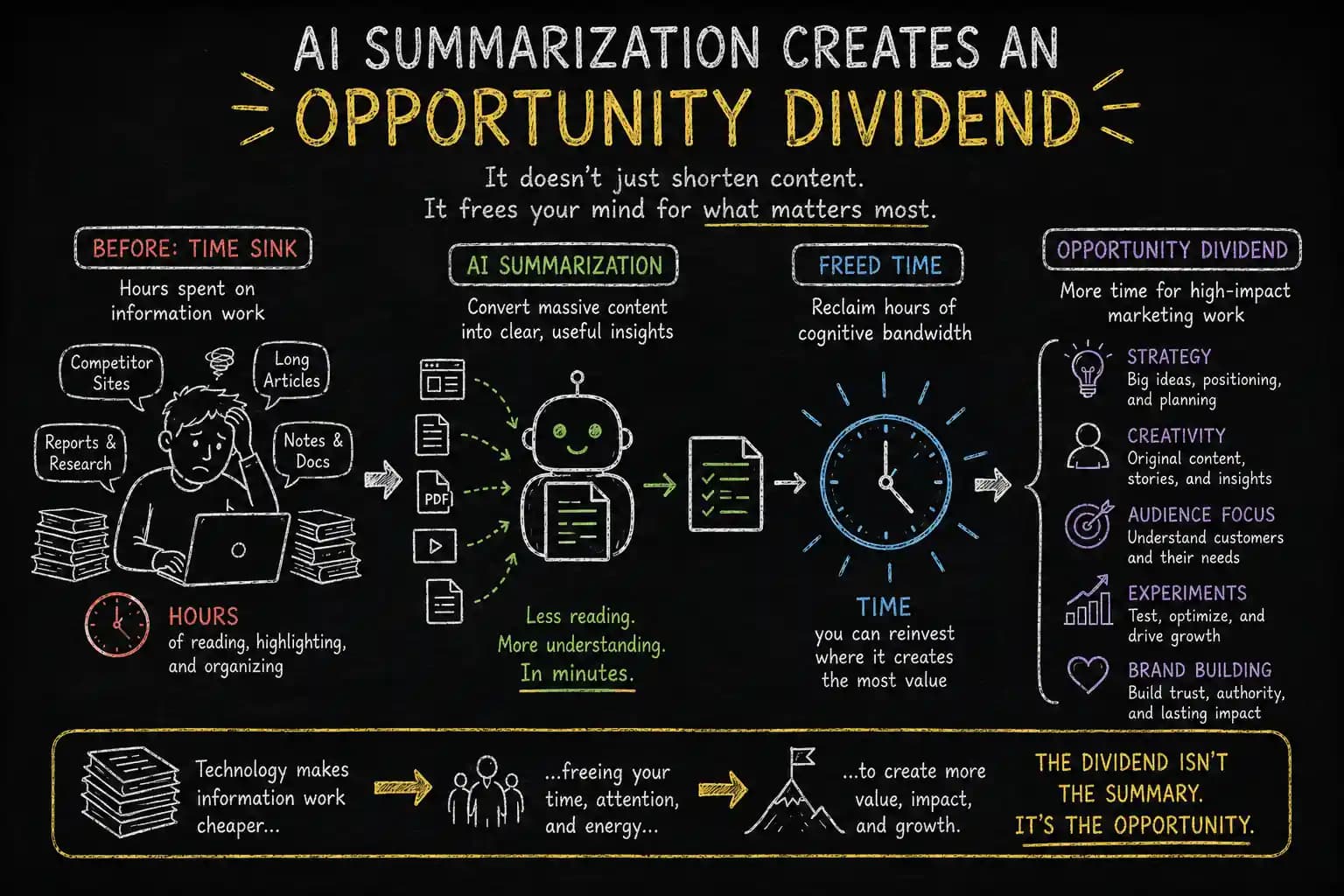
The larger opportunity is cognitive economy: directing attention toward the structure of knowledge so readers can understand, retrieve, compare, and apply what they learn.
Use a written summary to establish the essentials, a mind map to inspect relationships, and questions to test your understanding. With y2map, summarization becomes visual knowledge organization—a way to build a connected view of what you read.
Gutenberg made books easier to reproduce. AI makes their contents easier to sort. The enduring task is still human: decide which ideas matter, test what supports them, and put the knowledge to work.
Read for the argument. Map the relationships. Remember what matters.