What Is an Advance Organizer?
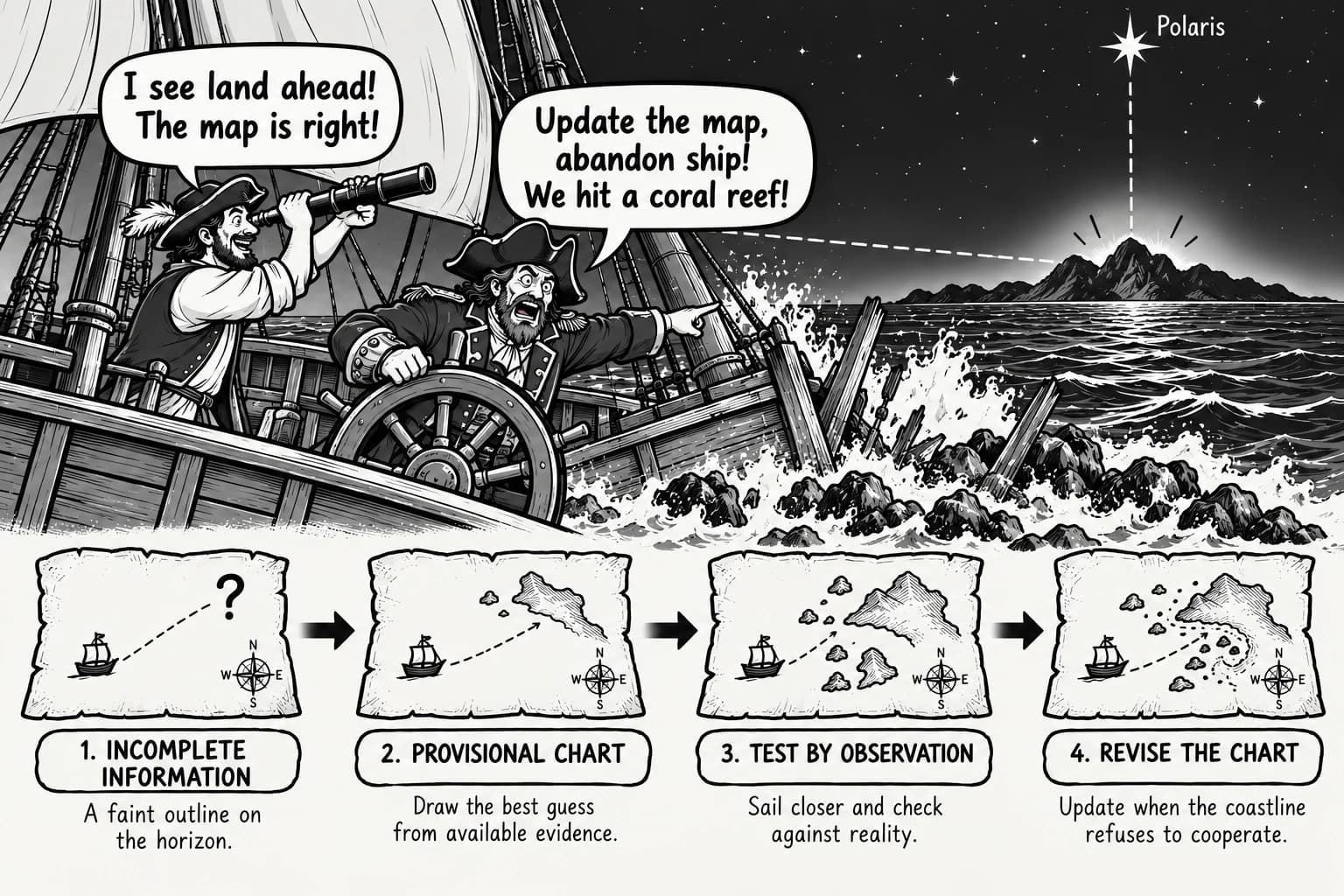
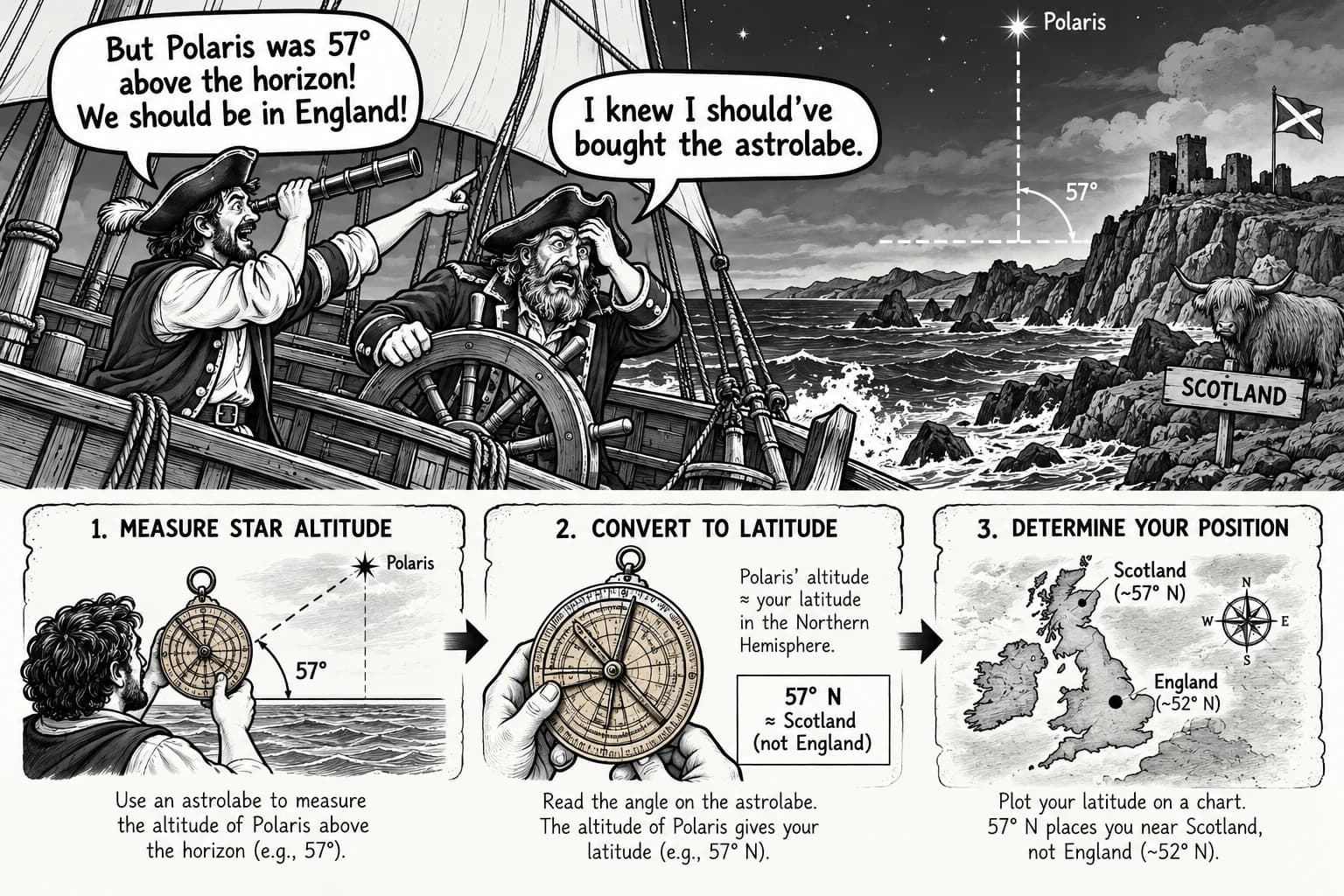
An advance organizer is a short framework presented before a lesson or reading to help learners connect unfamiliar ideas with what they already know. It might be a conceptual overview, a diagram of relationships, a guiding question, or a brief explanation of the main structure. Its purpose is not simply to tell learners what the material says; it prepares them to see how the parts fit together.
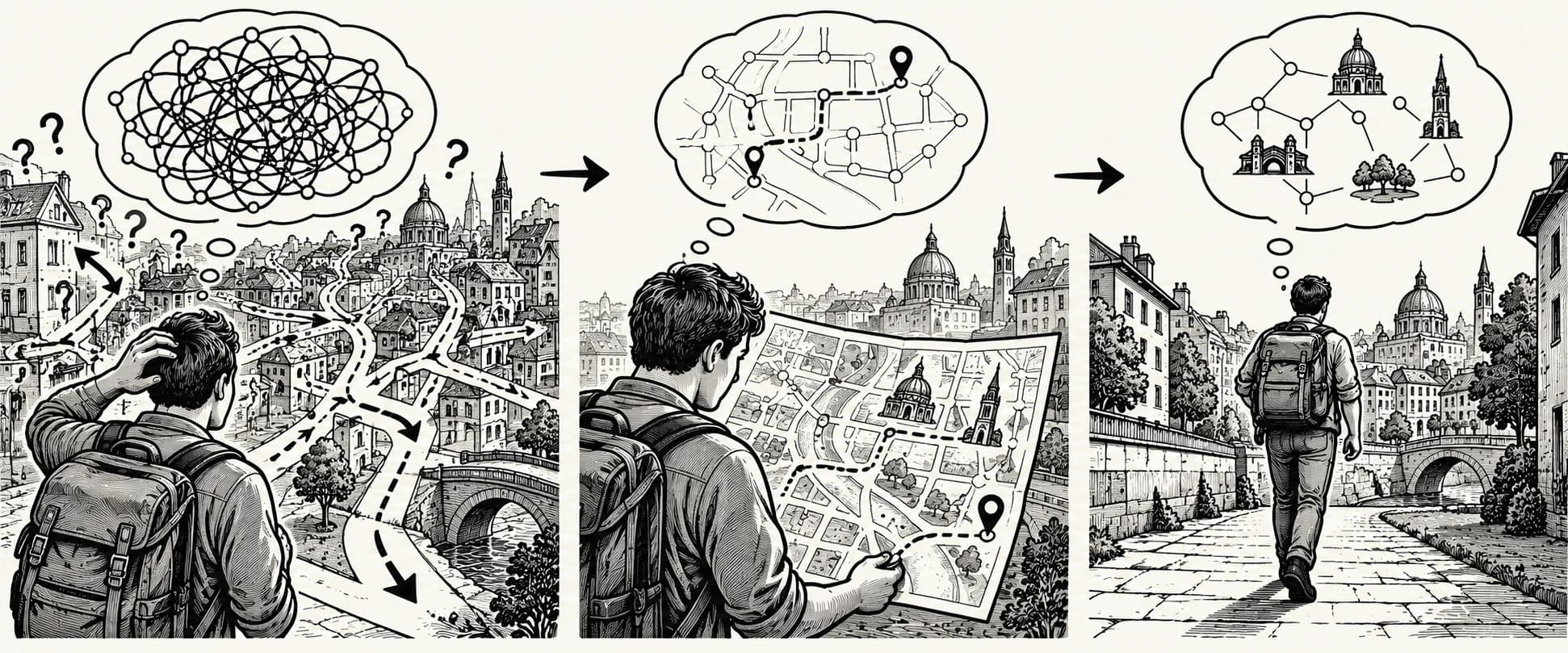
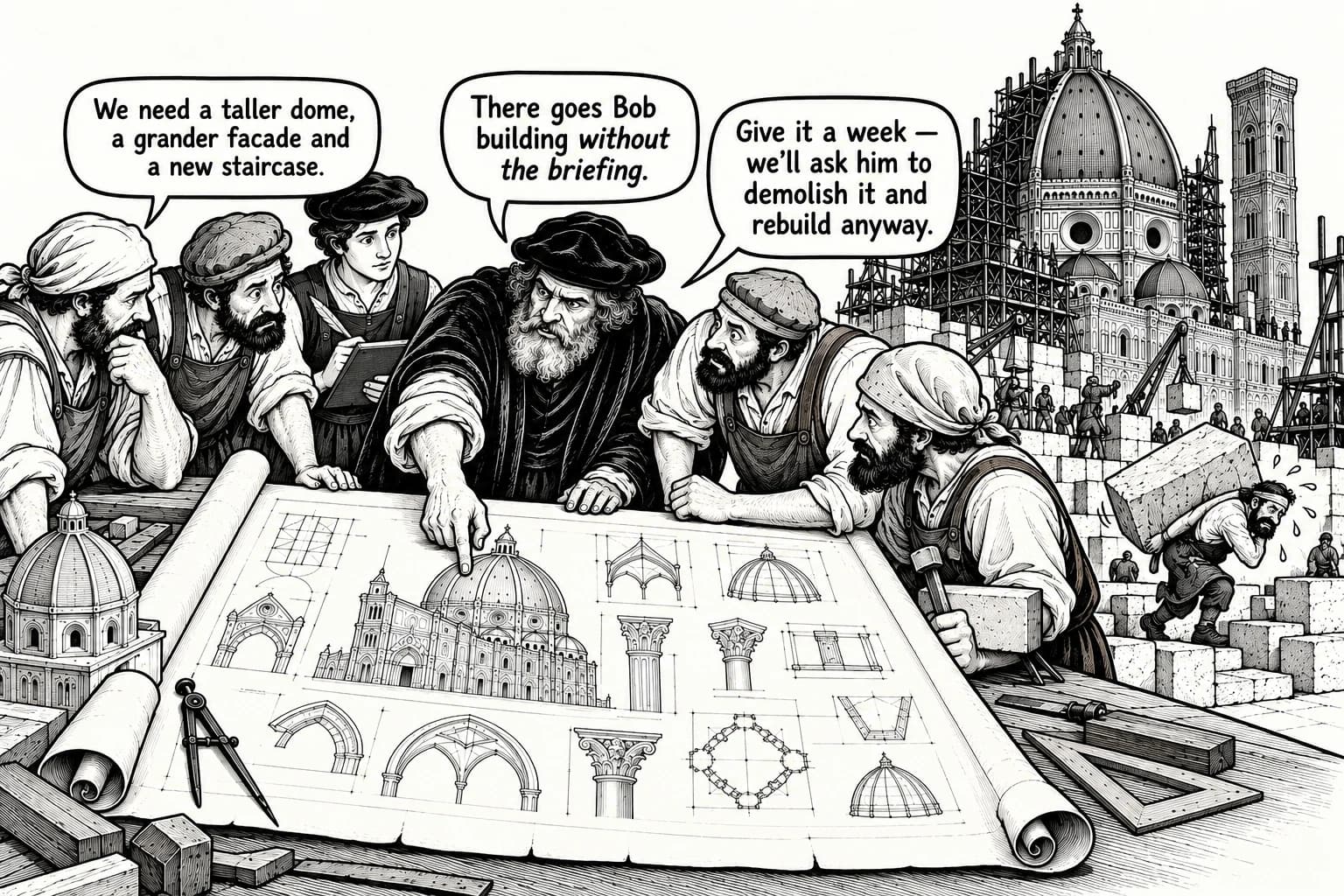
Imagine beginning work on a complicated building with no plan. You could study each brick, beam, and arch, yet still struggle to understand how they form a stable structure. A blueprint gives you a way to interpret each part before you encounter all the details. A useful advance organizer plays a similar role in learning: it gives new information somewhere to attach.
Educational psychologist David Ausubel (1960) developed the theory of advance organizers as part of his account of meaningful verbal learning. He argued that new material is easier to understand when learners can relate it to relevant concepts they already know. An organizer can support that connection, but it cannot guarantee comprehension by itself. Its value depends on whether it represents the subject accurately and helps the learner make meaningful connections.
Define advance organizers in Ausubel’s theory
In Ausubel’s theory, the organizer is a framework presented before detailed instruction to support meaningful verbal learning by connecting new material with relevant prior knowledge.
Explain how organizers connect prior knowledge with new material
- Activate relevant prior knowledge. A short reminder of familiar concepts gives learners a basis for interpreting new material. If the prior knowledge is inaccurate, the organizer should surface and correct that misconception rather than reinforce it.
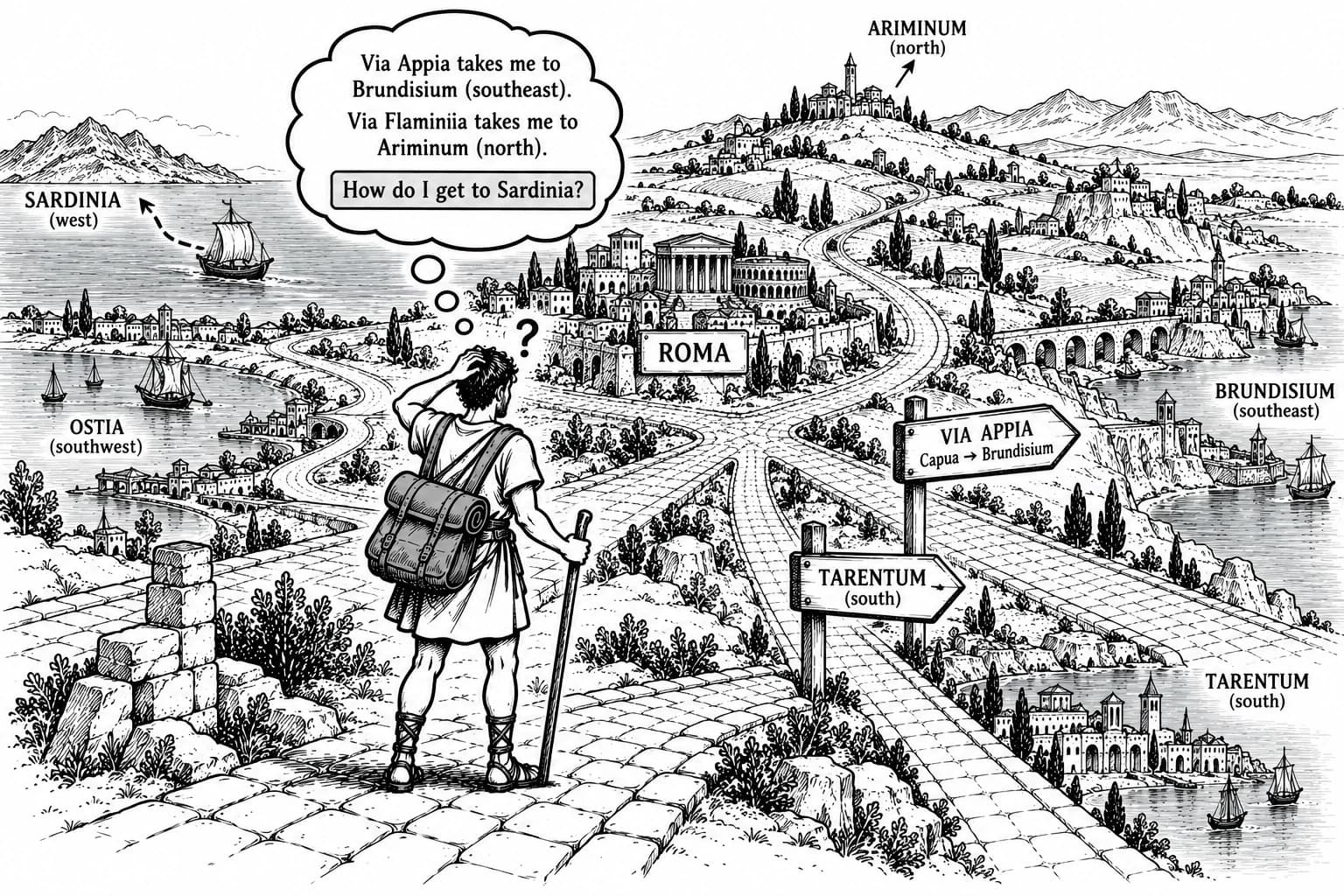
- Make relationships visible. A diagram can show hierarchy, cause and effect, sequence, contrast, or dependency that may be difficult to hold in working memory while reading a dense explanation.
- Guide attention without replacing thought. An organizer should indicate what matters and how ideas may connect, while leaving learners to inspect evidence, work through explanations, and test their understanding.
Distinguish an advance organizer from a summary
A summary usually condenses material after or during exposure to it. An advance organizer prepares learners before they study the details. The distinction is about function, not format: a concept map can serve as an organizer when it previews relationships, or as a summary when it recaps what has already been learned.
How Do Advance Organizers Work?
Advance organizers can provide a conceptual frame, clarify relationships, and direct attention toward a topic’s structure. They are most useful when the framework helps learners interpret the material while leaving room to examine evidence and work through explanations.
Activate relevant prior knowledge
A short reminder of familiar concepts gives learners a basis for interpreting new material. If prior knowledge is inaccurate, the organizer should help surface that misconception rather than reinforce it.
Provide a conceptual framework before detailed instruction
A clear overview can make hierarchy, cause and effect, sequence, contrast, or dependency easier to notice. It may reduce unnecessary searching and disorientation, but it cannot make intrinsically complex material simple.
Support integration of unfamiliar information
The learner uses the framework to connect new details with concepts already understood. The framework should remain selective: crowded diagrams, unexplained labels, or misleading links can add work instead of removing it.
What Are the Types of Advance Organizers?
The format should match the relationships learners need to understand. A format alone does not make something an effective organizer; its role before instruction and its fit with the content matter.
Expository advance organizers
An expository organizer introduces the core concepts and their structure when learners have little relevant background knowledge. A short overview of a chapter’s question, essential terms, and main claims can prepare learners for the details.
Comparative advance organizers
A comparative organizer connects new material to something learners already know, highlighting meaningful similarities and differences. For example, a comparison framework can preview natural selection and genetic drift by identifying what the two processes share and how they differ.
Visual and conceptual organizers
Concept maps, process diagrams, and other visual organizers make relationships visible. A map linking photosynthesis, light, carbon dioxide, glucose, and oxygen can preview the concepts a learner will encounter. Labels should identify the relationship accurately instead of relying on unlabeled lines.
What Are Examples of Advance Organizers in Education?
The right organizer depends on the material and the learner's existing knowledge. Common examples include:
| Organizer | Example | What it helps the learner notice |
|---|---|---|
| Concept map | A diagram linking photosynthesis, light, carbon dioxide, glucose, and oxygen | Relationships among concepts |
| Chapter overview | A short preview of a chapter's question, main claims, and sequence | The structure of an argument |
| Glossary of essential terms | Definitions of a few terms needed to follow a lesson on genetics | The meaning of unfamiliar vocabulary |
| Process diagram | A flowchart of how a bill becomes law | Order, dependencies, and decision points |
| Comparison framework | A table comparing natural selection and genetic drift | Similarities and differences that matter |
| Guiding questions | “What changes, what stays constant, and why?” before a physics lesson | The relationships to look for while studying |
Advance organizer examples in classroom lessons
- Science: Preview the components and relationships in a process such as photosynthesis or an electrical circuit.
- Civics: Use a flowchart to preview how a bill becomes law, including sequence and decision points.
- Comparative lessons: Show a small table of the dimensions learners will use to compare two theories or processes.
- Vocabulary-heavy lessons: Define a few essential terms before learners read a genetics or biology chapter.
Use concept maps and diagrams before reading
Use a concept map when learners need to see how terms relate, a process diagram when sequence or dependencies matter, and a comparison table when distinctions are central. Revisit the representation during instruction and ask learners to explain the links in their own words.
Use an overview before a lecture, video, or complex topic
A short overview can introduce the central question, the major sections, and a few guiding questions before a lecture, textbook chapter, research paper, training module, or long video. Keep it brief enough that learners can use it while studying the main material.
How Can Teachers Create an Effective Advance Organizer?
A useful organizer is selective, accurate, and aligned with the learning task. It does not need to contain every important fact. It should make the central structure easier to see.
- Show the main relationships. Label links precisely: “causes,” “depends on,” “contrasts with,” and “is an example of” mean different things.
- Use familiar anchors. Introduce unfamiliar ideas through relevant concepts the learner already understands, without forcing a misleading analogy.
- Keep the preview selective. Include the concepts and dependencies needed to follow the lesson. Move detail to the lesson itself.
- Coordinate words and visuals. Place labels close to the relevant diagram elements and avoid decorative images that compete with the explanation.
- Preserve uncertainty where the source is uncertain. Distinguish established facts, competing explanations, hypotheses, and open questions.
- Check it against the source. A visually elegant map can still contain missing concepts, false causal links, or invented relationships.
For a lesson about how an electrical circuit works, for example, a good organizer might identify the battery, conducting path, switch, and load, then show how they relate. It should not imply that current is "used up" by a bulb if the lesson is intended to teach the circuit model accurately. As described in How Do Advance Organizers Work?, the preview must reduce avoidable confusion without replacing the reasoning the lesson requires.
Identify the essential structure of the new topic
A practical workflow works for both instructors and independent learners:
- Identify the central question. What problem is the source trying to explain or solve?
- Extract the essential concepts. Choose the few terms a reader must understand to follow the argument.
- Map the relationships. Mark causes, dependencies, contrasts, sequences, evidence, and conclusions. Do not treat every association as a causal link.
- Identify prerequisites. Note which concepts require prior knowledge and briefly explain any essential unfamiliar terms.
- Add questions, not just answers. Include two or three questions that learners can try to answer while reading.
- Verify against the source. Confirm that every important relationship is supported and that the organizer has not omitted a qualification that changes the meaning.
- Test it after reading. Ask learners to reconstruct the map, explain its links, and apply the central idea to a new example.
Connect the organizer to learners’ prior knowledge
Check what learners already understand before choosing an organizer. A learner experienced in biology may still be a novice in statistics, so diagnose knowledge for the specific topic and include only the prerequisites and relationships that are missing.
Keep the organizer clear, relevant, and appropriately abstract
Keep the preview selective and accurate. Label relationships precisely, use familiar anchors without forcing misleading analogies, coordinate words with relevant visuals, and preserve uncertainty where the source is uncertain. Check the organizer against the original to catch missing concepts, false causal links, or invented relationships.
Use an organizer when learners need help seeing the structure of unfamiliar material, especially when a lesson introduces several connected concepts or assumes prerequisite knowledge. It can be useful before a lecture, textbook chapter, research paper, training module, or long video.
An organizer is less useful when it repeats information learners already know, introduces terminology without explaining its relevance, or presents so much detail that it becomes another lesson to study. There is no universal number of minutes before instruction when it must be shown. Present it close enough to the learning activity that learners can use it, and revisit it during the lesson when the connections become meaningful.
For complex material, a brief preview can be followed by worked examples, guided practice, and independent application. For simpler material, a single question or small comparison table may be sufficient. Choose the smallest organizer that genuinely improves orientation.
How Can AI Support Advance Organizers?
Generate a preliminary topic map from learning material
AI tools can draft an overview, glossary, concept map, or guiding questions from a document, textbook chapter, or video transcript. This can reduce the time needed to create a first draft, but the generated structure is a proposal to inspect—not a verified account of the source.
Use AI to surface concepts and relationships
A reliable workflow is to provide the source material, ask for the central question and essential concepts, identify prerequisites, and request only relationships supported by the source. Ask the system to flag unclear relationships and distinguish explicit claims from its own inferences.
Verify the organizer against the source material
Compare the generated organizer with the original, checking omissions, causal claims, definitions, and citations. Use it as a preview, then study the source. Hide the organizer and reconstruct it from memory; correct gaps and test transfer with a new problem.
For example, a learner using Y2Map to turn a video into a mind map can scan the map to understand the broad structure, then return to the video to verify important connections. A map supports orientation only when its links are accurate and checkable; it does not establish mastery by itself.
AI-generated organizers should not be treated as evidence that learning has improved unless that outcome has been measured. Faster production, cleaner formatting, and learner satisfaction are not substitutes for accurate explanations, delayed retention, or independent application.
What Are the Benefits and Limitations of Advance Organizers?
Support orientation and knowledge integration
Research on advance organizers and graphic organizers spans several decades, but it should not be compressed into one universal effect size. Studies differ in organizer format, learner population, comparison condition, and whether they measure immediate comprehension, delayed retention, or transfer. Ausubel’s early work (1960) examined whether relevant overarching concepts provided before unfamiliar material could support subsequent learning. The broader conclusion is conditional: an organizer can help when it provides a useful structure, but benefits vary with design, prior knowledge, and the outcome measured.
Match the organizer to prior knowledge and task complexity
Learners with limited prior knowledge may benefit when an organizer supplies relationships they do not yet know how to construct. But “novice” is relative to a particular topic: someone can be experienced in biology and still be a novice in statistics. An organizer that helps a beginner may feel redundant to a learner who already understands the structure.
This connects to the expertise reversal effect: instructional support that helps novices can become unnecessary or distracting as expertise grows. The practical response is not to label learners permanently as beginners or experts, but to check what they already understand and adjust the amount of guidance.
A useful sequence is:
- Ask learners to explain the topic or answer a few diagnostic questions before instruction.
- Provide a compact organizer that addresses missing prerequisites and relationships.
- Let learners study the source material and annotate the organizer with evidence or examples.
- Remove the organizer and ask learners to reconstruct the main relationships.
- Reduce prompts when learners can explain and apply those relationships independently.
The goal is not to keep learners dependent on a diagram. It is to help them build a mental structure they can use when the diagram is no longer present.
Avoid giving learners an inaccurate or overly detailed overview
Claims that organizers reliably improve comprehension by a fixed percentage, work across all subjects, or produce transfer automatically should be treated cautiously unless the underlying study and comparison are specified. A study showing better recall of a lesson does not, by itself, establish that learners can apply the knowledge in an unfamiliar setting.
When evaluating a claim about an organizer, ask:
- What did the learners study, and what did the organizer contain?
- Was it compared with no organizer, an equally long introduction, a summary, or another instructional method?
- Did the study measure immediate performance, delayed retention, or transfer?
- Were the learners novices, experienced students, or a mixed group?
- Were differences in study time, vocabulary exposure, and teacher explanation controlled?
A good organizer is selective and accurate. It should not contain every detail, imply unsupported causal links, or present uncertain claims as settled. An organizer can be less useful when it repeats what learners already know, introduces terms without context, or becomes so detailed that it is another lesson to study.
Measure the learning outcome that matters rather than judging the organizer by appearance or confidence alone.
| Outcome | A practical check |
|---|---|
| Orientation | Can learners identify the central question and major sections before reading? |
| Comprehension | Can they explain the key relationships in their own words? |
| Retention | Can they recall the main concepts after a delay? |
| Transfer | Can they use the ideas to solve an unfamiliar but relevant problem? |
| Independence | Can they reconstruct the organizer or explain the structure without prompts? |
If learners say the lesson feels easier but cannot explain it later, the organizer may have improved fluency or familiarity without producing durable learning. Combine the preview with retrieval practice, feedback, and spaced review when retention matters.
Like a cathedral blueprint, an advance organizer shows load-bearing walls before scaffolding rises: the central question, the arches of core concepts, and how each span depends on the next. Builders still lay every stone — the blueprint only tells them where each belongs and which walls must stand first. A faulty drawing misleads faster than no drawing, so every line is checked against the source and redrawn from memory once the structure stands. Used this way, the preview does not replace construction; it lets novices build meaning deliberately, course upon course, until the edifice holds without the paper that guided it. Experts may set the drawing aside sooner, while beginners return to it between stages — checking each new detail against the plan, correcting misalignments early, and gradually internalizing the structure until recall and transfer no longer need external support.
Frequently Asked Questions
What is an advance organizer according to Ausubel?
In Ausubel’s theory, it is a framework presented before detailed learning to help connect new material with relevant prior knowledge and support meaningful verbal learning.
What are examples of advance organizers in teaching?
Examples include chapter overviews, concept maps, glossaries of essential terms, process diagrams, comparison frameworks, and guiding questions presented before a lesson.
How is an advance organizer different from a summary?
An advance organizer prepares learners for material they are about to study. A summary condenses material already presented. The same diagram can serve either role depending on when and how it is used.
How do advance organizers support meaningful learning?
They can make the structure of unfamiliar material visible and help learners connect new concepts to relevant prior knowledge. Their effects depend on accuracy, design, learner knowledge, and the learning outcome being measured.
Can an AI mind map act as an advance organizer?
Yes, if it previews relevant concepts and relationships before detailed study. Check the map against the original source for omissions, inaccurate links, and unsupported claims; then use retrieval and delayed review to assess learning.
References
- Ausubel, D. P. (1960). The use of advance organizers in the learning and retention of meaningful verbal material. Journal of Educational Psychology, 51(5), 267–272. https://doi.org/10.1037/h0046669
- Ausubel, D. P. (1968). Educational Psychology: A Cognitive View. New York: Holt, Rinehart & Winston. "Most important single factor is what the learner already knows" — cited as secondary source — verify.
- Ausubel, D. P. (1978). In defense of advance organizers: A reply to the critics. Review of Educational Research, 48, 251–257. cited as secondary source — verify.
- Ausubel, D. P., Novak, J. D., & Hanesian, H. (1978). Educational Psychology: A Cognitive View (2nd ed.). New York: Holt, Rinehart & Winston. cited as secondary source — verify.