What Is Concept Mapping? From Roman Roads to Knowledge Representation
A traveler leaving the Milliarium Aureum in the Roman Forum could follow the Via Appia to Brundisium, continue by sea to Greece, or branch north onto the Via Flaminia toward Ariminum. Concept mapping, knowledge representation, graphical knowledge organization, concept hierarchies, semantic relationships, and meaningful learning solve the same problem. Joseph Novak's concept maps transformed knowledge into navigable infrastructure, replacing isolated facts with labeled relationships.
-
Concept maps externalize knowledge rather than decorate it. A concept map is a graphic organizer built from concepts, labeled propositions, hierarchical organization, and semantic networks. Just as every Roman road carried an inscription, every link in Novak's framework carries a verb—"causes," "requires," "contains," "produces"—turning disconnected nodes into explicit propositions.
-
Hierarchy makes large systems navigable. Roman surveyors classified consular roads, regional roads, and local streets into an organized transportation hierarchy. Likewise, concept hierarchies, subordinate concepts, superordinate concepts, and progressive differentiation arrange broad ideas before specific details.
-
Cross-links reveal expertise. Emperor Trajan's Bridge across the Danube connected two previously separate transportation systems. Cross-links, integrative reconciliation, systems thinking, and conceptual transfer play the same role inside a concept map, exposing relationships between seemingly unrelated ideas.
-
Different maps solve different problems. Roman military engineers, merchants, and administrators each used different route representations for different tasks. Modern learners choose different knowledge visualization tools depending on the task. Concept maps emphasize knowledge representation, semantic relationships, and learning assessment; mind maps encourage brainstorming, radiant thinking, and idea generation; knowledge graphs, argument maps, systems maps, and flowcharts each optimize different forms of reasoning.
-
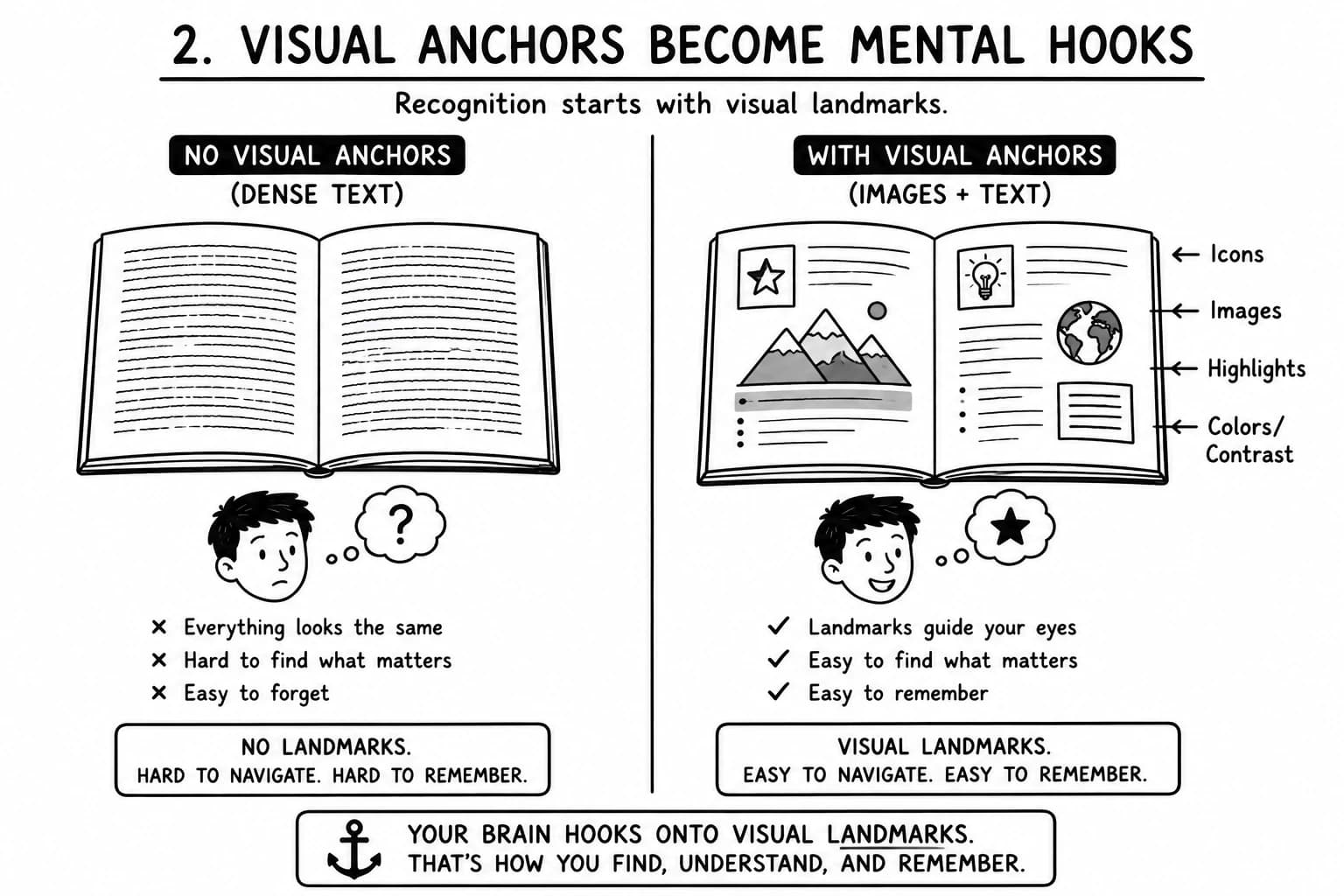
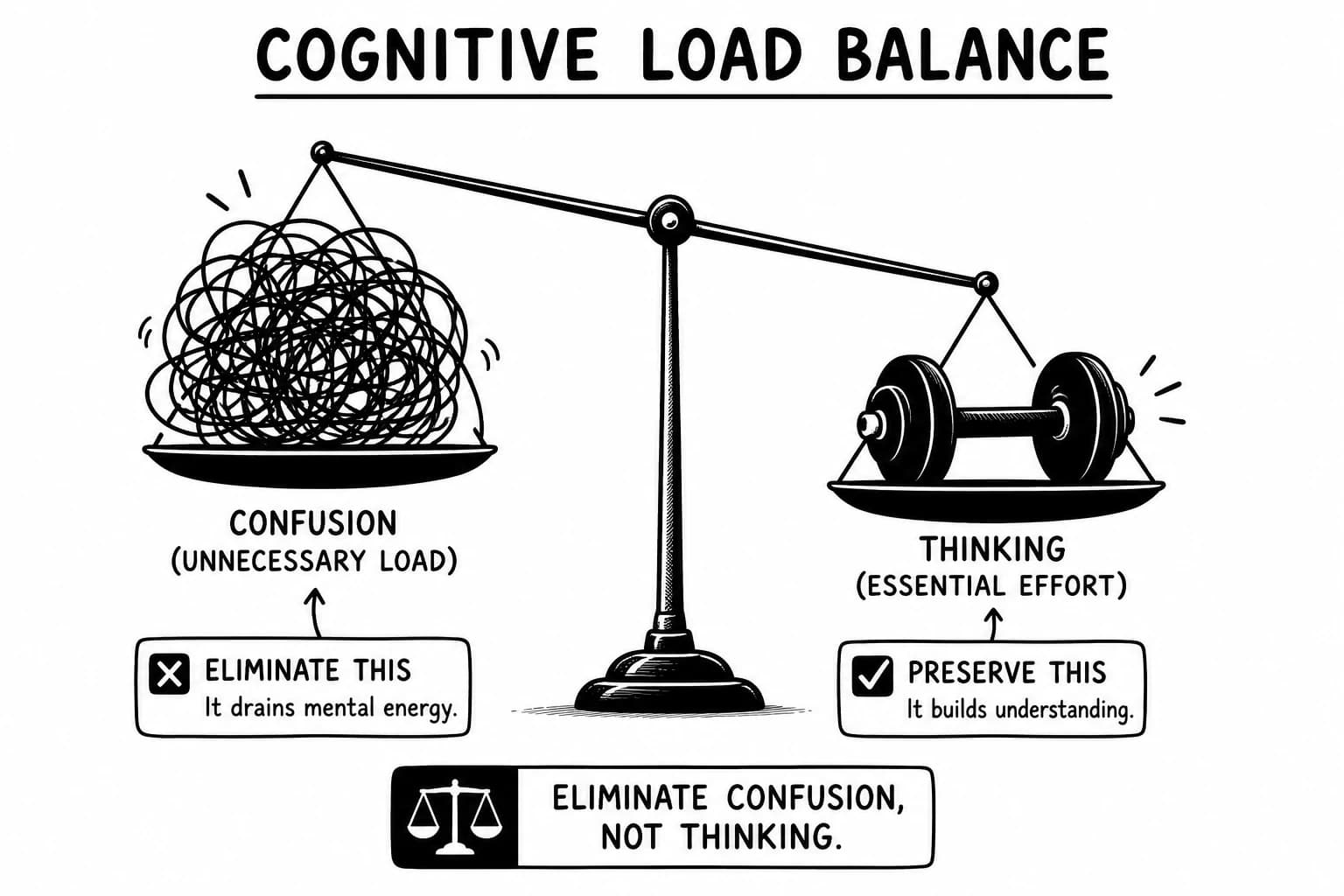
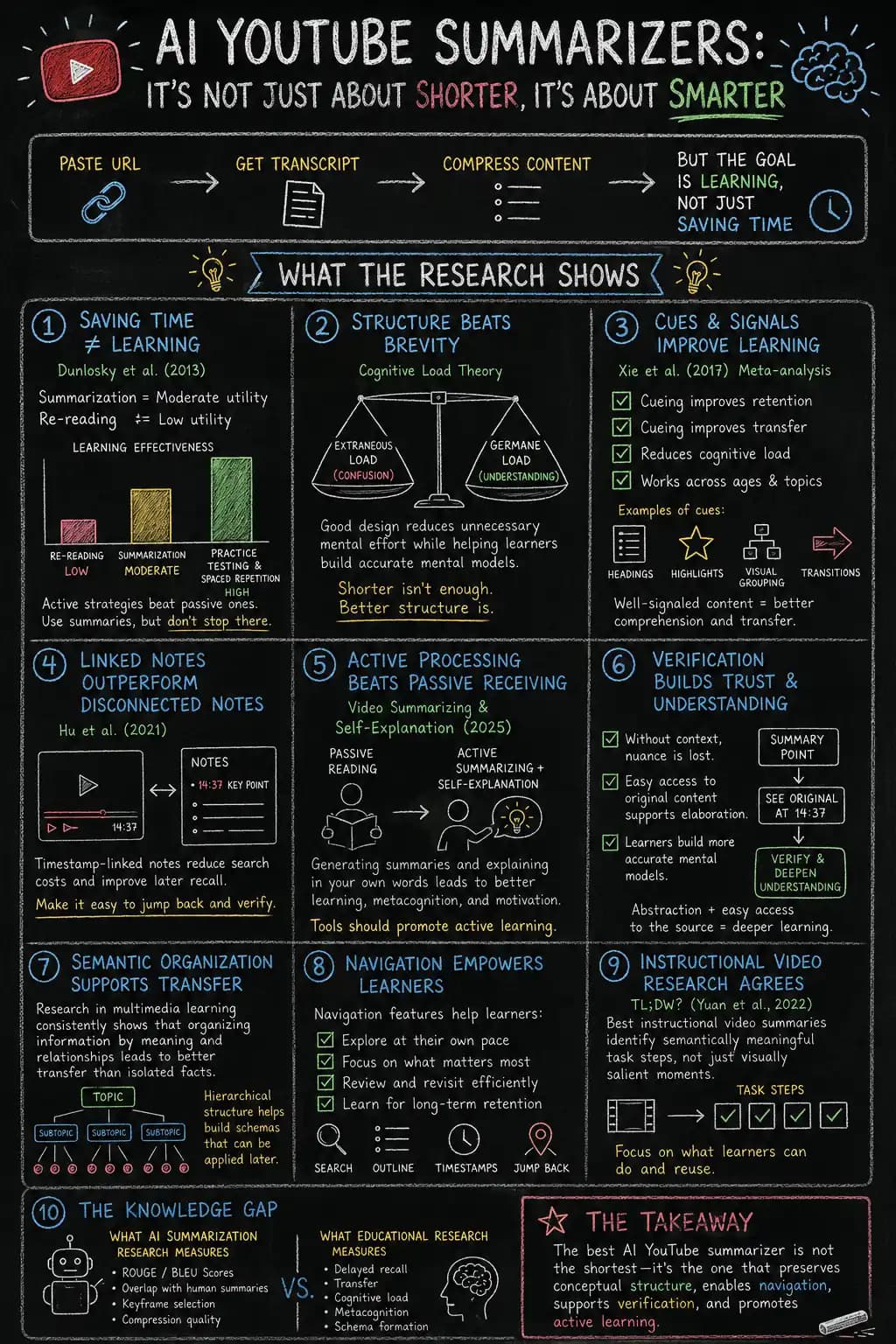
The representation matters as much as the information. A poorly marked Roman junction increased navigation costs despite using the same roads. Likewise, effective concept mapping, visual learning, information organization, instructional design, and knowledge visualization reduce extraneous cognitive load. The facts remain unchanged. Only the map improves.
From Roman Roads to Knowledge Maps: How Concept Mapping Learned to Label Every Junction
| Period | Roman Road Network Analogy | Researchers & Milestone | Concepts | Contribution to Concept Mapping & Knowledge Representation |
|---|---|---|---|---|
| 312 BC–AD 117 | Roman surveyors standardized the Via Appia, Via Flaminia, milestones, named junctions, road hierarchies, and provincial routes. | Roman engineers, cursus publicus | information architecture, hierarchical organization, network topology, navigation systems, external memory, structured knowledge, explicit relationships | A network becomes useful only when every connection is explicit and navigable. |
| 1968–1984 | The first educational surveyors labeled every conceptual road. | David Ausubel, Joseph Novak, Bob Gowin; Learning How to Learn (1984) | meaningful learning, assimilation theory, advance organizers, concept mapping, knowledge representation, graphic organizers, concept hierarchy, propositions | Ausubel argued that learning begins with existing knowledge. Novak transformed that principle into the concept map, arranging concepts hierarchically and connecting them with labeled propositions. |
| 1990–2004 | Engineers improved maps by documenting bridges, intersections, and secondary routes. | Novak, McClure, Alberto Cañas, CmapTools | cross-links, concept map scoring, expert skeleton maps, digital concept maps, proposition quality, knowledge networks, collaborative learning | Research demonstrated that the quality of propositions and cross-links predicts understanding. CmapTools extended concept mapping into collaborative digital knowledge networks and educational assessment. |
| 2000–2006 | A transportation network became stronger by distinguishing highways, local roads, bridges, and interchanges. | Kinchin, Nesbit & Adesope | hierarchical maps, network maps, spider maps, chain maps, flow concept maps, representation quality, meta-analysis, learning outcomes | Kinchin showed that spoke maps reveal novice thinking while richly interconnected network maps indicate expertise. Nesbit & Adesope's meta-analysis confirmed that concept mapping consistently improves learning, with outcomes largely determined by representation quality. |
| 1986–2011 | A well-designed road network reduces unnecessary navigation effort. | Paivio, Sweller, O'Donnell, Karpicke & Blunt | dual coding, cognitive load theory, working memory, schema activation, retrieval practice, knowledge organization, transfer of learning, student-generated concept maps | Research explained why concept maps work. External visual structure shares processing with verbal memory, reduces extraneous cognitive load, activates schemas, and becomes most effective when learners reconstruct maps from memory. |
| Today | Digital navigation systems combine roads, traffic, and destinations into continuously updated relationship graphs spanning entire continents. | AI researchers, knowledge engineers, educational technologists | knowledge graphs, AI knowledge representation, semantic search, graph databases, clinical reasoning, systems design, enterprise knowledge management, digital concept maps, large language models, AI educational tools | Novak's original framework now underpins knowledge graphs, AI learning assistants, enterprise knowledge systems, clinical reasoning, software architecture, and intelligent tutoring systems. Explicit relationships outperform isolated facts. |
Whether carved into Roman stone or rendered as an AI-generated concept map, knowledge graph, or semantic network, understanding becomes durable when every important junction explains why it exists.
What Is a Concept Map? Definition, Nodes, Edges and Propositions
In Conceptual Structures (1984), computer scientist John F. Sowa showed that explicit, labeled relationships connect concepts across semantic networks, logic, and natural language in structured knowledge representation.
In a real-world concept map of photosynthesis, Sunlight, Chlorophyll, Water, Carbon Dioxide, Glucose, and Oxygen are nodes (concepts), while “absorbs,” “uses,” and “produces” are labeled edges (relationships), forming interconnected propositions—“Chlorophyll absorbs sunlight,” “Photosynthesis uses water and carbon dioxide,” and “Photosynthesis produces glucose and oxygen”. A concept map combines multiple propositions into a network of knowledge.
| Concept | What John Sowa Did → Your Next Rep |
|---|---|
| Nodes, edges and propositions | Sowa's concept → relationship → proposition approach shows how precise linking phrases turn disconnected terms into meaningful knowledge representation. |
| Taxonomy, ontology and semantic modeling | Sowa combined taxonomic definitions with logical relationships to represent increasingly complex knowledge structures. His work demonstrates how classification → relationship definition → semantic modeling supports knowledge acquisition and machine reasoning. |
| Semantic graphs and knowledge structure | Sowa developed graph operations for representing and interpreting relationships across interconnected concepts. equivalence (copy/simplify), specialization (restrict/join) and generalization (unrestrict/detach). |
How to Make a Concept Map? Tutorial, Template and Focus Question Design
In the early 2000s, Alberto J. Cañas and colleagues developed CmapTools software which incorporated explicit focus questions, meaningful propositions and supported iterative map revision.
| Concept | What Alberto Cañas Did → Your Next Rep |
|---|---|
| Focus question and concept selection | Cañas and Novak proposed using a focus question to encourage explanatory relationships. These prompt learners to construct dynamic propositions, examine causal connections and reveal gaps in their understanding. |
| Linking phrases and proposition accuracy | Explanatory concept maps reveal how and why concepts interact, enabling causal reasoning, prediction, and knowledge transfer, while descriptive maps merely identify and categorize concepts. |
| Progressive differentiation and revision | Cañas developed tools that allowed learners to rearrange concepts, revise relationships and share evolving knowledge models. |
Concept Map vs Knowledge Graph vs Mind Map vs Flowchart vs Ontology?
In 2000, Ian Kinchin, David Hay and Alan Adams examined concept maps from Year 8 science classrooms and identified three recurring structures: radial topics (spoke), linear sequential concepts(chain), interconected network of meaningful relationships(net).
| Mapping Tool | Closest Structure | Purpose and Instructional Benefit |
|---|---|---|
| Mind Map | Spoke | Organizes ideas around a central topic. Useful for brainstorming, vocabulary previews and activating prior knowledge before teaching relationships. |
| Flowchart | Chain | Represents ordered steps, decisions and procedures. Useful for teaching algorithms, experimental methods and cause-and-effect sequences. |
| Concept Map | Spoke, chain or net | Uses labeled relationships to form meaningful propositions. Comparing students' map structures helps teachers identify isolated knowledge, sequential understanding and conceptual integration. |
| Knowledge Graph | Often net | Represents entities and relationships in a machine-processable structure. Useful for knowledge integration, semantic search and discovering connections across information sources. |
| Ontology | Hierarchy and network | Formally defines concepts, categories, properties and relationships. Useful for establishing shared terminology, consistent classifications and machine-interpretable domain knowledge. |
Does Concept Mapping Actually Work? Effect Sizes and When It Fails
In 2006, John Nesbit and Olusola Adesope synthesized 55 studies involving 5,818 participants. They found overall benefits for knowledge retention, but results varied considerably with instructional conditions and comparison methods.
| Concept | What Nesbit and Adesope Did → Your Next Rep |
|---|---|
| Comprehension, retention and transfer | Nesbit and Adesope found that concept maps especially help organize a subject's overarching structure. |
| Cognitive load, working memory and chunking | Visual organization of interconnected concepts may support chunking and working-memory efficiency. Students studying preconstructed concept maps achieved nearly identical average learning gains in classroom and laboratory settings |
| Metacognition and self-regulated learning | Construct a map from memory, check proposition accuracy and missing cross-links against an expert map, then use comprehension scores and delayed recall to identify knowledge gaps and adjust your learning strategy |
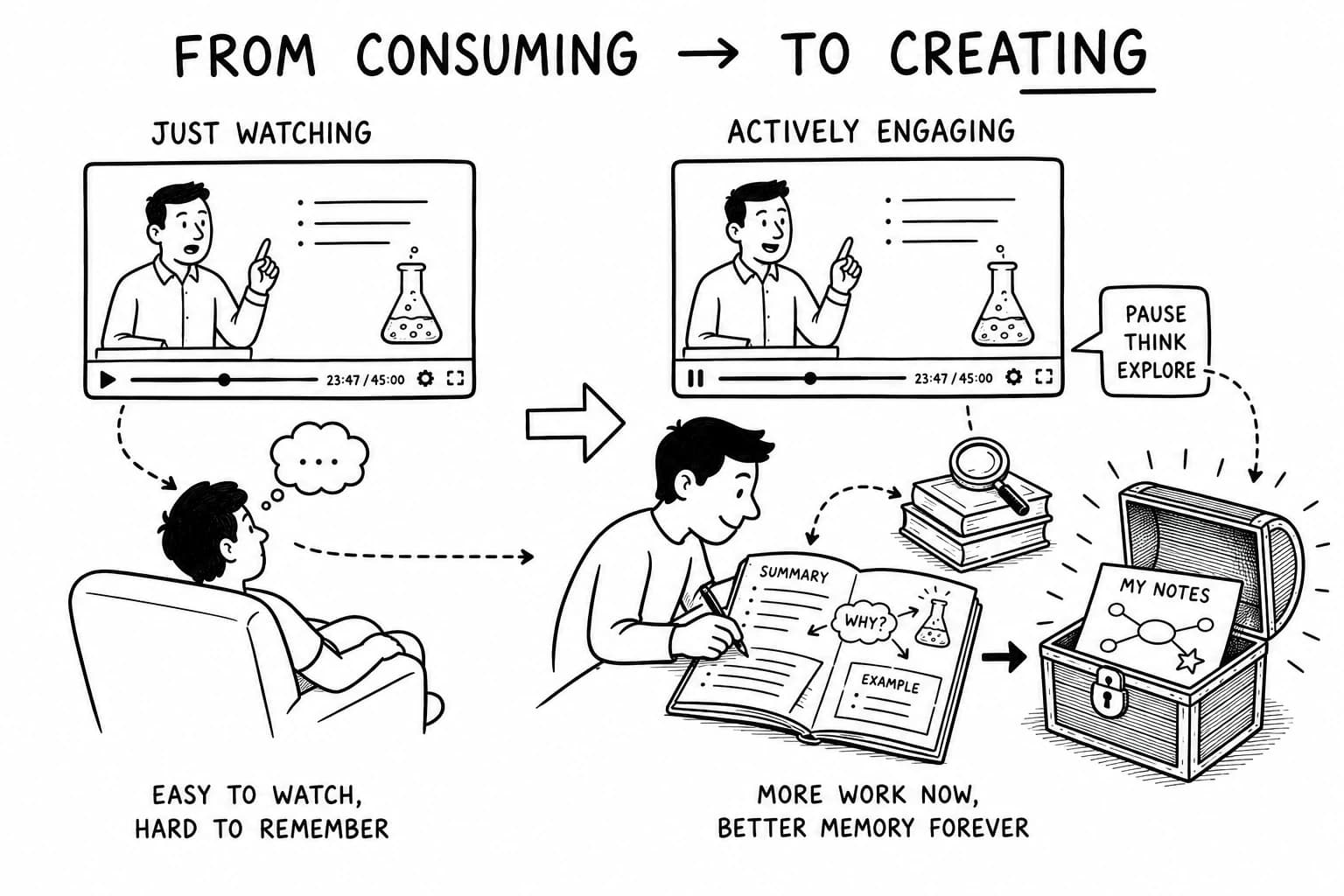
Why Does Building Beat Viewing? Retrieval Practice and Dual Coding
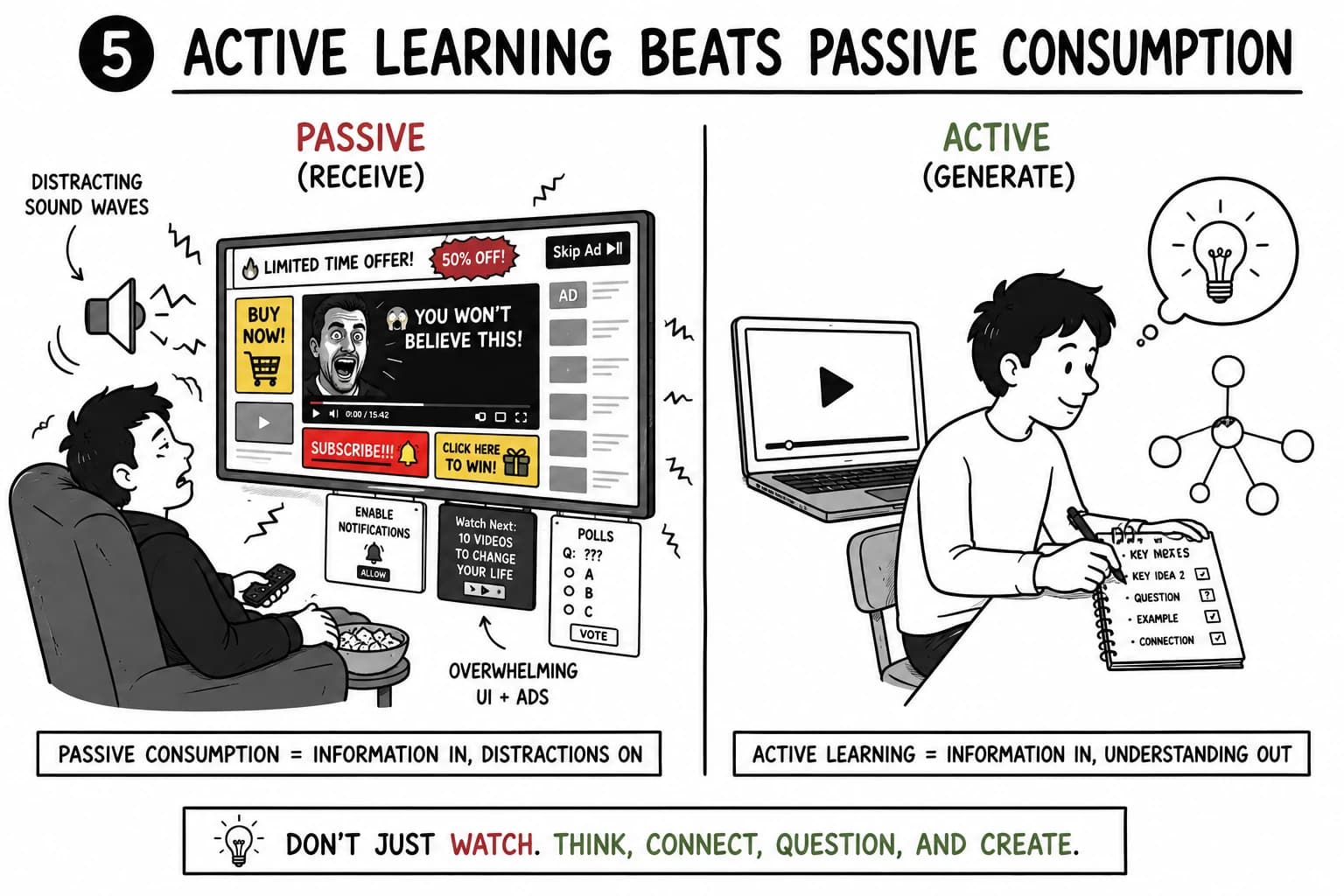
Hilbert and Renkl compared independent concept-map construction with studying worked examples, including examples accompanied by self-explanation prompts. Their experiments found that prompted self-explanation improved concept-mapping skills despite increasing cognitive load, illustrating the value of active construction.
| Concept | What Hilbert and Renkl Did → Your Next Rep |
|---|---|
| Subsumption theory, inclusive concepts and anchoring ideas | Explaining why a worked sales-contract map places "contract" above "offer" and "acceptance" helps learners recognize the principle of organizing subordinate concepts under an inclusive concept. |
| Semantic memory, visual-verbal encoding and self-explanation | Observing a worked map in which "sales contract" connects to "requires mutual agreement" helps learners associate visual connections with meaningful verbal propositions and form coherent knowledge structures. |
| Expert-novice differences, cognitive load and instructional scaffolding | A novice constructing a sales-contract map must simultaneously identify concepts, establish a hierarchy, formulate linking phrases and arrange nodes, whereas a worked example provides these decisions for inspection and prompts direct mental effort toward understanding why they work. |
How Should You Measure a Concept Map? Proposition Scoring, Transfer Tests and Learning Outcomes
In 1999, John McClure and colleagues compared six concept mapping assessment methods. Their findings emphasized proposition accuracy over visual appearance.
| Concept | What McClure, Sonak and Suen Did → Your Next Rep |
|---|---|
| Proposition accuracy, hierarchy quality and cross-link scoring | In a photosynthesis map, separately evaluating "chlorophyll absorbs light" and "carbon dioxide supplies carbon for sugar synthesis" allows independent raters to identify accurate and inaccurate relationships |
| Delayed recall, knowledge retention and transfer tests | Score an initial photosynthesis map against an expert reference, repeat the assessment from memory after 48 hours, then administer near-transfer questions about light availability and far-transfer questions about ecosystem productivity to distinguish proposition accuracy, knowledge retention and conceptual transfer. |
| Mental effort ratings, misconception analysis and cognitive load | Combine proposition-level scoring and expert-map comparison with standardized mental-effort ratings, construction time and misconception analysis; investigate whether instructional scaffolding reduces cognitive load while improving conceptual accuracy and assessment reliability. |
Can Collaborative Concept Mapping Improve Learning? Peer Review, Knowledge Sharing and Organizational Learning
In 1993, Wolff-Michael Roth and Anita Roychoudhury studied collaborative concept mapping in high-school physics classrooms, examining how students negotiated propositions, challenged competing explanations and constructed shared scientific understanding. Discussion during map construction can expose misconceptions and support collective knowledge construction.
| Concept | What Roth and Roychoudhury Did → Your Next Rep |
|---|---|
| Peer review, proposition negotiation and critical thinking | The researchers observed students negotiating propositions verbally and nonverbally, adopting opposing positions and appealing to authority; these activities review, highlight misconceptions and improve critical thinking and proposition accuracy. |
| Shared mental models, knowledge integration and knowledge management | Collaborative mapping improved several students' declarative knowledge, including the hierarchical organization and local configuration of concepts, while groups sometimes formed temporary alliances around classmates perceived as knowledgeable. |
| Organizational learning, collaborative learning and collective problem solving | The researchers found that sustained discussion could improve understanding while allowing incorrect propositions to become entrenched. Explicit responsibility for proposing, challenging and verifying relationships is key. |
Are AI Concept Map Generators Accurate? Benefits, Hallucinations and Human Validation
In the early 1990s, Kenneth Ford, Alberto Cañas and colleagues developed knowledge-acquisition tools associated with the NUCES nuclear-cardiology expert system. Concept maps helped experts organize domain knowledge and provided a browsing interface for explaining the system's knowledge.
| Concept | What the NUCES Researchers Did → Your Next Rep |
|---|---|
| AI concept map generators, knowledge graphs and meaningful learning | The researchers used ICONKAT to capture a cardiologist's expertise in interpreting first-pass cardiac images, organizing specialist concepts into maps that subsequently became NUCES's explanation interface. |
| Hallucination detection, source verification and active recall | ICONKAT supported the construction, testing, refinement and maintenance of expert knowledge bases, allowing specialists and knowledge engineers to inspect and revise the domain model. |
| Human validation, retrieval practice and spaced repetition | NUCES reused expert-constructed concept maps as a context-sensitive explanation interface, allowing users to explore related maps, medical images, research papers and expert videos. |
| Memory palaces, interleaving and adaptive study techniques | NUCES organized specialist knowledge into interconnected maps and linked multimedia resources, supporting need-based navigation. |
Which Study Method Works Best? Concept Maps vs Flashcards, Spaced Repetition and Memory Palaces
In 2015, Joseph Burdo and Laura O'Dwyer compared concept mapping and retrieval practice in an undergraduate physiology course. They found a trend favoring retrieval practice.
| Concept | What Burdo and O'Dwyer Did → Your Next Rep |
|---|---|
| Concept mapping, flashcards, medical education, and clinical reasoning | Construct symptom → mechanism → diagnosis → treatment concept maps, then use flashcards to retrieve isolated facts and test whether the combined strategy improves diagnostic understanding. |
| Spaced repetition, retrieval practice, and scientific research | Burdo and O'Dwyer evaluated retrieval-based learning against concept mapping across four physiology module examinations. |
| Memory palaces, procedural learning, and systems thinking | Use concept maps to externalize interconnected knowledge structures, memory palaces to memorize ordered sequences, and retrieval practice to reinforce procedural knowledge. Their study did not evaluate memory palaces or procedural learning directly. |
| Software engineering, systems design, and AI knowledge representation | An API concept map linking endpoints, HTTP methods, auth, request validation, database operations and external service dependencies to their failure conditions (4XX - 5XX) can help developers create standardized, battle tested reusable code. |
| UX research, product management, and business strategy | Use concept mapping to connect user needs, research evidence, product requirements, strategic objectives, and organizational dependencies; then apply retrieval practice to reconstruct the underlying assumptions and evaluate competing decisions. |
| Knowledge management, corporate training, and research planning | Externalize complex knowledge structures into visual models for corporate training, scientific research planning, and organizational knowledge management, then assess whether employees can independently reconstruct critical relationships. |
Where Are Concept Maps Used? Education, Medicine, Engineering, Business and AI
In 1999, Barbara Daley and colleagues investigated concept mapping with nursing students across six senior clinical groups. Students constructed three maps during a semester, and their mean map scores increased from 40.38 to 135.55 between the first and final assessments.
| Concept | What Barbara Daley Did → Your Next Rep |
|---|---|
| Medical education and clinical reasoning | Daley's students constructed three clinical concept maps over a semester, increasing their mean scores from 40.38 to 135.55. |
| Software engineering and systems design | Significant improvement across successive maps illustrates how repeated construction and assessment can develop more sophisticated representations of interconnected knowledge. For example, an initial API map might connect an endpoint to authentication and a database, while subsequent versions incorporate request validation, authorization, transaction failures, HTTP 400/401/403/404/409/429/500/504 responses, upstream timeouts, retry policies and error propagation. |
| Business strategy and research planning | Construct three successive business strategy maps, validate relationships against customer interviews and performance data, and compare proposition accuracy, causal assumptions, cross-functional dependencies and evidence gaps to evaluate strategic reasoning and research synthesis. |
Why Do Concept Maps Work? Retrieval Practice, Dual Coding or Better Knowledge Organization?
María Teresa Lechuga and colleagues trained 60 high-school students to construct concept maps and found that organizing retrieved knowledge into a visual network before explaining it verbally can support subsequent learning.
| Concept | What Lechuga, Ortega-Tudela and Gómez-Ariza Did → Your Next Rep |
|---|---|
| Dual coding, visual-verbal encoding, and knowledge organization | By explaining every visual relationship with precise linking verbs, connecting concepts into richer semantic networks and reinforcing visual-verbal representations, learners are more engaged and retain more. |
| Schema construction, semantic memory, and meaningful learning | Students reconstructed concepts and meaningful relationships in a map before producing a written explanation, or completed these activities in reverse order. Better delayed performance was observed when mapping came first. |
| Retrieval practice, generation effect, and long-term retention | After studying a topic such as photosynthesis, close your notes and retrieve its key concepts, generate a map connecting sunlight, chlorophyll, water, carbon dioxide and glucose through meaningful propositions, then explain those relationships in a paragraph; check and correct your errors, and reconstruct the map after progressively longer intervals to assess long-term retention. |
| Memory consolidation, conceptual elaboration, and transfer of learning | Explain relationships through unfamiliar examples and test whether the resulting knowledge structures and underlying consolidation mechanisms support transfer of learning. |
Applying Concept Mapping to AI Learning: From the Cursus Publicus to AI Skeleton Maps
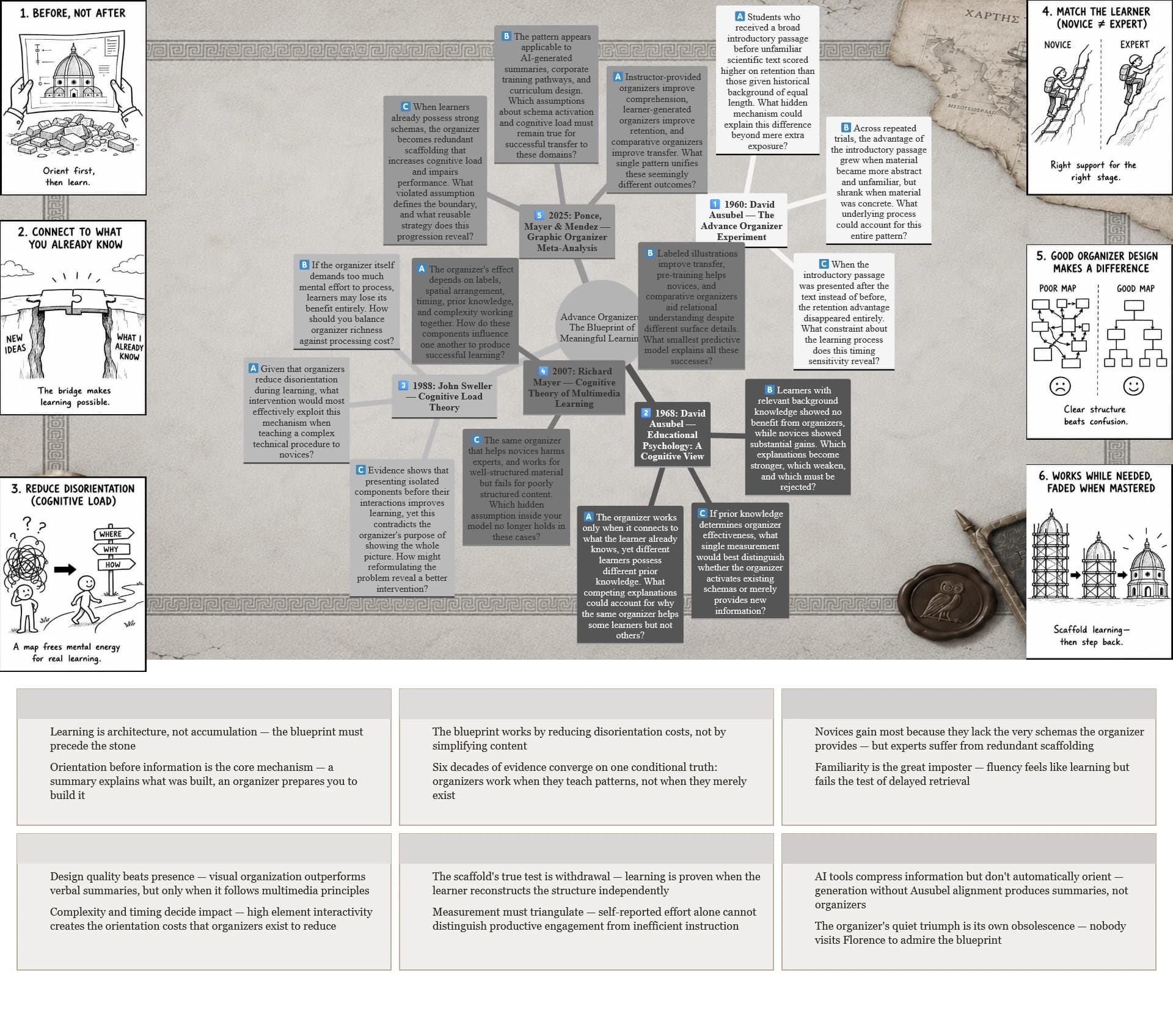
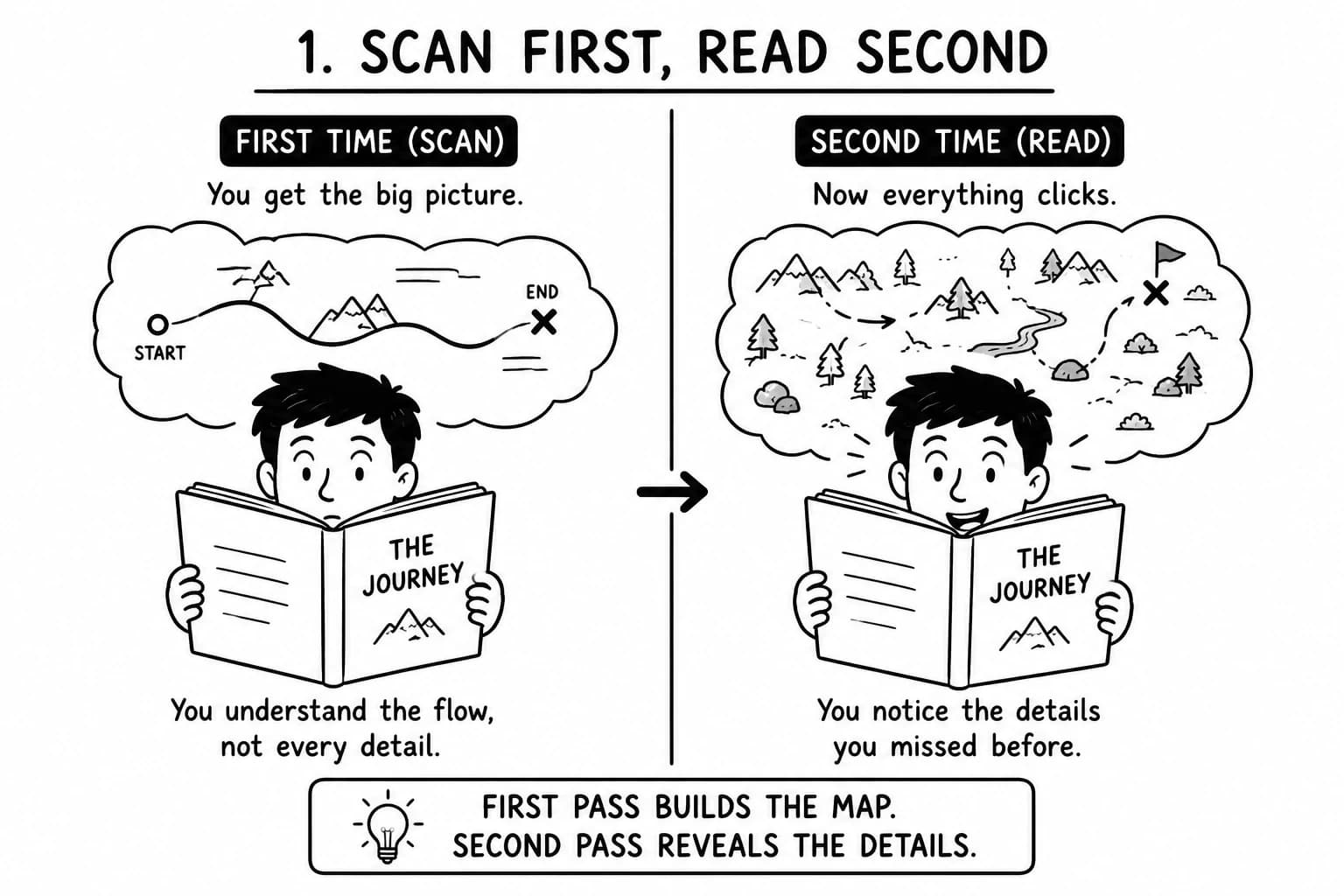
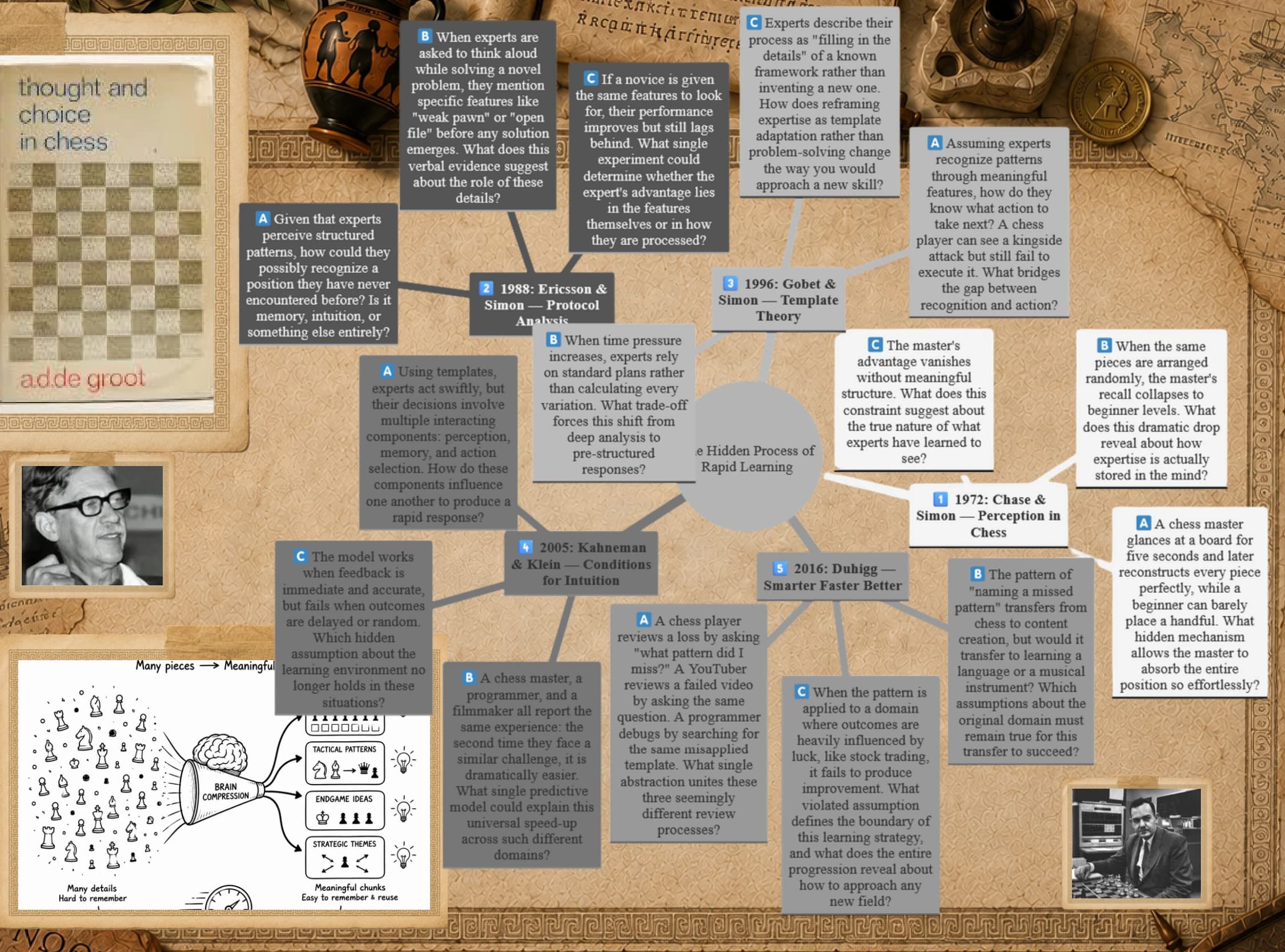
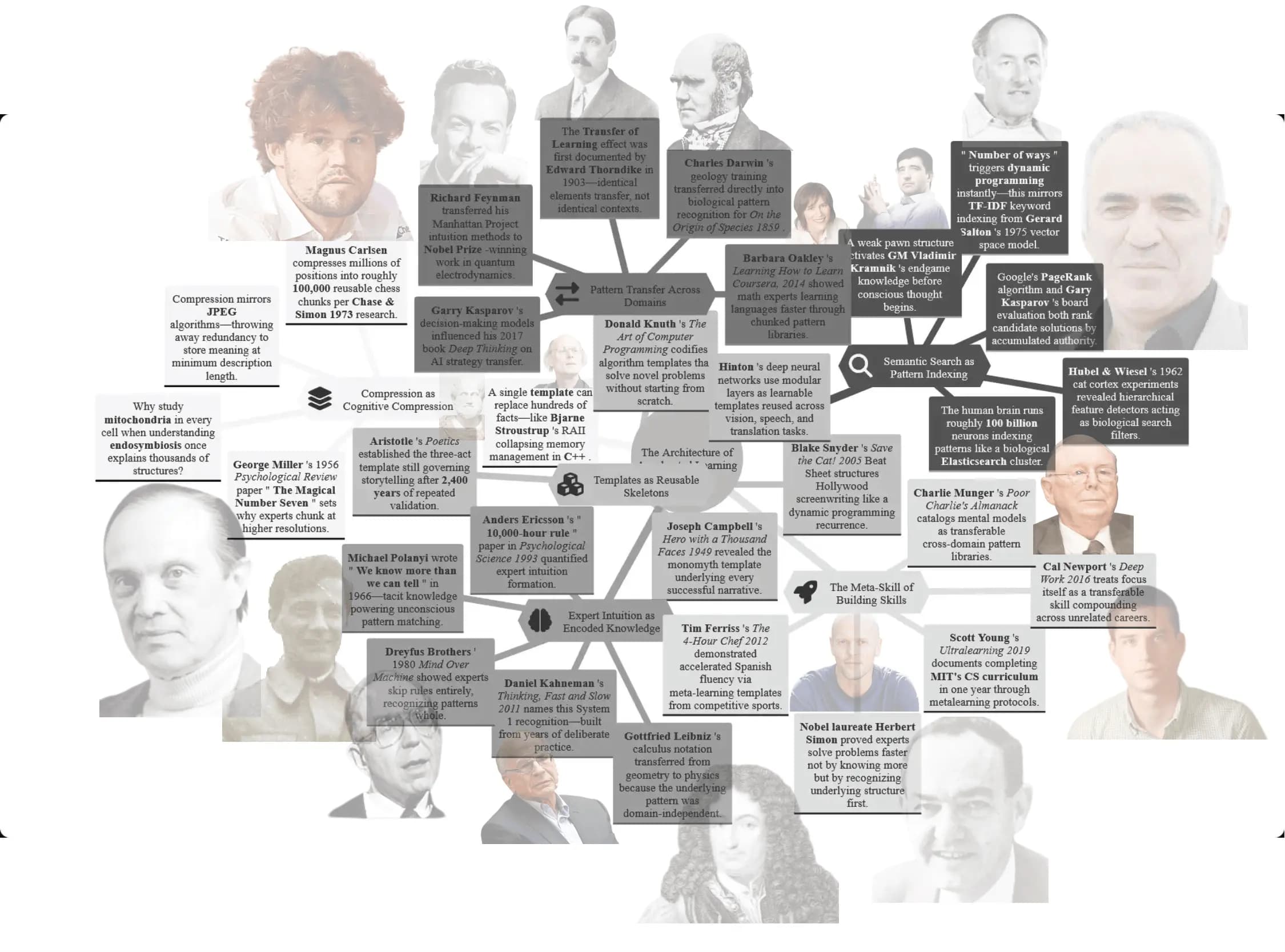
When Emperor Augustus reorganized the Cursus Publicus, Rome's imperial courier system, an empire stretching from Britannia to Syria could no longer depend on every courier remembering every road, bridge, provincial capital, and mountain pass. Instead, Augustus transformed the Roman road network into an external memory system. Standardized milestones recorded distances from the Milliarium Aureum, mutationes supplied fresh horses every few dozen kilometers, mansiones provided official lodging along major routes, itineraria documented established routes between cities, and imperial surveyors continually inspected roads before they carried armies, tax revenues, or government dispatches. The courier no longer memorized the empire because the infrastructure carried part of the navigation. Concept mapping, knowledge representation, expert skeleton maps, advance organizers, AI learning assistants, knowledge graphs, and instructional scaffolding pursue the same objective. They externalize relationships, activate prior knowledge, reduce extraneous cognitive load, and provide an organized route that lets working memory focus on understanding instead of navigation.
Best Concept Mapping Software and Best AI Concept Map Generator?
In 1945, Vannevar Bush proposed the memex, a hypothetical information system in which researchers could connect documents through associative trails, retrieve related material and preserve the paths of their investigations. His proposal anticipated important ideas in hypertext and personal knowledge management. Modern concept mapping software extends this principle through editable relationships, collaborative diagrams and NLP embedding/AI-assisted knowledge organization.
| Concept | What Vannevar Bush Proposed → Your Next Rep |
|---|---|
| Classroom concept mapping, CmapTools and lesson planning | A teacher can prepare a lesson or advance organizer around meaningful relationships that help students revisit prerequisite knowledge, explain causal relationships and identify gaps in understanding. |
| Collaborative diagram design, interaction design and cognitive fit | Bush envisioned interconnected information displayed together, allowing researchers to navigate related documents while preserving the paths of their investigations. *Think of it as a concept map whose nodes are documents. |
| AI concept map generators, knowledge engineering and research workflows | Researchers could connect new findings to existing knowledge, reuse previously established relationships and navigate linked evidence without losing the context of their investigations. |
Concept Maps for Nursing, Biology, Chemistry, Medicine and Research?
In 1994, Songer and Mintzes investigated how 200 college biology students understood cellular respiration. They used concept maps, clinical interviews and open-ended questions to examine the prevalence of misconceptions and conceptual difficulty.
| Concept | What the Researchers Did → Your Next Rep |
|---|---|
| Biology, chemistry, cellular respiration and misconceptions | A biology teacher asks students to explain cellular respiration through concept maps, written answers and interviews, using disagreements between their responses to uncover misconceptions that a conventional factual quiz might miss. |
| Nursing, medical education, clinical reasoning and pathophysiology | A nursing instructor asks students to predict how impaired oxygen delivery affects ATP production before and after a physiology lesson, using their explanations to identify persistent misunderstandings that require targeted instruction rather than further repetition of the same material. |
| Scientific research, formative assessment, conceptual change and knowledge organization | A university curriculum researcher compares introductory and advanced biology students' explanations of cellular respiration, traces recurring misconceptions across course levels and uses the findings to redesign prerequisite teaching around the concepts that repeated instruction has failed to clarify. |
Concept Maps for Knowledge Management, Curriculum and Business Strategy?
In 1876, Melvil Dewey published his decimal classification system, organizing library collections into standardized subject categories and expandable hierarchies. This allowed librarians and readers to locate related knowledge through a consistent organizational structure, an important precedent for modern knowledge organization systems, curriculum taxonomies and enterprise information architecture. The Library of Congress subsequently incorporated Dewey numbers into cataloging records distributed to other libraries, illustrating the organizational value of shared classification standards.
| Concept | What the Researchers Did → Your Next Rep |
|---|---|
| Curriculum mapping, instructional design, adaptive learning and scaffolding | Because Dewey organized broad subjects into progressively narrower categories, an instructional designer can use obsidian to build a curriculum map connecting learning objectives, prerequisite concepts and assessments, then use Bloom's taxonomy and backward design to create progressively more specialized learning pathways for students in an LMS. |
| Enterprise knowledge management, organizational learning, business strategy and controlled vocabularies | Because Dewey's standardized classification enabled different libraries to organize knowledge consistently, an enterprise knowledge manager can establish a shared vocabulary connecting business processes, departmental expertise, product requirements and strategic objectives, allowing employees to retrieve institutional knowledge across teams without relying on inconsistent departmental terminology. |
| Information architecture, knowledge organization systems, information visualization and UX research | Because Dewey's expandable decimal notation accommodated increasingly specialized subjects without abandoning the broader classification structure, a UX researcher can design and test a progressively disclosed knowledge-navigation interface that moves from broad topics to specific documents, measuring whether employees can locate relevant information accurately without navigating an overwhelming collection of unrelated results. |
When Should You Use — or Avoid — Concept Mapping? Size, Cycles and Pitfalls
In the early nineteenth century, Joseph-Marie Jacquard developed a loom mechanism that used sequences of punched cards to control intricate woven patterns, encoding complex designs as repeatable instructions. Each card controlled part of the weaving process, allowing elaborate patterns to emerge from a manageable sequence of operations. A structured sequence serves procedural tasks, while a concept map is particularly useful when understanding depends on relationships between ideas.
| Concept | What the Researchers Did → Your Next Rep |
|---|---|
| Concept map scope, cognitive load, knowledge construction and instructional scaffolding | An instructional designer can teach students to distinguish sequential procedures from conceptual relationships, using flowcharts for laboratory protocols and focused concept maps for explaining biological mechanisms while assessing whether each representation makes the task easier to understand. |
| Concept map quality, grading, misconception analysis and formative assessment | A chemistry teacher can ask students to predict reaction outcomes from their concept maps, test those predictions through experiments and use discrepancies to identify incorrect causal propositions, missing prerequisites and misconceptions requiring targeted instruction. |
| Research synthesis, collaborative concept mapping, feedback cycles and knowledge management | A multidisciplinary research team can maintain a shared concept map linking hypotheses, experimental evidence, contradictory findings and feedback cycles, using version history and proposition ownership to preserve institutional knowledge and trace how its scientific explanations evolve. |
All Roads Lead to Rome
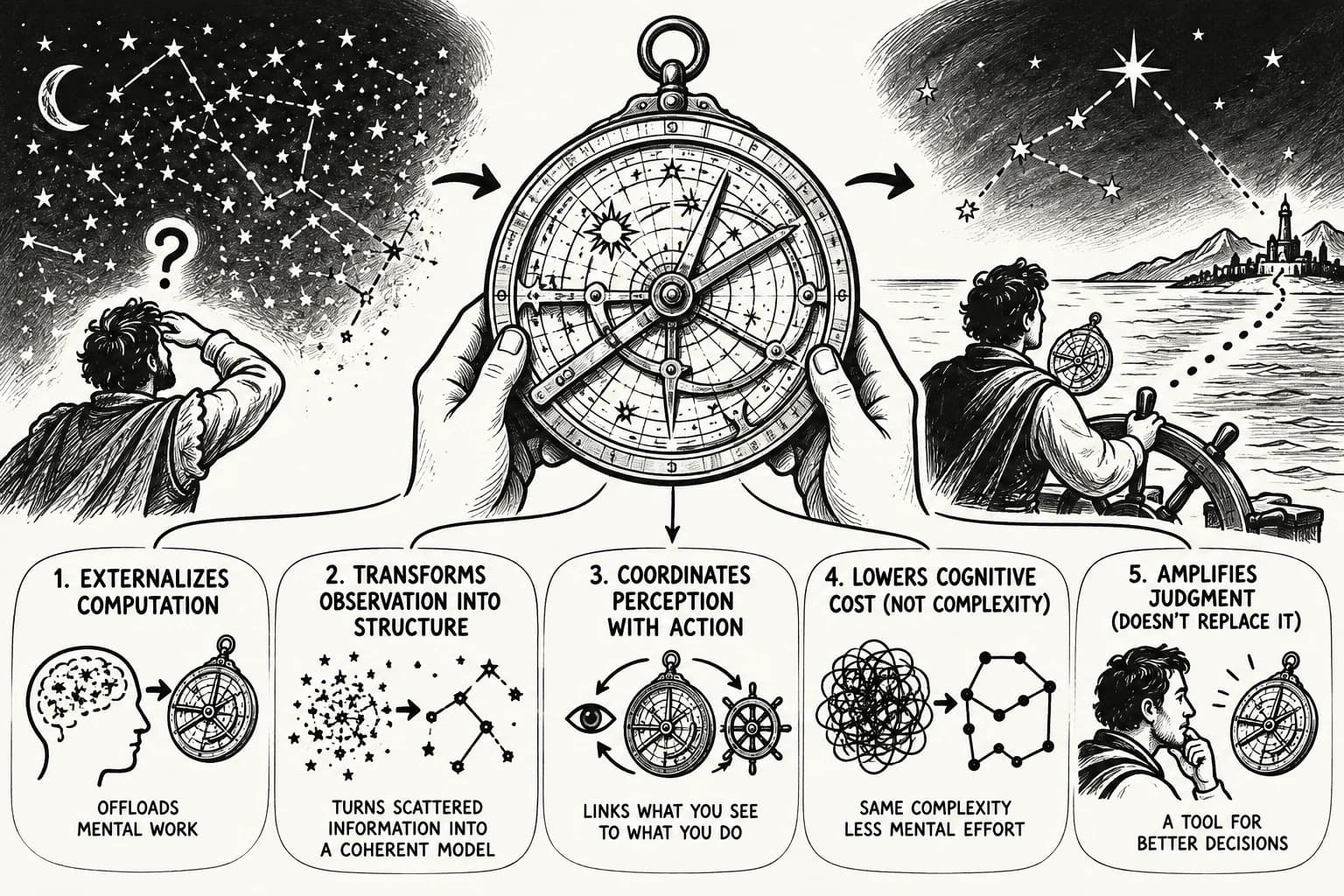
The Cursus Publicus did not make couriers more intelligent; it made navigation less wasteful. Standardized milestones, route registers, relay stations, and official itineraries externalized the empire's geography so memory could be reserved for judgment rather than directions. The same engineering principle underlies modern AI concept mapping, expert skeleton maps, knowledge graphs, instructional scaffolding, and learning assistants. The strongest systems do not replace thinking. They remove the navigational burden that prevents thinking from reaching its destination.
If every important destination is connected by clear routes, labeled junctions, and the occasional well-placed bridge, you spend less time wandering and more time arriving. The irony is that we've recreated the Cursus Publicus inside our computers. Roman milestones became hyperlinks. Relay stations became search engines. Provincial maps became knowledge graphs. AI can now sketch the roads before we've even packed our bags.
Yet one thing hasn't changed: someone still has to walk the route.
After all, staring at a map never got a legion to Gaul.