A Ship Never Crossed an Ocean Because One Sailor Remembered Everything
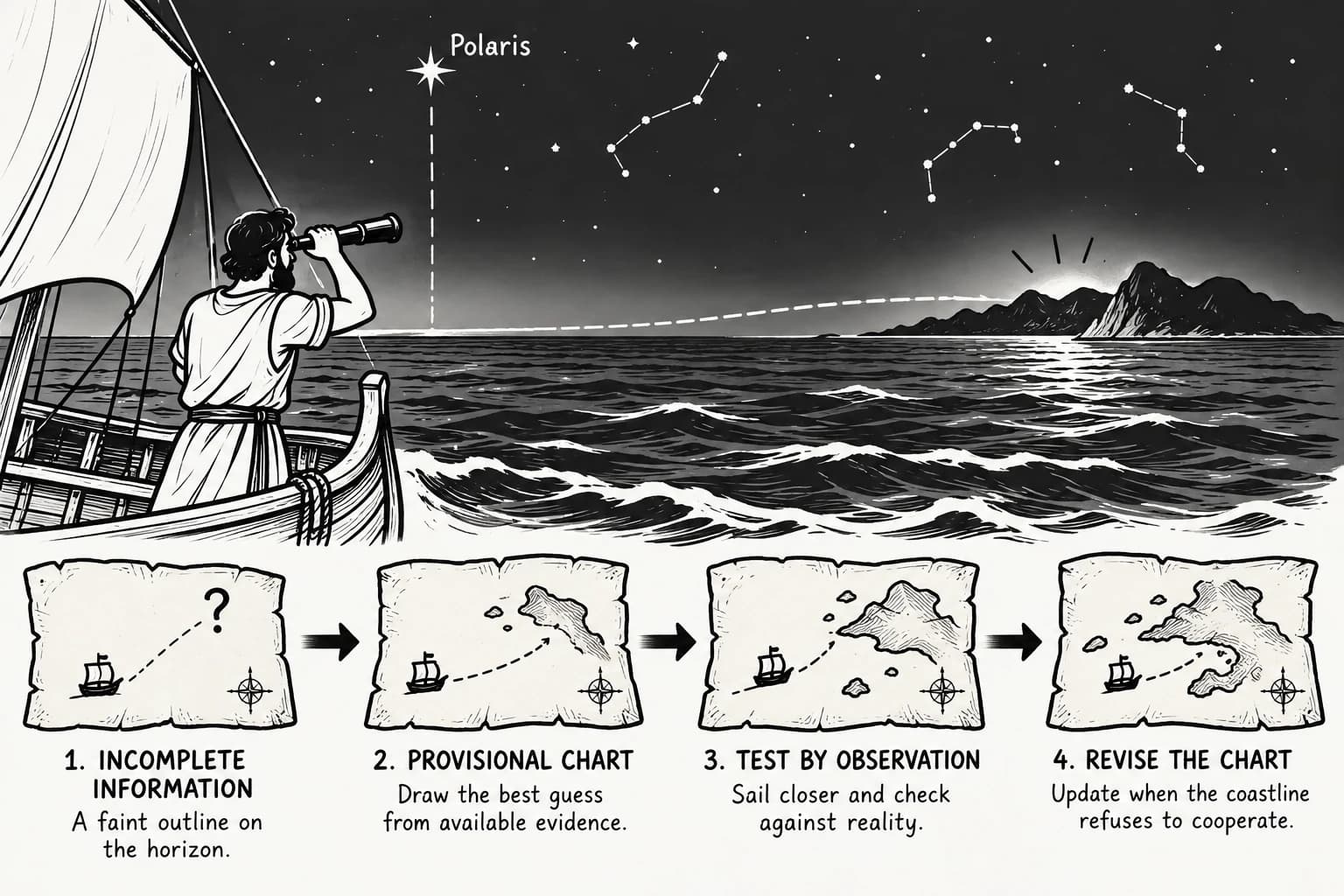
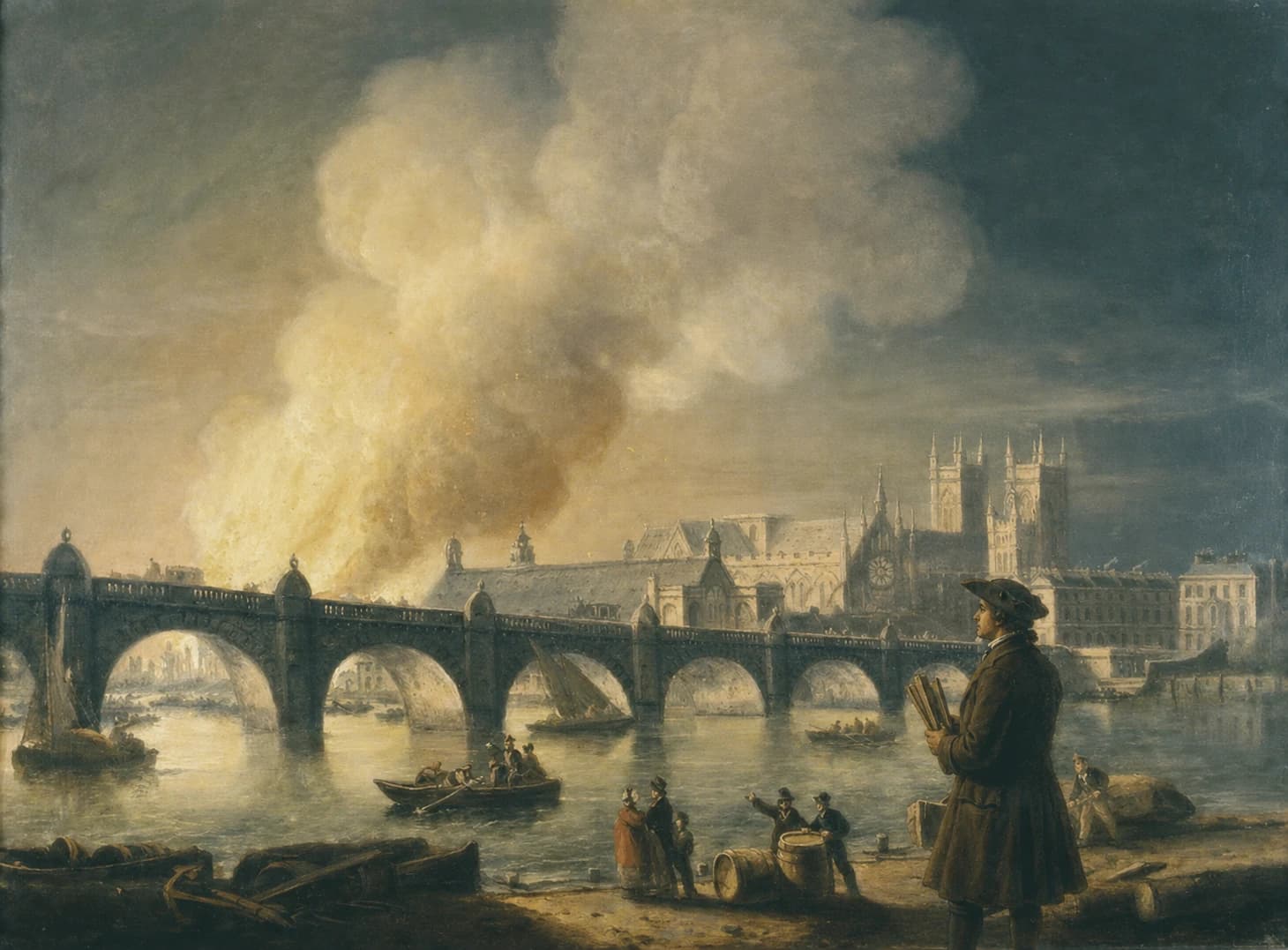
For most of human history, no single sailor understood the entire voyage.
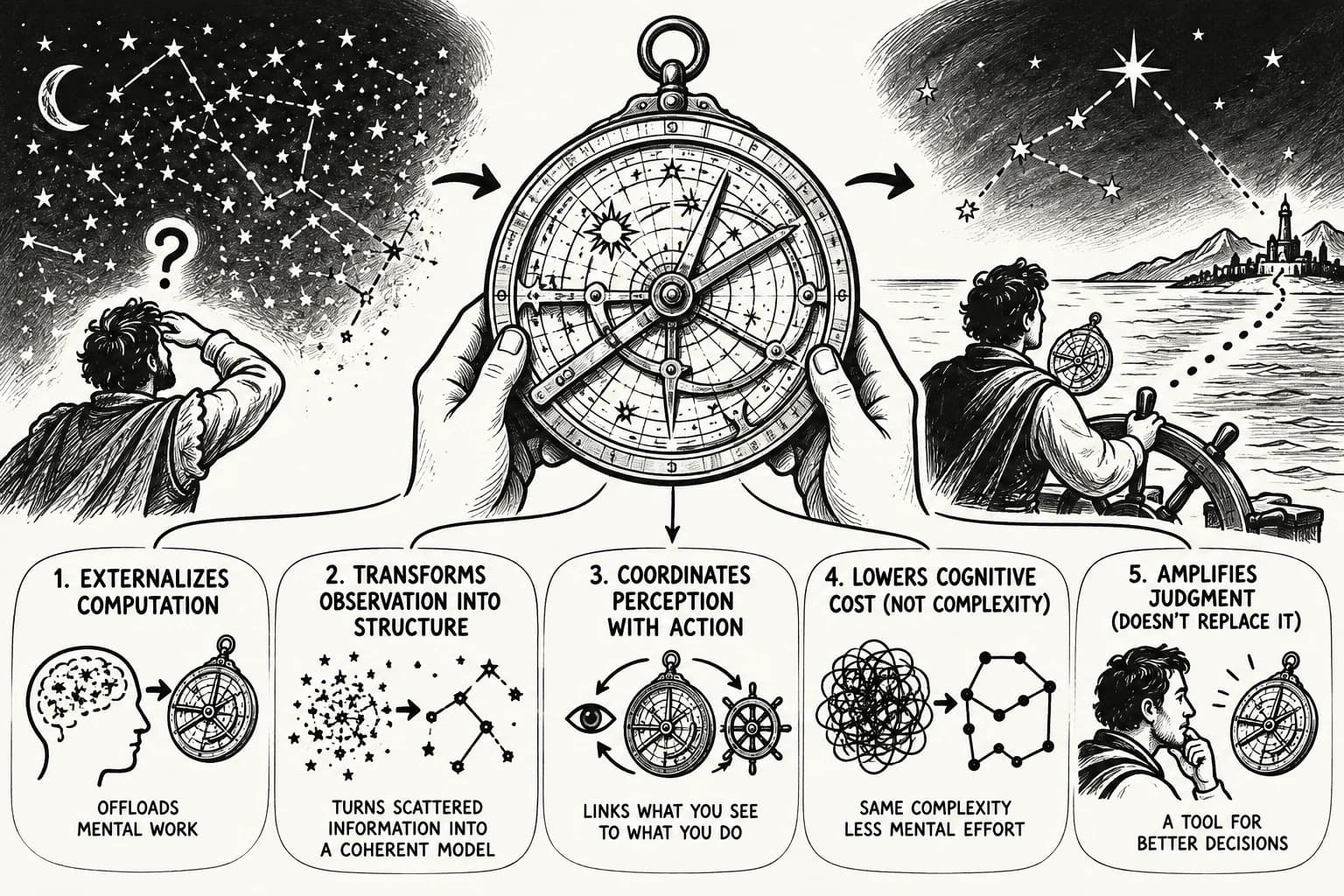
The navigator studied the charts but never touched the rudder. The helmsman held the course but not the calculations. The quartermaster managed provisions, the lookout watched the horizon, while the logbook, compass, fathom line, and later the gyrocompass quietly remembered measurements no human could continuously hold in mind. Long-distance navigation succeeded because knowledge was distributed across the crew, their instruments, and the sea itself. Remove any one component and the voyage became slower, riskier, and more error-prone.
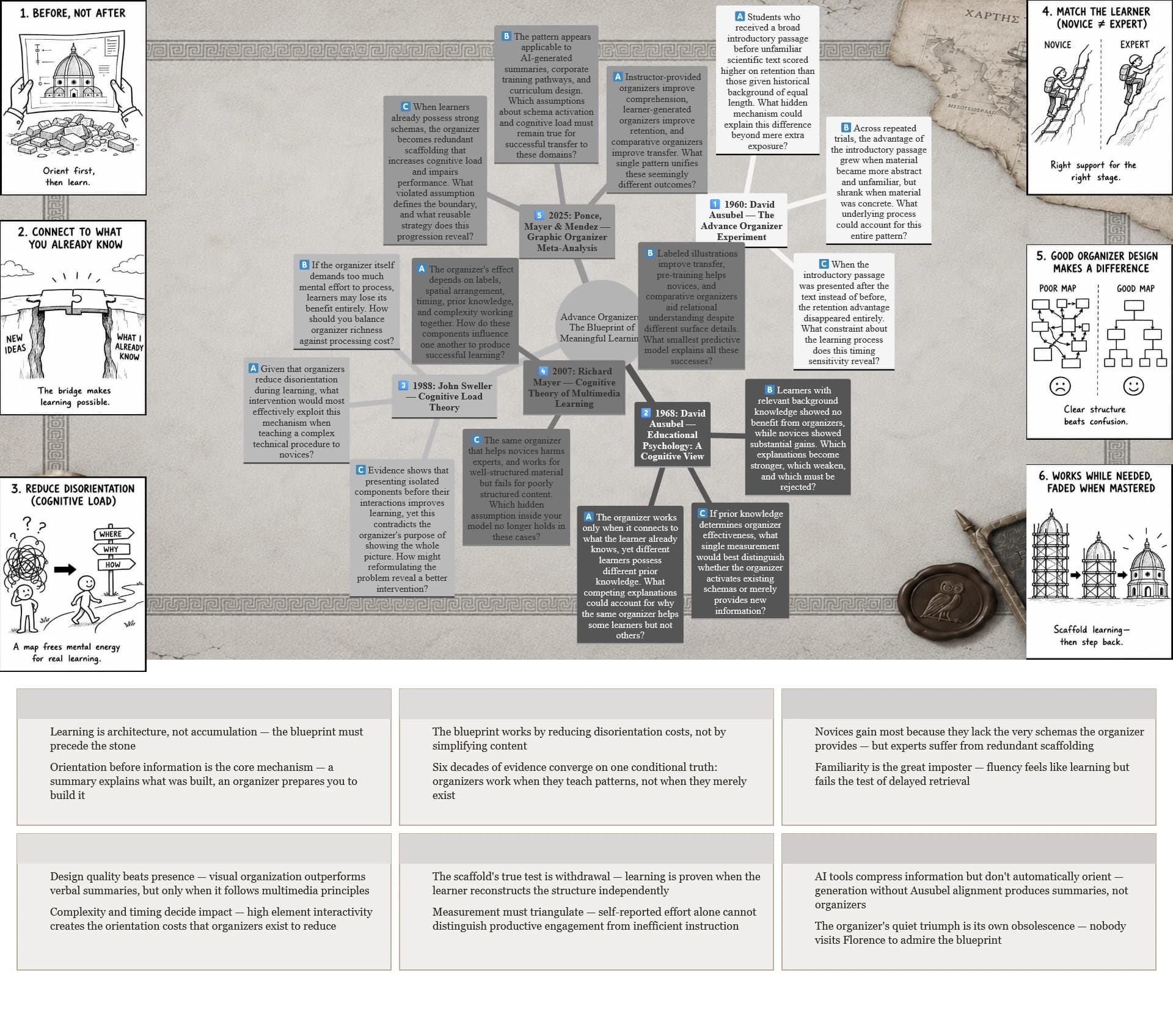
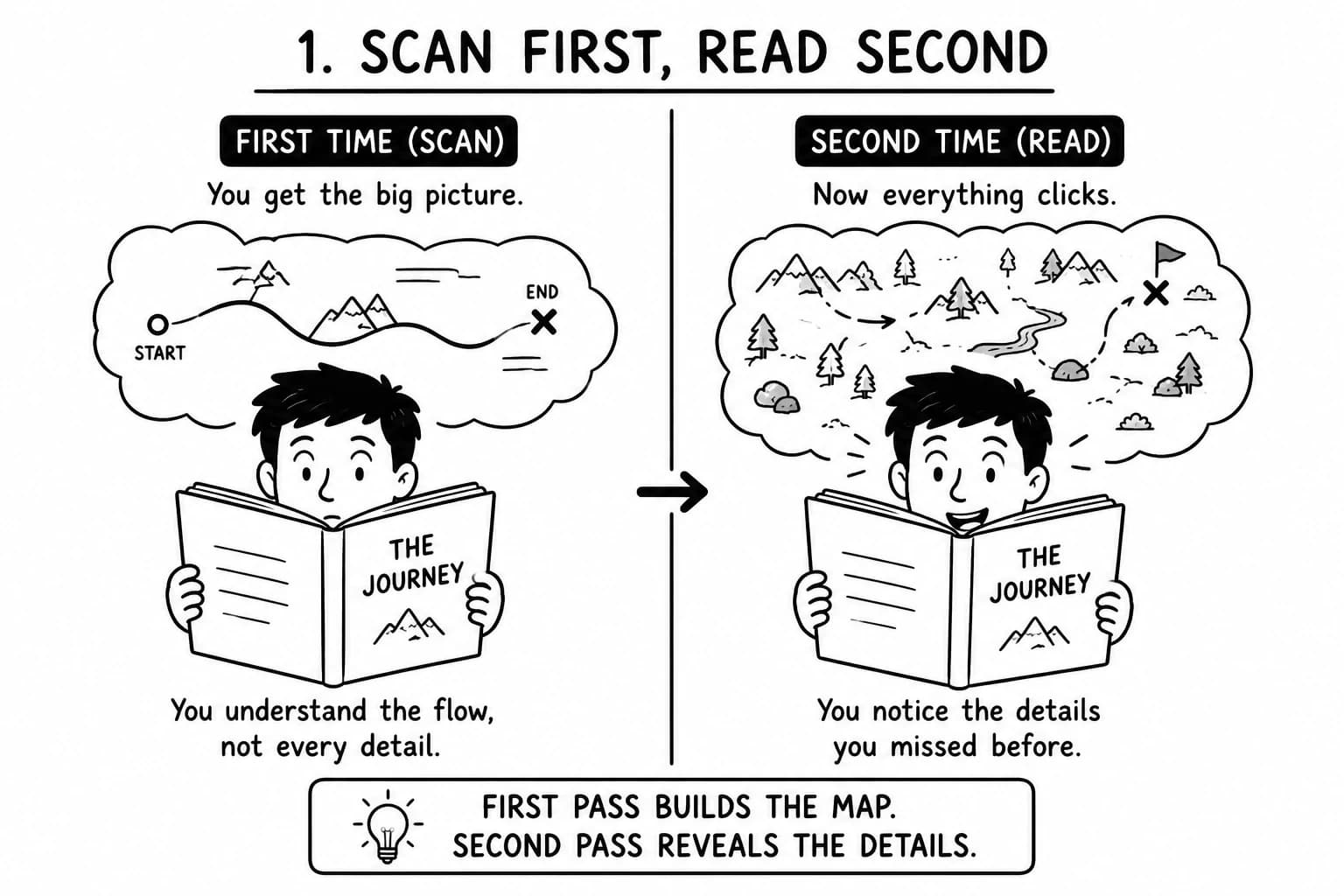
When Edwin Hutchins documented naval navigation in Cognition in the Wild (1995), he argued that the true unit of intelligence was the distributed cognitive system. Thinking emerged from people coordinating with cognitive artifacts, external representations, and their environment. Modern AI advance organizers, AI mind maps, and knowledge graphs should inherit the same philosophy. Their purpose is to reduce the busywork of search, information retrieval, knowledge organization, and cognitive offloading so humans can spend more effort on higher-order reasoning—analysis, synthesis, evaluation, hypothesis generation, and decision making. The ship still needs a captain. AI simply keeps the charts updated.
-
Social Distribution — Collaborative Cognition, Distributed Expertise, Team Cognition: Hutchins showed that socially distributed cognition emerges through collaborative cognition, distributed expertise, shared awareness, knowledge distribution, task distribution, distributed decision making, workflow coordination, and organizational cognition, where intelligence arises from coordinated teams. Modern AI extends the crew by improving communication without replacing human judgment.
-
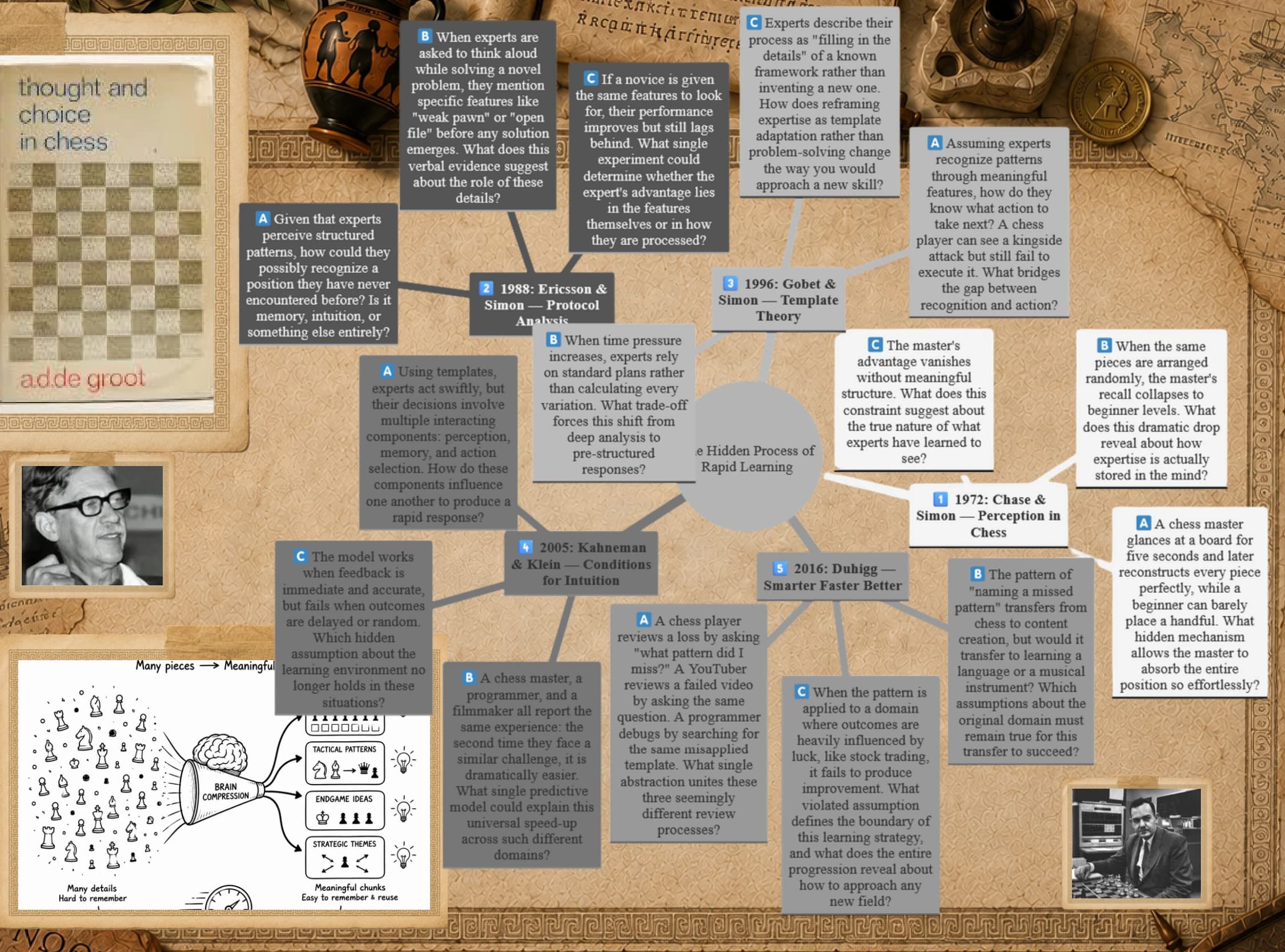
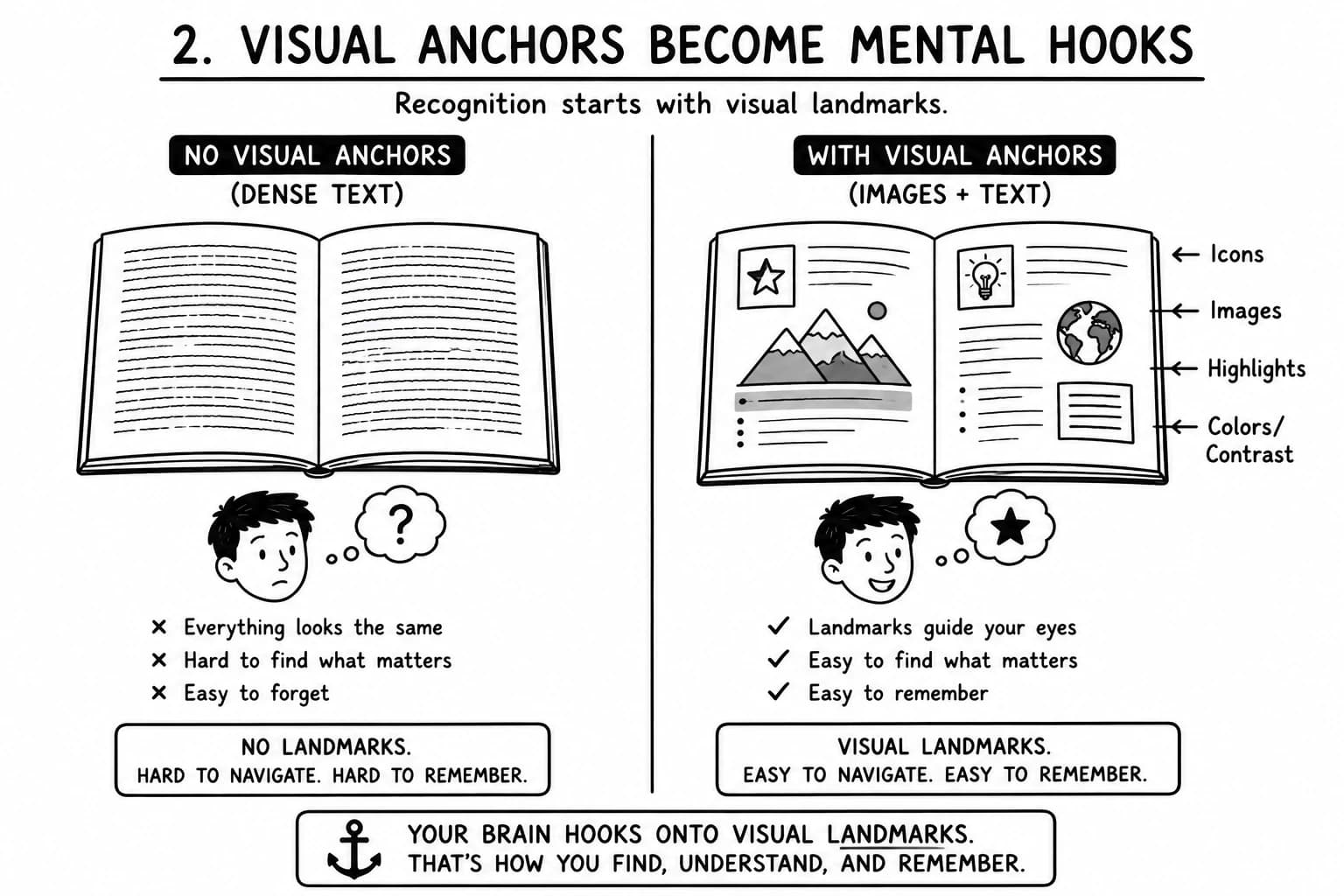
Material Distribution — Cognitive Artifacts, External Representations, Human-Artifact Interaction: Materially distributed cognition relies on cognitive artifacts, external representations, communication artifacts, shared representations, human-artifact interaction, and distributed information processing. Maps, diagrams, notes, dashboards, AI mind maps, and knowledge graphs perform genuine computational work by organizing information, reducing working-memory demands, and making complex relationships visible.
-
Spatial and Temporal Distribution — Environmental Scaffolding, Distributed Memory, Cognitive Ecology: Intelligence also extends across spatial distribution, temporal distribution, distributed memory, environmental scaffolding, coordination mechanisms, and a shared cognitive ecology. Information persists in logbooks, checklists, diagrams, workflows, and digital knowledge bases, allowing reasoning to accumulate across places, people, and time.
-
Distributed Cognition Across Real Systems — Aviation, Healthcare, Software Engineering, Emergency Response: Research demonstrates distributed cognition across aviation, healthcare, software engineering, classrooms, emergency response, and military navigation, where reliable performance depends on coordinated distributed workflows, shared representations, and cognitive artifacts. Modern AI systems belong in this tradition by coordinating information.
-
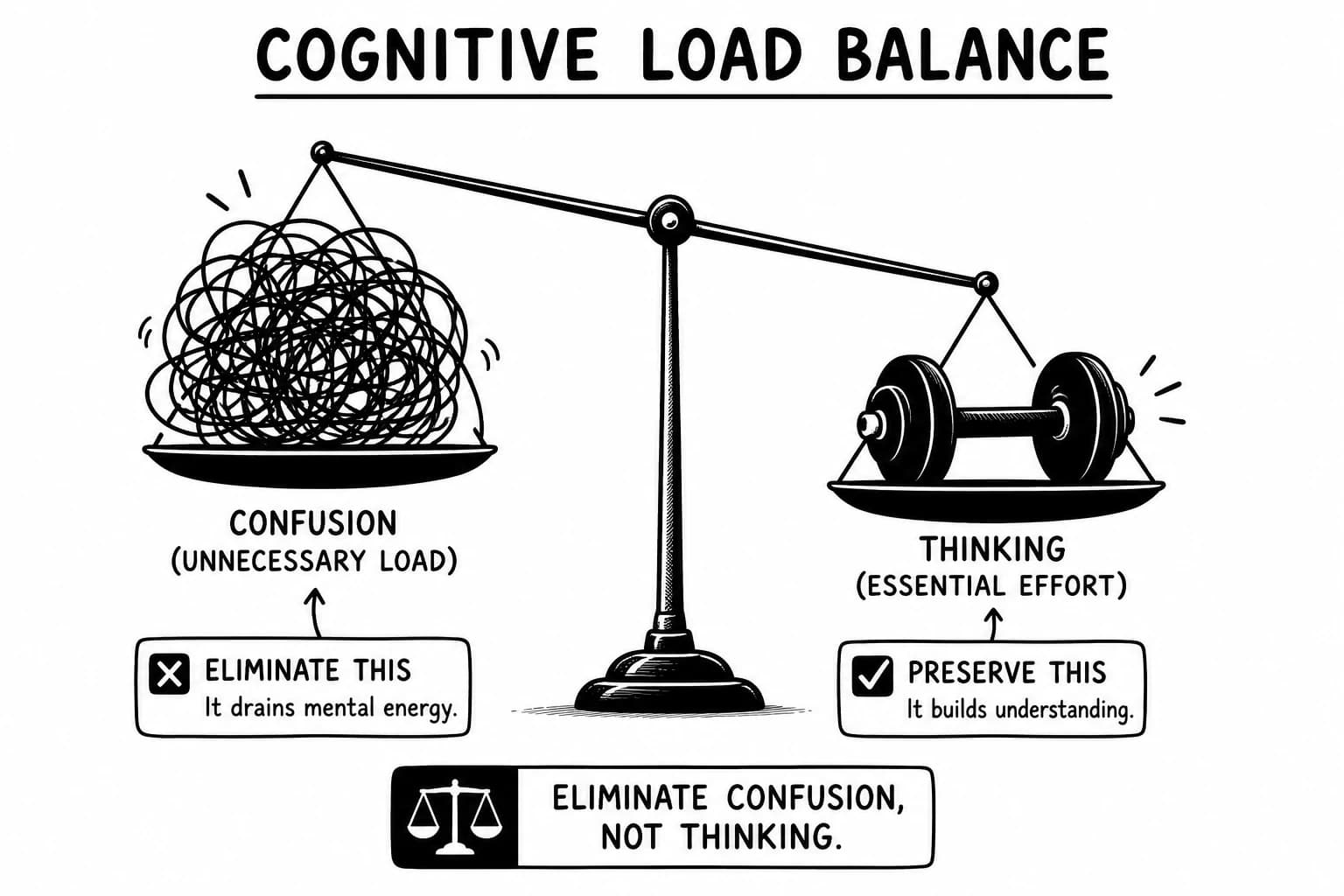
Engineering AI Advance Organizers — Cognitive Offloading Without Cognitive Replacement: The practical design principle is simple: AI should perform cognitive offloading for search, retrieval, summarization, organization, and relationship mapping while preserving human responsibility for interpretation, critical thinking, causal reasoning, creativity, and final decisions. Effective AI advance organizers become components of the learner's distributed cognitive system, reducing information management so people can devote scarce cognitive resources to higher-order cognition.
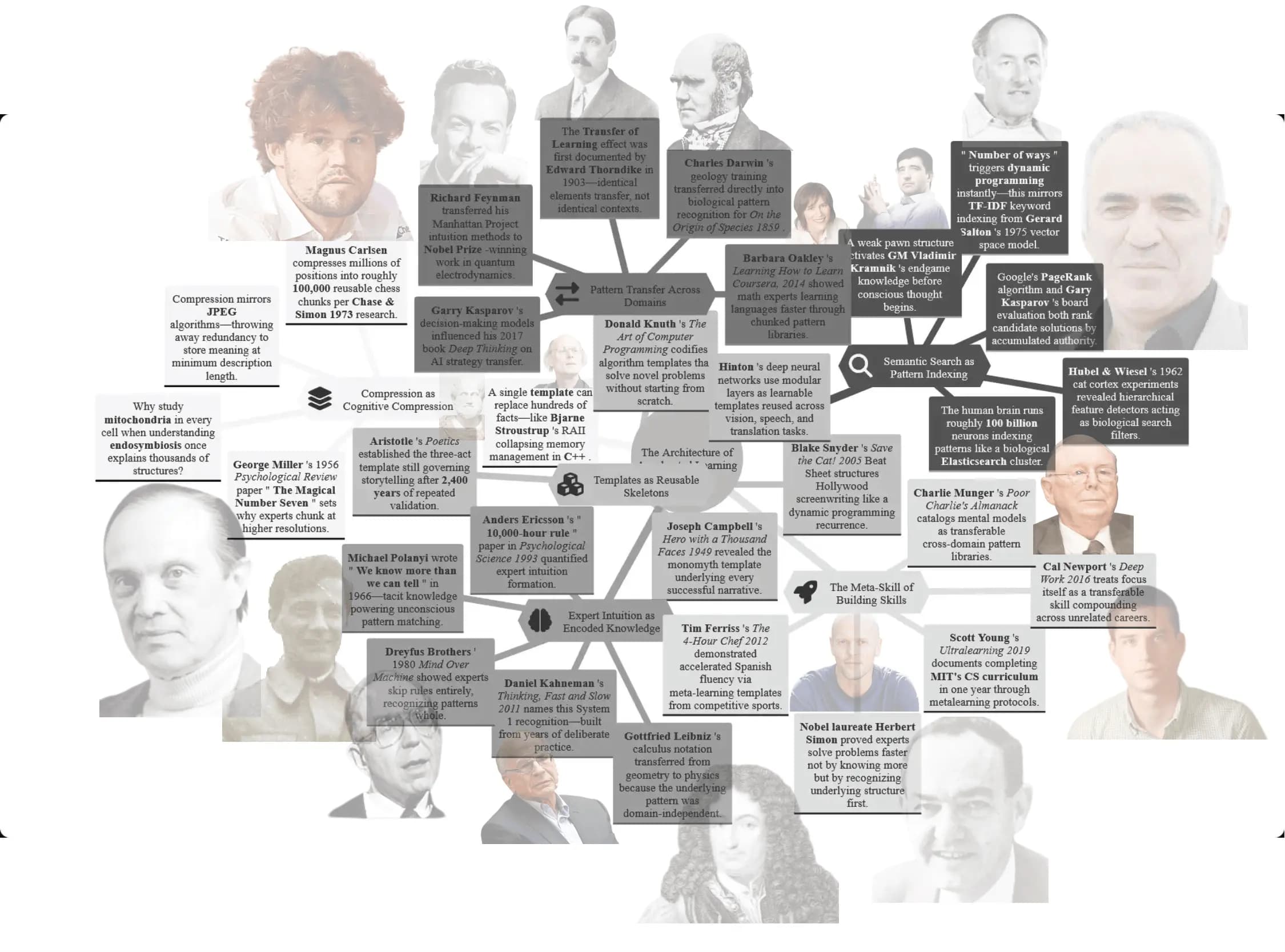
Year Research Key concepts and advancements 1920s–1930s Lev Vygotsky develops Sociocultural Theory Sociocultural theory, mediated cognition, psychological tools, social interaction, cultural artifacts, scaffolding, internalization, Zone of Proximal Development (ZPD) establish that thinking develops through interaction with people and tools. 1987 Daniel Wegner introduces Transactive Memory Transactive memory, collective memory, shared expertise, who-knows-what, social cognition, knowledge distribution explain how groups distribute remembering across individuals. 1987–1988 John Sweller develops Cognitive Load Theory Working memory, limited working memory, Cognitive Load Theory, intrinsic load, extraneous load, germane load, schema construction, schema automation, element interactivity, mental effort, information processing, executive function, chunking provide the cognitive rationale for external support. 1990s Edwin Hutchins (UCSD) develops Distributed Cognition from cognitive anthropology and situated cognition Distributed cognition origins, cognitive anthropology, situated cognition movement, navigation studies, distributed cognitive systems, cognition beyond the individual, thinking across people and tools, cognitive ecology, knowledge work evolution redefine cognition as a system. 1994 Kirsh & Maglio introduce Epistemic Actions Epistemic actions, external problem solving, human-artifact interaction, cognitive artifacts, interaction design, thinking through action demonstrate that manipulating external objects performs genuine cognitive work. 1994 Zhang & Norman — Representations in Distributed Cognitive Tasks External representations, representation design, cognitive artifacts, information visualization, mental models, conceptual models, hierarchical representations, graphs vs tables, diagram cognition, representation quality, operator constraints, representation cost, information structure, visual cognition show that representations change reasoning. 1994 Rogers & Ellis apply DCog to Human–Computer Interaction Human-computer interaction (HCI), coordination of cognition, distributed information processing, workflow coordination, shared representations, communication artifacts, collective problem solving, distributed workflows establish DCog as an HCI analysis framework. 1995 Edwin Hutchins — Cognition in the Wild Distributed cognition definition, distributed cognition meaning, what is distributed cognition, Cognition in the Wild, distributed cognitive systems, socially distributed cognition, materially distributed cognition, environmentally distributed cognition, unit of analysis, cognitive system, ship navigation, military navigation, cognition across time, external representations, cognitive artifacts establish that cognition is distributed across people, tools, and environments. 1997 Gavriel Salomon — Distributed Cognitions Distributed cognitions, educational technology history, collaborative cognition, shared awareness, distributed expertise, organizational cognition, team cognition, distributed decision making, environmental scaffolding, classroom learning bring DCog into education and collaborative learning. 1998 Andy Clark & David Chalmers — The Extended Mind Extended mind theory, The Extended Mind, philosophy of mind, where does cognition occur, extended cognition provide a philosophical counterpart to DCog while highlighting differences between distributed cognition and extended mind. 2000 Hollan, Hutchins & Kirsh — Toward a New Foundation for HCI Research Social distribution, material distribution, spatial distribution, temporal distribution, distributed memory, coordination mechanisms, distributed workflows, shared representations, human-artifact interaction, cognitive ecology, distributed expertise formalize the three major forms of distributed cognition for HCI and collaborative systems. 2006 Zhang & Patel extend DCog to learning and education Distributed cognition in education, learning environments, knowledge representation, distributed learning, external representations, collaborative learning, cognitive artifacts connect DCog with instructional design. 2008 Dror & Harnad — Cognition Distributed Distributed cognition, cognitive technology, human-computer interaction, distributed intelligence, knowledge technologies, external cognition broaden DCog into emerging digital technologies. 2010 David Kirsh — Thinking with External Representations External representations, information visualization, knowledge visualization, representation design, diagram cognition, concept maps, mind maps, flowcharts, semantic networks, knowledge graphs, representation quality, information granularity explain how well-designed representations actively transform cognition. 2016 Risko & Gilbert — Cognitive Offloading Cognitive offloading, external memory, memory offloading, mental outsourcing, digital memory, working memory relief, metacognitive strategy, memory aids, note taking, checklists, calendars, reminders, smartphones as memory, Google effect, digital amnesia, information outsourcing, prospective memory, memory compensation, benefits of offloading, costs of cognitive offloading, everyday cognitive artifacts synthesize decades of research explaining why humans place information outside the brain. 2016 Dunn & Risko develop a metacognitive account of cognitive offloading Metacognition, offloading decisions, confidence judgments, memory strategy, working memory relief, cognitive offloading, self-regulated learning show that people offload cognition strategically rather than automatically. Today AI Knowledge Systems and Learning Platforms AI advance organizers, AI mind maps, knowledge graphs, concept maps, semantic networks, information retrieval, knowledge organization, representation quality, learning analytics, human-AI collaboration, distributed cognitive systems, cognitive offloading, external representations, knowledge visualization, information design apply distributed cognition by reducing search, retrieval, and organizational work.
How Distributed Cognition Works: From Ship Navigation to AI Advance Organizers
During the 1789 Mutiny on the Bounty, Captain William Bligh was cast adrift in a small open boat with eighteen loyal sailors. They possessed almost no supplies and no charts. Yet Bligh reconstructed navigation using a sextant, a pocket watch, handwritten observations, shared expertise, and disciplined procedures. While one sailor steered, another measured speed with the log line, another maintained the records, and others watched weather and coastline. No individual held the entire navigation solution. The external representations (charts, calculations, logbook), cognitive artifacts (sextant, compass, watch, log line), shared awareness (everyone operating from the same recorded state), and workflow coordination (specialized roles handing information from one sailor to the next) collectively performed the computation that guided the boat to Timor.
Modern AI mind maps, knowledge graphs, and AI summaries solve the same class of problem. AI should reduce the busywork of semantic search, knowledge organization, information retrieval, and representation design, freeing limited working memory for higher-order activities such as comprehension, metacognition, knowledge construction, critical thinking, abstraction, transfer, and decision making. A well-designed AI-generated cognitive artifact becomes another experienced crew member. A poorly designed one becomes an overconfident navigator that quietly persuades everyone to stop thinking.
Historical Evidence: Cognitive Offloading and AI Cognitive Artifacts
Does Cognitive Offloading Actually Improve Learning?
In 1979, University of Texas archaeologist Denise Schmandt-Besserat documented 661 ancient Near Eastern accounting tokens, identifying increasingly sophisticated representations associated with expanding trade and administration. Her archaeological research traces how externalizing quantities into physical symbols helped support the development of numerical notation and writing, although it cannot establish experimentally that offloading improved individual learning.
| Audience / Industry / Use Case | Research Finding → Your Next Rep |
|---|---|
| Financial accounting and commerce | Early farmers used clay tokens representing commodities, such as cones for grain and disks for sheep, to maintain external memory through physical cognitive artifacts. This one-to-one knowledge representation made quantities independently recordable; the corresponding modern application is structured transaction records that reduce dependence on individual memory. |
| Supply chain and inventory management | As urban production expanded, accounting tokens developed additional shapes and markings, allowing administrators to represent increasingly diverse goods. This illustrates how semantic organization, distributed cognition and information granularity can scale with operational complexity; inventory systems should similarly preserve quantities, categories and transaction relationships. |
| Educational technology and AI learning workspaces | Sealed clay envelopes eventually carried impressions indicating their contents, allowing quantities to be inspected without opening them. This transition from physical counters to visible symbolic records illustrates representational abstraction, cognitive offloading and information architecture; AI learning maps can similarly make complex relationships visible while leaving interpretation to the learner. |
The historical implication is substantial: external representations can create new possibilities for coordination and abstraction as well as reduce immediate memory demands. The precise evolutionary pathway from tokens to writing remains debated, with archaeological evidence showing that tokens and written records sometimes coexisted.
Why Representation Quality Matters More Than Having a Mind Map
In 1995, University of California, San Diego cognitive scientist Edwin Hutchins documented how commercial aircraft cockpits distribute the representation and management of critical speeds across pilots, instruments and coordinated procedures. His analysis showed how the arrangement of external representations supports coordinated performance, making the cockpit a documented example of distributed cognition rather than an experiment establishing the superiority of one diagram design.
| Audience / Industry / Use Case | Research Finding → Your Next Rep |
|---|---|
| Aviation training and operations | Cockpit speed information is distributed across instruments, physical settings and crew communication, illustrating how external representations, visual hierarchy and shared memory can make operationally important information available at the point of use. Assess whether crews correctly identify and coordinate critical speeds under realistic workload. |
| DevOps and site reliability engineering | The cockpit analysis shows how persistent instrument settings help coordinate actions across people and time. For interactive dashboards, information architecture and situational awareness, the corresponding design principle is to keep operational thresholds visible and interpretable; evaluate detection and handover accuracy in simulated incidents. |
| Clinical decision-support designers | Hutchins examined cognition across the entire cockpit system, including the relationships between people and instruments. This distributed cognition perspective makes representation quality, labeling and human-artifact interaction relevant to clinical interfaces, where comprehension should be evaluated across the complete team and workflow. |
When Does Cognitive Offloading Backfire? Google Effect, Digital Amnesia and Cognitive Deskilling
In 2011, Columbia University psychologist Betsy Sparrow, Jenny Liu and Harvard psychologist Daniel Wegner published four experiments investigating how expectations of computer access influence human memory. Participants expecting future access recalled less information itself while remembering more about where it was stored, showing how external memory can redirect what people encode and retrieve.
| Audience / Industry / Use Case | Research Finding → Your Next Rep |
|---|---|
| University students using AI mind maps | Participants expecting information to remain accessible subsequently recalled less of its content. This Google effect links cognitive offloading, memory encoding and potential artifact dependency: review the AI map, hide it and reconstruct its central relationships from memory, then compare unaided recall with an ordinary study condition. |
| Corporate knowledge management | Participants remembered where externally stored information could be retrieved, illustrating transactive memory and the value of external memory for information location. Distinguish successful document retrieval from actual knowledge retention by assessing employees' ability to explain and apply important procedures without access to the repository. |
| Medical educators and professional certification | Difficult questions activated thoughts of computers as potential information sources, while later experiments demonstrated the influence of expected access on recall. These findings motivate separate assessments of metacognitive monitoring, retrieval practice and confidence calibration, particularly where professionals must recognize when independent knowledge is insufficient. |
The study establishes changes in information retrieval and memory allocation. Long-term cognitive deskilling, critical-thinking decline and permanent digital amnesia require additional evidence.
Distributed Cognition vs Extended Mind vs Cognitive Load Theory vs Embodied Cognition
In 1994, Ohio State University psychologist Jiajie Zhang and cognitive scientist Donald Norman published four experiments investigating how different physical representations of the Tower of Hanoi change problem-solving behavior. Their research demonstrated that distributing task rules between the environment and the learner changes the cognitive operations required, providing experimental support for distributed representations without resolving the philosophical extended-mind debate.
| Audience / Industry / Use Case | Research Finding → Your Next Rep |
|---|---|
| University cognitive science instructors | Versions of the Tower of Hanoi placed different numbers of rules into physical constraints instead of requiring participants to remember every rule. This demonstrates distributed cognition, external representations and working memory relief: compare solutions across physically constrained and verbally specified versions to identify which cognitive operations the environment performs. |
| Human-computer interaction designers | Physical configurations made certain legal and illegal moves directly perceptible, illustrating how embodied cognition, affordances and cognitive load interact during problem solving. Interfaces can similarly encode valid operations into their controls; evaluate rule violations and task completion across alternative representations. |
| AI learning-workspace designers | The experiments examined equivalent problems with different distributions of internal and external information. This supports evaluating extended-mind proposals through observable human-artifact interaction and schema construction, while recognizing that improved supported performance does not establish that users have internalized the rules. |
How to Measure If AI Advance Organizers Really Work?
In 1988, educational psychologist Alice Jane Corkill investigated advance-organizer encoding and retrieval with 195 junior-high students and 241 college students, randomly assigning participants to organizer-processing, retrieval-cue and testing-delay conditions. College students benefited particularly from paraphrasing organizers and having them available at immediate recall, while delayed recall showed benefits for general information after paraphrasing; junior-high students gained little from organizer access.
| Audience / Industry / Use Case | Research Finding → Your Next Rep |
|---|---|
| Educational technology product teams | College students performed better when they paraphrased the organizer during encoding and received it again at retrieval, particularly for immediate recall of specific information. This separates representation quality, retrieval support and learning outcomes; compare AI-map viewing with active paraphrasing while holding study material constant. |
| University learning-science researchers | Students who paraphrased the organizer recalled more general information on the seven-day delayed test. This connects active learning, knowledge organization and retention testing; evaluate whether AI-generated organizers support durable understanding through delayed, artifact-free assessments. |
| Secondary-school instructional designers | Junior-high students obtained little benefit from organizer access, whereas college students showed condition-specific advantages. This establishes prior knowledge and learner characteristics as important candidates for moderator analysis; stratify randomized trials by educational level and compare immediate recall, delayed retention and transfer. |
This study offers a useful experimental blueprint for AI advance organizers. Its outcomes measure recall, so a modern replication would need separate workload measures, preregistration and appropriately powered comparisons to establish that mechanism.
Can AI Reduce Cognitive Load Without Replacing Critical Thinking?
In a randomized controlled trial published in 2024, researchers studying 103 medical students compared 12 weeks of problem-based training supported by LearnGuide, a customized ChatGPT tool, with identical training without AI assistance. The AI-supported group showed significantly greater improvements in self-directed learning and critical-thinking assessments, with the latter advantage persisting at the 14-week follow-up.
| Audience / Industry / Use Case | Research Finding → Your Next Rep |
|---|---|
| Medical educators | LearnGuide-supported students improved their self-directed learning scores by an estimated 4.15 points relative to controls at 12 weeks (p = .01). Structured AI tutoring, instructional scaffolding and active learning can support independent learning within problem-based instruction; evaluate progress through standardized self-directed learning assessments. |
| University instructors teaching critical thinking | The intervention group demonstrated a 7.11-point advantage on the Cornell Critical Thinking Test at 12 weeks (p < .001). This connects human-AI collaboration, critical thinking and metacognition within structured problem-based learning; assess reasoning independently of the AI interface to distinguish developed skills from assisted task performance. |
| Professional learning and development teams | The critical-thinking advantage persisted at the 14-week follow-up, and the intervention group also reported improved flow during training. These findings support further investigation of adaptive learning, learning efficiency and knowledge retention in professional education, using delayed independent assessments to establish durability. |
The experiment provides evidence that structured AI assistance can coexist with improved critical thinking. It did not isolate cognitive-load reduction as the cause, nor did it compare AI-generated mind maps with other learning materials.
When Should You Use an AI Mind Map? Before, During or After Learning?
In 1989, IBM researcher Vivian C. Healy studied 55 ninth-grade science students, comparing an advance organizer presented before instruction with a passage developing prerequisite knowledge. Although the organizer improved students' initial understanding of the instructional framework, neither preparation method produced significantly better subsequent learning or retention, demonstrating the importance of distinguishing orientation from durable knowledge.
| Audience / Industry / Use Case | Research Finding → Your Next Rep |
|---|---|
| Secondary-school science teachers | Students receiving an advance organizer performed significantly better on an initial framework test than those receiving prerequisite-knowledge instruction (p < .001). This demonstrates how prior knowledge activation and knowledge organization can support initial orientation; use a prelesson map when the immediate goal is understanding the structure of unfamiliar material. |
| University instructional designers | Students receiving prerequisite-knowledge instruction performed significantly better on the corresponding prerequisite test (p < .001). This illustrates how instructional scaffolding, schema construction and preparation depend on the knowledge being targeted; assess whether learners need a conceptual overview or specific foundational explanations before instruction. |
| AI learning-workspace developers | Neither preparation method produced significantly superior immediate or delayed learning outcomes (p > .05). This establishes an important boundary for artifact access timing, retrieval practice and delayed recall: compare preview-only, continuously available and progressively faded AI maps before claiming that any access schedule improves retention. |
The experiment directly investigates preparation before instruction. Whether an AI mind map should remain visible during learning or be removed before retrieval remains an open question requiring a study that manipulates those access conditions.
The People and Tools of Distributed Learning
A distributed cognitive system needs fuel. The inputs are whatever raw material enters the learner's orbit—research papers, educational videos, PDFs, lecture notes, books, documentation, and knowledge bases. None of these think on their own. They are inert until someone or something transforms them into a representation the brain can actually use.
The transformation is where the system gets interesting.
Historical Evidence: AI Knowledge Workspaces and Organizational Memory
How to Use AI for Studying Videos, Lectures and Textbooks Without Losing Retention?
In 1985, educational psychologist Kenneth A. Kiewra studied 23 college students who watched a videotaped lecture, comparing personal note-taking with listening followed by access to instructor-prepared notes. Immediate test performance did not differ, while students reviewing the instructor's more complete notes two days later performed significantly better on factual questions than students reviewing their own notes.
| Audience / Industry / Use Case | Research Finding → Your Next Rep |
|---|---|
| University students studying recorded lectures | Taking notes during the video produced no immediate test advantage over listening, challenging the assumption that transcription automatically improves memory encoding. Use AI-generated lecture notes for comprehensive coverage while reserving attention for self-explanation; compare immediate unaided comprehension after both methods. |
| Medical educators creating video-based training | Students reviewing the instructor's organized notes outperformed those reviewing their own brief notes on delayed factual questions. This demonstrates the value of external memory, information hierarchy and structured lecture summaries; create comprehensive, source-grounded study materials and measure factual retention after review. |
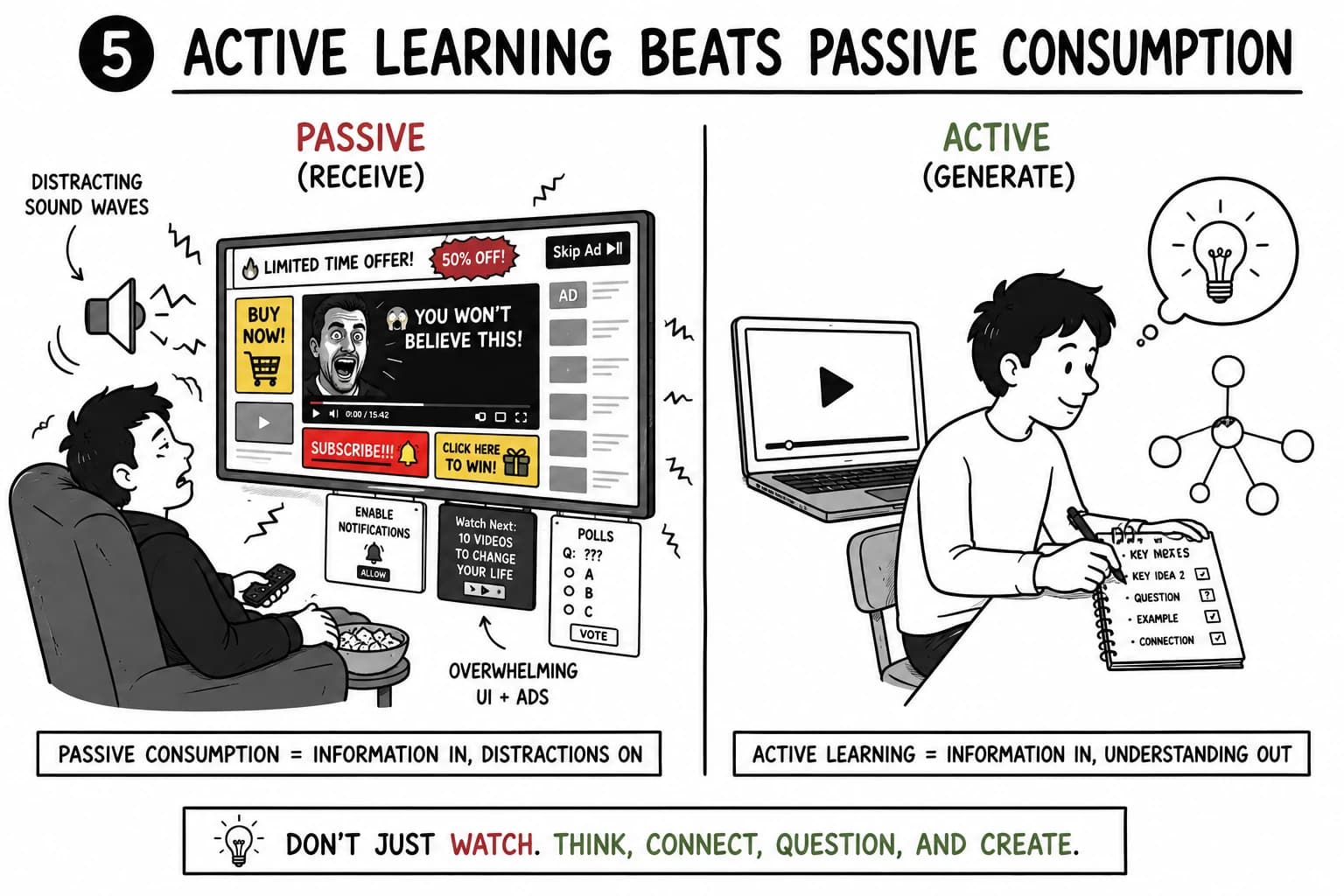
| Learning management system designers | Personal notes were relatively incomplete and poorly organized, helping explain their weaker value as review materials. Combine AI concept maps, synced notes and spaced retrieval so learners can locate missing explanations and subsequently reconstruct the lecture without assistance; test delayed recall against ordinary note review. |
How Do AI Knowledge Graphs and Literature Maps Accelerate Research?
In 1963, Massachusetts Institute of Technology researcher M. M. Kessler published an NSF-supported research project using automated bibliographic coupling to organize scientific papers according to shared references. The resulting groups showed substantial logical relationships among their constituent papers, demonstrating how citation structure can expose connections across a large scientific literature.
| Audience / Industry / Use Case | Research Finding → Your Next Rep |
|---|---|
| Academic researchers conducting literature reviews | Papers sharing references could be grouped automatically, revealing relationships that were difficult to discover through individual document inspection. This establishes bibliographic coupling as a foundation for citation maps and knowledge graphs; organize retrieved papers by shared references, then assess the topical coherence of the resulting clusters. |
| Scientific research laboratories | Applying bibliographic coupling to 8,186 papers from 35 volumes of Physical Review produced ten case histories illustrating information-retrieval problems. This demonstrates how graph traversal, semantic organization and literature mapping can support exploration at scale; compare relevant-paper discovery against conventional keyword search. |
| Research intelligence and R&D teams | The method grouped publications using explicit reference relationships. Modern entity extraction, knowledge provenance and citation networks can extend this approach, provided researchers verify whether shared references represent substantive conceptual relationships. |
How to Turn Enterprise Knowledge Into Organizational Memory That Survives Turnover?
In 2004, University of Texas management researcher Kyle Lewis followed 64 MBA consulting teams comprising 261 members to examine how transactive memory systems develop throughout knowledge-intensive projects. Teams with distributed expertise, established familiarity and effective face-to-face communication developed stronger shared knowledge systems, which were positively associated with team performance and viability.
| Audience / Industry / Use Case | Research Finding → Your Next Rep |
|---|---|
| Enterprise knowledge-management teams | Teams beginning with distributed expertise and familiar members were more likely to develop transactive memory, where colleagues understand who possesses particular knowledge. Preserve this distributed expertise in searchable organizational memory through expertise directories, decision records and ownership maps; measure how accurately employees identify appropriate knowledge owners. |
| Software engineering and DevOps teams | Frequent face-to-face communication supported the emergence of transactive memory, while other communication channels showed no comparable initial effect. This highlights the relationship between shared mental models, workflow coordination and knowledge transfer; connect technical documentation with structured team discussions and assess incident-resolution coordination. |
| Corporate onboarding and succession planning | More established transactive memory systems were associated with stronger team performance and viability, although the study did not directly examine employee turnover. Maintain shared memory, knowledge provenance and collaborative repositories that document expertise and decisions; evaluate whether incoming employees can recover critical knowledge without relying on departing colleagues. |
Second Brain vs Distributed Cognition: Obsidian, Notion, Zettelkasten, PARA — Which Workflow Wins?
In 1995, educational psychologist Kenneth A. Kiewra and colleagues conducted two experiments comparing conventional, outline and matrix note-taking formats alongside different review strategies. Their experiments found that outline notes improved test performance in the first experiment, illustrating how the organization of personal knowledge can influence learning outcomes independently of the amount of information stored.
| Audience / Industry / Use Case | Research Finding → Your Next Rep |
|---|---|
| Knowledge workers building a second brain | During a 19-minute lecture, students using an outline framework achieved better test performance than those using the other note formats in the first experiment. This supports structured personal knowledge management, information hierarchy and knowledge organization; compare outline-based notes with unstructured capture using unaided recall and relational questions. |
| University students using Obsidian or Logseq | The experiments examined whether conventional, outline and matrix formats changed how students recorded and learned lecture information. This provides a basis for evaluating atomic notes, semantic relationships and knowledge construction through structured note-taking, while recognizing that the study did not test digital backlinks or Zettelkasten. |
| Researchers maintaining connected notes | In the first experiment, writing a comparative essay during review was less effective for relational learning than standard note review. This establishes a boundary for assuming that additional elaboration always improves knowledge retrieval; compare linked-note reconstruction, ordinary review and independent explanation using assessments of conceptual relationships. |
The evidence supports evaluating note structure and review strategy. It does not establish that any particular personal knowledge-management application or organizational method produces superior learning.
What Makes a Good AI Advance Organizer? Checklist to Build Your Own
In 2003, University of Hawaiʻi researcher Daniel D. Suthers and Christopher D. Hundhausen experimentally compared graph, matrix and text representations while pairs investigated complex science and public-health problems. Graph and matrix users elaborated more on previously represented information than text users, while matrices encouraged more discussion of evidential relationships and graphs had the greatest influence on subsequent written essays.
| Audience / Industry / Use Case | Research Finding → Your Next Rep |
|---|---|
| AI learning-workspace designers | Graph and matrix users elaborated more on previously recorded information than text users, demonstrating how human-centered visualization, information architecture and representational guidance influence reasoning. Choose representations that expose conceptual relationships, then evaluate the quality of learners' explanations. |
| Research and evidence-analysis teams | Matrix users represented and discussed evidential relationships most extensively, although they also spent excessive effort reconsidering unimportant relationships. This reveals a trade-off between information granularity, cognitive ergonomics and signal-to-noise ratio; prioritize important evidence relationships and measure productive reasoning against unnecessary revision. |
| Educational technology product teams | Graph users appeared more focused in their consideration of evidence, and their representations had the greatest influence on subsequent essays. This supports concept mapping, knowledge visualization and information hierarchy as candidates for learning interfaces; assess whether learners can incorporate mapped evidence into independent written arguments. |
How Do Shared Cognitive Workspaces Extend Human Thinking?
In a study published in 2008, University of Hawaiʻi researcher Daniel D. Suthers and colleagues compared knowledge maps with threaded discussions while pairs of participants investigated problems through asynchronous communication. Knowledge-map users generated hypotheses earlier, elaborated more extensively and achieved better performance on questions requiring integration of information distributed between partners.
| Audience / Industry / Use Case | Research Finding → Your Next Rep |
|---|---|
| Distributed research teams | Knowledge-map users generated hypotheses earlier and elaborated more extensively than threaded-discussion users. This illustrates how shared cognitive workspaces, manipulable representations and distributed reasoning can make emerging ideas available for collective examination; compare hypothesis development across map-based and conventional discussion environments. |
| Enterprise knowledge-management teams | Participants using knowledge maps were more likely to converge on the same conclusion, demonstrating the potential of shared representations, collaborative knowledge graphs and collective intelligence. Maintain a common evidence map with linked claims and annotations, then measure agreement alongside the accuracy of the resulting conclusions. |
| Online education and collaborative learning platforms | Knowledge-map users performed significantly better on post-test questions requiring information distributed between partners, particularly when maps with embedded notes served as the primary communication medium. This connects collaborative learning, shared memory and knowledge integration; assess whether learners can combine separately held evidence into an independently justified explanation. |
What Makes AI Cognitive Artifacts Better Than Ordinary Summaries?
In 1987, Carnegie Mellon University cognitive scientists Jill H. Larkin and Herbert A. Simon developed computational analyses comparing informationally equivalent diagrams and written descriptions of mathematical and physical problems. Their analysis showed that spatial representations can reduce information-search demands and make relationships directly perceptible, explaining why the structure of a representation can change the computational effort required for reasoning.
| Audience / Industry / Use Case | Research Finding → Your Next Rep |
|---|---|
| Academic researchers analyzing complex papers | Diagrams organize related information spatially, allowing relevant elements to be located together instead of recovered from separate textual statements. This explains how citation maps, knowledge visualization and semantic organization can reduce search demands; compare the accuracy and speed of identifying relationships in diagrams and conventional summaries. |
| Software engineers navigating technical documentation | Diagrammatic representations can make information explicit that otherwise requires additional inference from prose. This connects dependency maps, information architecture and cognitive offloading: represent component relationships and architectural constraints visually, then evaluate whether engineers identify dependencies and consequences more accurately. |
| Educational technology and AI learning-workspace designers | Spatial representations can place cues to subsequent reasoning steps near the information needed to perform them, reducing search and computation within a problem. This supports interactive concept maps, progressive disclosure and navigation design when relationships matter; compare supported problem-solving performance and subsequent artifact-free transfer against ordinary summaries. |
The study provides a computational explanation of representational efficiency rather than a direct experiment on AI-generated artifacts. Its central design implication is to evaluate whether a representation makes important relationships easier to find and reason about, while separately testing whether those advantages persist after the artifact is removed.
The Captain Still Has to Decide
The finest compass never argued with a foolish captain. Even the legendary cursus publicus occasionally delivered orders that should never have been obeyed. Infrastructure makes judgment easier; it does not replace judgment.
AI should aspire to be an excellent quartermaster—keeping the charts current, the logbook organized, and the compass within reach.
Just don't let it captain the ship.