What Is Schema Theory? From Carl Linnaeus' Taxonomy to AI Advance Organizers
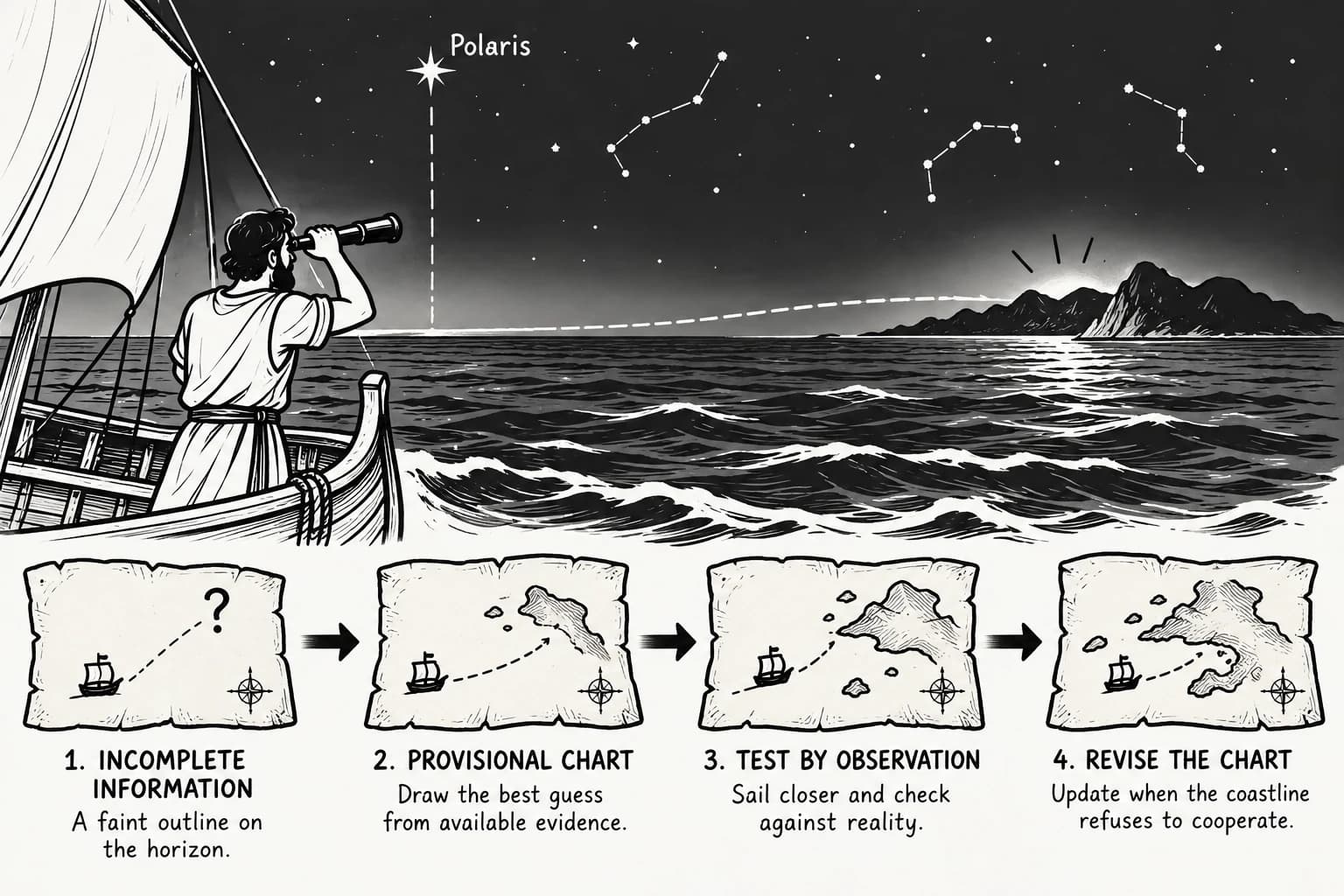
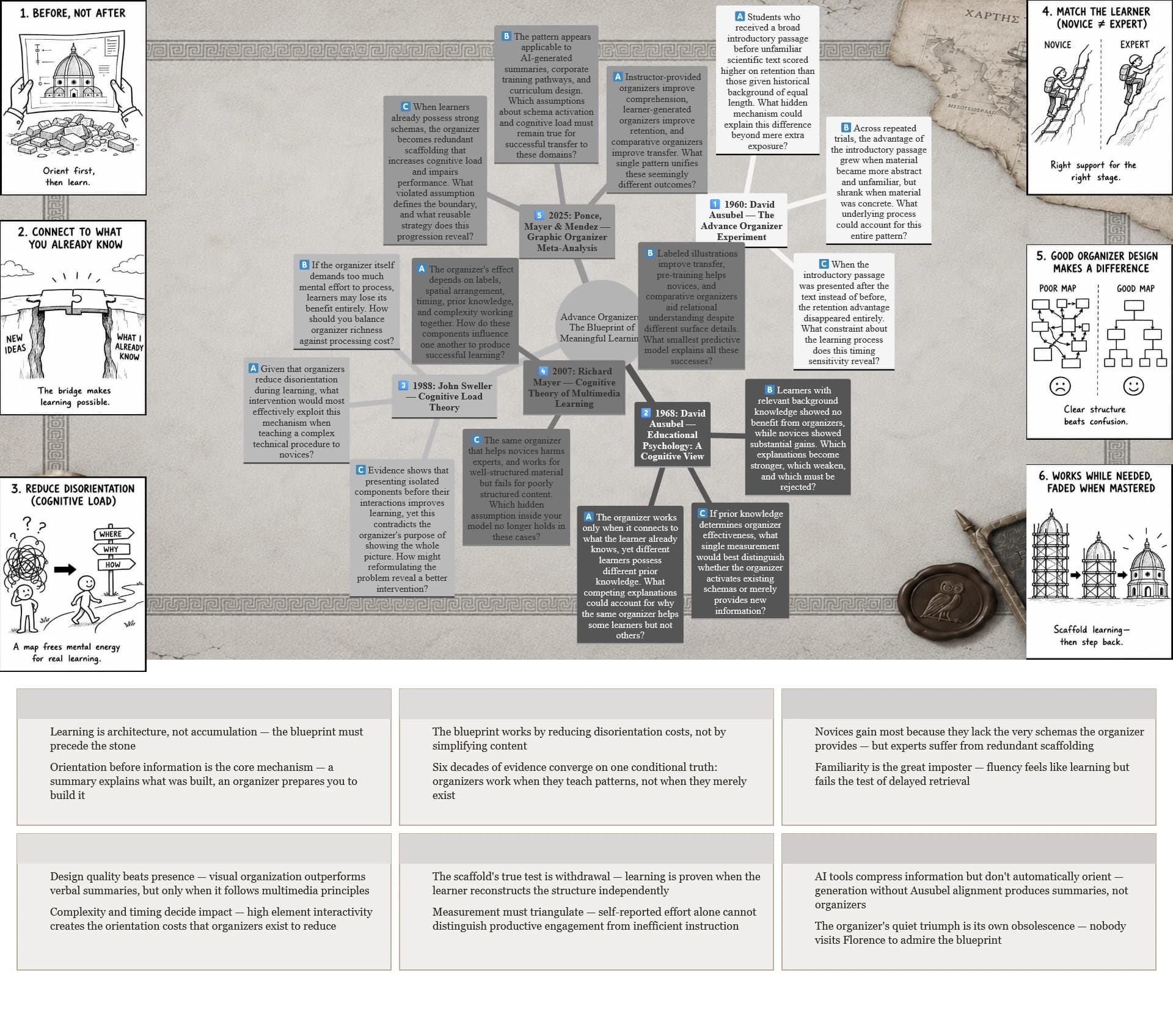
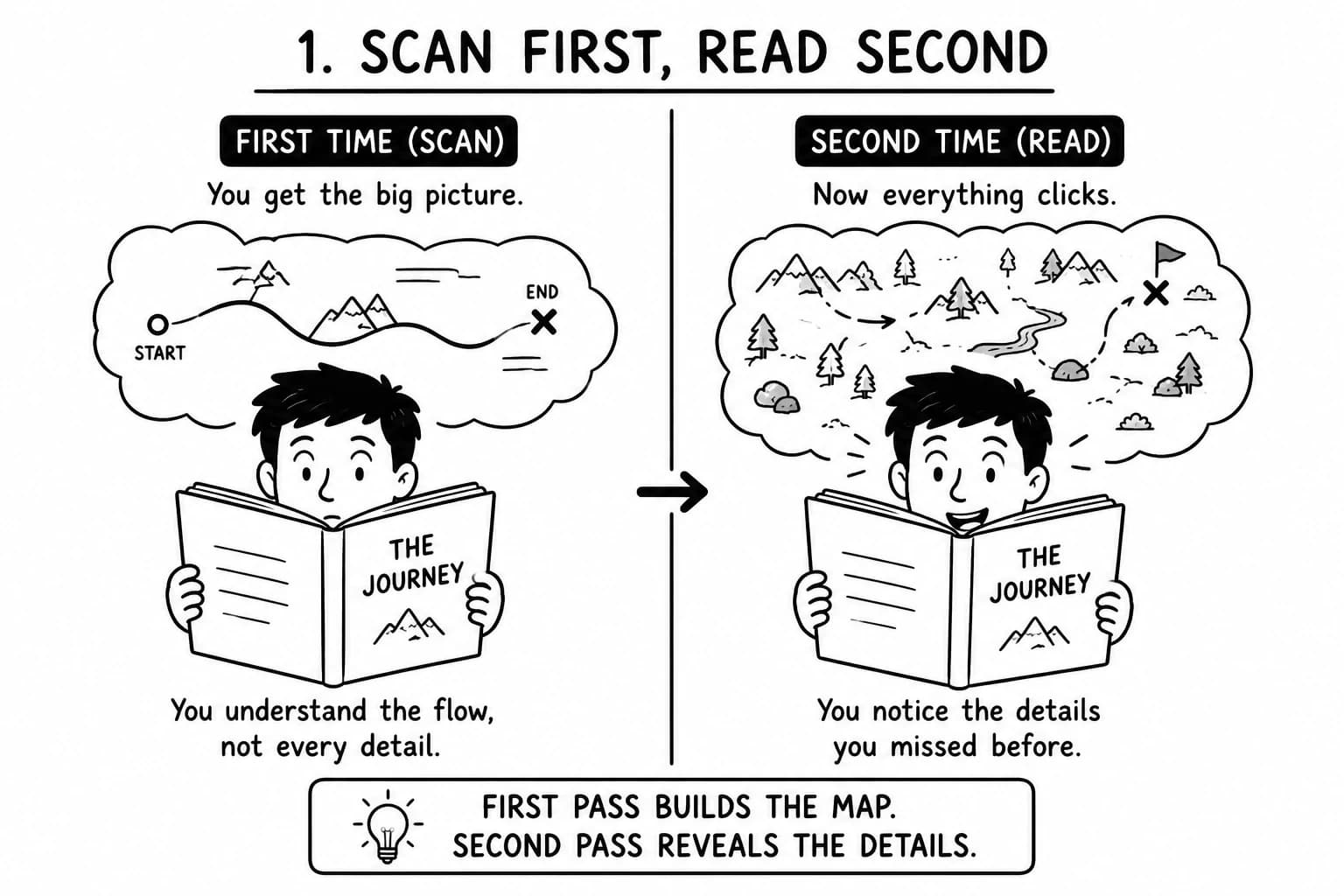
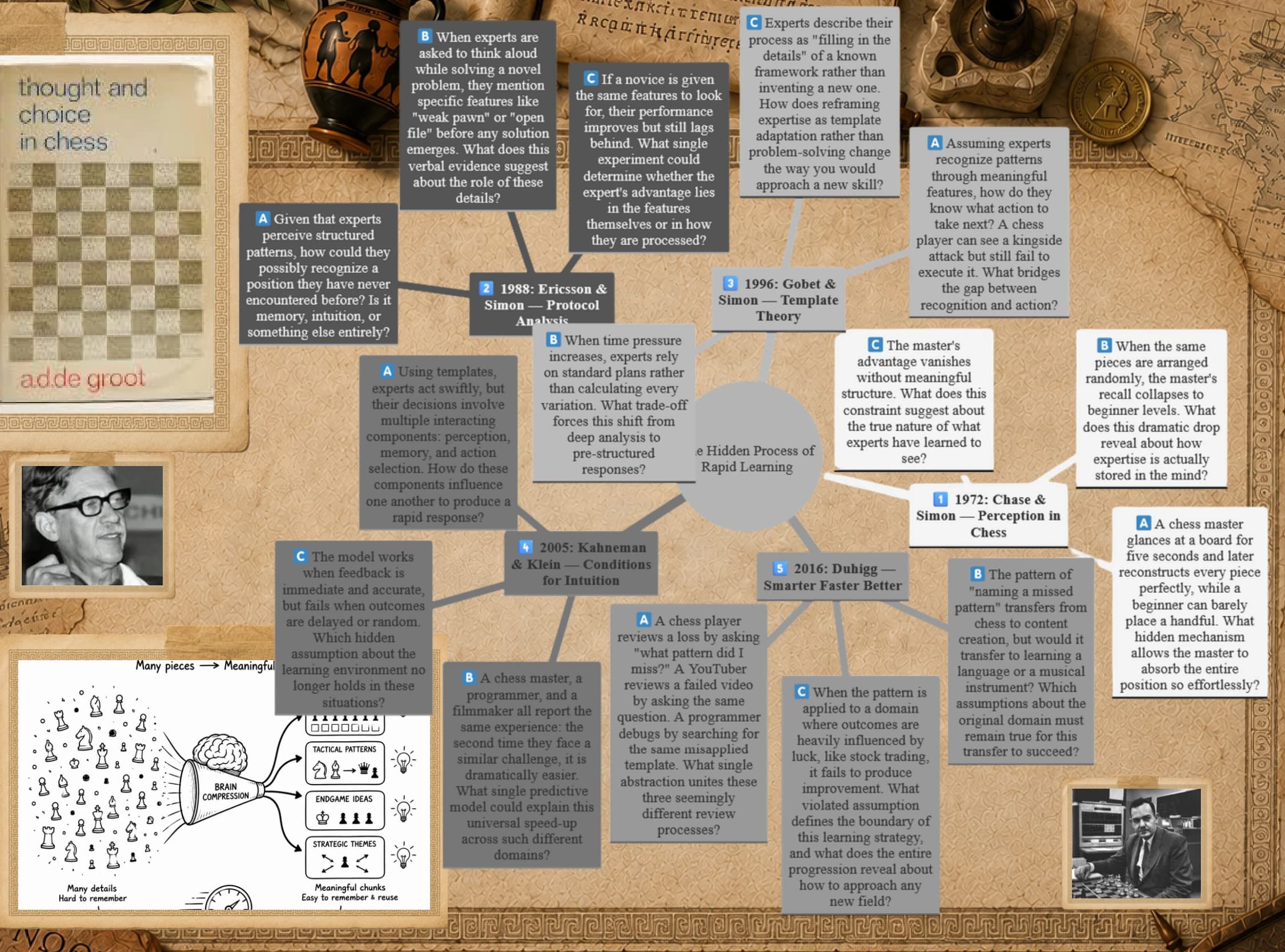
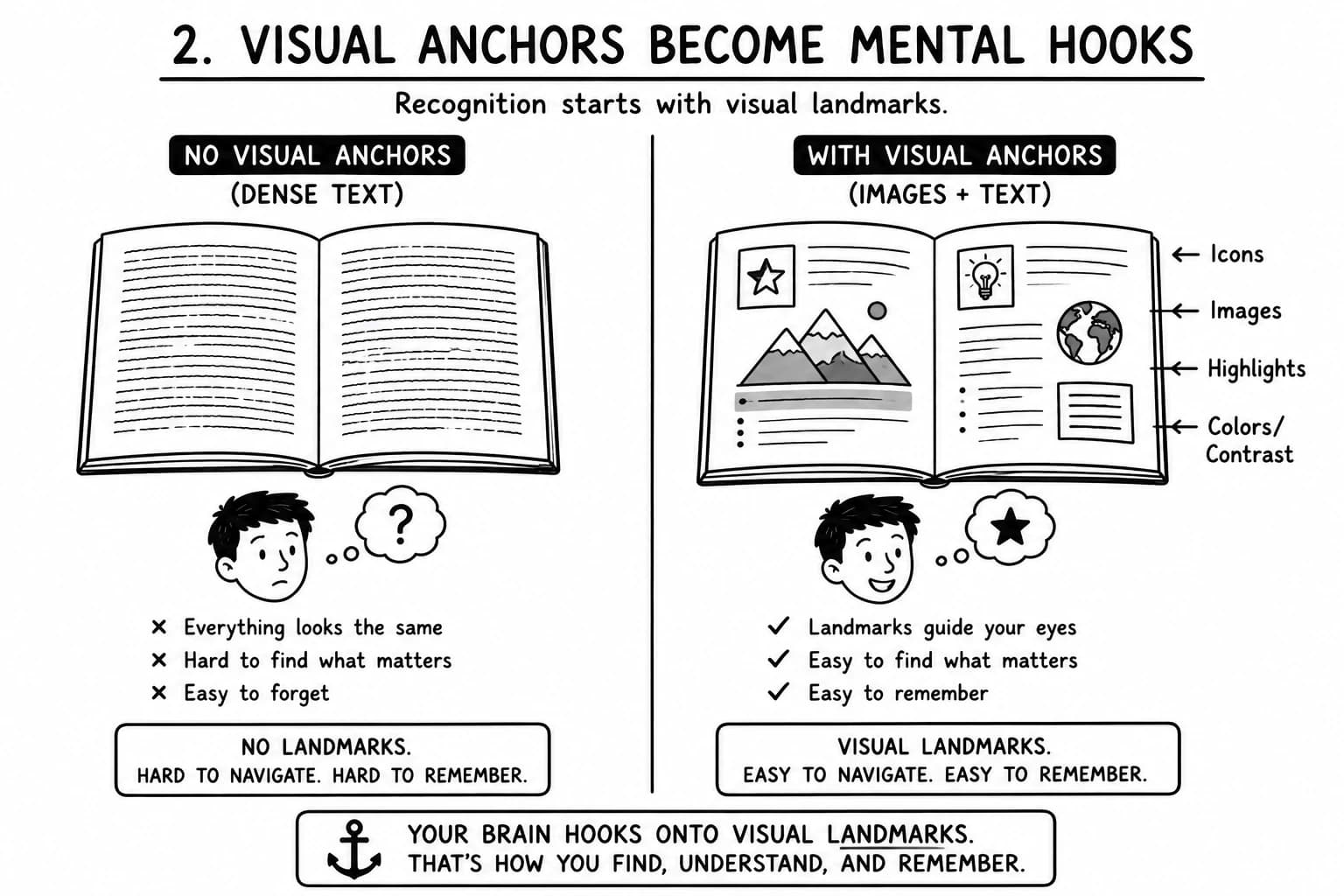
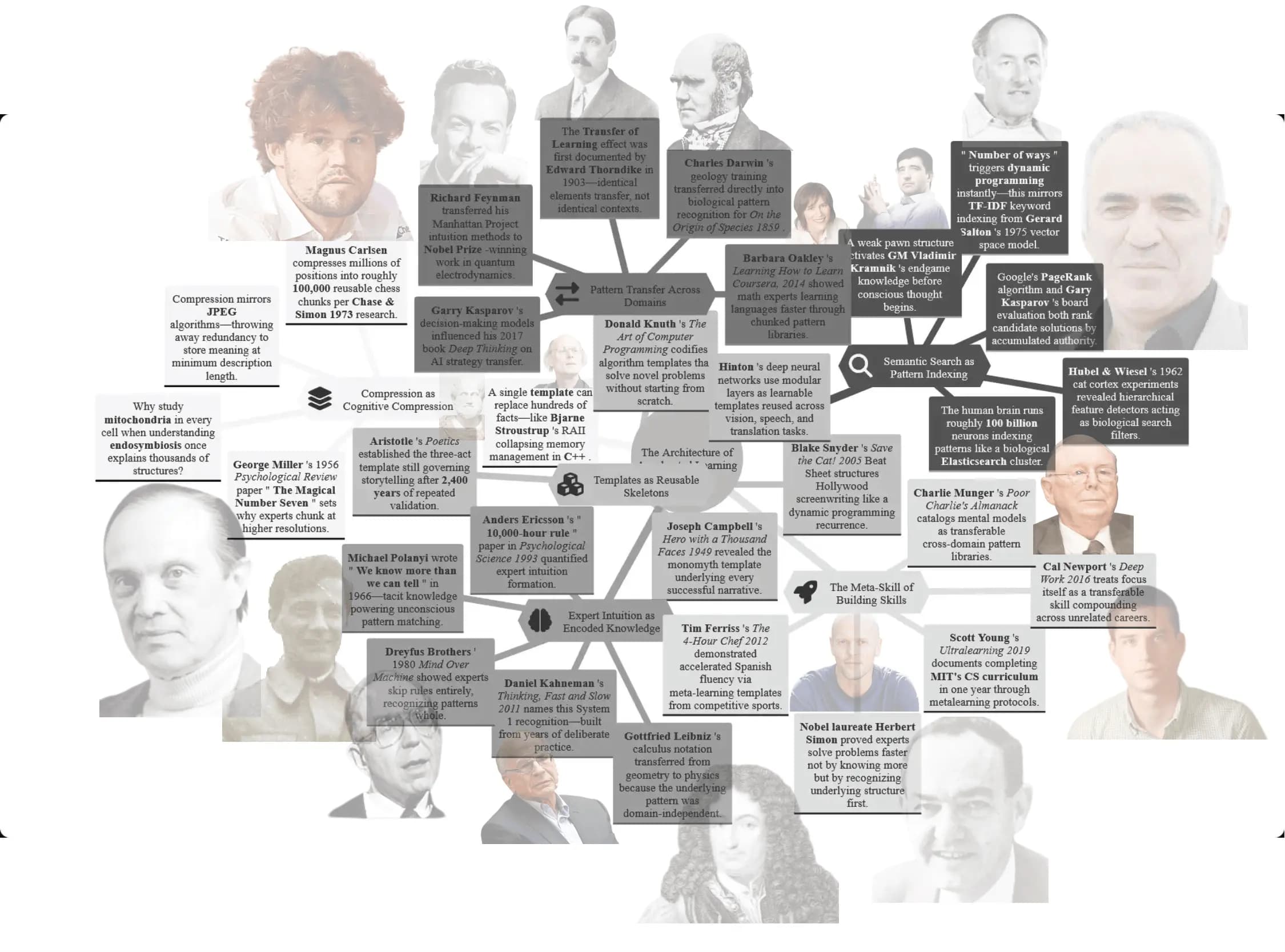
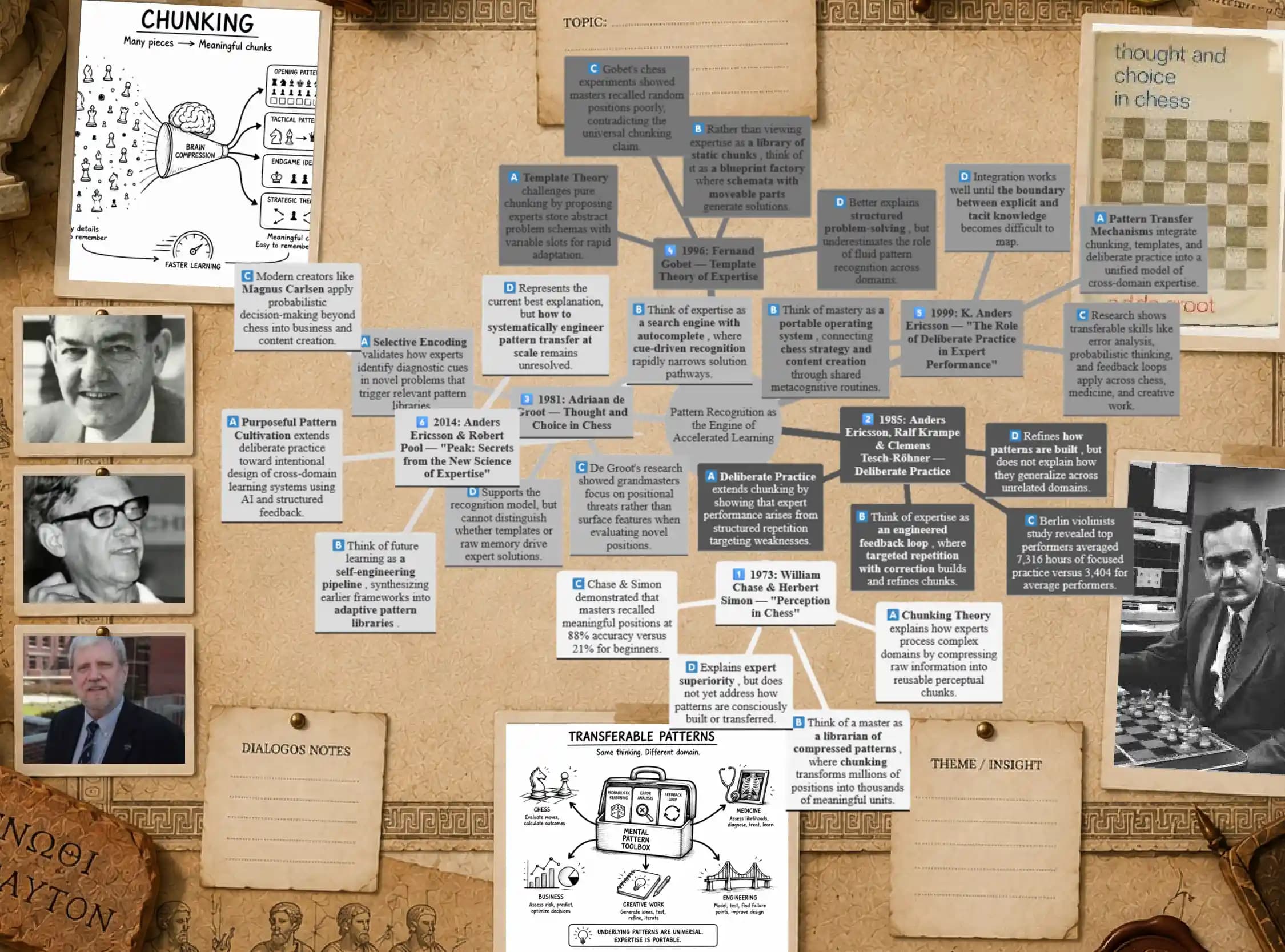
When Carl Linnaeus published Systema Naturae in 1735, natural history was drowning in discovery. Ships returned from Asia, Africa, and the Americas carrying unfamiliar plants and animals, and every specimen posed the same question: Where does this belong? Linnaeus did not begin with an empty page for every arrival. He compared each organism against an existing taxonomy, placing most into familiar genera while occasionally discovering a specimen that forced the classification itself to change. Biology advanced because knowledge accumulated inside an organized structure. Schema theory proposes that human memory works much the same way. New experiences are interpreted through existing schemas, mental models, and knowledge structures, making schema activation, encoding, memory organization, and retrieval dramatically more efficient. Yet the same machinery that accelerates learning, reading comprehension, knowledge transfer, and advance organizers can also distort reality when unfamiliar information is forced into familiar categories instead of reshaping the schema itself. Modern AI summarizers, mind maps, concept maps, knowledge graphs, and AI advance organizers inherit Linnaeus' challenge: assimilation or accommodation.
Five Principles That Define Schema Theory
-
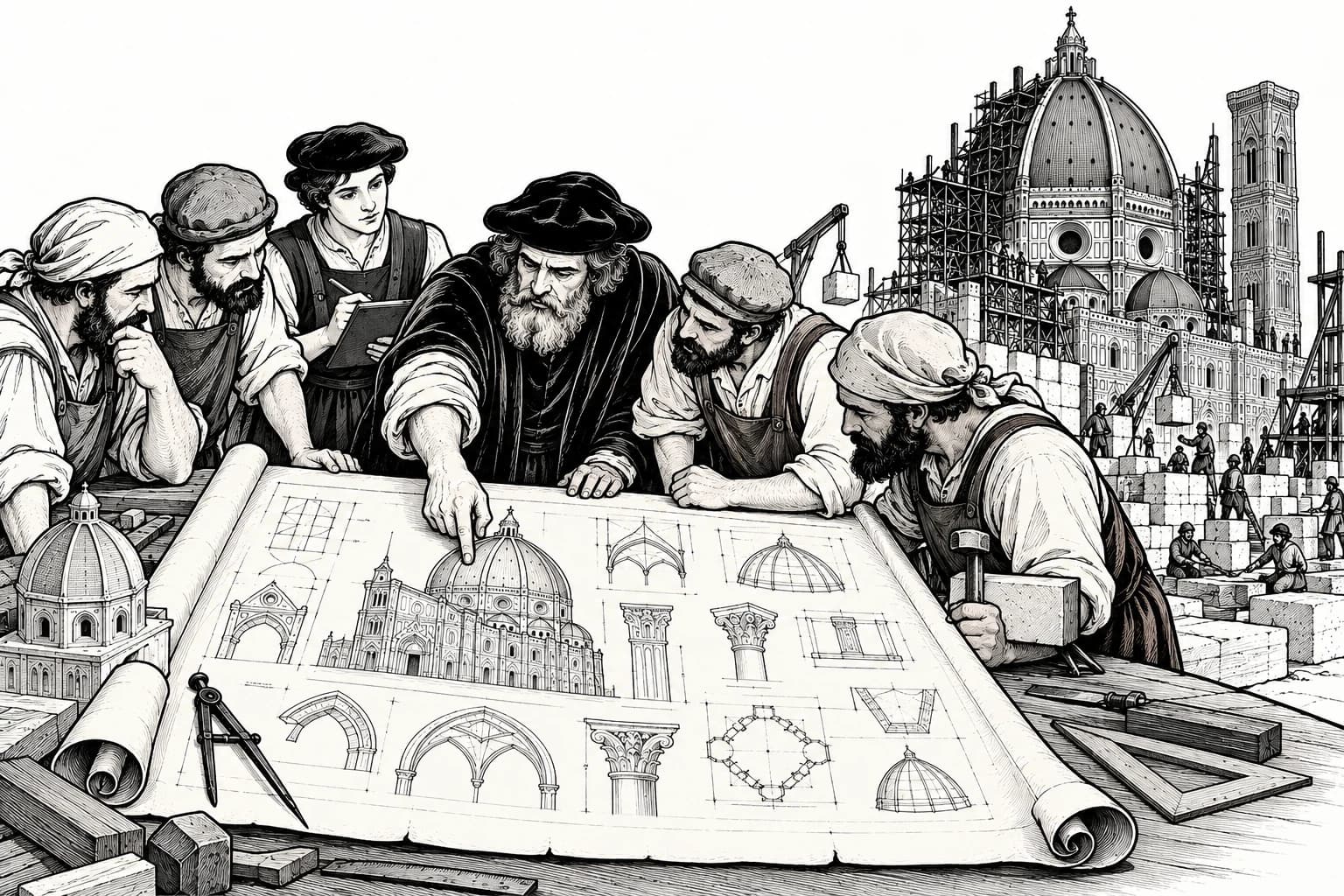
Schemas organize knowledge before they store it. Like Linnaeus' taxonomy, the brain classifies new information into existing schemas, knowledge structures, and mental models, allowing more efficient encoding than isolated memorization.
-
Assimilation is the default strategy. Most new experiences resemble previously encountered patterns closely enough that assimilation, prior knowledge activation, top-down processing, reading comprehension, and schema-guided learning integrate them without restructuring existing knowledge.
-
Accommodation drives genuine learning. When evidence refuses to fit existing categories, schema accommodation, conceptual change, knowledge restructuring, and constructivist learning modify the underlying framework itself.
-
Schemas improve retrieval while risking distortion. Organized memory schemas, retrieval cues, encoding specificity, and schema-consistent processing strengthen recall, but reconstructive memory, false memories, and source misattribution emerge when expectations quietly replace observation, as Bartlett's experiments repeatedly demonstrated.
-
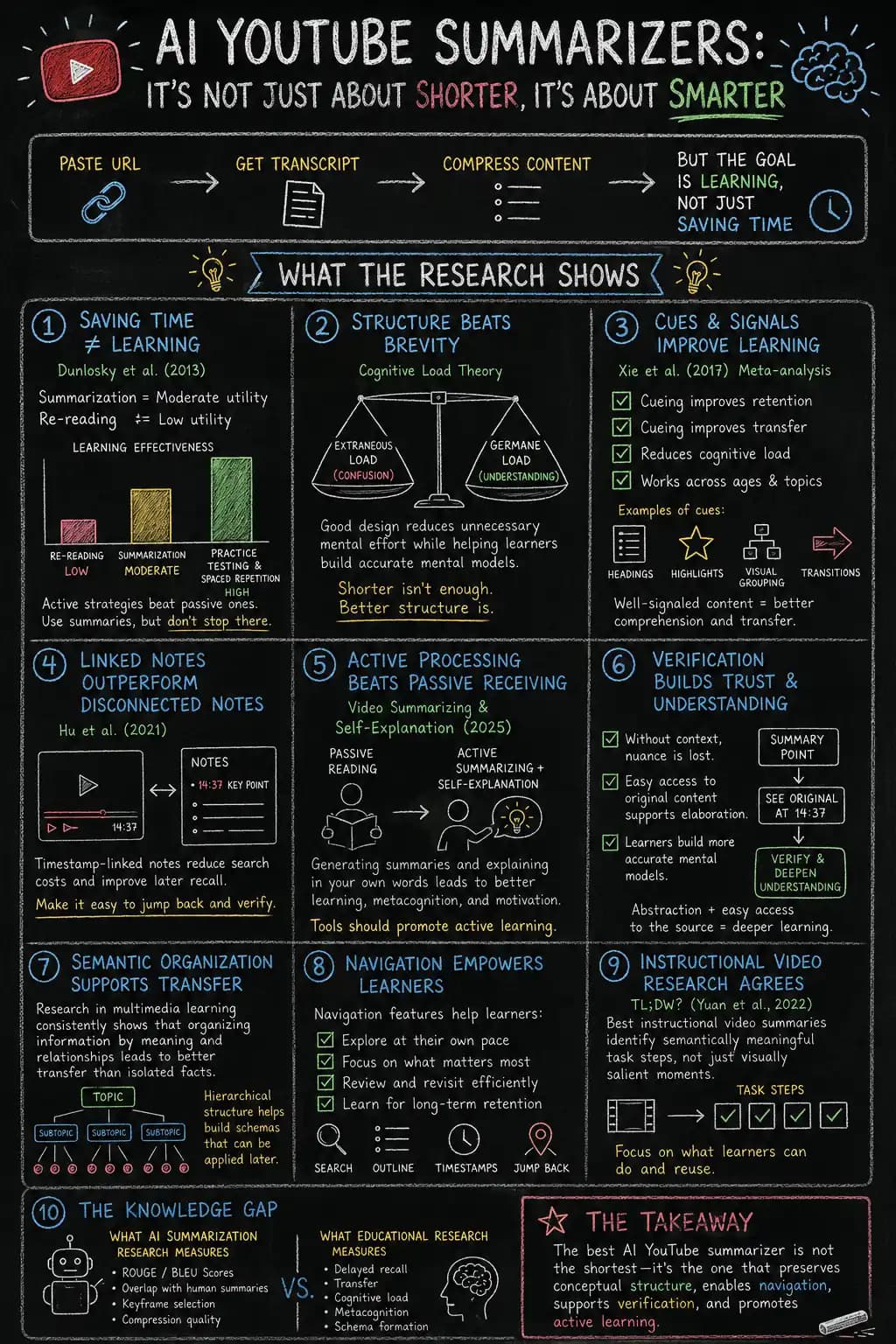
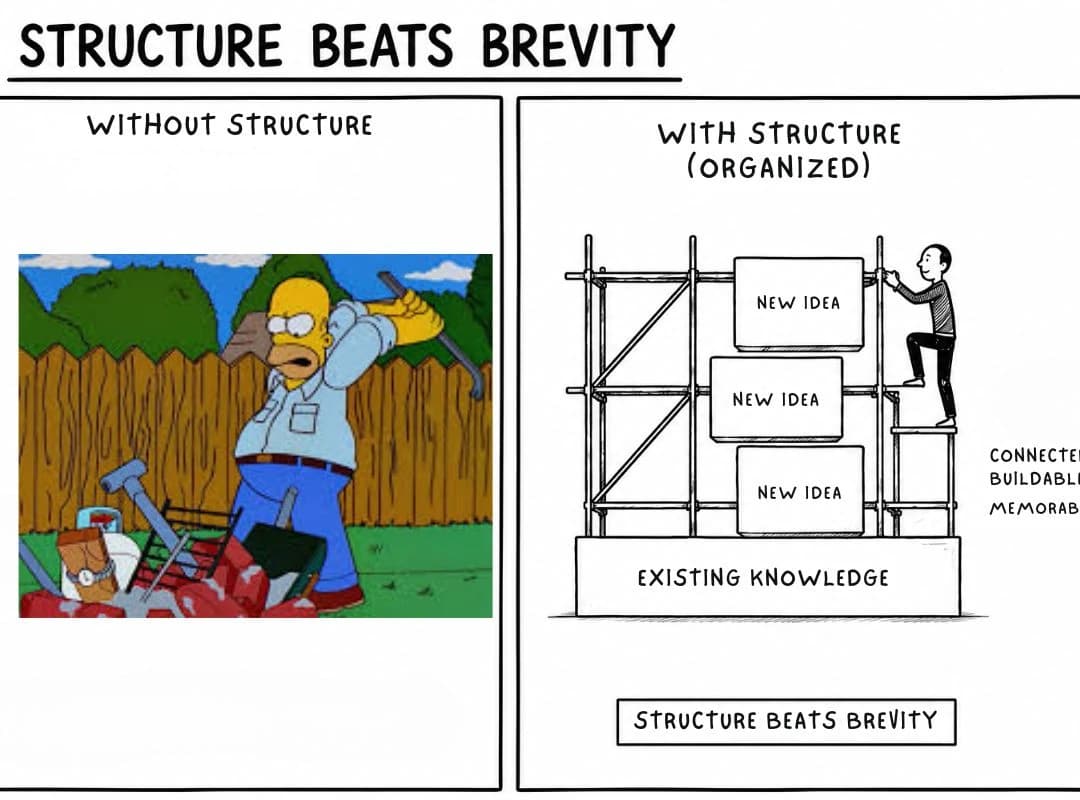
AI advance organizers manufacture schemas before learning begins. Modern AI summarizers, mind maps, concept maps, knowledge graphs, and advance organizers accelerate schema activation, cognitive scaffolding, knowledge organization, and learning efficiency, provided they remain flexible enough to accommodate genuinely new ideas.
Historical Development of Schema Theory
| Era / Period | Historical Development | Contribution to Schema Theory | Modern Learning Science & AI Keywords |
|---|---|---|---|
| 1735 | Carl Linnaeus publishes Systema Naturae, introducing a systematic biological taxonomy. | Demonstrates how complex knowledge becomes manageable through structured classification while allowing categories to evolve when new evidence appears. | schema theory, knowledge organization, classification systems, assimilation, accommodation, prior knowledge, conceptual structures |
| 1781 | Immanuel Kant introduces transcendental schemata in the Critique of Pure Reason. | Proposes that abstract mental structures mediate between concepts and experience. | mental representations, cognitive structures, knowledge frameworks, concept formation |
| 1920s | Henry Head develops the concept of the body schema in neurology. | Shows that organized internal representations guide perception and movement. | body schema, internal representation, cognitive organization, perception |
| 1926–1952 | Jean Piaget develops assimilation and accommodation in cognitive development. | Explains how schemas either absorb new information or reorganize themselves when existing structures fail. | schema adaptation, constructivist learning, conceptual change, learning development |
| 1932 | Frederic Bartlett publishes Remembering and the War of the Ghosts experiment. | Demonstrates reconstructive memory, showing recall is rebuilt through existing schemas rather than replayed exactly. | schema activation, reconstructive memory, false memory, memory retrieval, encoding |
| 1975 | Marvin Minsky introduces Frames for artificial intelligence. | Applies schema-like structures to computational knowledge representation. | AI knowledge representation, frames, knowledge graphs, artificial intelligence |
| 1977 | Roger Schank & Robert Abelson introduce scripts; Richard Anderson extends schemas to reading comprehension. | Explains how prior knowledge guides event understanding and text comprehension. | scripts, reading comprehension, schema-guided learning, prior knowledge activation |
| 1980 | David Rumelhart formalizes schemas as the building blocks of cognition. | Defines schemas as structured knowledge containing slots, defaults, and relationships. | schema theory, knowledge structures, semantic memory, information processing |
| Modern AI Era | AI summarizers, mind maps, concept maps, and knowledge graphs generate advance organizers before learning begins. | Externalize and activate schemas to improve comprehension, retrieval, and conceptual organization while balancing efficiency against schema-driven distortion. | AI advance organizers, AI summarization, mind maps, concept maps, knowledge graphs, schema activation, educational AI, adaptive learning |
Benefits of Schema Activation: What the Evidence Shows
When Carl Linnaeus assembled the herbarium that informed Systema Naturae (1735), every newly collected specimen reached his workbench with the same question: does this belong in an existing drawer, or does the cabinet itself need to change? That cabinet is an enduring metaphor for schema theory, schema activation, prior knowledge activation, advance organizers, and AI learning systems. When a specimen fit an existing category, classification accelerated; when the drawer matched reality, every future identification became faster. Cognitive psychology shows the same pattern. Activating the correct mental schema before learning consistently improves reading comprehension, knowledge organization, memory encoding, information processing, knowledge transfer, and retrieval, with Anderson, Reynolds, Schallert & Goetz (1977) showing that providing an appropriate conceptual framework increased correct interpretation of an ambiguous passage from roughly 40% to 85%. The cabinet also reveals the cost of a misplaced label. Brewer & Treyens (1981) found that people confidently "remembered" expected objects that had never been present, producing 30–40% false recall because existing schemas filled empty spaces with familiar patterns. Across educational psychology, schema activation for learners with sufficient prior knowledge frequently produces large effects (d > 0.80) on comprehension of complex material, making AI-generated summaries, mind maps, concept maps, knowledge graphs, and advance organizers powerful instructional tools when they activate the right framework before instruction. Yet the same evidence defines the boundary conditions: an incorrectly activated schema can distort interpretation, schema-consistent memory can overwrite genuine evidence, and schema supply—constructing an entirely new conceptual framework for novices—remains less precisely quantified than activating one that already exists. Like Linnaeus's herbarium, the cabinet becomes more valuable with every correctly filed specimen, but one misplaced drawer quietly teaches every future collector the wrong pattern.
When Schema Activation Works — and When It Backfires
Activating the right cognitive schema before learning improves reading comprehension, encoding, retrieval, and transfer of learning, while the wrong schema distorts memory.
What Is Schema Activation and How Does It Improve Learning?
Anderson and Pichert (1978, University of Illinois) had college students read a story about two boys in a house from a burglar's or a home-buyer's perspective, then recall it twice. Schema activation steered learning: perspective-relevant ideas were recalled more, and after a perspective switch students retrieved roughly 7% more previously unrecalled, newly relevant ideas.
| Audience / Industry / Use Case | Research Finding → Your Next Rep |
|---|---|
| Corporate training designers | Readers given the burglar or home-buyer frame recalled more frame-relevant details, showing that activated prior knowledge decides what encoding keeps. A briefing on the relevant frame steers comprehension toward what matters. |
| Exam-revision coaches | Switching perspective after the first recall released roughly 7% more previously unrecalled ideas. This suggests retrieval depends on the active schema as well as on storage, so "forgotten" material can resurface under a new framing. |
| Audit and due-diligence teams | After the switch, recall of ideas tied to the first perspective tended to dip. One active schema narrows retrieval, so the same knowledge organization cannot foreground every viewpoint at once. |
Why Does Activating the Right Schema Matter More Than Any Schema?
Steffensen, Joag-Dev, and Anderson (1979, University of Illinois Center for the Study of Reading) had Indian and American adults read two letters, one describing an American wedding and one an Indian wedding. The matching cultural schema won: each group read its own culture's letter faster and recalled more, while the foreign letter drew culture-driven distortions.
| Audience / Industry / Use Case | Research Finding → Your Next Rep |
|---|---|
| Cross-cultural onboarding and localization teams | Each group read the native-culture letter faster, showing that a fitting cultural schema lowers processing effort during text comprehension of equally simple text. |
| Reading and literacy specialists | Readers recalled more idea units from their own culture's letter. A matched content schema supports elaborative encoding, and the same adults recalled less from the foreign letter. |
| Global communications writers | Readers embellished the familiar letter appropriately but distorted the unfamiliar one in culture-consistent ways. This is schema-consistent distortion: a misapplied cultural schema produces wrong interpretations. |
When Do Advance Organizers Work Best? Novices, Complex Content, and Clear Design
Barnes and Clawson (1975, Review of Educational Research) analyzed 32 experiments testing whether advance organizers improve learning from prose and lessons. Most found no reliable benefit over control conditions, which is why organizer clarity, learner familiarity and content complexity became the conditions later researchers tested.
| Audience / Industry / Use Case | Research Finding → Your Next Rep |
|---|---|
| Instructional design teams | Across 32 studies, organizers usually failed to beat controls, so an advance organizer is no automatic fix. Benefit depends on organizer clarity and its fit to content complexity. |
| Textbook authors and curriculum developers | Studies used inconsistent organizer formats, such as short passages, outlines and comparisons, so the review could not treat "organizer" as one intervention. Specify the expository type and design before judging effects. |
| Learning-evaluation leads | The review recommended tighter designs: defined organizers, measured prior knowledge, and appropriate outcome tests. This is a recommendation, not a demonstrated effect, and later work on novices and dense material pursued it. |
Who Benefits Most? Prior Knowledge, Expertise, Age, and Motivation
Schneider, Körkel, and Weinert (1989; Weinert directed the Max Planck Institute for Psychological Research, Munich) compared third-, fifth- and seventh-grade soccer experts and novices, at high or low IQ, on comprehension and recall of a soccer story. Domain knowledge outweighed general ability: low-IQ experts outperformed high-IQ novices, across grade levels.
| Audience / Industry / Use Case | Research Finding → Your Next Rep |
|---|---|
| Primary-school teachers | Low-aptitude children with rich soccer prior knowledge beat high-aptitude novices on the story. Background knowledge can compensate for limited general ability in text comprehension. |
| Learning-support and special-education staff | Experts also detected text inconsistencies and drew more inferences. This is consistent with a richer schema supporting knowledge organization, though the mechanism is inferred from task differences rather than measured. |
| Early-literacy curriculum planners | The knowledge advantage held from third to seventh grade, indicating that expertise, not developmental stage alone, shaped comprehension in this domain. |
When Should You Show an Organizer? Timing and Activation Decay
Boothby and Alvermann (1984; Alvermann is a literacy researcher) trained 38 fourth graders in two classrooms over three months, with the experimental group practicing graphic organizers on social studies text three times a week while controls got equal time without them. Organizer-trained students recalled significantly more idea units immediately and 48 hours later, but no difference remained at one month.
| Audience / Industry / Use Case | Research Finding → Your Next Rep |
|---|---|
| Upper-elementary content-area teachers | Trained students recalled significantly more idea units right after reading. A structured organizer strengthens comprehension and recall at the point of study. |
| Revision-planning and test-prep providers | The advantage persisted at 48 hours but no group difference appeared at one month. Benefits faded with forgetting, which suggests follow-up spaced repetition is needed. That inference is mine, since the study did not test review. |
| Assessment designers | Groups did not differ in the proportion of main ideas recalled. Organizers raised the volume of recall, not which ideas were kept, which bounds what knowledge organization training delivers. |
When Do Schemas Backfire? Rigidity, Overconfidence, and False Memories
Sulin and Dooling (1974) had students read a paragraph about a difficult girl named either Helen Keller or the fictitious Carol Harter, then judge whether sentences, including an unseen "she was deaf, dumb, and blind" line, had appeared. Activating the famous schema increased false recognition of the unseen sentence, and the intrusion rose after a one-week delay.
| Audience / Industry / Use Case | Research Finding → Your Next Rep |
|---|---|
| Investigative-interview trainers | Identical text plus a famous name produced more false recognition. An activated schema supplied plausible content that reconstructive memory reported as remembered, which is schema-consistent false recall. |
| Journalism and fact-checking editors | In the famous-name condition, acceptance of the false sentence rose over a one-week delay. This is consistent with gist outlasting detail, a source misattribution that grows with time. |
| Learning-experience designers | The fictitious-name version, with the same sentences, showed little intrusion, isolating the activated schema as the cause. Schema vs cognitive bias checks belong wherever a prompt supplies a rich frame. |
How Do Schemas Encode, Store, and Transfer Knowledge?
Loewenstein, Thompson, and Gentner (1999, Northwestern University) had MBA students study two negotiation cases either by comparing them or by analyzing each separately, then negotiate a new case. Comparison built a transferable schema: comparers were roughly three times as likely to apply the underlying strategy in the new negotiation.
| Audience / Industry / Use Case | Research Finding → Your Next Rep |
|---|---|
| MBA and executive-education faculty | Side-by-side comparison led roughly three times as many students to transfer the strategy. Analogical reasoning turned two concrete cases into an abstract schema supporting transfer of learning. |
| Sales-enablement trainers | Students who analyzed each case separately showed little transfer despite identical content. Encoding by comparison, not mere exposure, built the retrieval structure, a mechanism the authors attribute to structure mapping. |
| Organizational-learning researchers | The test negotiation differed from both training cases in surface details, so success reflects abstracted structure rather than remembered specifics, which is evidence of transfer beyond rote memorization. |
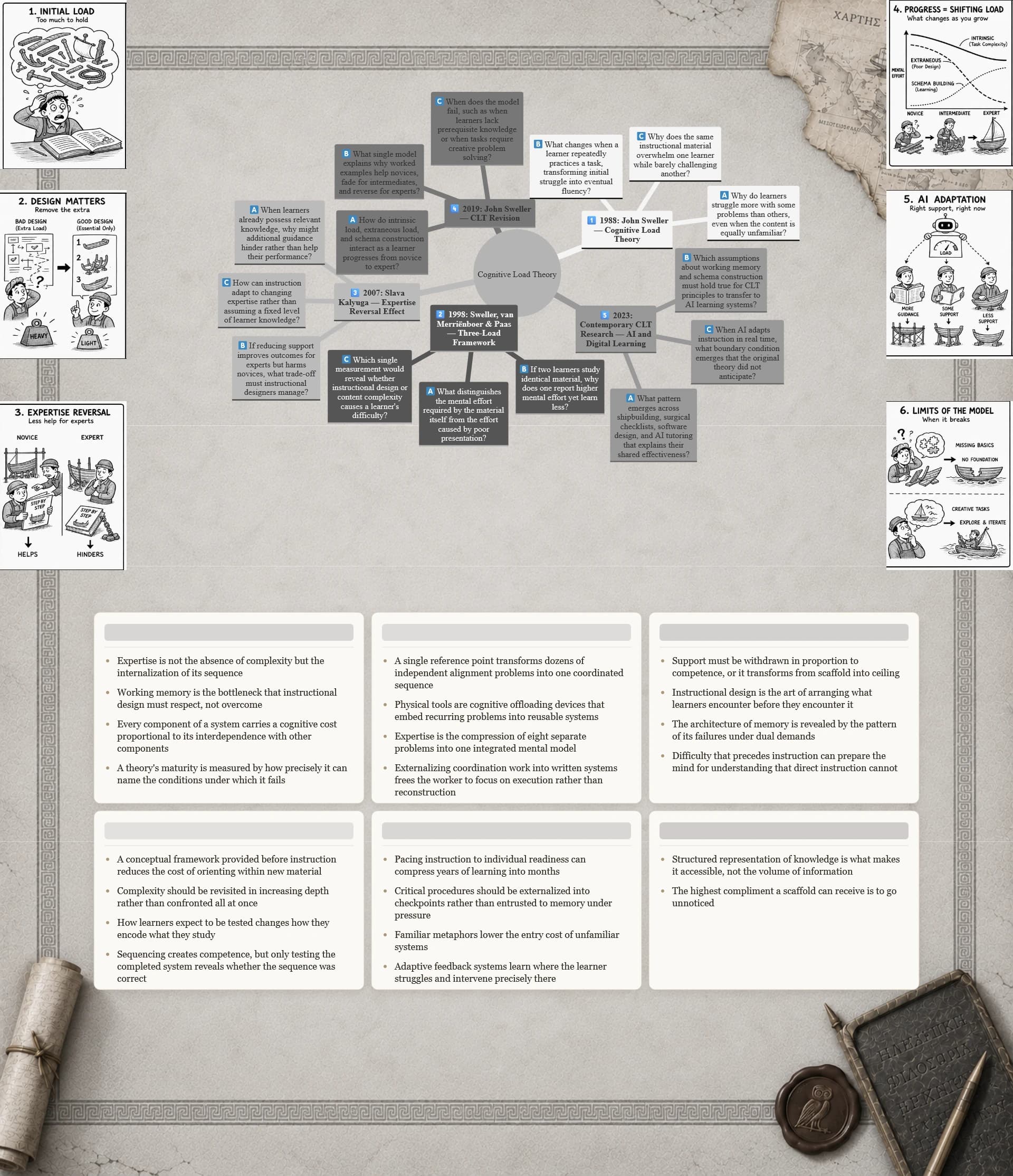
Can Organizers Overload Working Memory? Cognitive Load View
Leutner, Leopold, and Sumfleth (2009, University of Duisburg-Essen) had 111 tenth graders read a roughly 1,600-word science text on water molecules, varying whether they drew pictures and whether they mentally imagined the content. Drawing raised cognitive load and lowered comprehension (d = −0.37), while imagery lowered load and raised comprehension (d = 0.72) only when students were not also drawing.
| Audience / Industry / Use Case | Research Finding → Your Next Rep |
|---|---|
| Slide and digital-course designers | Drawing, mediated through increased cognitive load, decreased comprehension (d = −0.37). Extra representational work can crowd out understanding in working memory. |
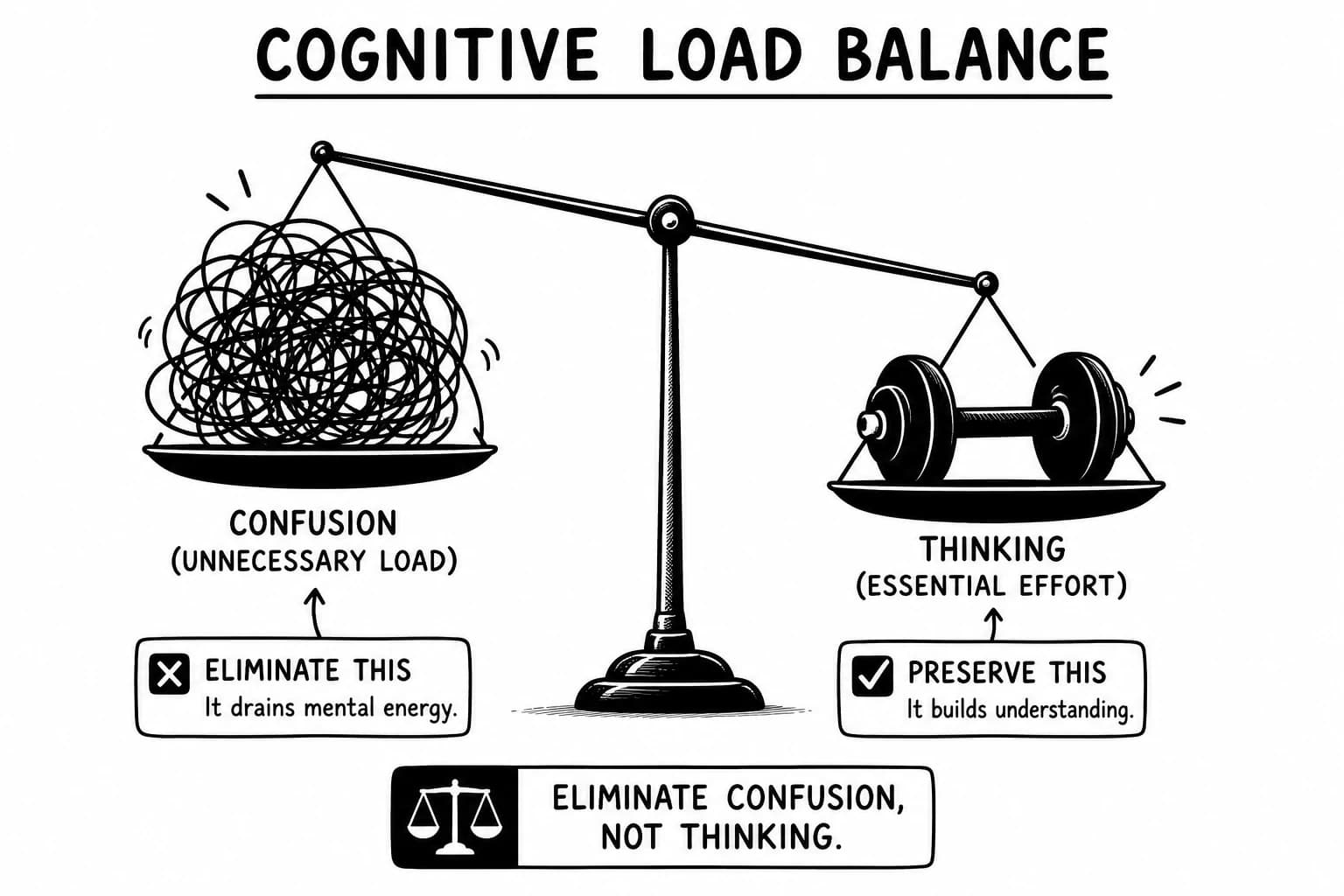
| Science teachers | Mental imagery decreased cognitive load and raised comprehension (d = 0.72). A low-demand visual strategy worked, which fits cognitive load theory and the case for lean, coherent aids. |
| Learning-technology product managers | The imagery benefit appeared only when students did not draw simultaneously. Stacking two activities cancelled a helpful strategy, so cognitive architecture limits favor one coherent aid at a time. |
Schema vs Priming vs Attention vs Familiarity: What Is Really Working?
Meyer and Schvaneveldt (1971, cognitive psychologists) had participants judge whether two letter strings were both words, comparing associated pairs such as nurse–doctor with unrelated pairs. Related pairs were recognized roughly 85 ms faster, showing that priming speeds word-level access without structural comprehension, which is the rival explanation schema studies must rule out.
| Audience / Industry / Use Case | Research Finding → Your Next Rep |
|---|---|
| Learning-science researchers | Associated pairs were identified faster than unrelated pairs. Semantic priming raised lexical accessibility using only word-level links, with no schema structure required. |
| Search and e-learning product teams | The task required only a word/non-word judgment, so the speed-up reflected semantic relatedness. It mimics "activation" but says nothing about whether learners grasp relationships. |
| Assessment designers | The authors proposed retrieval of one word facilitating retrieval of its associate, later elaborated as spreading activation. This is a proposed mechanism, not demonstrated schema structure, so valid tests must measure comprehension beyond familiarity. |
What Are Advance Organizers? Expository vs Comparative Organizers With Examples
Rancourt (1986, Fordham University doctoral research) compared expository and comparative organizers on achievement and retention in set theory among ninth graders of low and high mathematical ability. Comparative organizers, which contrast new material with established learning, produced significantly higher scores than expository organizers on both the achievement and retention posttests.
| Audience / Industry / Use Case | Research Finding → Your Next Rep |
|---|---|
| Secondary mathematics departments | The comparative group scored significantly higher than the expository group on achievement (beyond the .05 level). Contrasting with prior knowledge may aid integrative reconciliation more than supplying a new superordinate frame. |
| Tutoring and retention-focused providers | The same advantage appeared on the retention posttest. The comparative organizer benefit was not limited to immediate performance, which matters for instructional sequencing. |
| Mixed-ability classroom leads | Comparative-group students of both high and low ability scored higher than their counterparts in expository groups. The effect was not confined to strong students, which matters for lesson planning. |
Which AI Format Activates Schemas Best? Summary vs Mind Map vs Glossary
Leopold, Sumfleth, and Leutner (2013, University of Duisburg-Essen) had 71 tenth graders either self-generate or study predefined summaries in verbal or pictorial form. Studying predefined pictorial summaries facilitated deep understanding.
| Audience / Industry / Use Case | Research Finding → Your Next Rep |
|---|---|
| EdTech teams building AI summary tools | Pictorial summaries facilitated comprehension and transfer compared with verbal summaries. A spatial, mind map-style format did more than narrative text for relational science content. |
| Science teachers | Predefined summaries facilitated transfer more than learner-generated ones. An accurate ready-made summary can support schema activation better than a novice's own attempt, which is relevant to AI-generated organizers. |
| Instructional-design researchers | Spatial representations mediated the pictorial effect, and mental imagery facilitated those representations. This is a statistical mediation linking dual coding to mental models, not a direct manipulation. |
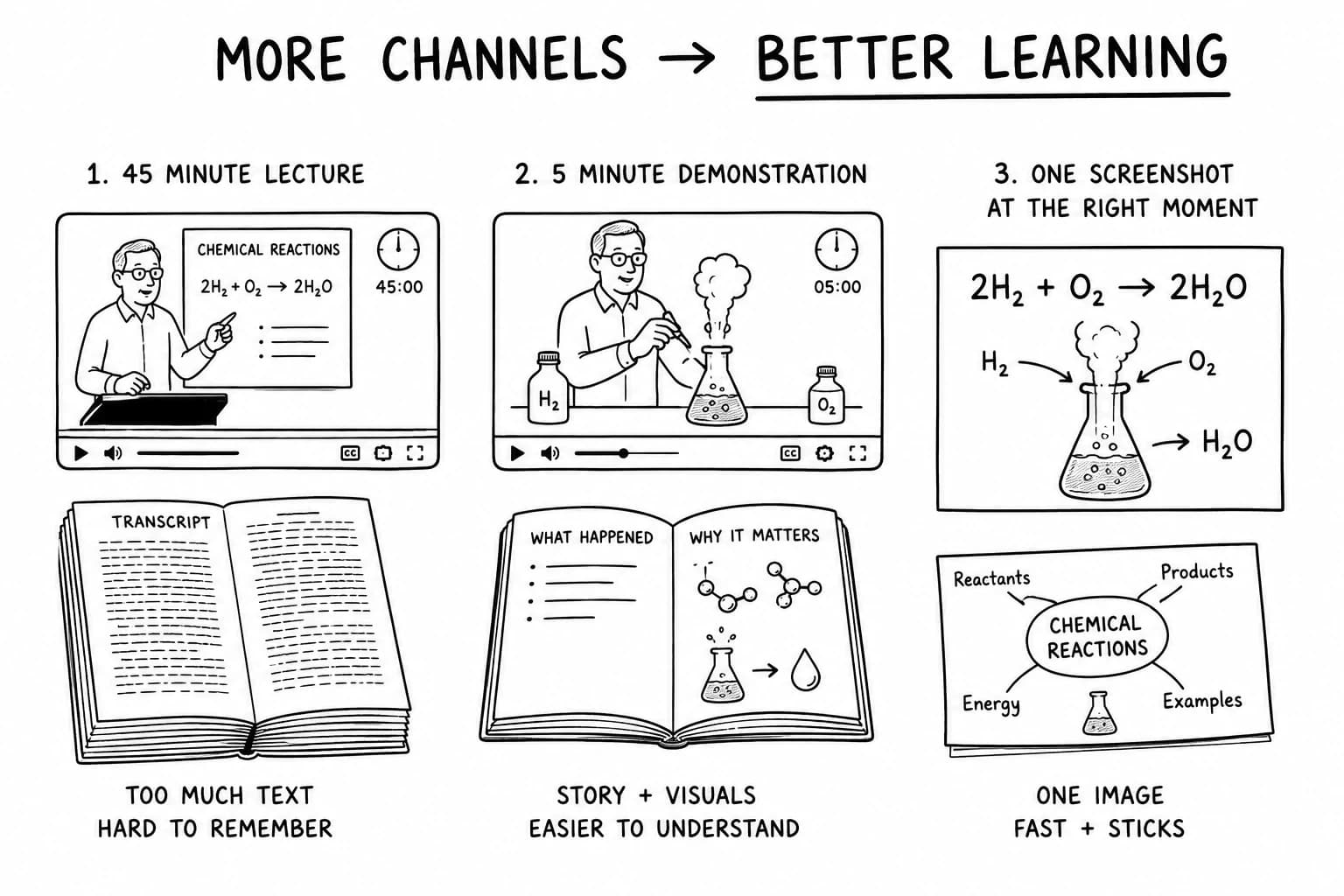
Why Does Combining Formats Work Better? Dual Coding and Generation Synergy
Leopold, Doerner, Leutner, and Dutke (2015, Instructional Science) compared students reading a science text with pictures, without pictures, or with instructions that encouraged or discouraged linking words to picture parts. Text with pictures beat text alone, and the integration and text-picture groups beat the separation group.
| Audience / Industry / Use Case | Research Finding → Your Next Rep |
|---|---|
| Multimedia course developers | Transfer and comprehension were higher with text plus pictures than with text alone. This supports dual coding of verbal and visual mental representation. |
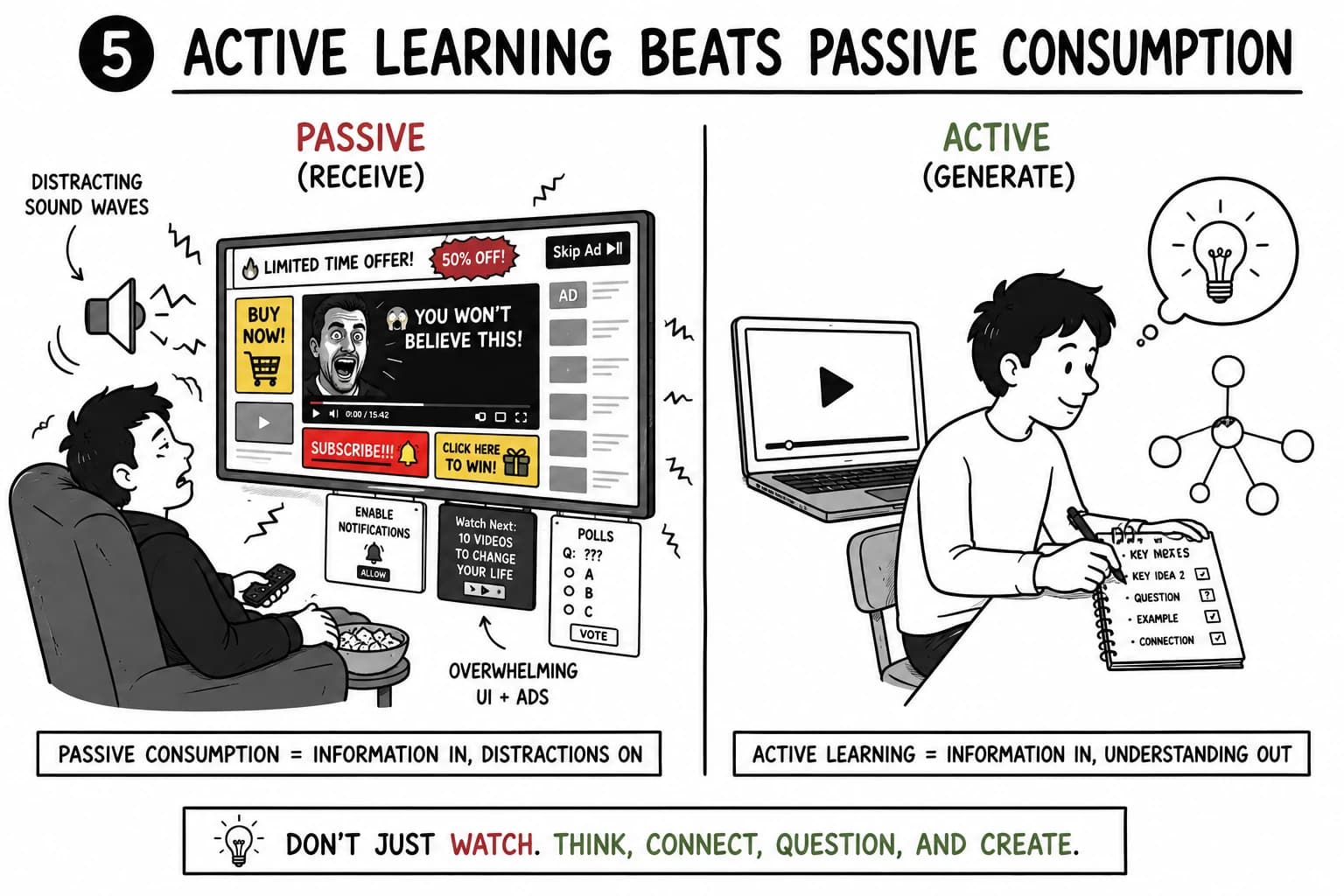
| Corporate e-learning designers | Integrating concepts with picture components, and reading illustrated text, both outperformed the separation condition. The combined format worked when learners actively formed referential links, a generation-style step. |
| Training-content and assessment teams | The main results replicated when a summary strategy replaced the important-concepts strategy. The verbal and visual integration benefit was not tied to one strategy. |
How Does Modern AI Use Schemas? RAG, Embeddings, and Knowledge Graphs Explained
Lewis and colleagues (2020; Facebook AI Research, University College London, New York University) combined a pretrained sequence-to-sequence model with a dense retrieval index of Wikipedia passages and tested it on knowledge-intensive tasks. Retrieval-augmented generation set state-of-the-art open-domain question-answering results and produced more factual, specific text than a parametric-only baseline, showing external retrieval can supply missing knowledge structure.
| Audience / Industry / Use Case | Research Finding → Your Next Rep |
|---|---|
| Enterprise knowledge-management teams | Retrieval plus generation beat parametric-only models on open-domain question answering. Vector embeddings with semantic search can externalize knowledge a model's weights lack. |
| Documentation and content teams | RAG outputs were judged more factual and specific than a BART baseline, so grounding in retrieved passages reduces the wrong-schema risk of plausible but unsupported text. |
| Compliance and regulatory-knowledge teams | Swapping the Wikipedia index from 2016 to 2018 updated answers about world leaders without retraining, with about 70% accuracy when the index matched versus roughly 4–12% when it did not. External memory can be revised like an ontology while model weights stay fixed. |
Schema Activation in AI Learning: The Platypus Problem, AI Advance Organizers, and When Mental Schemas Mislead
When the first preserved platypus reached Britain from Australia in 1799, naturalists suspected fraud. Here was a mammal with a duck's bill, an otter's body, a beaver-like tail, and webbed feet. George Shaw, the zoologist who first described it, reportedly searched for stitches, convinced someone had sewn unrelated animals together. The specimen was genuine. The schema was wrong.
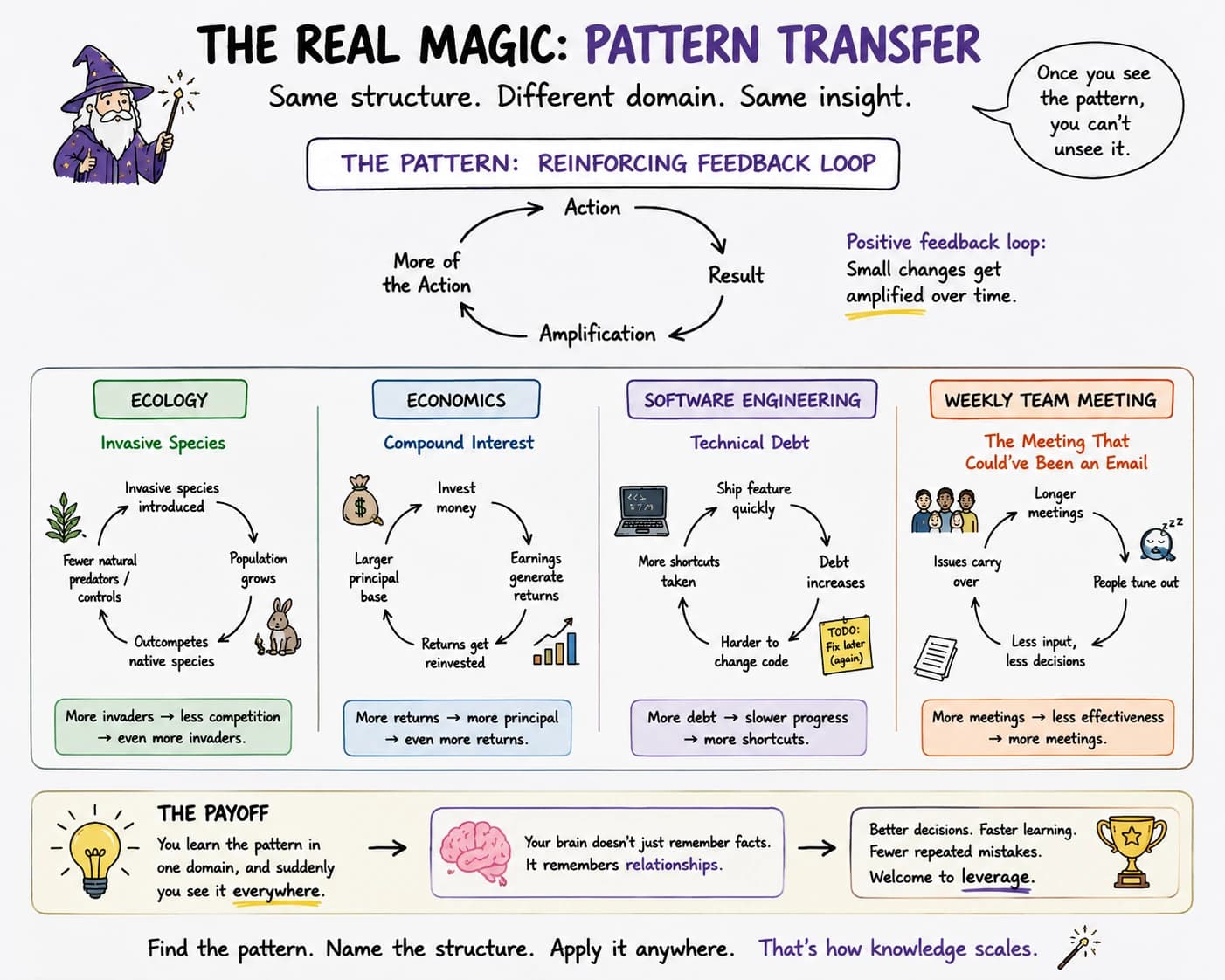
That episode captures both the power and limitation of schema theory, mental schemas, prior knowledge, advance organizers, AI-generated summaries, mind maps, concept maps, and knowledge graphs. Existing cognitive schemas usually accelerate comprehension, knowledge organization, memory encoding, and learning efficiency because new information can be assimilated into familiar conceptual structures. Yet when reality violates the pattern—as the platypus violated eighteenth-century zoology—the learner must abandon assimilation and begin accommodation, reorganizing the conceptual framework itself. Modern AI tutoring systems, adaptive learning platforms, instructional design, and educational AI face exactly the same challenge. A high-quality AI advance organizer should activate the correct schema before learning begins, but it must also leave room for revision when evidence contradicts the initial framework. The engineering objective is not merely schema activation, but schema updating—building instructional systems that improve comprehension, knowledge transfer, retrieval, and self-regulated learning without trapping learners inside an elegant but inaccurate mental model.
Schema Activation Across the Learning Workflow
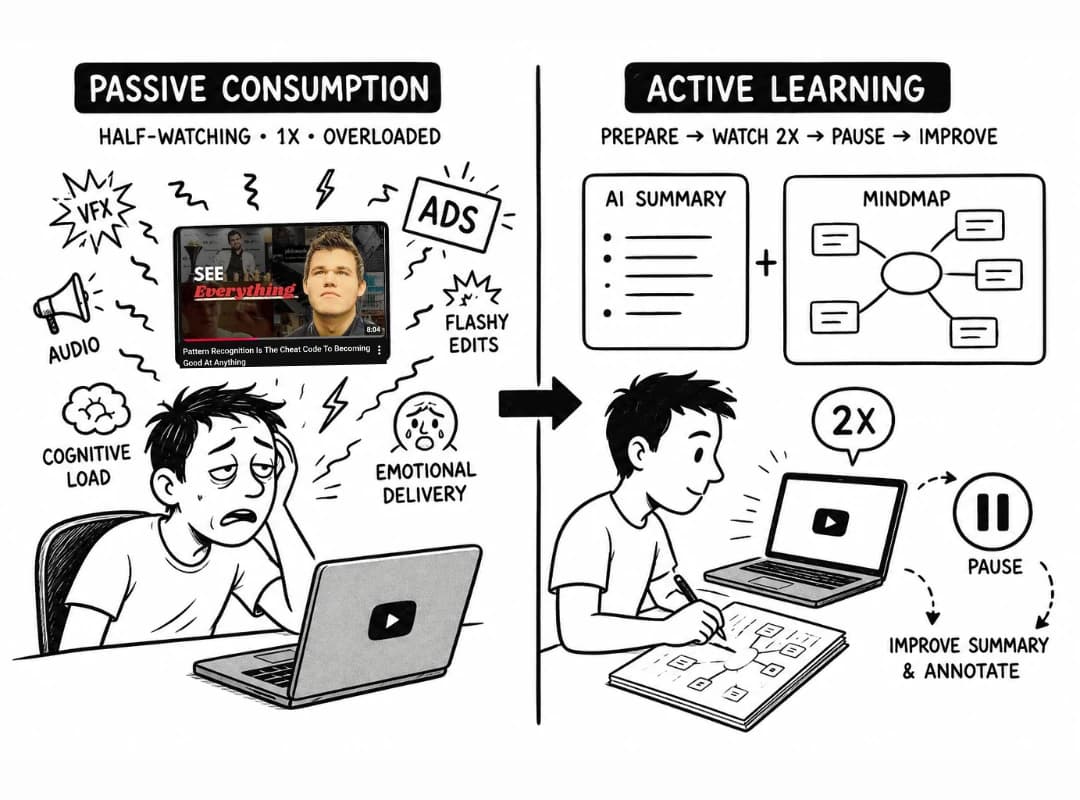
Use it to turn video or text into advance organizers, mind maps, and retrieval practice.
How to Assess Prior Knowledge Before Teaching? Prior Knowledge Profile Guide
Richard Hake (Indiana University physicist, 1998) analysed Force Concept Inventory pre/post scores from 6,542 physics students in 62 courses, comparing 14 traditional-lecture courses with 48 interactive-engagement courses. Benchmarking each class against its own pretest answered the question: traditional courses realised just 23% of possible gain versus 48% for interactive engagement, so unmeasured starting knowledge proved costly.
| Audience / Industry / Use Case | Research Finding → Your Next Rep |
|---|---|
| Physics and STEM instructors | The pretest used distractors built from common misconceptions, and traditional courses averaged only 0.23 normalised gain, (post − pre)/(100 − pre). Diagnostic formative assessment exposes gaps in background knowledge that lecturing leaves intact. |
| Curriculum designers and department chairs | Interactive-engagement courses averaged 0.48 normalised gain, roughly double. This demonstrates a method effect on classroom assessment results; that revised cognitive schemas caused the gain is an inferred mechanism, not something Hake directly tested. |
| Corporate and adult-learning managers | Class-average gain was essentially uncorrelated with pretest score (r ≈ 0.02). A prior-knowledge profile lets cohorts of different readiness be compared fairly by gain rather than raw score. |
Best Way to Activate Background Knowledge? Advance Organizer Examples That Work
Sonya Carr (Southeastern Louisiana University) and Bruce Thompson (Texas A&M University, 1996) compared students with learning disabilities, age peers and reading-level peers on inferential passages with familiar or unfamiliar topics, contrasting experimenter-provided with self-generated activation. Experimenter activation helped every group, most for learners with learning disabilities and for unfamiliar topics.
| Audience / Industry / Use Case | Research Finding → Your Next Rep |
|---|---|
| Instructional designers for LMS courses | Every group, not just struggling readers, answered more inferential questions after the experimenter activated relevant background knowledge. Schema activation plausibly lowers the search cost of finding the right schema, though the abstract does not isolate that mechanism. |
| Teachers introducing unfamiliar content | Gains were largest when passage topics were unfamiliar and smaller for familiar ones. Activation mattered most where retrieval cues to existing schemas were weakest, which points to activation rather than exposure alone. |
| Special-education and intervention teams | Students with learning disabilities performed like reading-level peers, not age peers, yet showed the most noteworthy benefit. Subject-led and experimenter-led activation were compared, but the abstract reports benefits only for experimenter-led activation. |
How to Turn Fragmented Facts Into a Mind Map Schema?
Eleanor Rosch (UC Berkeley) and colleagues (1976) had participants list attributes for nine taxonomies, such as furniture, tools and fruit, at superordinate, basic and subordinate levels, then tested sorting, naming and verification. Basic-level categories like "chair" shared the most attributes, superordinates few, and subordinates barely more, so hierarchies organise best around basic-level nodes.
| Audience / Industry / Use Case | Research Finding → Your Next Rep |
|---|---|
| Information architects and taxonomy designers | Superordinate terms like "furniture" yielded few shared attributes, while basic-level "chair" yielded many. Basic-level nodes carry the densest mental categorization, and hierarchies anchored there mirror how concept formation clusters features. |
| Primary and secondary teachers | Participants identified and verified objects fastest at the basic level, and the authors reported that young children name and sort at this level first. Learners appear to build conceptual understanding from the middle of a hierarchy outward, which is the pattern's proposed reading, not a tested teaching method. |
| Library, museum and product-catalogue teams | A companion study (Rosch & Mervis, 1975) found members sharing more attributes with their category were rated more typical. This supports prototype theory, where category membership is graded around typical exemplars rather than fixed by strict definitions. |
Concept Map vs Knowledge Graph vs Ontology: Which Organizes Relationships Best?
Timothy Goldsmith, P. J. Johnson and William Acton (1991, University of New Mexico) had undergraduates in a 16-week research-methods and statistics course rate pairwise concept relatedness, converted the ratings into Pathfinder networks and compared them with the instructor's network. No single format won outright; the number of links shared with the instructor's network strongly predicted exam performance, so explicit relationship structure tracks learning.
| Audience / Industry / Use Case | Research Finding → Your Next Rep |
|---|---|
| University curriculum designers | Students whose networks shared more links with the instructor's network scored higher on exams. Semantic-network structure, not vocabulary alone, reflects transfer-relevant learning, which makes explicit concept hierarchies an assessable output. |
| Assessment-tool and learning-analytics developers | Prediction of exam performance improved as more concepts were rated, but the number of pairwise judgments grows quickly with concept count. Any knowledge graph or taxonomy built from learner judgments faces a trade-off between completeness and rating time. |
| Ontology and knowledge-management teams | Follow-up work by the same group (Acton, Johnson & Goldsmith, 1994) compared referent structures, and later reviews favour averaging several experts over one instructor. Whose relationships count as correct depends on the reference, so a folksonomy or ontology inherits that choice. |
How to Write a Learning Summary That Preserves Schema Structure?
Steve Graham and Michael Hebert (2010 Carnegie Corporation report; 2011 Harvard Educational Review) meta-analysed experiments on writing and reading in grades 1–12, including 29 norm-referenced and 55 researcher-designed test studies. Writing about a text, through summaries, notes or questions, beat reading, rereading, studying or discussing it alone, and teaching text structure also improved comprehension.
| Audience / Industry / Use Case | Research Finding → Your Next Rep |
|---|---|
| Secondary content-area teachers | Writing summaries of a text produced statistically significant comprehension gains. Compressing forces selection while keeping expository text organisation, which plausibly eases working memory load, though the meta-analysis did not measure that mechanism. |
| Teachers of struggling readers | Benefits of writing about reading were stronger for lower-achieving students when tied to explicit instruction on how to write. Structured practice seems to matter more than writing alone, though the pooled studies do not isolate which component supports comprehension monitoring or inferencing. |
| Corporate-training and documentation writers | Teaching text structures and paragraph construction improved reading comprehension. Explicit structure appears to let readers inherit an author's framework in narrative and expository text alike, though all studies were school-based. |
How Does Vocabulary Unlock Schema Activation? Glossary Strategy
Steven Stahl and Marilyn Fairbanks (1986, Review of Educational Research) meta-analysed experiments on vocabulary instruction for children, comparing comprehension of passages containing taught words with global comprehension. Instruction raised comprehension of passages with taught words by an effect size of 0.97 (50th to 82nd percentile) but global comprehension by only 0.30 (63rd percentile), so vocabulary unlocks the schemas attached to the taught terms first.
| Audience / Industry / Use Case | Research Finding → Your Next Rep |
|---|---|
| Clinical and engineering educators teaching domain terminology | Passages containing taught words were understood far better, equivalent to moving a median learner to the 82nd percentile. Mastering a term appears to make the linguistic schema behind it available when text uses the word. |
| Corporate and technical-training designers | Effective programmes combined definitions with contextual information, involved deeper processing and gave multiple exposures. Drilling definitions or dictionary look-up alone had little or no effect, so glossary entries need conceptual context. |
| Literacy assessment leads | Global comprehension gained only 0.30 (63rd percentile). Vocabulary teaching transfers modestly to untaught text, so outcome measures should include passages containing the taught terms. |
How to Sequence Lessons From Familiar to Unfamiliar Using Schemas?
John Clement and David Brown (University of Massachusetts Amherst, 1989–1993) interviewed 21 high-school students with no physics instruction, 14 of whom denied that a table pushes up on a book, and compared bridging-analogy sequences from familiar anchors with standard teaching by example. Anchor-to-target sequencing produced significantly larger pre–post gains than traditional instruction, as later summarised by Stephens and Clement.
| Audience / Industry / Use Case | Research Finding → Your Next Rep |
|---|---|
| Physics and science teachers | Chains that began with accepted anchors (a book resting on a hand or spring) and bridged to the table yielded larger gains than traditional instruction. Instructional sequencing seems to work by extending an existing schema rather than replacing it. |
| Curriculum designers | Clement, Brown and Zietsman (1989) showed that not all preconceptions are misconceptions. A diagnostic test identified valid "anchoring conceptions", so curriculum design can start from what learners already get right. |
| Tutoring-system developers | A 1987 computer tutor from the same analogy programme was motivating and effective in some learning situations, but the data showed others needing alternatives. A single scaffold sequence has limits, which is an argument for adaptive sequencing. |
How to Build Durable Long-Term Memory Frameworks?
Dorothy Tse, Richard Morris and colleagues (University of Edinburgh, 2007, Science) trained rats over weeks on six flavour–place pairs, then tested one-trial learning of two new pairs with hippocampal lesions at varying delays. With the schema in place, new pairs were learned in one trial and no longer needed the hippocampus by 48 hours, versus a month or more typically.
| Audience / Industry / Use Case | Research Finding → Your Next Rep |
|---|---|
| Corporate onboarding and enterprise-training architects | Memory for the flavour–place pairs became persistent only as the schema gradually developed across weeks. A durable semantic framework appears to be earned through repeated, consistent exposure rather than a single pass. |
| University curriculum planners | Hippocampal removal 3 hours after learning abolished memory of the new pairs, but removal at 24 or 48 hours spared it. Memory consolidation was unusually fast when new information fit the schema, though this is a rat result and its transfer to classrooms is inferred. |
| Educational neuroscience researchers | In a 2011 follow-up, learning new pairs within the schema up-regulated plasticity genes in prelimbic cortex, and pharmacological interventions there prevented new learning. This supports a cortical role in rapid assimilation, while predictive-processing and long-term-potentiation accounts remain theoretical. |
Best Retrieval Practice to Strengthen Schemas? Quizzes and Free Recall
Christopher Rowland (Eckerd College, 2014, Psychological Bulletin) meta-analysed experiments comparing testing with restudy on later retention across materials such as paired associates and prose. Testing beat restudy by roughly half a standard deviation (g ≈ 0.50), with larger benefits after feedback and at delays of a day or more.
| Audience / Industry / Use Case | Research Finding → Your Next Rep |
|---|---|
| Teachers and course designers | Retrieving information produced better later retention than restudying it. This supports retrieval practice as a way to reinforce organisation rather than rote memorisation, with restudy as the comparison condition. |
| Learning-platform developers | Testing effects were larger when feedback followed the initial test. Effortful retrieval plus correction plausibly strengthens retrieval pathways, and Rowland's abstract credits effortful processing, though that account is supported by moderators rather than directly measured. |
| Certification and corporate training teams | Benefits grew with longer retention intervals and were larger when the final test demanded cued recall rather than free recall or recognition. Delayed, recall-format assessment is where the retrieval advantage is most visible. |
How to Build an AI Learning Workflow That Compounds? Consistency System
Phillippa Lally, Cornelia van Jaarsveld, Henry Potts and Jane Wardle (University College London, 2010) asked 96 volunteers to perform a chosen eating, drinking or activity behaviour daily in a stable context for 12 weeks while rating its automaticity. Among 39 well-modelled participants, automaticity plateaued after a median of 66 days (range 18–254), showing that consistency compounds gradually and unevenly.
| Audience / Industry / Use Case | Research Finding → Your Next Rep |
|---|---|
| EdTech product teams | Automaticity climbed steeply with early repetitions, then flattened toward a plateau. A consistent pipeline of repeated cycles pays off as compounding gains. |
| Corporate L&D leaders | Missing a single day did not reduce the chance of forming the habit. Discipline protects progress through returning to the cue, not through unbroken streaks, so automaticity over weeks is the better measure. |
| Skill-coaching and workforce-upskilling programmes | Exercise-type behaviours took roughly 1.5 times longer than drinking or eating habits, and only 39 of 96 participants fitted the model well. More complex skills need longer cycles, and the 66-day median is not a deadline. |
Absent Schema vs Incorrect Schema: How to Diagnose and Fix Misconceptions?
Andrew Shtulman (Occidental College) and Joshua Valcarcel (2012, Cognition) had 150 undergraduates with several college maths and science courses judge 200 true/false statements across ten domains as quickly as possible, comparing statements consistent with intuitive theories against those that conflicted. Conflicting statements were verified more slowly and less accurately (individual accuracy ranged 59–89%), so incorrect schemas are suppressed rather than replaced.
| Audience / Industry / Use Case | Research Finding → Your Next Rep |
|---|---|
| Science teachers and learning scientists | Even students with substantial science coursework were slower and less accurate when scientific and intuitive theories collided. Misconceptions appear to persist alongside corrected schemas, so formative assessment should probe speeded conflict, not just final correctness. |
| Adult-learning and professional-development providers | A later study (Shtulman & Harrington, 2016) with 104 younger and 48 older adults found equal accuracy but a larger response-time lag on intuition-inconsistent statements for older adults. The lag persisted even among professional scientists, so conceptual change leaves lasting interference. |
| Assessment and e-learning designers | Priming with schematic scientific diagrams improved accuracy on counterintuitive statements compared with everyday-scene primes, but not speed (100 undergraduates; Shtulman & Meller conference report). Misconception repair can be cued, yet the conflict remains. |
This pairs well with the earlier Linnaeus metaphor: Linnaeus illustrates how schemas organize knowledge efficiently, while the platypus illustrates why schemas must remain flexible enough to accommodate exceptions. Together they cover both halves of schema theory—assimilation and accommodation.