What Is Knowledge Building? Scardamalia and Bereiter's Workshop for Ideas
In the early 1980s, while most classrooms still treated knowledge as something to receive, Marlene Scardamalia and Carl Bereiter posed a different question: what if students improved ideas instead of collecting them? Their answer emerged through CSILE (Computer Supported Intentional Learning Environments), first prototyped in 1983 and later evolving into Knowledge Forum, where learners worked together to refine explanations much as scientists, engineers, and research teams refine theories. The shift was subtle yet radical. Learning ceased to be measured by how much each student remembered and became visible in how far the community advanced a shared explanation. That philosophy became knowledge building—a cornerstone of the learning sciences, knowledge creation theory, student-centered learning, collaborative knowledge construction, and modern educational technology.
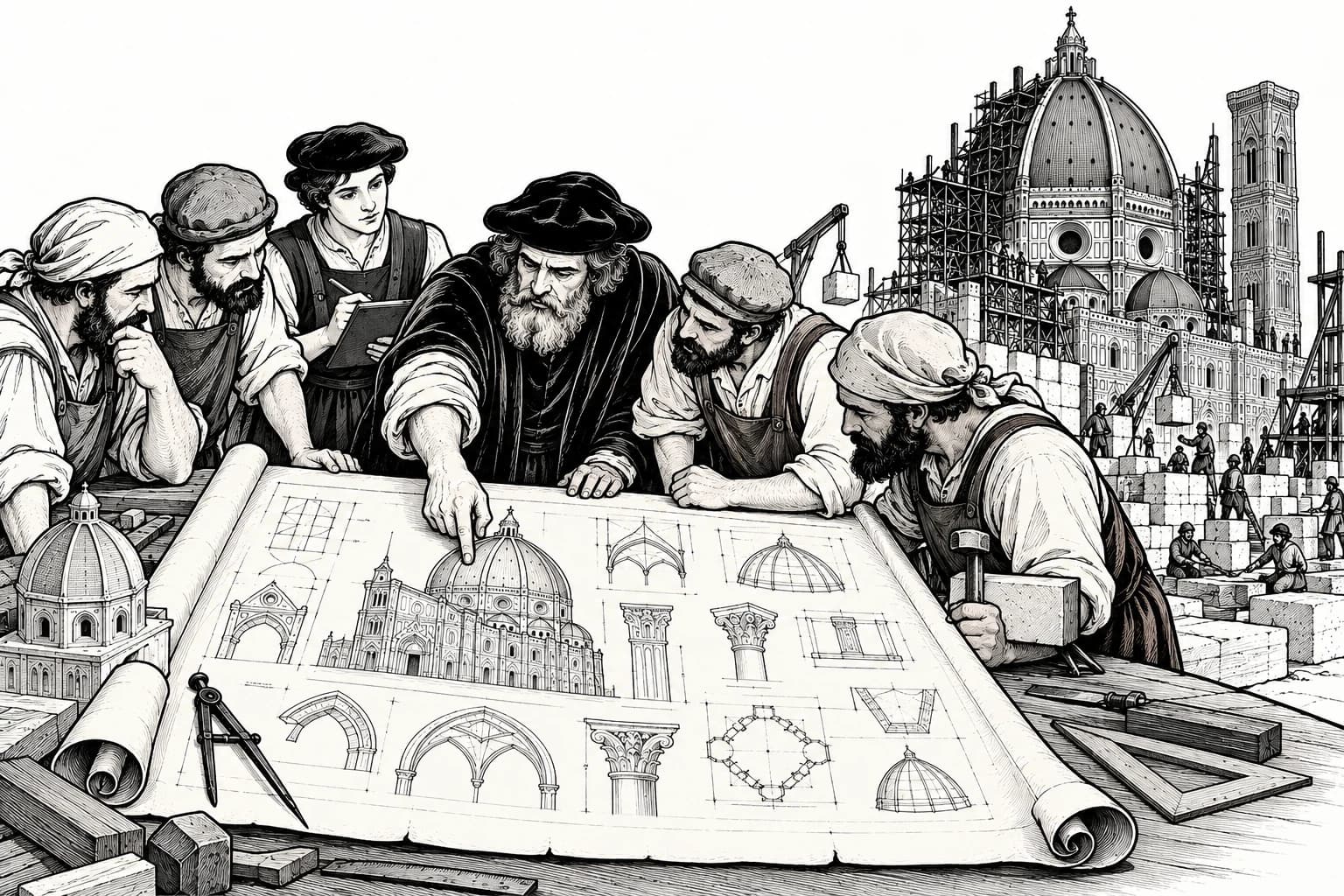
Knowledge building leaves them in the open like timber stacked in a public workshop. Every participant can cut a stronger joint, replace a weak beam, or combine scattered pieces into something sturdier than anyone could have designed alone. The success of the workshop is judged by the strength of the structure, not by who carried the most boards.
-
Knowledge building transforms learning from private understanding into collective knowledge creation, where theories become public knowledge, knowledge artifacts, and epistemic objects that everyone can question, revise, improve, and extend. Learners practice idea improvement, knowledge advancement, intentional learning, and innovation through learning, continually strengthening explanations.
-
The framework differs from neighboring approaches because its destination is different. Collaborative learning, cooperative learning, peer learning, problem-based learning, project-based learning, and inquiry-based learning often end when a task is completed or a solution is found. Knowledge building continues beyond completion, pursuing continuous knowledge refinement, community inquiry, collective intelligence, and the long-term evolution of ideas themselves.
-
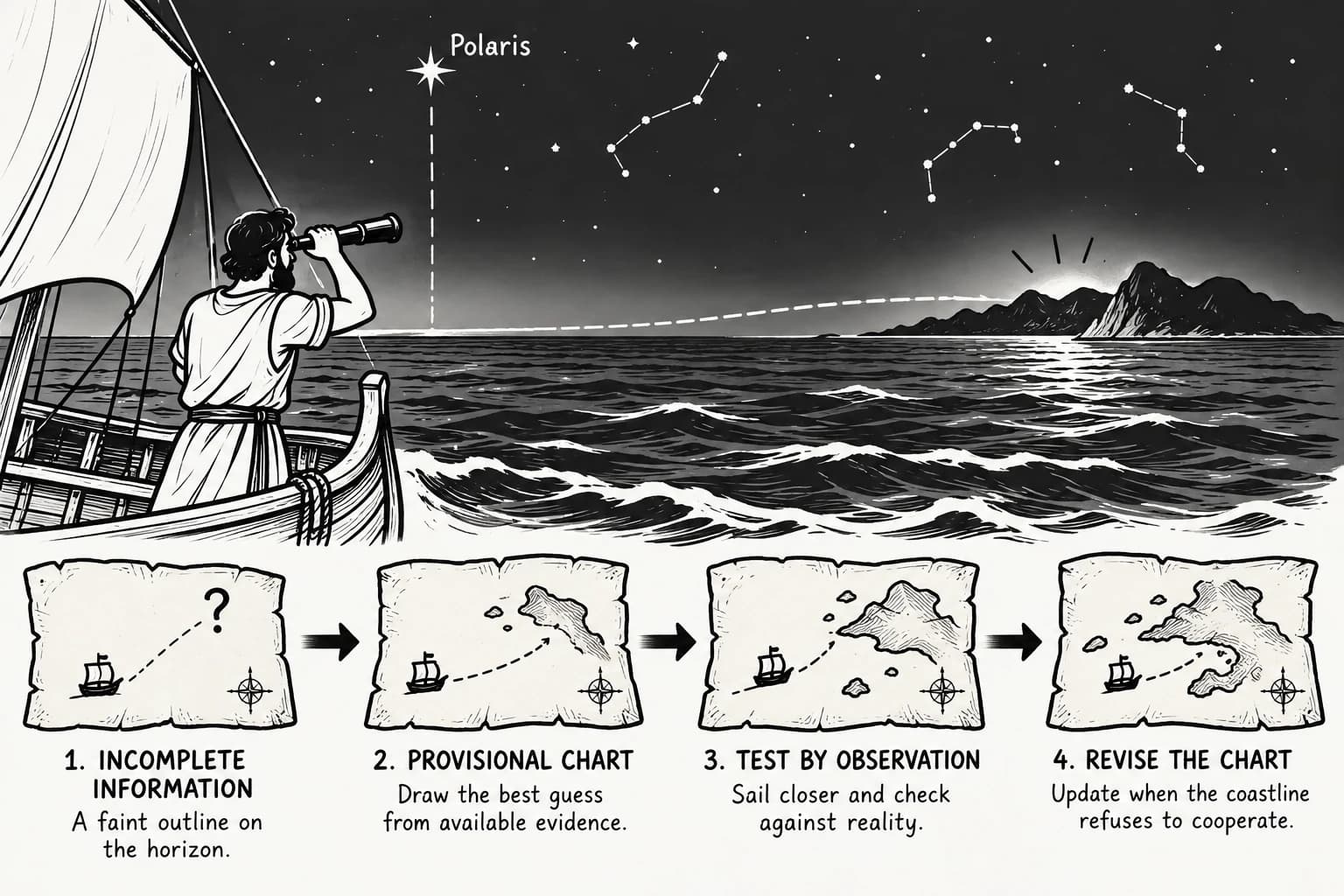
The engine is an iterative inquiry cycle: learners pose questions, generate theories, critique evidence, revise explanations, and periodically rise above competing threads to produce broader syntheses. Throughout this knowledge creation cycle, scientific inquiry, design thinking, hypothesis generation, argumentation, knowledge integration, and feedback loops steadily transform isolated observations into coherent explanatory frameworks.
-
Several well-established cognitive theories power the process simultaneously. Generative learning encourages learners to produce explanations rather than repeat them; elaborative encoding deepens memory by linking new ideas to existing knowledge; retrieval practice repeatedly reconstructs understanding; distributed cognition and collective cognition allow communities to outperform individuals; metacognition, epistemic agency, and external cognition help learners monitor and improve both their own thinking and the community's shared knowledge.
-
Today the model extends far beyond classrooms into research groups, higher education, corporate learning, knowledge management, organizational learning, professional development, online learning communities, and AI-supported learning ecosystems. Modern collaborative platforms increasingly function as knowledge-building environments where ideas remain living objects, continuously revised through community knowledge, shared cognition, and sustained knowledge evolution.
Historical Development of Knowledge Building
| Year | Milestone | Historical Significance | Lasting Contribution |
|---|---|---|---|
| 1978 | Lev Vygotsky popularizes social constructivist foundations | Learning becomes understood as socially mediated. | Provides the social foundation later extended by knowledge-building communities. |
| 1983 | CSILE prototype created by Scardamalia & Bereiter | First large-scale attempt to support knowledge creation rather than information delivery through networked computers. | Introduces intentional learning environments centered on shared ideas. |
| 1986 | First elementary classroom deployment | Young students demonstrate sustained community inquiry, theory improvement, and collaborative explanation. | Shows children can participate in authentic knowledge-building pedagogy. |
| 1989 | CSILE research published | Classroom discourse begins to be analyzed as collaborative knowledge construction. | Establishes empirical evidence for sustained idea improvement. |
| 1995 | Knowledge Forum launched | Web technologies transform CSILE into a scalable platform supporting knowledge artifacts, epistemic discourse, and long-term idea revision. | Becomes the flagship environment for knowledge-building research worldwide. |
| 2002 | Twelve Knowledge Building Principles articulated | The framework formalizes concepts such as epistemic agency, improvable ideas, rise above, democratizing knowledge, and embedded assessment. | Provides the design blueprint for knowledge-building classrooms. |
| 2002 | Bereiter publishes Education and Mind in the Knowledge Age | Introduces Popper's World 3 as the home of public ideas that communities continuously improve. | Distinguishes learning from genuine knowledge creation. |
| 2003 | Encyclopedia definition of Knowledge Building | Establishes the canonical definition emphasizing collective knowledge advancement over individual achievement. | Positions knowledge building as a distinct theory within the learning sciences. |
| 2006 | Cambridge Handbook of the Learning Sciences | Knowledge building becomes recognized as a foundational framework in educational research. | Broadens adoption across universities and research communities. |
| 2009 | Zhang, Scardamalia, Reeve & Messina | Demonstrates that greater learner responsibility produces richer epistemic discourse and more sophisticated explanations. | Strengthens evidence for learner-driven knowledge advancement. |
| 2013 | Resendes, Chen, Acosta & Scardamalia | Reflective assessment improves the quality of collaborative ideas. | Connects assessment directly to idea improvement and knowledge refinement. |
| Today | AI-supported knowledge-building environments | Large language models, collaborative editors, and knowledge graphs increasingly support collective intelligence, distributed cognition, and continuous knowledge evolution. | Extends the workshop model into modern AI-enhanced learning ecosystems. |
Benefits of Knowledge Building: Effect Sizes and Scaffolds
Knowledge building succeeds because the workshop changes what improves. It measures whether the community produces stronger explanations, and decades of knowledge building research suggest that this shift consistently improves conceptual understanding, although reported effect sizes vary widely—from roughly d ≈ 0.3 to above 1.0—depending on implementation fidelity, classroom culture, and the maturity of the knowledge-building community. The strongest and most consistent knowledge-building outcomes include higher-order thinking, critical thinking, creative thinking, knowledge transfer, far transfer, knowledge retention, academic achievement, collaborative problem solving, innovation skills, 21st-century skills, student engagement, motivation, self-regulated learning, metacognition, shared understanding, idea diversity, collective intelligence, constructive discourse, epistemic growth, and steadily improving knowledge quality. Much of that progress comes from remarkably simple Knowledge Forum scaffolds that function like specialized tools on a craftsman's bench: prompts such as "My Theory" encourage explanation, "I Need to Understand" keeps inquiry alive, "New Information" integrates evidence without ending discussion, "This Theory Cannot Explain" exposes conceptual gaps, "A Better Theory" normalizes revision, and "Putting Our Knowledge Together" culminates in rise-above synthesis, while embedded assessment and reflective assessment evaluate the quality of ideas during construction rather than after completion. These scaffolds do not stand alone. They recruit independently validated mechanisms—including question generation, self-explanation, elaborative inquiry, and continual revision—that have repeatedly demonstrated meaningful learning gains across educational research, while studies spanning children through adults and classrooms across Hong Kong, Finland, Singapore, Spain, and beyond suggest that the model travels surprisingly well across cultures and persists beyond the short-lived novelty that often accompanies educational innovations.
Factors, Rivals, and Evidence at a Glance
Does Knowledge Building Improve Conceptual Understanding vs Traditional Teaching?
Ivan Lam and Carol K. K. Chan (2008), researchers at the University of Hong Kong, studied 79 Grade-10 chemistry students, comparing 40 students using Knowledge Forum-mediated knowledge building with 39 receiving traditional instruction. Students generated questions, theories, explanations and revisions; the knowledge-building group made greater conceptual and epistemological gains, with reflection and inquiry predicting conceptual change beyond prior knowledge.
| Audience / Industry / Use Case | Research Finding → Your Next Rep |
|---|---|
| Secondary-school science | The knowledge-building group generated theories, hypotheses, explanations and revisions and made greater gains on conceptual-change measures than traditional instruction, showing how idea improvement, epistemic agency and knowledge-building discourse convert explanation into conceptual restructuring; assess pre/post misconception items alongside theory revisions. |
| Chemistry curriculum design | Epistemological measures improved alongside conceptual understanding, while knowledge-building reflection correlated with science learning, linking collective responsibility, reflective discourse and conceptual change; retain reflection artifacts alongside achievement tests to distinguish knowing an answer from changing the underlying model. |
| Science teacher education | Regression analyses showed that knowledge-building reflection and inquiry contributed to conceptual change beyond prior knowledge and epistemological beliefs, demonstrating that prior knowledge, epistemic agency and idea revision can jointly explain improvement; evaluate whether discourse variables predict post-test conceptual understanding beyond baseline scores. |
How to Use Prior Knowledge for Knowledge Building? Profile, Advance Organizer and Democratizing Entry [MERGED]
Frederic C. Bartlett (1932), Cambridge psychologist and pioneer of reconstructive-memory research, asked British participants to repeatedly reproduce the unfamiliar Native American story The War of the Ghosts across delays ranging from minutes to years. Recall preserved the broad structure while unfamiliar details were transformed toward familiar cultural schemas, demonstrating that prior knowledge actively shapes encoding and retrieval.
| Audience / Industry / Use Case | Research Finding → Your Next Rep |
|---|---|
| Teacher onboarding and curriculum design | Participants preserved the story's broad theme while transforming unfamiliar elements, showing that prior knowledge, schema activation and tentative interpretation shape comprehension; surface learners’ existing explanatory structures before introducing unfamiliar content so later revisions have something concrete to modify. |
| Cross-cultural education | The unfamiliar story was repeatedly reshaped toward culturally familiar forms, demonstrating how knowledge diversity, misconceptions and public knowledge artifacts influence interpretation; use a prior-knowledge profile to expose competing interpretations before an advance organizer fixes the conceptual frame. |
| Professional training for unfamiliar domains | Bartlett found that repeated recall retained central structure while details underwent transformation, illustrating how advance organizers, prior schemas and knowledge construction determine what survives; measure whether learners can reconstruct the central causal model after encountering unfamiliar terminology and examples. |
What Makes a Good Knowledge Building Activity? Task Complexity and Authentic Problems
Jo Boaler of King’s College London (1998) followed students for three years in two schools using markedly different mathematics approaches: one emphasized traditional textbook instruction and the other sustained open-ended, project-based activity. The traditional group developed more procedural knowledge with limited unfamiliar-task usefulness, while the open environment developed conceptual understanding that transferred across assessments and school and nonschool settings.
| Audience / Industry / Use Case | Research Finding → Your Next Rep |
|---|---|
| Secondary-school mathematics | Students exposed to open-ended mathematics developed conceptual understanding, authentic problem solving and idea diversity that proved useful across unfamiliar situations; design tasks requiring multiple legitimate solution paths and evaluate performance on problems structurally different from instruction. |
| STEM curriculum teams | The traditional environment produced procedural knowledge with limited use in unfamiliar contexts, showing the boundary of closed tasks, epistemic agency and transfer; pair procedural assessments with novel-application problems to detect whether learners can perceive the underlying mathematical structure. |
| Project-based professional training | The open, project-based students were described as apprenticed into a way of thinking usable in school and nonschool settings, connecting authentic problems, complexity and knowledge transfer; evaluate whether learners reuse principles in contexts whose surface features differ from the training task. |
How to Implement Knowledge Building in the Classroom? Teacher Facilitation Guide
Jianwei Zhang, Marlene Scardamalia, Richard Reeve and Richard Messina (2009), working across the University at Albany and University of Toronto, examined Knowledge Forum discourse in knowledge-building communities and analyzed how collective cognitive responsibility was supported through idea-centered activity. Their work distinguished productive knowledge creation from information sharing and showed that community processes, idea improvement and shared goals determine whether collaborative technology becomes knowledge building.
| Audience / Industry / Use Case | Research Finding → Your Next Rep |
|---|---|
| Knowledge-building classroom teachers | Productive communities treated ideas as improvable objects and organized discourse around real ideas, authentic problems and community knowledge, making facilitation a matter of connecting and advancing ideas; track idea revisions and build-on relationships rather than discussion volume alone. |
| Instructional technology teams | Knowledge Forum supported public ideas, collaborative inquiry and sustained revision, while discourse analysis distinguished knowledge sharing from knowledge creation, demonstrating that technology, epistemic agency and knowledge-building discourse require aligned social practices; audit platform traces for explanation, critique, synthesis and revision. |
| Teacher professional-development programs | Zhang and colleagues framed collective responsibility as a classroom design problem involving shared goals, idea improvement and community processes, showing why facilitation moves, psychological safety and collective responsibility determine whether students merely contribute or advance communal knowledge; evaluate contribution quality and collective synthesis. |
How Do Knowledge Building Question Stems Drive Inquiry-Based Learning?
James R. King, Shirley Biggs and Sally Lipsky (1984), based at Texas Woman’s University and the University of Pittsburgh, trained 87 college students in developmental reading to use higher-level prequestioning or summary generation while reading, with a control group, then measured free recall, objective-test performance and essay performance. Summary generation improved all three outcomes, whereas prequestioning improved objective-test performance without improving free recall or essay performance.
| Audience / Industry / Use Case | Research Finding → Your Next Rep |
|---|---|
| University reading programs | Summary generation significantly improved free recall, objective testing and essay performance, showing that question generation, retrieval and knowledge construction become more powerful when learners must reorganize material into an output; measure both factual tests and constructed responses. |
| Professional certification training | Interspersed prequestioning improved objective-test recall while leaving free recall and essay performance unchanged, demonstrating that question stems and retrieval can strengthen selected knowledge without automatically producing broad conceptual restructuring; match question quality to the intended assessment. |
| Content-area literacy | The comparison showed that different generative activities produced different outcome profiles, establishing that inquiry, elaboration and transfer should be evaluated through the form of learner output; use explanation or synthesis tasks when the goal extends beyond recognition-level comprehension. |
Why Is Explanation Generation the Ultimate Comprehension Test in Knowledge Building?
Cristine H. Legare of the University of Texas at Austin and Tania Lombrozo of the University of California, Berkeley (2014) conducted two experiments with 3–6-year-olds using a mechanical gear toy, comparing explanation with observation and verbal-description conditions. Explanation selectively strengthened causal-mechanism learning, reconstruction and generalization while providing no benefit for irrelevant perceptual details, showing that generated explanations expose and organize the structure learners actually understand.
| Audience / Industry / Use Case | Research Finding → Your Next Rep |
|---|---|
| Early-science education | Children prompted to explain how the gear mechanism worked showed stronger causal learning, explanation generation and conceptual understanding than observation controls; use mechanism explanations as the comprehension output and score whether learners identify how components produce the observed function. |
| Engineering education | Explanation improved understanding of functional-mechanical relationships and reconstruction of the toy, linking self-explanation, knowledge organization and causal reasoning; require learners to explain a mechanism before evaluating whether they can reconstruct or diagnose it. |
| Transfer-oriented training | Explanation supported generalization to a new gear configuration while failing to improve memory for irrelevant perceptual details, demonstrating a boundary between conceptual understanding, schema construction and transfer; assess application to structurally novel systems. |
What Are Epistemic Agency and Collective Responsibility in Knowledge Building?
Jianwei Zhang, Marlene Scardamalia, Mary Lamon, Richard Messina and Richard Reeve (2007) followed 22 Grade-4 students for four months as they investigated optics through Knowledge Forum, analyzing inquiry threads around idea improvement, authentic problems, community knowledge and authoritative sources. The study showed how sustained collective responsibility organized students’ discourse around advancing shared explanations.
| Audience / Industry / Use Case | Research Finding → Your Next Rep |
|---|---|
| Elementary science classrooms | Four months of optics inquiry produced sustained analysis of idea improvement, authentic problems and community knowledge, showing epistemic agency as responsibility for advancing explanations; preserve student-generated questions and revisions as the longitudinal evidence of inquiry. |
| Collaborative research teams | Students worked with explanations, empirical artifacts and authoritative sources inside a shared inquiry space, demonstrating how collective responsibility, epistemic agency and constructive use of authoritative sources coordinate distributed expertise; evaluate whether sources alter communal theories. |
| Knowledge-management platforms | Inquiry-thread analysis made the evolution of shared ideas visible, showing how symmetric knowledge advance, discourse and rise-above synthesis can be represented through linked contributions; measure whether later contributions transform earlier explanations. |
Is Knowledge Building Just a Novelty Effect? Limitations and Criticisms
Bodong Chen, Leanne Ma, Yoshiaki Matsuzawa and Marlene Scardamalia (2015) conducted a longitudinal analysis of 22 students’ Knowledge Forum discourse from Grade 1 through Grade 6, measuring productive vocabulary and knowledge-building behavior. Vocabulary grew significantly across the six years, especially beyond the first 2,000-word bands, while note revisions were the strongest behavioral predictor of vocabulary-growth rate and note reading related to lexical proficiency.
| Audience / Industry / Use Case | Research Finding → Your Next Rep |
|---|---|
| Elementary-school curriculum leaders | Productive written vocabulary increased from Grade 1 to Grade 6, demonstrating sustained pervasive knowledge building, idea improvement and longitudinal knowledge growth beyond a short novelty window; track discourse development across years. |
| Teacher-development programs | Note revisions were the strongest predictor of vocabulary-growth rate, linking improvable ideas, revision and sustained inquiry to measurable language development; monitor the proportion and quality of revised ideas as an implementation-fidelity indicator. |
| Educational technology teams | Note reading correlated with lexical proficiency while revision predicted growth rate, showing that knowledge-building discourse, visible ideas and collective knowledge create different behavioral signals; distinguish consumption traces from transformation traces when evaluating platform impact. |
Knowledge Building Research Limitations: Hawthorne, Selection and Time-on-Task?
Robert A. McCracken (1968) examined a three-year first-grade reading experiment involving two teachers and five classes, comparing experimental, control and subcontrol groups to investigate whether awareness of a new teaching method altered outcomes. Both experimental and control classes initially exceeded subcontrols, later performance changed across years, and McCracken proposed positive and negative Hawthorne effects arising from teacher expectations and perceived comparative success.
| Audience / Industry / Use Case | Research Finding → Your Next Rep |
|---|---|
| Education researchers | In the first year both experimental and control classes outperformed subcontrols, showing why selection, teacher effects and comparison design can masquerade as treatment effects; retain multiple control conditions and baseline measures when evaluating innovative pedagogy. |
| School innovation programs | The experimental group’s third-year performance fell below its first-year level while remaining above the first-year subcontrol, illustrating how novelty, implementation fidelity and longitudinal measurement can produce unstable snapshots; compare intervention effects across repeated cohorts and years. |
| Learning-science evaluation teams | Control-group performance also improved across later years, demonstrating that time-on-task, teacher behavior and Hawthorne effects can contaminate simple intervention-versus-control interpretations; triangulate achievement with process measures and repeated-cycle implementation data. |
Mind Maps vs Concept Maps vs Knowledge Frameworks: Which Visual Routine Works?
Paul Farrand, Fearzana Hussain and Enid Hennessy (2002), working at Barts and The London School of Medicine and Dentistry, randomly assigned 50 second- and third-year medical students to mind mapping or self-selected study techniques after a 600-word passage, then tested recall immediately and one week later. Both groups improved immediately, while only the mind-map group retained a robust advantage after one week, although motivation was lower for mind mapping.
| Audience / Industry / Use Case | Research Finding → Your Next Rep |
|---|---|
| Medical education | Both techniques improved immediate recall, while the mind-map condition retained a robust one-week benefit, connecting visual organization, chunking and long-term retrieval to delayed memory; evaluate visual organizers with delayed rather than immediate recall tests. |
| Clinical knowledge management | At one week, factual knowledge in the mind-map group was 10% higher after baseline adjustment, although the 95% CI ranged from −1% to 22%, demonstrating that knowledge organization and delayed retention can coexist with statistical uncertainty; preserve delayed outcomes. |
| Professional learning design | Mind-map motivation was lower, and the authors estimated a 15% adjusted improvement if motivation were equal, showing that visual mapping, learner effort and usability jointly shape effectiveness; evaluate retention and adoption separately so a cognitively useful representation does not become an unused tool. |
Best Knowledge Building Prompts and Scaffolds: ICAP and Wittrock Guide
Rachel Lam and Kasia Muldner (2017) conducted a 2×2 experiment across four introductory psychology classes, comparing individual preparation versus no preparation and Active versus Constructive preparation before collaboration. Individual preparation produced better deep-learning outcomes than immediate collaboration without preparation, while Active and Constructive preparation produced similar learning outcomes, showing that preparation can enable productive collaboration even when task labels alone do not determine learning.
| Audience / Industry / Use Case | Research Finding → Your Next Rep |
|---|---|
| University collaborative learning | Students who individually prepared before collaborating achieved better deep-learning outcomes than students who collaborated throughout, showing how ICAP, constructive preparation and retrieval-oriented output can prepare cognitive resources for dialogue; insert an individual theory or explanation phase before group work. |
| Corporate training programs | Active and Constructive preparation produced near-equal collaborative learning outcomes, demonstrating that engagement quality, epistemic agency and collaborative knowledge building depend partly on preparation itself; measure deep-transfer performance. |
| Instructional-design teams | Dialogue analysis suggested that individual preparation encouraged more constructive collaboration, connecting generative prompts, idea production and interactive learning to the quality of subsequent discussion; compare collaboration after preparation with collaboration without preparation using deep-learning and transfer measures. |
Knowledge Building in Practice: Turning Learning Deliverables into Living Ideas
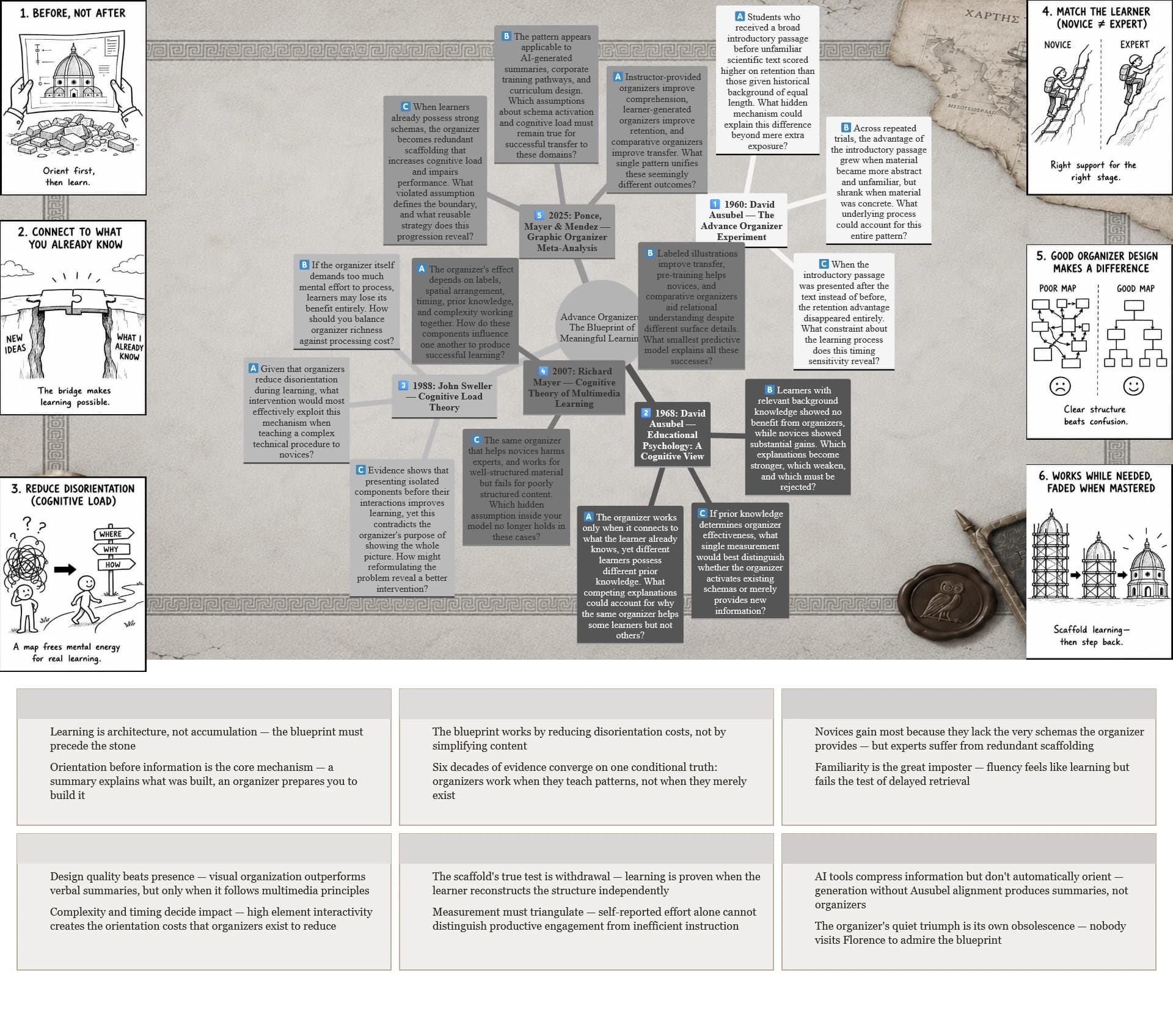
Most instructional deliverables begin life as finished products. A summary explains, a mind map organizes, a concept map connects, and an advance organizer prepares. Knowledge building asks a different question: what if every deliverable remained deliberately unfinished? Instead of serving as destinations, they become starting points for knowledge creation, collaborative knowledge construction, and continuous idea improvement. Every artifact becomes a public object that learners can challenge, extend, combine, and refine through community inquiry, epistemic agency, and sustained knowledge advancement. Whether implemented in higher education, corporate learning, professional learning communities, research teams, knowledge management systems, AI-supported collaboration, or modern learning management systems (LMSs), the objective remains constant: improve the quality of ideas rather than simply increase the quantity of information remembered. High-quality educational design measures richer theories, stronger explanations, deeper synthesis, and more durable collective intelligence, not longer summaries or higher click counts.
Knowledge Building Mind Map Example: Science Lesson That Turns Facts Into Systems
Issam Abi-El-Mona of Rowan University and Fouad Abd-El-Khalick of the University of Illinois at Urbana-Champaign studied 62 eighth-grade science students randomly assigned to mind-mapping or note-summarization conditions during a science unit. Mind mapping produced significantly larger achievement gains, with accurate concept links and color-coded relationships distinguishing stronger conceptual understanding while iconography contributed little. ([Wiley Online Library][1])
| Audience / Industry / Use Case | Research Finding → Your Next Rep |
|---|---|
| Secondary-school science teachers | Students constructing mind maps achieved substantially greater science gains than the note-summarization comparison, showing how schema organization, chunking, and dual coding can make relationships explicit; assess the resulting map alongside the unit test. ([Wiley Online Library][1]) |
| Teacher-training programs | The achievement advantage was not mediated by prior scholastic achievement, indicating that the mapping activity supported learners across different starting levels; use revisable nodes, conceptual links, and evidence to make knowledge structure inspectable. ([Wiley Online Library][1]) |
| Science curriculum designers | Higher-performing maps were distinguished chiefly by accurate links between central themes and major/minor concepts and by meaningful color coding, while iconography was less central; prioritize systems thinking, relational structure, and visual organization over decorative complexity. ([Wiley Online Library][1]) |
Concept Map Example for History and Engineering: From Implicit Links to Theories
Mohammadreza Farrokhnia, Héctor J. Pijeira-Díaz, Omid Noroozi, and Javad Hatami examined 120 tenth-grade physics students working in dyads on conservation-of-energy concept maps across three computer-supported collaborative mapping designs. Conceptual understanding improved across conditions, while individual preparation followed by sharing the map before collaboration produced the strongest conceptual learning and more integration- and conflict-oriented knowledge co-construction. ([ScienceDirect][2])
| Audience / Industry / Use Case | Research Finding → Your Next Rep |
|---|---|
| Secondary-school physics teachers | All three collaborative concept-mapping conditions improved conceptual understanding, demonstrating that externalizing relationships through a map can support systems thinking, proposition accuracy, and knowledge co-construction around a concrete domain such as conservation of energy. ([ScienceDirect][2]) |
| University engineering instructors | Dyads that first constructed individual maps and then collaborated showed stronger integration- and conflict-oriented consensus building, whereas continuous collaboration produced more quick consensus; individual theory formation created material for genuine comparison and theory critique. ([ScienceDirect][2]) |
| Research and innovation teams | Sharing the individual map before collaboration enhanced cognitive group awareness and optimized the combined learning outcome, demonstrating how explicit relationships, competing explanations, and collaborative revision can turn private representations into shared theoretical structures. ([ScienceDirect][2]) |
Beyond Learning Summaries: Strategy for University and Corporate Training?
Keith W. Thiede of Boise State University and Mary C. M. Anderson of the University of Illinois at Chicago conducted two experiments in which college students read texts, generated summaries either immediately or after a delay, or used a control condition before judging comprehension and taking tests. ([Boise State University][3]) Delayed summarization dramatically improved metacomprehension accuracy, with later analyses reporting roughly .61–.63 judgment–performance correlations versus about .25 for immediate summaries and .27 for controls, making summary generation a calibration mechanism rather than merely an orientation tool. ([ResearchGate][4])
| Audience / Industry / Use Case | Research Finding → Your Next Rep |
|---|---|
| University students | Delayed summaries produced metacomprehension accuracy around r = .61–.63, compared with roughly .25 for immediate summaries, showing that generation, retrieval, reflection, and metacognitive calibration become more diagnostic when learners reconstruct the text after a delay. ([ResearchGate][4]) |
| Corporate learning teams | Immediate summarization performed around the control level for metacomprehension, showing that merely producing a polished summary immediately after exposure does not guarantee accurate self-assessment; delay creates a stronger retrieval-based diagnostic signal for deciding what requires further study. ([ResearchGate][4]) |
| AI learning-platform designers | The delayed-summary condition improved learners' ability to align comprehension judgments with later test performance, supporting AI summaries as starting frameworks when the learner subsequently reconstructs, challenges, and evaluates the material. ([ScienceDirect][5]) |
How to Build Shared Vocabulary Through Collaborative Inquiry? Glossary Guide
Hagit Meishar-Tal and Paul Gorsky of the Open University of Israel analyzed 60 graduate students collaboratively constructing a wiki glossary of key course concepts, coding their additions, edits, and deletions as forms of collaborative writing. Students predominantly added material while also modifying existing definitions more substantially than earlier collaborative-writing research had reported, showing that shared vocabulary develops through accumulated contribution and revision. ([Taylor & Francis Online][6])
| Audience / Industry / Use Case | Research Finding → Your Next Rep |
|---|---|
| University seminar instructors | Adding information was the dominant collaborative-writing action, demonstrating that learner-generated definitions, shared vocabulary, and community knowledge can create an expanding lexical substrate; track substantive additions. ([Taylor & Francis Online][6]) |
| Engineering knowledge-management teams | Students modified existing wiki text more extensively than earlier research suggested, revealing that critique, refinement, and collective terminology emerge when contributors can work directly on prior definitions; measure revision activity alongside definition coverage. ([Taylor & Francis Online][6]) |
| Corporate onboarding and professional training | The study identified adding, editing, and deleting as distinguishable collaborative actions; structure shared definitions, examples, critiques, and revisions around the same contribution taxonomy. ([ERIC][7]) |
Knowledge Building Lesson Plan Example: Elementary, High School and Remote Learning?
Huang-Yao Hong, Leanne Ma, Pei-Yi Lin, and Karen Yuan-Hsuan Lee studied two third-grade classes in Taipei, randomly assigning 24 students to Knowledge Building and 27 to direct instruction across a semester. The Knowledge Building class outperformed direct instruction on PIRLS reading comprehension, while sustained Knowledge Forum activity and collaborative idea work were associated with stronger higher-level comprehension. ([DOI][8])
| Audience / Industry / Use Case | Research Finding → Your Next Rep |
|---|---|
| Elementary literacy teachers | The Knowledge Building class outperformed the direct-instruction class on PIRLS, demonstrating that publication, idea improvement, epistemic discourse, and collaborative meaning-making can support reading comprehension when students repeatedly work with ideas. ([DOI][8]) |
| Remote-learning program designers | Knowledge Forum activity correlated with improved PIRLS performance, connecting online discourse, sustained inquiry, collaborative knowledge, and transfer to measurable reading outcomes; platform analytics become meaningful when they capture idea advancement. ([DOI][8]) |
| University seminar designers | Qualitative analysis linked sustained creative work with ideas to higher-level reading comprehension, illustrating how questioning, theory development, critique, and revision can turn reading from information acquisition into cumulative interpretation. ([DOI][8]) |
What Does the Knowledge Building Cycle Look Like? Question to Rise-Above Framework
Bodong Chen, Marlene Scardamalia, and Carl Bereiter reported a 2015 design-based research study in which Grade 3 students used a Promising Ideas Tool within Knowledge Forum to select ideas, discuss their promise, and guide subsequent collective work. Across two cycles, children as young as eight made useful judgments and the class using promisingness judgments achieved significantly greater knowledge advances than students without the judgment-and-discussion process. ([Experts@Minnesota][9])
| Audience / Industry / Use Case | Research Finding → Your Next Rep |
|---|---|
| Elementary knowledge-building classrooms | Eight-year-olds successfully judged which ideas were promising, demonstrating that epistemic agency, idea improvement, collaborative discourse, and rise-above synthesis can be enacted through age-appropriate collective selection. ([Experts@Minnesota][9]) |
| Research laboratories | Students knew their selections would influence subsequent group work, creating a feedback loop from question → theory → critique → revision → collective direction; institutional knowledge systems can similarly make promising ideas visible before allocating another cycle of inquiry. ([Experts@Minnesota][9]) |
| Innovation and R&D organizations | The judgment-and-discussion condition produced significantly greater knowledge advances than the comparison process, showing that calibration, collective responsibility, discourse refinement, and synthesis can turn accumulated ideas into directional knowledge work. ([Experts@Minnesota][9]) |
Retrieval Practice That Improves Ideas: Reflection Journals and Peer Critique?
MeganClaire Cogliano, Matthew L. Bernacki, and CarolAnne M. Kardash randomly assigned 103 undergraduates in an educational psychology course to metacognitive retrieval-practice training or a control condition, with repeated practice assignments, performance feedback, and monitoring judgments across the semester. ([ERIC][10]) The trained students achieved higher performance on novel exam items, with the advantage mediated by monitoring accuracy, demonstrating that retrieval becomes more powerful when learners learn to interpret feedback and regulate subsequent study. ([Carnegie Mellon University][11])
| Audience / Industry / Use Case | Research Finding → Your Next Rep |
|---|---|
| University instructors | Metacognitive retrieval training produced higher performance on novel exam items, connecting retrieval practice, reflection, feedback, and metacognition to performance beyond repeatedly studying the same course material. ([Carnegie Mellon University][11]) |
| Professional certification programs | The performance advantage was mediated by monitoring accuracy, showing that effortful reconstruction plus self-assessment matters because learners need an accurate signal about what remains unstable before selecting the next study target. ([Carnegie Mellon University][11]) |
| Corporate learning platforms | Training incorporated performance feedback into future study decisions, providing an evidence base for practice testing, reflective journals, feedback interpretation, and longitudinal calibration as one learning loop. ([ERIC][10]) |
Full Knowledge Building Classroom Workflow for LMS and AI Co-Thinking?
Kimberley Scott, Julie Young, Jeff Barbee, and Marcia Nahikian-Nelms evaluated a redesigned asynchronous undergraduate medical-terminology course with 494 students, comparing 277 students receiving authentic language use, interaction, formative feedback, retrieval practice, and metacognition with 217 students in the standard course. Participation reached 88–94%, final course grades were higher in the modified course by about half a standard deviation, satisfaction also increased, while exam scores and self-efficacy showed no between-course difference. ([PubMed Central (PMC)][12])
| Audience / Industry / Use Case | Research Finding → Your Next Rep |
|---|---|
| Asynchronous medical-education programs | Assignment participation reached 88–94%, showing that integrated retrieval practice, formative feedback, metacognition, interaction, and authentic language use can operate at large online-course scale; participation becomes the first workflow-integrity measure. ([PubMed Central (PMC)][12]) |
| University LMS designers | The modified course produced higher final grades, with the detailed analysis reporting d = .45, demonstrating an association between an integrated learning-science design and overall course performance even though average exam scores did not differ. ([PubMed Central (PMC)][12]) |
| Corporate learning-platform teams | Course satisfaction increased from 4.09 to 4.24, d = .27, while exam scores remained statistically unchanged, separating learner experience and course-grade effects from summative-test effects and supporting multidimensional learning analytics, formative assessment, and workflow evaluation. ([PubMed Central (PMC)][12]) |
The lumber is still in the square. Plane something.