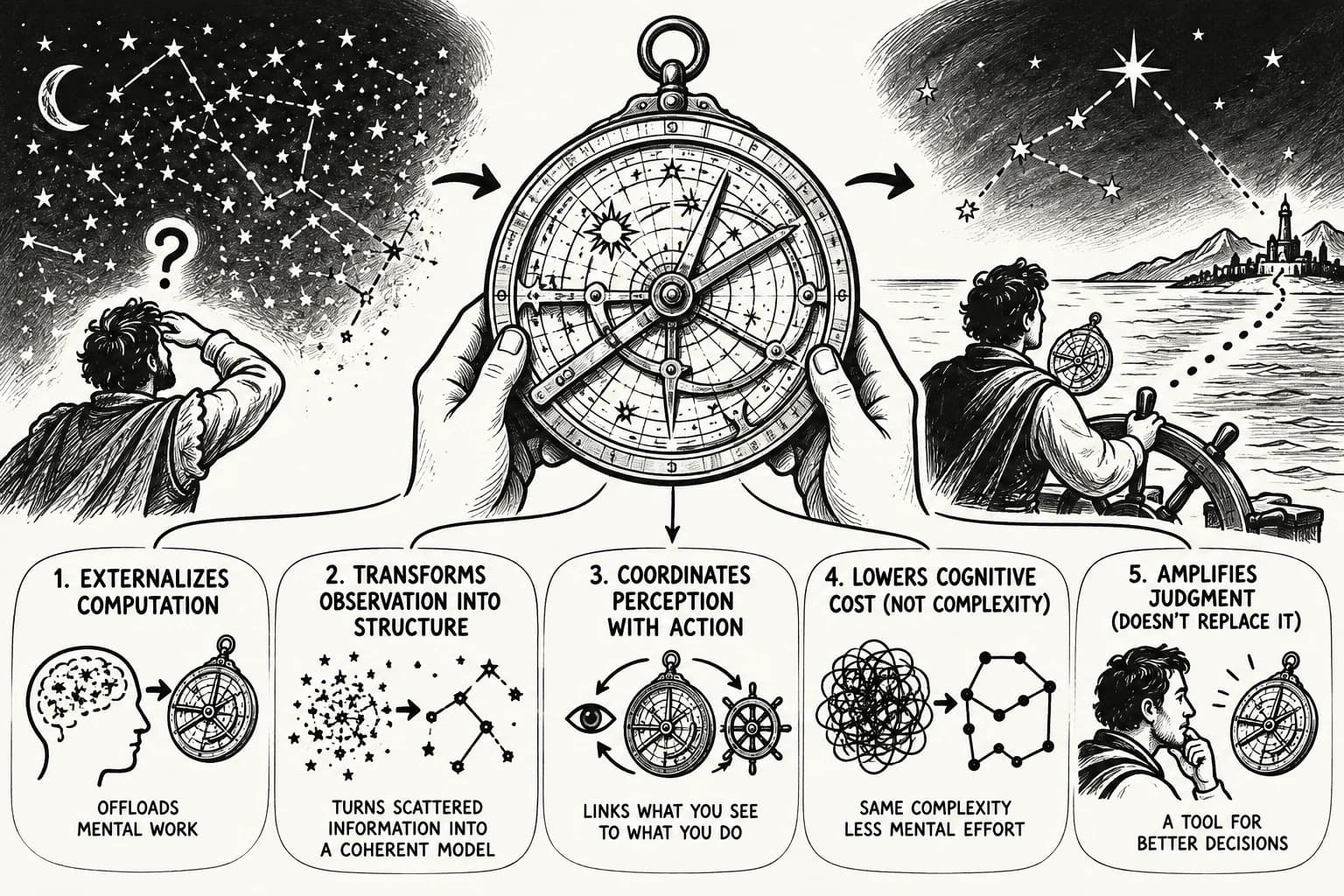
What Is Retrieval Practice? How Recalling Information Builds Stronger Memory Than Re-Reading
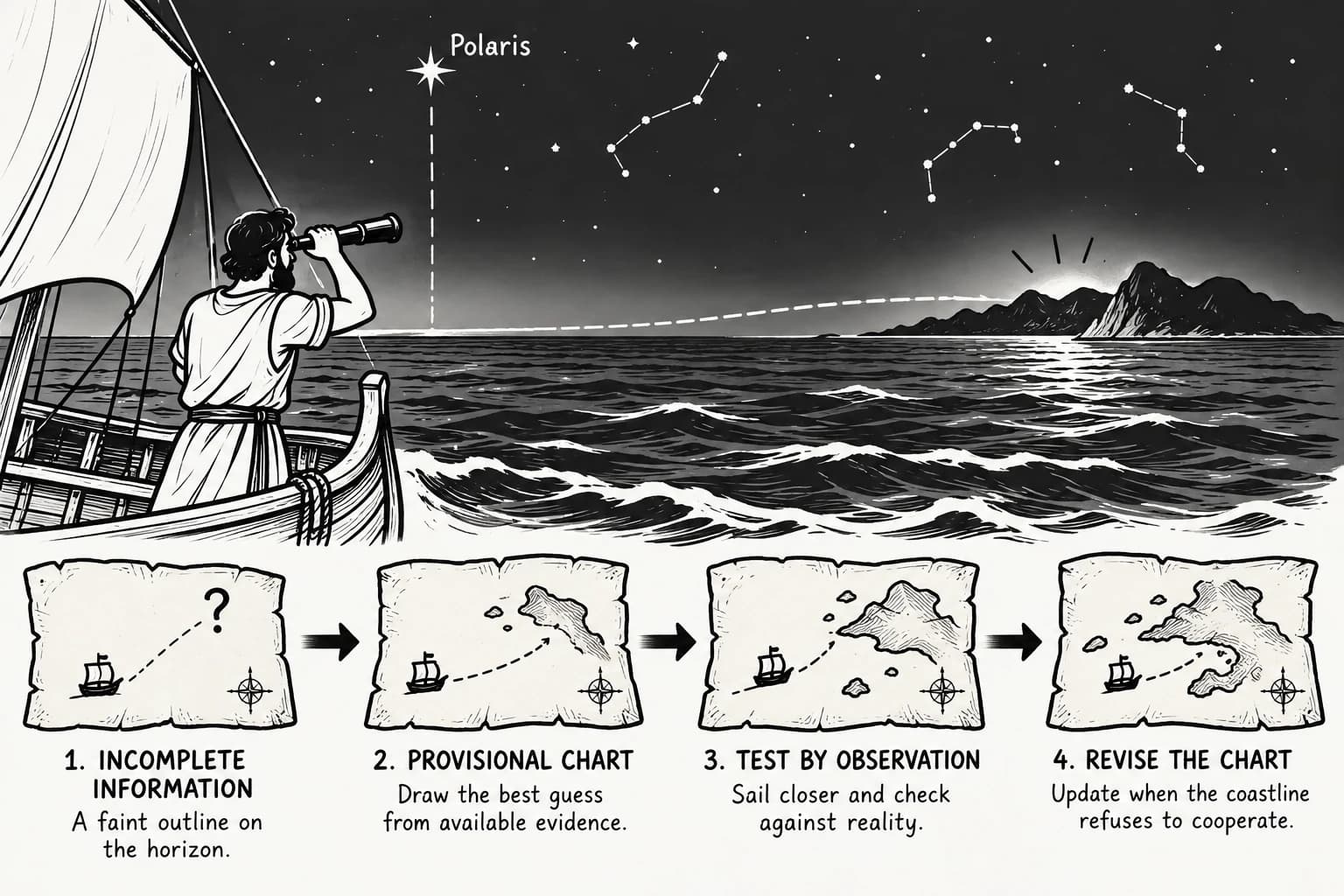
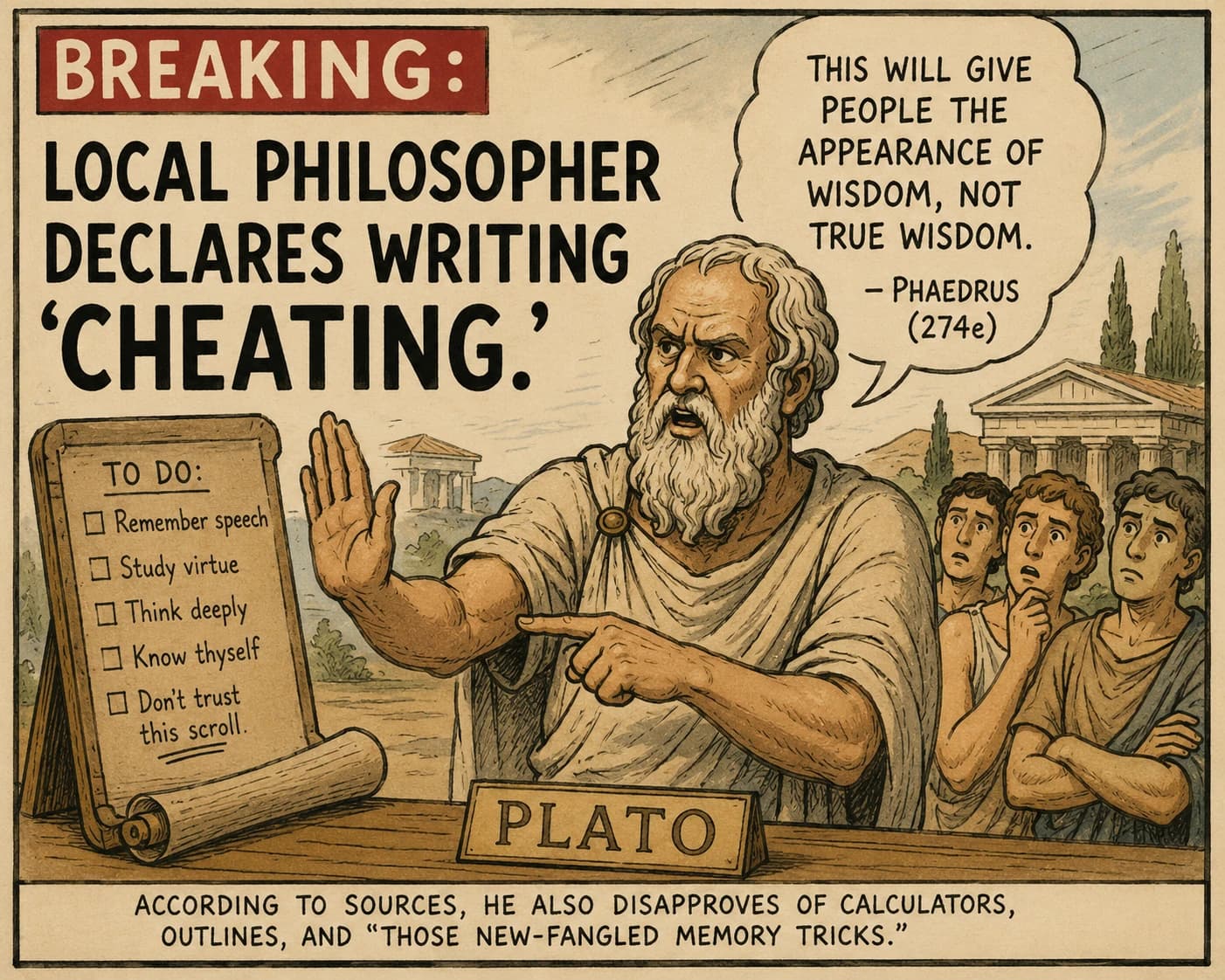
Long before psychology measured memory in laboratories, scholars measured it in voices. Before books became common, Greek philosophers, Roman orators, medieval monks, and Renaissance scholars preserved law, poetry, medicine, and history through repeated recitation. A manuscript could be lost to fire, but knowledge repeatedly retrieved survived in people. The printing press made rereading effortless. Ironically, centuries later cognitive psychology would demonstrate that the older habit often produced stronger long-term memory than the newer convenience.
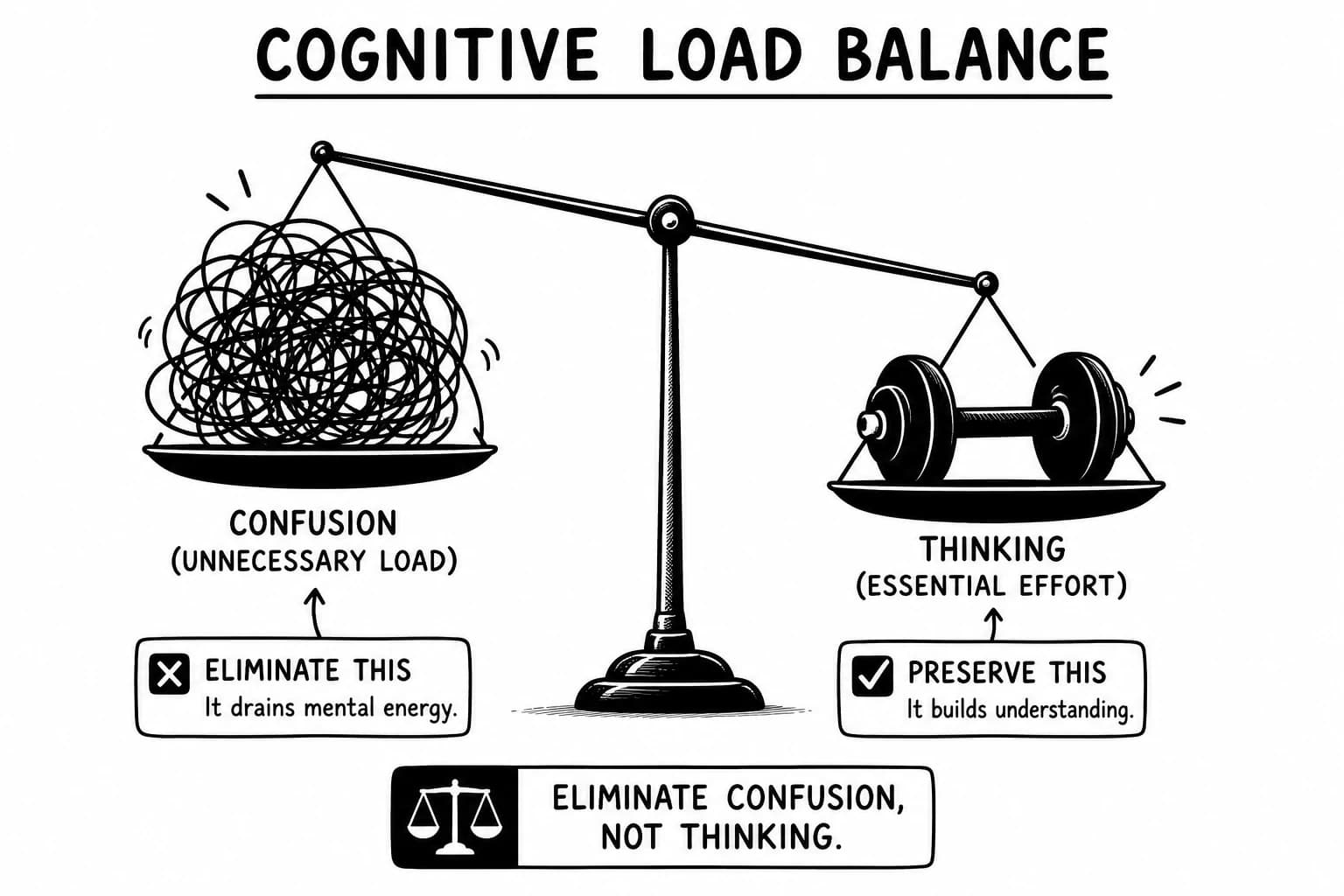
Retrieval practice—also known as active recall, test-enhanced learning, practice testing, and retrieval-based learning—describes the well-replicated finding that deliberately retrieving information from memory strengthens it more than passive review. Modern learning science, educational psychology, and cognitive science view every successful (and even unsuccessful) retrieval attempt as another opportunity to reinforce the underlying memory trace. From Francis Bacon (1620) and William James (1890) through Edwina Abbott (1909), C.A. Mace (1932), Robert Bjork, Henry Roediger III, and Jeffrey Karpicke, more than four centuries of observation have converged on the same conclusion: memory grows stronger when it is used.
Key concepts explored throughout this guide include:
- Retrieval practice, active recall, and the testing effect as evidence-based learning strategies.
- Desirable difficulties, storage strength, retrieval strength, and why effort improves long-term retention.
- Memory consolidation, hippocampal activation, and the neuroscience behind successful retrieval.
- Retrieval practice vs. rereading, spacing, interleaving, and other complementary learning techniques.
- AI learning tools, advance organizers, practice testing, and instructional design principles for durable learning.
Historical Development of Retrieval Practice Research
| Year | Research Milestone | Contribution to Retrieval Practice, Active Recall, and Learning Science |
|---|---|---|
| 1620 | Francis Bacon | Observed that reciting knowledge from memory produced stronger retention than repeatedly reading the same material, foreshadowing the modern testing effect. |
| 1890 | William James – The Principles of Psychology | Described recall as an active mental process, anticipating modern theories of memory retrieval and active learning. |
| 1909 | Edwina Abbott | Published one of the first controlled experiments demonstrating that retrieval practice improves memory beyond passive review. |
| 1932 | C.A. Mace – The Psychology of Study | Argued that successful studying depends on repeated recall from memory, not repeated exposure. |
| 1992 | Bjork & Bjork | Introduced the New Theory of Disuse, distinguishing retrieval strength from storage strength and explaining why difficult retrieval produces durable learning. |
| 2006 | Roediger & Karpicke | Landmark Test-Enhanced Learning experiments demonstrated that practice testing consistently outperformed rereading after delays ranging from one day to one week. |
| 2007 | Roediger, Karpicke & McDermott | Extended retrieval practice findings from laboratory experiments into authentic classroom instruction and educational settings. |
| 2011 | Roediger & Butler | Demonstrated that retrieval actively modifies and strengthens the memory trace, establishing retrieval as a learning mechanism rather than merely an assessment tool. |
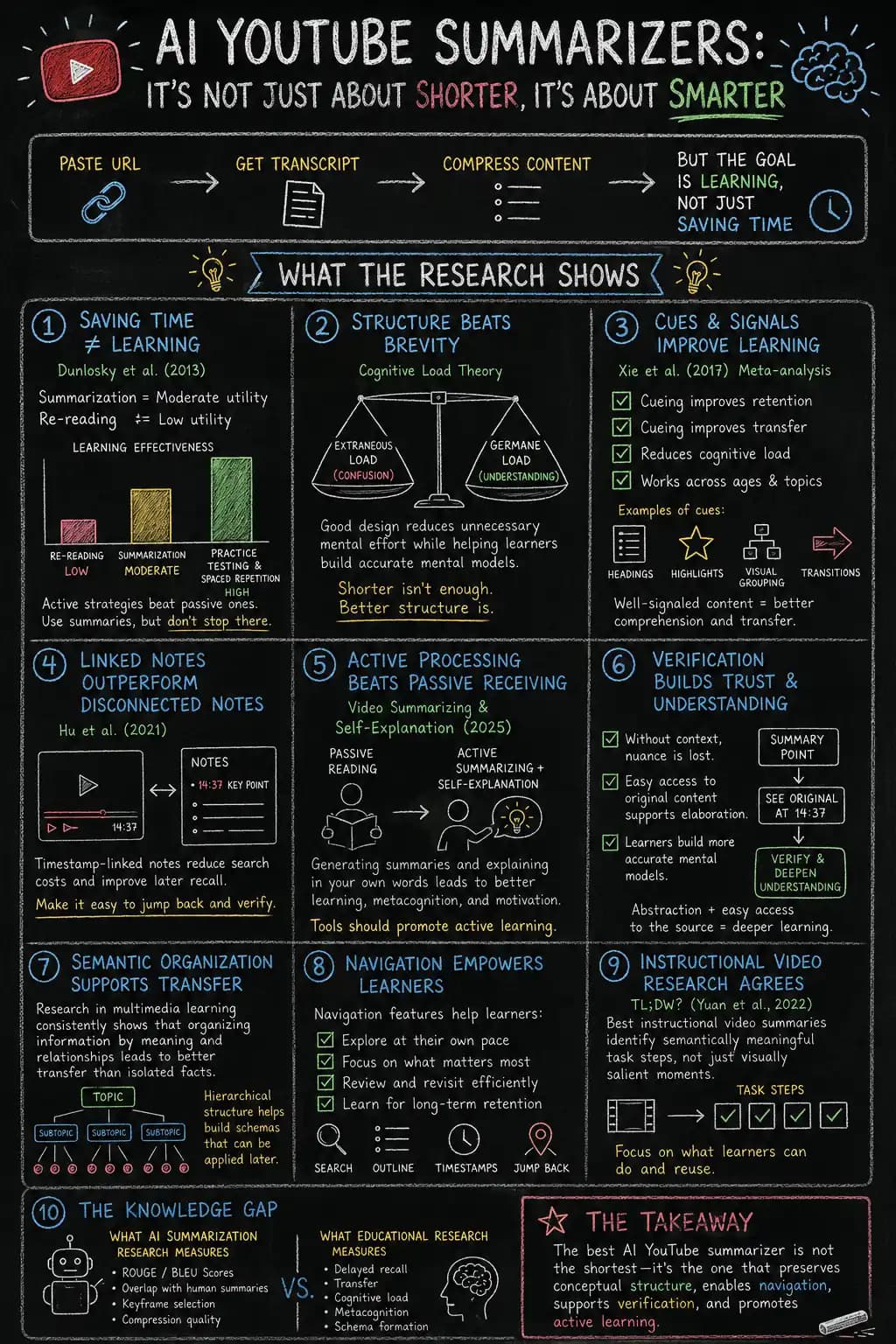
| 2013 | Dunlosky et al. | Comprehensive review ranked practice testing and distributed practice among the highest-utility evidence-based study techniques available to students. |
| 2017 | Adesope et al. Meta-analysis | Synthesized 118 experiments, reporting a moderate overall effect (g ≈ 0.50) supporting retrieval practice across domains and educational contexts. |
| 2021 | Wiklund-Hörnqvist et al. | fMRI studies demonstrated increased activation across anterior and posterior hippocampal networks, providing neural evidence that retrieval reshapes memory rather than merely accessing it. |
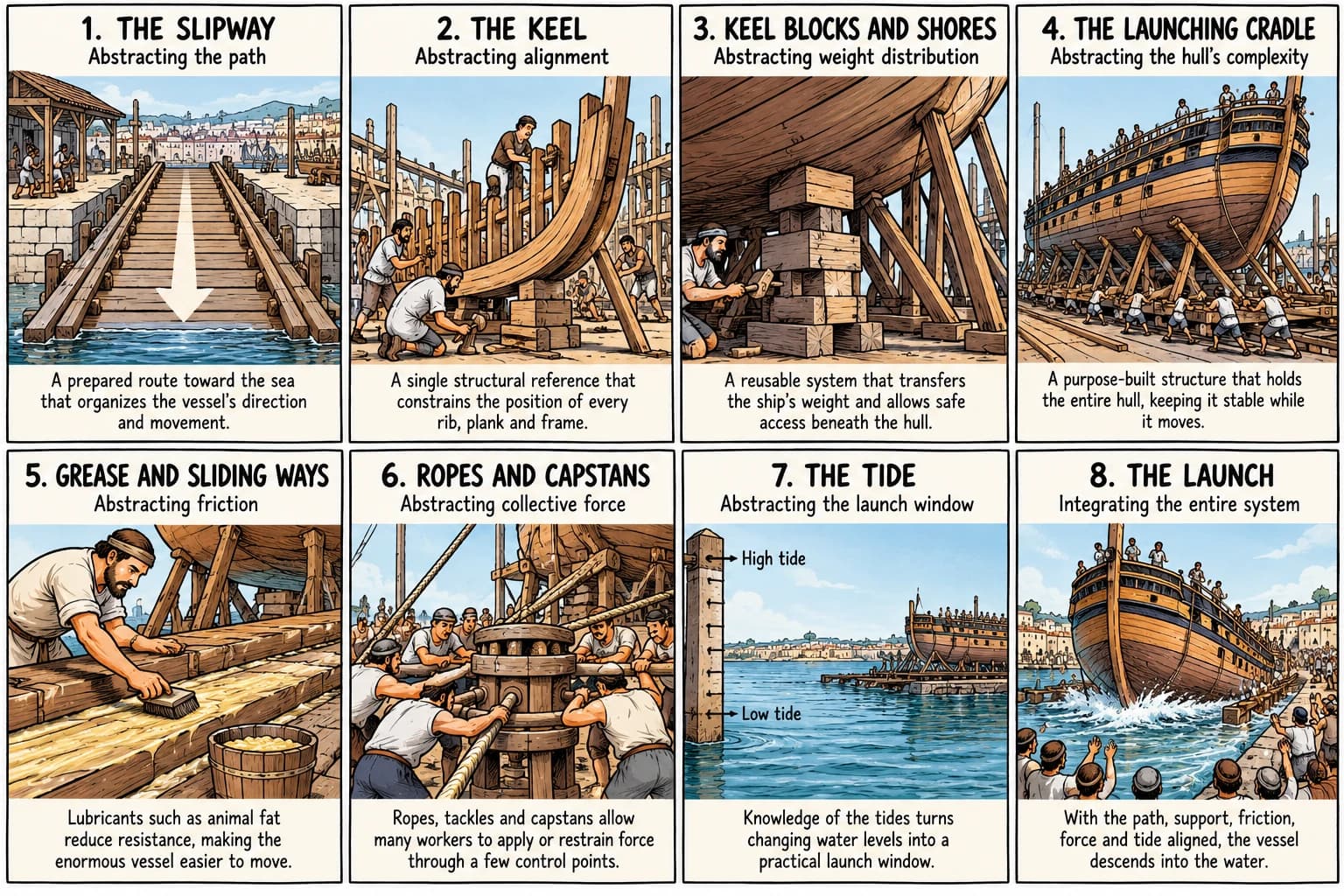
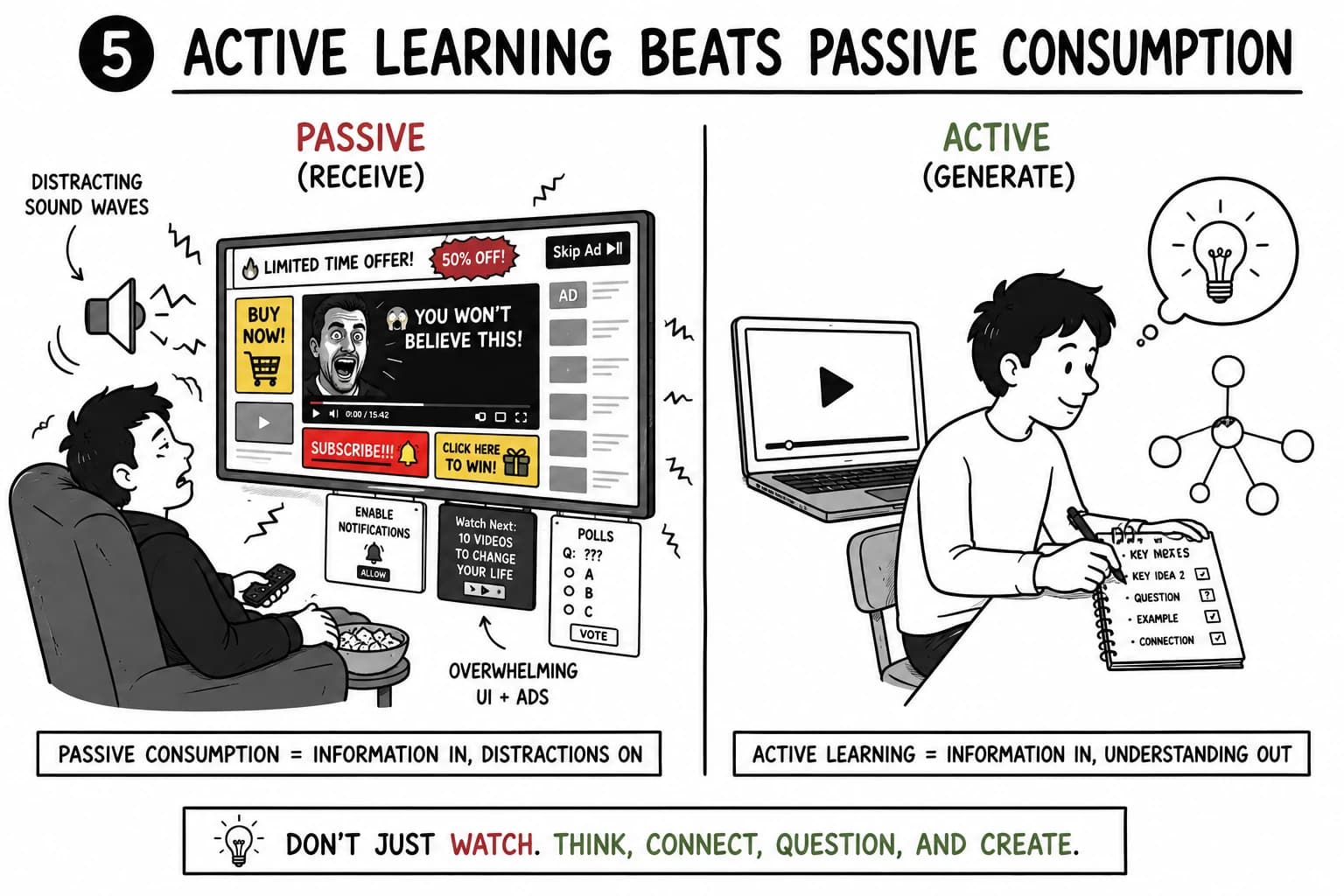
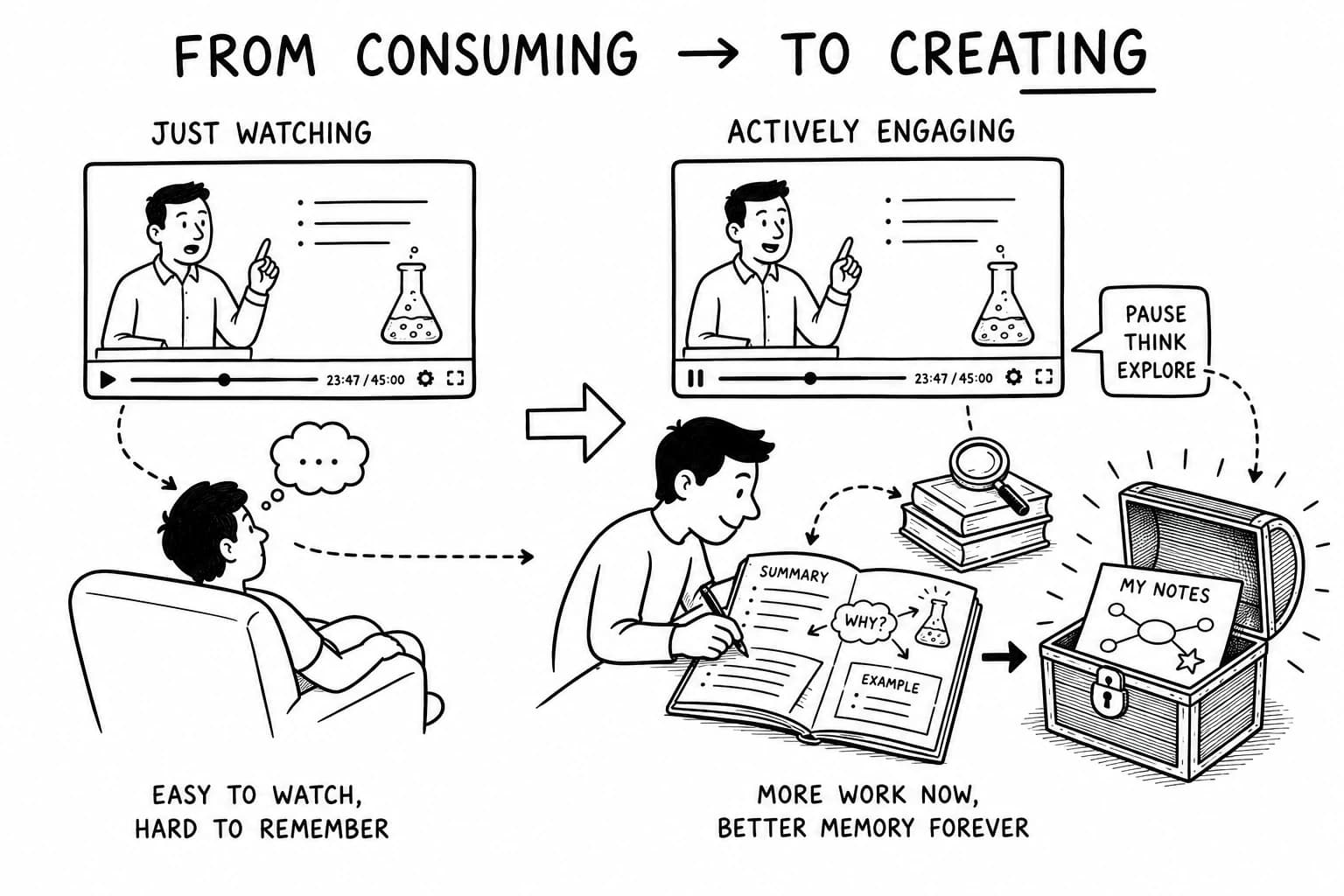
Like Renaissance libraries that survived not because their shelves were full but because scholars repeatedly copied, recited, debated, and reconstructed their manuscripts, retrieval practice strengthens knowledge through repeated use rather than repeated exposure. Across modern learning science, educational psychology, and cognitive psychology, the direction of evidence is remarkably consistent: active recall, practice testing, and the testing effect reliably outperform passive rereading for long-term retention and durable learning. Dunlosky et al. (2013) rated retrieval among the few high-utility evidence-based learning strategies with typical effect sizes (Cohen's d) of 0.35–0.68, while Adesope et al. (2017) synthesized 118 experiments to report an overall Hedges' g ≈ 0.50, enough to move an average learner from roughly the 50th to the 69th percentile—a meaningful gain in practical significance, educational outcomes, and real-world learning performance. The advantage grows along the Ebbinghaus forgetting curve, where delayed retention, memory durability, and knowledge transfer increasingly favor retrieval practice over rereading, especially after one week or longer. Repeated retrieval, distributed retrieval, the spacing effect, retrieval with feedback, and desirable difficulties further amplify learning gains, particularly when learners successfully recall information through challenging short-answer formats rather than recognition-based multiple-choice tests. Although researchers continue to debate the relative contributions of memory consolidation, elaborative retrieval, and hippocampal reconsolidation, and effects are smaller for immediate tests or higher-order creative synthesis, replication spans word lists, prose passages, video lectures, textbooks, online learning, medical education, K–12 classrooms, higher education, and older adults, making retrieval practice one of the most robust and widely replicated interventions in the science of human learning.
Factors, Rivals, and Evidence at a Glance
Boundary conditions, moderators, and mediators decide when testing helps: feedback timing, retrieval difficulty calibration at the desirable difficulty sweet spot, prior knowledge and element interactivity under cognitive load theory and working memory limitations, metacognition versus fluency illusion/illusion of competence/overconfidence in learning, retrieval-induced forgetting (distinguish separate phenomenon), test anxiety, motivation, and self-regulated learning. For when retrieval practice fails, limitations of testing effect, active recall disadvantages, and common misconceptions: failure concentrates in no-feedback, too-easy, zero-knowledge, and recognition-only conditions.
Does Retrieval Practice Beat Rereading? Definition, Benefits, and Why It Works
In 2016, Oliver Kliegl and Karl-Heinz T. Bäuml of the University of Regensburg compared nonselective retrieval practice with restudy across three experiments testing episodic-memory interference through list length, output interference, and retrieval-induced forgetting. Retrieval practice insulated studied items against all three forms of interference, showing that its advantage over rereading is not limited to simple delayed recall but can increase resistance to competing memories. ([PubMed][1])
| Audience / Industry / Use Case | Research Finding → Your Next Rep |
|---|---|
| University instructors | Retrieval practice protected memories against the list-length effect: adding competing items impaired restudied material more than retrieved material. The finding supports active recall, because repeatedly reconstructing an item appears to make it less vulnerable to interference; cumulative quizzes target a weakness that rereading leaves exposed. ([PubMed][1]) |
| Language-learning programs | In the output-interference condition, earlier retrieval practice reduced the damage caused by subsequently recalling other items. This demonstrates that retrieval practice can increase memory's resistance to competition rather than merely producing temporary retrieval fluency. ([ResearchGate][2]) |
| Professional certification training | Retrieval practice also reduced retrieval-induced forgetting, where retrieving some related information can impair access to other information. The result supports replacing repeated rereading with closed-book recall when learners must retrieve the right knowledge amid competing alternatives. ([PubMed][1]) |
How Often Should You Use Retrieval Practice? Best Schedule, Expanding Intervals, and Spacing
Arthur M. Glenberg of Arizona State University reported four experiments with 216 college students in 1977 examining how spacing repetitions changes free recall. The experiments found that spacing altered the number of retrieval routes available to memory, and recall improved as spacing increased under conditions where retrieval cues gave comparable access to those routes. ([ResearchGate][3])
| Audience / Industry / Use Case | Research Finding → Your Next Rep |
|---|---|
| Language-learning platforms | Across four experiments, greater spacing between repeated words increased the number of retrieval routes available for later recall. This provides a concrete basis for combining spacing with retrieval. ([ResearchGate][3]) |
| University study programs | Glenberg's model showed that spacing does not operate independently of the retrieval process: when cues provide roughly equal access to retrieval routes, recall rises monotonically with spacing. A schedule should distribute attempts. ([ResearchGate][3]) |
| Corporate skills training | The four-experiment design linked temporal distribution to later access rather than merely immediate performance. This supports distributed practice across progressively separated sessions when the objective is durable retrieval. ([ResearchGate][3]) |
Does Retrieval Practice Work Without Feedback? Feedback Loops and Error Correction Guide
Lisa K. Fazio, Barbie J. Huelser, Aaron Johnson, and Elizabeth J. Marsh at Duke University published three experiments in 2010 using prose facts and Luganda-English vocabulary to distinguish no feedback, right/wrong feedback, answer feedback, and subsequent review. Right/wrong feedback did not reliably correct errors, whereas answer feedback and later review substantially improved correction, showing that retrieval needs access to the correct answer when an error occurs. ([PubMed Central (PMC)][4])
| Audience / Industry / Use Case | Research Finding → Your Next Rep |
|---|---|
| Secondary-school teachers | In Experiment 1, erroneous prose answers were corrected on the final test at .82 after answer feedback, versus .47 after right/wrong feedback and .43 with no feedback. The result shows why a feedback loop must expose the correct answer rather than merely signal failure. ([PubMed Central (PMC)][5]) |
| Language-learning programs | Experiment 2 replicated the pattern with Luganda-English pairs: answer feedback produced greater improvement than either right/wrong or no feedback, while review itself substantially improved performance. Error correction requires either the answer or an effective opportunity to locate it. ([PubMed Central (PMC)][5]) |
| Adaptive assessment systems | Experiment 3 found that right/wrong feedback did not generally improve retention, but it did improve persistence of low-confidence correct answers. Feedback has different functions for errors and uncertain successes. ([PubMed Central (PMC)][5]) |
Why Does Retrieval Practice Feel Difficult or Stressful? Desirable Difficulties, Test Anxiety, and Low-Stakes Quizzes Explained
David N. Rapp and Shannon Hinze examined performance pressure in two 2014 experiments comparing high-stakes and low-stakes retrieval quizzes with rereading. Quiz performance itself was similar under high and low pressure, but only low-stakes retrieval produced a final-test advantage over rereading, showing that retrieval difficulty can become counterproductive when performance pressure consumes resources needed for learning. ([Wiley Online Library][6])
| Audience / Industry / Use Case | Research Finding → Your Next Rep |
|---|---|
| University instructors | High- and low-stakes quizzes produced comparable quiz performance, yet final learning was better after low-stakes retrieval. The distinction matters because immediate performance can conceal a difference in durable learning; low-stakes practice preserves the desirable difficulty without adding unnecessary pressure. ([Wiley Online Library][6]) |
| Professional certification programs | Only low-pressure retrieval produced an advantage over rereading, while high-pressure retrieval failed to show the same benefit. This indicates that test anxiety and retrieval effort can interact: making recall difficult is useful only when learners can devote cognitive resources to the retrieval itself. ([Wiley Online Library][6]) |
| K–12 schools | A classroom study of 1,408 middle- and high-school students found that 72% reported retrieval-practice quizzes made them less nervous about exams, while 6% reported greater nervousness. This observational evidence complements the experiment by showing that repeated low-stakes exposure can make testing feel less threatening. ([ScienceDirect][7]) |
What Does Neuroscience Say? Hippocampus, Reconsolidation, and Synaptic Plasticity
Erik A. Wing, Elizabeth J. Marsh, and Roberto Cabeza at Duke University used fMRI in a 2013 experiment comparing retrieval practice with passive restudy of word pairs, followed by a cued-recall test one day later. Retrieved items were remembered better (.63 vs .51), while successful retrieval engaged the anterior hippocampus, lateral temporal cortex, medial prefrontal cortex, and stronger hippocampal connectivity with prefrontal and midline regions. ([PubMed Central (PMC)][8])
| Audience / Industry / Use Case | Research Finding → Your Next Rep |
|---|---|
| Neuroscience-informed learning platforms | Retrieval-practiced words produced stronger delayed memory than restudied words, with subsequent-memory activity involving the hippocampus and medial PFC. The neural result accompanies, rather than independently proves, the behavioral testing effect. ([ScienceDirect][9]) |
| Medical education | Successful retrieval engaged the anterior hippocampus and lateral temporal cortex more strongly than restudy. These regions are consistent with relational binding and semantic processing, providing a neural correlate for why reconstructing an answer can create richer memory representations than seeing the answer again. ([ScienceDirect][9]) |
| Lifespan learning research | Retrieval practice also increased hippocampal connectivity with ventrolateral PFC and midline regions. The study supports a network account involving memory search, elaboration and integration, rather than the simpler claim that retrieval merely "strengthens a neural pathway." ([PubMed Central (PMC)][8]) |
Is Retrieval Just Elaboration? Semantic Encoding and Transfer-Appropriate Processing
Vegard Gjerde, Vegard Havre Paulsen, Bodil Holst, and Stein Dankert Kolstø at the University of Bergen combined two studies in 2022 with introductory-mechanics students, examining retrieval of physics principles before self-explanation of worked examples. Retrieval practice improved post-test problem solving and increased the quality of self-explanations, while explanations containing principles, conditions, actions, and goals predicted learning outcomes. ([DOI][10])
| Audience / Industry / Use Case | Research Finding → Your Next Rep |
|---|---|
| University physics courses | Self-explanations that identified the principle, its setup, and its conditions of application were associated with better learning; procedural explanations benefited from explicit actions and goals. This connects semantic elaboration to the structure of actual problem solving. ([DOI][10]) |
| STEM professional training | In the experimental study, retrieving physics principles and application conditions before self-explanation produced a medium-sized effect on post-test problem solving. Retrieval supplied accessible conceptual components that the subsequent elaborative activity could organize. ([APS Journals][11]) |
| Engineering education | Retrieval before worked-example explanation also increased the quality of students' explanations. The result suggests that retrieval practice and elaboration can be complementary: retrieval makes relevant principles accessible, while explanation connects those principles to conditions and procedures. ([APS Journals][11]) |
Can Retrieval Practice Replace Studying? Metacognition, Fluency Illusion, and Self-Regulated Learning
Jennifer L. Osterhage, Ellen Usher, Trisha A. Douin, and William M. Bailey studied self-evaluation in an introductory biology course in 2019, first observing students' calibration across exams and then testing an instructional intervention with 290 students versus a 251-student comparison section. Calibration improved across the semester, and the intervention combining self-evaluation instruction with retrieval opportunities produced better calibration and first-exam performance. ([DOI][12])
| Audience / Industry / Use Case | Research Finding → Your Next Rep |
|---|---|
| Introductory biology programs | Students initially overestimated their exam performance, and the lowest-performing students showed the largest errors. Repeated metacognitive monitoring across exams reduced this mismatch, making actual performance evidence more informative than subjective fluency. ([DOI][12]) |
| University academic-support programs | In the intervention semester, 290 students received instruction addressing overconfidence plus retrieval-practice opportunities, compared with 251 students in a control section. The intervention group showed better calibration and first-exam performance, linking self-testing to both monitoring and achievement. ([PubMed][13]) |
| Self-directed professional learning | The study's calibration result shows why a learner should compare predicted performance with actual retrieval. Self-regulated learning becomes measurable when confidence judgments can be checked against subsequent performance. ([PubMed Central (PMC)][14]) |
How Do Retrieval Cues Build Memory? Encoding Specificity and Cue-Dependent Memory
Michael D. Murphy and William P. Wallace reported three experiments with 240 undergraduates in 1974 that manipulated the semantic relationship between encoding and retrieval cues. Identical cues facilitated recall, while changing cues could reduce recall relative to free recall; among changed cues, semantically similar cues produced better recall than semantically dissimilar ones, demonstrating the dependence of retrieval on the information encoded with the target. ([ResearchGate][15])
| Audience / Industry / Use Case | Research Finding → Your Next Rep |
|---|---|
| Language-learning systems | Across three experiments, identical encoding and retrieval cues produced the clearest facilitation. This directly illustrates encoding specificity: vocabulary practice should create retrieval cues that resemble the conditions under which the learner will later need access. ([ResearchGate][15]) |
| Medical education | Changing the cue from study to test reduced recall, while semantically similar changed cues performed better than semantically dissimilar cues. Multiple retrieval cues can broaden access, but cue changes remain constrained by what was encoded. ([ResearchGate][15]) |
| Technical certification | The experiments show that a cue is not automatically helpful merely because it is associated with the answer; its relationship to the original encoding matters. Practice should vary cues while preserving meaningful cue-dependent memory relationships. ([ResearchGate][15]) |
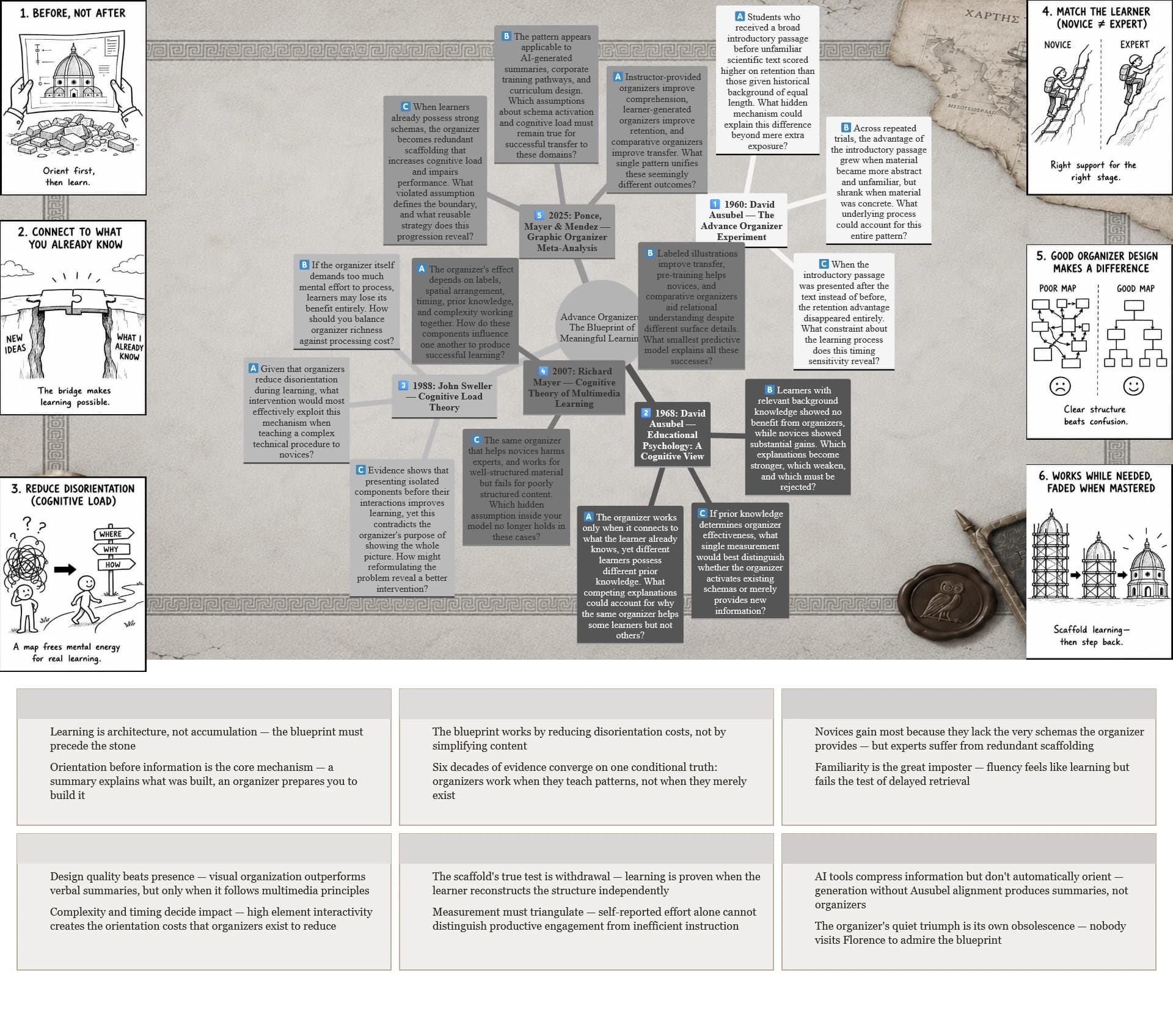
Should You Retrieve Before Learning? Advance Organizers, Prior Knowledge, and Pre-Testing
Jeri L. Little and Elizabeth Ligon Bjork examined multiple-choice pretesting in three experiments, comparing pretests with question memorization and factual pre-exposure before studying passages. Pretesting improved later recall of pretested information without impairing related untested information, while factual pre-exposure could impair related learning; later work by the same researchers showed that multiple-choice pretesting can also potentiate related information. ([ResearchGate][16])
| Audience / Industry / Use Case | Research Finding → Your Next Rep |
|---|---|
| Secondary-school teachers | Pretesting improved later recall of the information represented in the questions without reducing recall of related, untested information. A prediction question can activate attention before instruction even when learners cannot yet retrieve the answer. ([ResearchGate][16]) |
| University lecturers | Pretesting was not significantly better than question memorization or factual pre-exposure for the directly pre-exposed information, but it avoided the impairment to related learning produced by factual study. This qualifies the advance-organizer claim: the benefit is not simply equivalent to showing facts early. ([ResearchGate][16]) |
| Online learning platforms | Later work by Little and Bjork found that multiple-choice pretests can enhance learning of related information as well as pretested information. The practical mechanism is broader schema activation: alternatives can direct attention toward related material during the subsequent lesson. ([PubMed][17]) |
Does Retrieval Practice Work for Complex Math? Cognitive Load, Worked Examples, and Problem Solving
Xiaoxue Huang, Sining Zheng, Zhiyun Yu, and Shunsen Chen at Chinese universities tested retrieval practice with mathematical worked examples in three experiments published in 2023. Retrieval groups generally outperformed repeated-study groups on delayed tests, but the researchers found no retrieval advantage on an enhanced delayed test across the three experiments, showing that the standard retrieval effect does not automatically transfer to complex mathematical problem-solving skill. ([PubMed][18])
| Audience / Industry / Use Case | Research Finding → Your Next Rep |
|---|---|
| University mathematics instructors | Example–problem pairs did not improve delayed problem-solving performance over repeated study in the basic comparison. This places a boundary on applying retrieval practice indiscriminately to high-element-interactivity tasks. ([PubMed][18]) |
| STEM instructional designers | The three experiments manipulated retrieval difficulty, material difficulty, and feedback conditions. Retrieval generally produced a delayed advantage over repeated study, but the effect disappeared on the enhanced delayed assessment, showing that memory retrieval and procedural problem-solving are not interchangeable outcomes. ([PubMed][18]) |
| Mathematics assessment programs | The study found no evidence that retrieval practice changed performance on the enhanced delayed problem-solving measure. Worked examples, problem representation and retrieval should be evaluated with genuine problem-solving assessments. ([PubMed][18]) |
Can Retrieval Practice Improve Grades and Transfer? Classroom Evidence and Inference Transfer
Francesco Avvisati and Francesca Borgonovi used two field experiments embedded in the 2012 PISA administration, exploiting randomized test versions among representative samples of 15-year-olds in 32 countries. More mathematics practice produced a small subject-specific improvement on a subsequent mathematics test, with effects across same-day and 1–7-day lags, but it did not improve general reasoning and problem-solving ability. ([Springer][19])
| Audience / Industry / Use Case | Research Finding → Your Next Rep |
|---|---|
| Secondary-school mathematics systems | Students exposed to more mathematics problems on the first test showed a small positive effect on mathematics performance on the second test. The result provides field evidence that test practice can support subject-specific retrieval and application beyond laboratory word-pair tasks. ([Springer][19]) |
| International assessment programs | The effect appeared across both same-day and 1–7-day lags, indicating that the benefit was not restricted to immediate test familiarity. The researchers used authentic PISA problem-solving tasks, giving the result greater ecological validity than a purely laboratory memory task. ([Springer][19]) |
| General reasoning and transfer training | The additional mathematics practice did not improve general reasoning and problem-solving ability on the separate non-mathematics assessment. This is a useful boundary condition: retrieval can improve domain-specific performance without establishing far transfer to unrelated reasoning tasks. ([Springer][19]) |
Retrieval Practice in the Real World: Turning Knowledge Into Performance
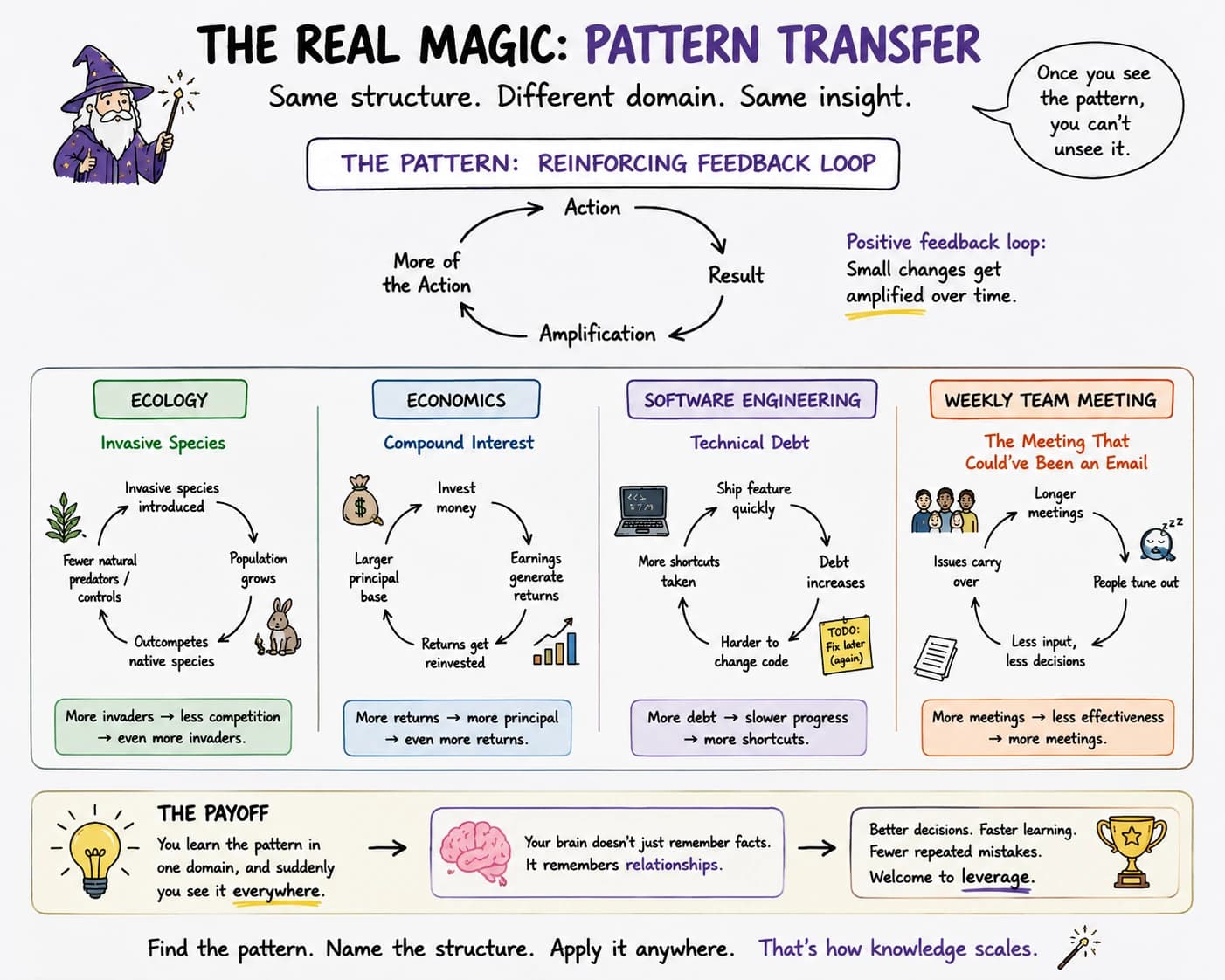
A Renaissance humanist rarely became learned by reading the same manuscript again. Instead, scholars built commonplace books—personal libraries where quotations, observations, and arguments were indexed beneath subjects like Memory, Justice, or Nature. When writing a lecture or debating a rival, they first tried to reconstruct the idea from memory before reopening the page, strengthening the mental pathway each time they returned. Centuries before cognitive psychology named the testing effect, retrieval practice, active recall, and test-enhanced learning, Erasmus, Francis Bacon, John Milton, and John Locke among others had already discovered that knowledge grows stronger when it is repeatedly recovered rather than repeatedly reread. Modern AI learning assistants, mind maps, advance organizers, knowledge graphs, and adaptive learning systems follow the same principle: every summary, glossary, concept map, or quiz should become the starting point for deliberate retrieval, immediate feedback, and durable long-term retention, turning information management into evidence-based learning science rather than passive review.
How to Start Retrieval Practice as a Beginner? Pre-Testing and Prior Knowledge Checks Before Instruction
Overoye, James, and Storm (2021), psychologists at Utah Valley University and the University of California, Santa Cruz, tested adults who received pretests before studying fictional topics, with or without contextual information. Contextualized pretesting produced a significantly larger learning benefit, and the effect survived both 5-minute and 1-week delays. ([Taylor & Francis Online][1])
| Audience / Industry / Use Case | Research Finding → Your Next Rep |
|---|---|
| Secondary-school teachers | Adding a short context paragraph before pre-testing increased the subsequent memory benefit compared with pretesting without context. The mechanism was not simply retrieval success: learners entered the test with a usable prior-knowledge frame; measure the difference with delayed recall. ([PubMed][2]) |
| Corporate onboarding teams | The contextualized pretest benefit appeared after both a 5-minute and 1-week delay, showing that cued recall, contextual activation, and subsequent study can affect retention beyond immediate performance. Use a brief scenario before baseline questions and compare delayed recall with a no-pretest cohort. ([PubMed][2]) |
| Adaptive-learning platforms | The study compared pretesting with and without contextualization, and the interaction remained significant across different timing and between-/within-subject manipulations. A practical retrieval practice workflow needs both a baseline probe and enough context to make the probe meaningful; track posttest accuracy by condition. ([Taylor & Francis Online][1]) |
What Is the Best Way to Prime Memory Before Studying? Advance Organizers, Prediction, and Schema Activation
Gick and Holyoak (1983), cognitive psychologists at the University of Michigan, gave participants one or two stories containing solved problems before asking them to solve an analogous transfer problem. A single analogy plus summaries, verbal principles, or diagrams produced little transfer, whereas two analogies encouraged schema induction and substantially improved later analogical transfer. ([ScienceDirect][3])
| Audience / Industry / Use Case | Research Finding → Your Next Rep |
|---|---|
| University STEM instructors | A single example did not reliably produce a transferable schema, even when learners received semantic encoding aids such as summaries or diagrams. Presenting two structurally related examples instead allowed learners to extract common relations; assess transfer to a new problem. ([ScienceDirect][3]) |
| Professional certification programs | Participants who described similarities across two analogs often generated a more general schema, and schema quality strongly predicted subsequent transfer. Use paired worked cases before introducing new material, then measure whether learners can recognize the shared structure in an unfamiliar case. ([Reasoning Lab][4]) |
| Instructional-design teams | Verbal principles and diagrams that failed with one analog became useful when paired with two analogs, showing that schema activation, elaborative encoding, and structured comparison can complement one another. Build the organizer around relationships across examples and test application outside the training examples. ([ScienceDirect][5]) |
Retrieval Practice vs Concept Mapping vs Mind Mapping: Which Builds Durable Knowledge Organization?
Ritchie, Della Sala, and McIntosh (2013), researchers in Human Cognitive Neuroscience at the University of Edinburgh, tested 8–12-year-olds learning unfamiliar geographical facts with retrieval practice, mind mapping, both, or neither. Retrieval practice improved delayed recall after four days and again at one and five weeks, while mind mapping showed no consistent main effect. ([PLOS][6])
| Audience / Industry / Use Case | Research Finding → Your Next Rep |
|---|---|
| Primary-school teachers | Retrieval practice produced significantly higher recall four days after learning, whereas mind mapping produced no main effect; this directly separates active recall from visual organization. Replace some rereading with blank-page reconstruction and assess factual recall after several days. ([PubMed Central (PMC)][7]) |
| Social-studies curriculum teams | In the harder second experiment, retrieval practice remained significant at one and five weeks, with retrieval learners recalling about 8.5 percentage points more facts at five weeks. Retrieval-based learning survived longer delays; compare delayed reconstruction. ([ResearchGate][8]) |
| Digital learning-product teams | Mind mapping did not significantly interact with retrieval practice in Experiment 2, while retrieval practice remained significant, indicating that dual coding or visual organization did not substitute for retrieval in this factual geography task. Track delayed recall separately from visual-map completion. ([PLOS][6]) |
How to Build Far Transfer and Reasoning? Concept Frameworks, Elaborative Retrieval, and Short-Answer Questioning
Gick and Holyoak (1980), at the University of Michigan, conducted five experiments in which participants studied a military problem and attempted Duncker’s medical radiation problem. Analogical transfer increased when participants received a hint to use the earlier story, declined when the source was substantially disanalogous, and fell sharply when no retrieval cue was supplied. ([ScienceDirect][9])
| Audience / Industry / Use Case | Research Finding → Your Next Rep |
|---|---|
| Medical-education programs | Participants who studied the military solution generated an analogous radiation solution when prompted to use it, demonstrating how concept frameworks, retrieval cues, and relational structure can support transfer. After teaching a clinical case, require short-answer reconstruction of the governing principle before a novel case. ([ScienceDirect][10]) |
| Law-school instructors | Transfer fell when the source problem was substantially disanalogous, even though its solution structure could still support the radiation problem. Elaborative retrieval must preserve the relevant relational structure; assess whether learners can distinguish structurally relevant from merely surface-similar cases. ([ScienceDirect][10]) |
| Engineering training programs | When the analogy was presented without a cue, transfer dropped markedly even when participants had previously encountered the source. The result shows that short-answer questioning and retrieval cues can determine whether stored knowledge becomes accessible; compare prompted and unprompted solutions to unfamiliar problems. ([ScienceDirect][10]) |
Can Retrieval Practice Replace Notes and Summarizing? Brain Dump, Closed-Book Summaries, and Test-Enhanced Learning
Bretzing and Kulhavy (1979) compared five study conditions among 180 high-school students reading a 2,000-word passage about a fictitious tribe. Summarization and meaningful note-taking produced the strongest immediate and delayed performance, outperforming verbatim copying, shallow letter-searching, and control reading. ([Sage Journals][11])
| Audience / Industry / Use Case | Research Finding → Your Next Rep |
|---|---|
| Secondary-school students | Students who summarized each page in their own words outperformed shallow letter-search processing and simple reading on tests requiring connections across the text. Brain dump, generative processing, and organization provided more than surface exposure; compare closed-book reconstruction with passive rereading. ([Sage Journals][11]) |
| University humanities courses | Summary and meaningful note-taking were both superior to verbatim copying, showing that selecting important information was insufficient without active generation and rephrasing. Convert lecture notes into a closed-book summary and score retained idea units against the original material. ([PubMed Central (PMC)][12]) |
| Corporate knowledge training | The advantage persisted on a delayed test one week later, indicating that generative summarization was not limited to immediate performance. A closed-book summary can serve as a retrieval checkpoint; measure delayed comprehension. ([Sage Journals][11]) |
How to Learn Vocabulary Faster? Spaced Flashcards, Leitner System, and Cued Recall for Language and Medicine
Paul Pimsleur (1967), a language-learning researcher at Ohio State University, synthesized experimental memory research into his “graduated-interval recall” schedule for foreign-language vocabulary and structures. He argued that forgetting is initially rapid, while appropriately timed recalls progressively lengthen retention intervals; he also cautioned that one fixed schedule cannot fit every word or structure. ([ERIC][13])
| Audience / Industry / Use Case | Research Finding → Your Next Rep |
|---|---|
| Language-learning platforms | Pimsleur described forgetting as initially rapid and recommended recalling a new word before it disappears completely, then progressively extending the interval. This links spaced flashcards, cued recall, and expanding intervals; evaluate vocabulary accuracy across successive delayed tests. ([ERIC][13]) |
| Medical-terminology programs | Each successful recall was expected to lengthen the subsequent retention interval, making repeated retrieval more efficient than fixed massed repetition. Apply retrieval prompts at increasing intervals and track the number of successful recalls before an item requires another review. ([ERIC][13]) |
| Anki/flashcard system designers | Pimsleur explicitly noted that the same schedule should not be applied identically to every word or structure. That boundary condition supports adaptive spaced repetition; evaluate schedules by delayed vocabulary accuracy and review failures. ([ERIC][13]) |
How to Link New Ideas During Class? Structured Modules With Frequent Knowledge Checks
Bangert-Drowns, Kulik, and Kulik (1991) reviewed research on frequent classroom testing, drawing on studies conducted across regular instructional settings. Students receiving at least one test during a 15-week term scored about 0.5 standard deviations higher on criterion examinations than students receiving none, while additional testing produced diminishing returns. ([Taylor & Francis Online][14])
| Audience / Industry / Use Case | Research Finding → Your Next Rep |
|---|---|
| University course designers | Students who received at least one test during a 15-week term scored approximately 0.5 SD higher than students receiving no tests. Frequent knowledge checks, retrieval practice, and feedback fit structured modules; compare criterion-exam performance against a no-testing baseline. ([ScienceDirect][15]) |
| K–12 STEM programs | Achievement increased as testing became more frequent, but the gain diminished as additional tests accumulated. This supports repeated low-stakes quizzes; track retrieval success and criterion-test performance as quiz frequency changes. ([Taylor & Francis Online][14]) |
| Corporate LMS teams | The review found no clear additional achievement benefit from testing more frequently than approximately once every two weeks. Adaptive assessment should avoid indiscriminate quiz density and use performance data to determine when another retrieval check is warranted. ([ScienceDirect][15]) |
How to Build Knowledge You Never Forget? Frameworks, Chunking, and Gap Analysis When You Cannot Remember Anything
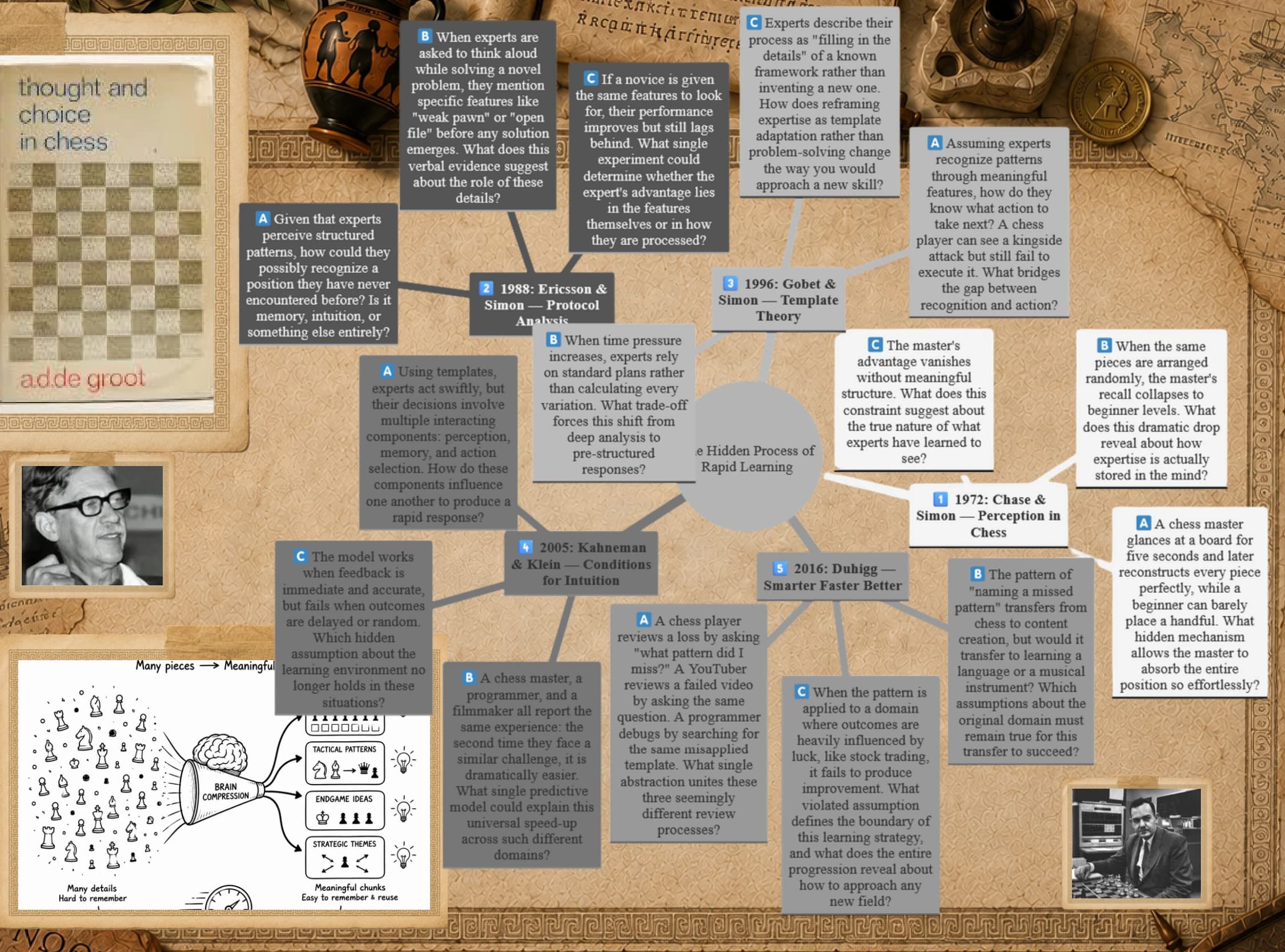
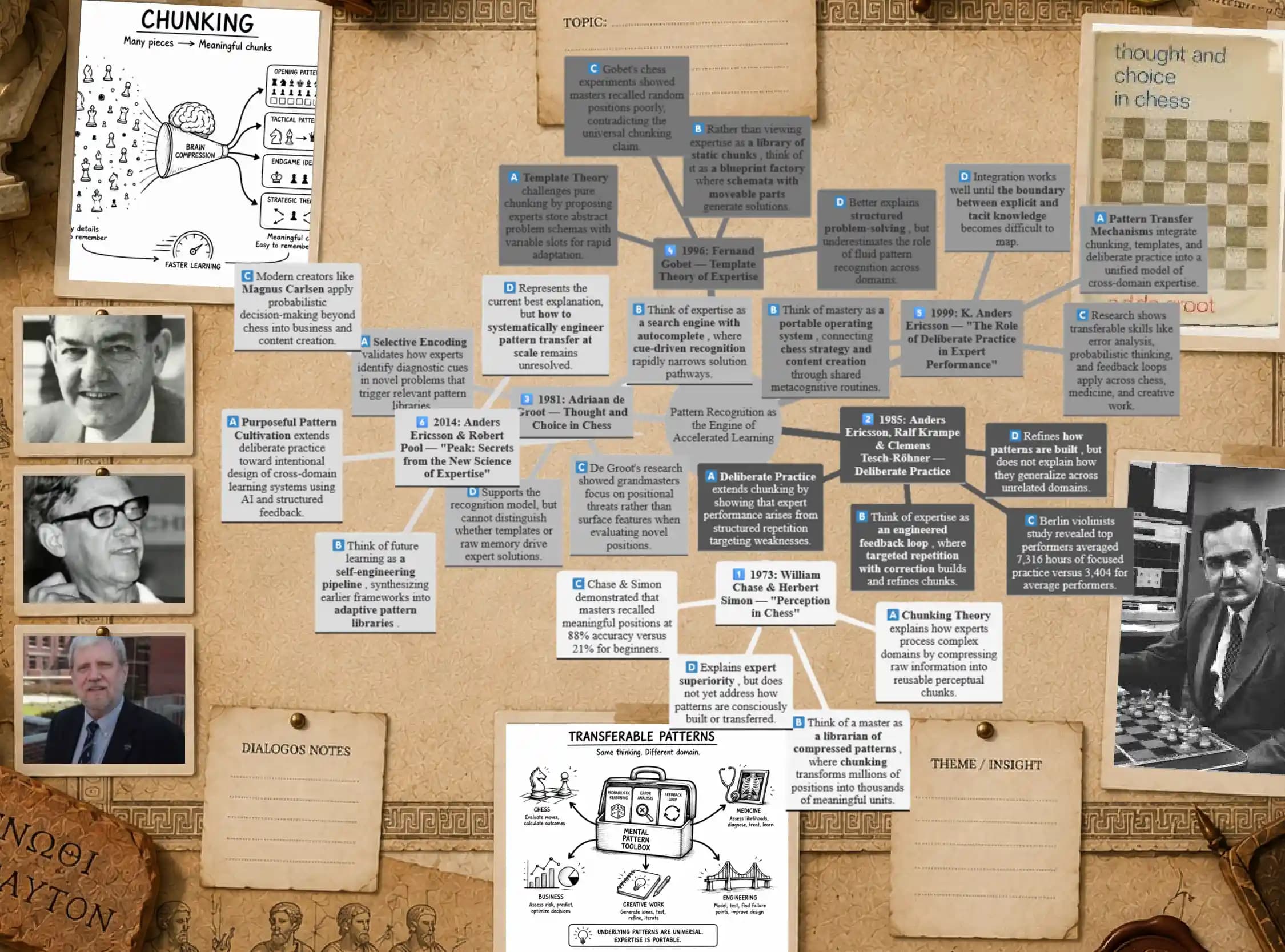
Adriaan de Groot’s 1965 chess research compared players of different skill levels on briefly presented chess positions and problem-solving tasks. Masters and grandmasters showed markedly better recall for meaningful game positions, while their general search behavior did not show the same dramatic advantage, supporting the role of acquired domain-specific patterns and structured knowledge. ([ScienceDirect][16])
| Audience / Industry / Use Case | Research Finding → Your Next Rep |
|---|---|
| Advanced chess training | Masters and grandmasters recalled meaningful chess positions far better than weaker players after brief exposure, showing how chunking compresses repeatedly encountered domain structures. Build retrieval around recognizable configurations and measure reconstruction accuracy. ([ScienceDirect][16]) |
| Technical professional training | De Groot found no comparable expert advantage in the general type of search behavior used to solve chess problems, while recall of meaningful positions differed sharply. Knowledge frameworks can support performance by making domain information rapidly accessible; assess both recall and problem solving. ([ScienceDirect][16]) |
| Expertise-development programs | The large recall advantage depended on meaningful game configurations, not arbitrary arrangements, showing a boundary condition for chunking: domain structure matters. Diagnose retrieval gaps with structured versus scrambled examples before deciding whether a learner lacks facts, relationships, or pattern knowledge. ([ScienceDirect][17]) |
What Are the Best Retrieval Tools? Quizzes, Flashcards, AI Tutors, and Adaptive Spaced Repetition
Ocorr and colleagues (2003) compared a Personalized System of Instruction biochemistry course with a standard lecture-based course across three semesters, tracking common exam questions, GPA, satisfaction, and perceived effort. Performance did not differ significantly in two semesters; in one semester, PSI students scored about 10 points higher, while GPA, satisfaction, and effort remained similar. ([Wiley Online Library][18])
| Audience / Industry / Use Case | Research Finding → Your Next Rep |
|---|---|
| University biochemistry programs | Across two of three semesters, PSI and standard lecture students showed no significant difference on common exam questions, while one semester produced a 10-point PSI advantage. Adaptive retrieval should be evaluated against course-level outcomes. ([Wiley Online Library][18]) |
| Learning-platform teams | PSI combines small learning units, mastery tests, rapid feedback, self-pacing, and retesting after unsuccessful attempts. These features operationalize practice testing, adaptive learning, and mastery progression; measure unit mastery and final assessment performance. ([Cognitive Psychology][19]) |
| Professional certification providers | The biochemistry comparison found similar GPA, satisfaction, and perceived effort across formats, despite the isolated 10-point performance advantage. AI tutors or flashcards should be judged by validated assessment gains, not user satisfaction or time-on-task alone. ([Wiley Online Library][18]) |
What Is the Complete Evidence-Based Study Workflow? Pre-Testing to Transfer Assessment in One Module
Fred S. Keller’s 1968 Personalized System of Instruction described a university teaching model built around small sequential units, self-pacing, frequent mastery tests, immediate feedback, and retesting after further study. The model operationalized a complete feedback loop rather than a single study technique: learners demonstrated mastery before progressing, with lectures minimized and performance data directing subsequent study. ([DOI][20])
| Audience / Industry / Use Case | Research Finding → Your Next Rep |
|---|---|
| University course designers | Keller divided material into small units and required demonstrated mastery before progression, turning pre-testing, retrieval, feedback, and mastery learning into a sequential workflow. Measure the proportion of learners reaching criterion on each unit before permitting advancement. ([Cognitive Psychology][19]) |
| Corporate certification programs | Learners could proceed at their own pace and retest after restudying when mastery was not demonstrated. This links retrieval practice, spacing, corrective feedback, and adaptive progression; evaluate repeat-attempt success and final certification performance. ([Cognitive Psychology][19]) |
| EdTech instructional systems | PSI minimized lectures and used written material, unit tests, rapid reinforcement, and performance-based progression as the operating loop. The measurable workflow is diagnostic assessment → guided study → retrieval → feedback → retest → progression, with mastery rate and final assessment as endpoints. ([ScienceDirect][21]) |
Durable learning and lifelong learning through memory mastery and evidence-based education: build learning habits for effective studying, knowledge retention, learning efficiency, study psychology, habit formation, metacognitive awareness, continuous learning, cognitive resilience, learning optimization, memory improvement, academic success, professional development, and learning science principles into behavior change. Practical takeaways and actionable study advice for how to remember information longer, best way to study, improve memory naturally, retain information for exams, and learn more efficiently: walk the path — spaced, effortful, with feedback.
Bacon had no effect size. He had a hunch from reciting Latin: the path remembers the walker, not the map-reader.
Four centuries later the hunch has numbers — g = 0.50, d = 0.35-0.68, dual hippocampal activation — and one stubborn irony. Students still trust the map-staring of rereading (Karpicke et al., 2009).
The fix is not more maps. It is more walking.