What Is the Generation Effect? Why Self-Generated Learning Outlasts Passive Reading
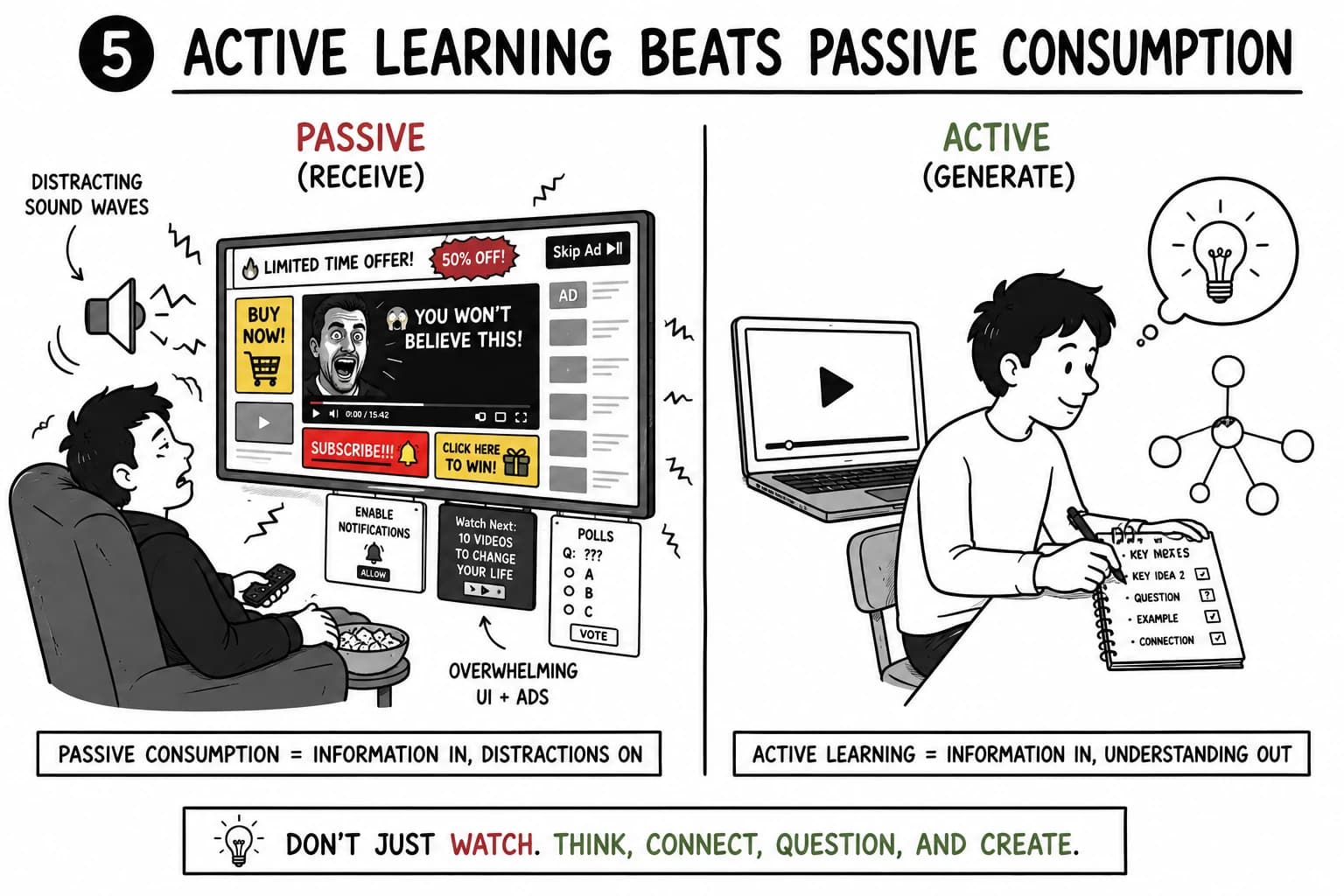
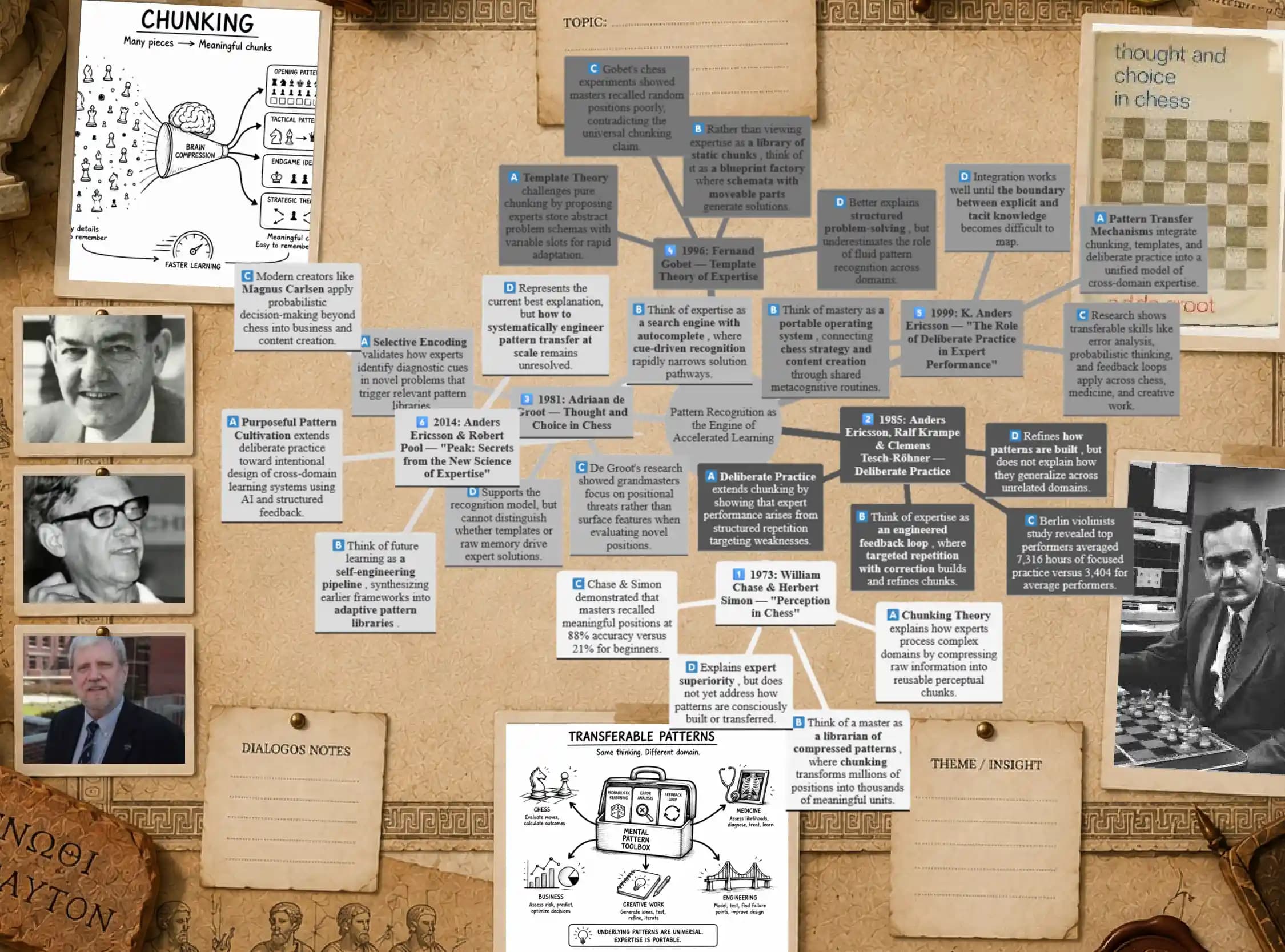
Socrates rarely answered questions directly. In Meno, he guided a slave boy through geometry until the solution emerged from the boy's own reasoning, arguing that knowledge constructed by the learner survives where instruction alone often fades. Modern cognitive psychology arrived at the same conclusion two millennia later. The generation effect describes the reliable finding that information people generate themselves is remembered better than information they simply read, first demonstrated by Slamecka & Graf (1978). Across decades of research, producing an answer, making a prediction, or completing a problem consistently strengthens memory encoding, improves long-term retention, and creates richer retrieval pathways than passive study. The effect now sits alongside the testing effect, desirable difficulties, and retrieval practice as one of the most replicated principles in learning science.
-
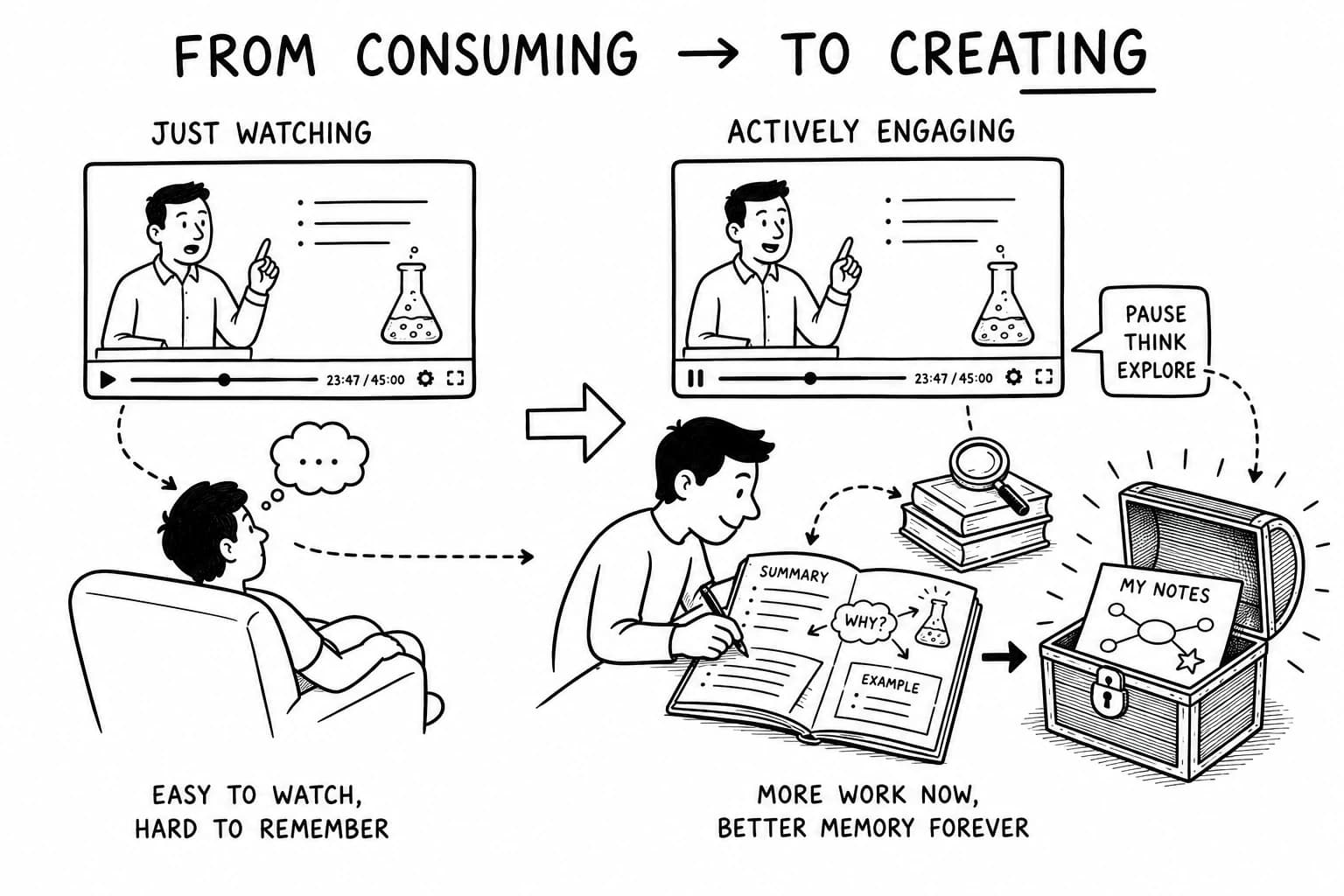
Generation transforms learning from reception into construction. Learners solve word fragments, predict outcomes, finish equations, explain concepts, or infer missing information from cues. That additional cognitive effort strengthens encoding, activates prior knowledge, and produces memory traces that remain accessible long after passive reading has faded.
-
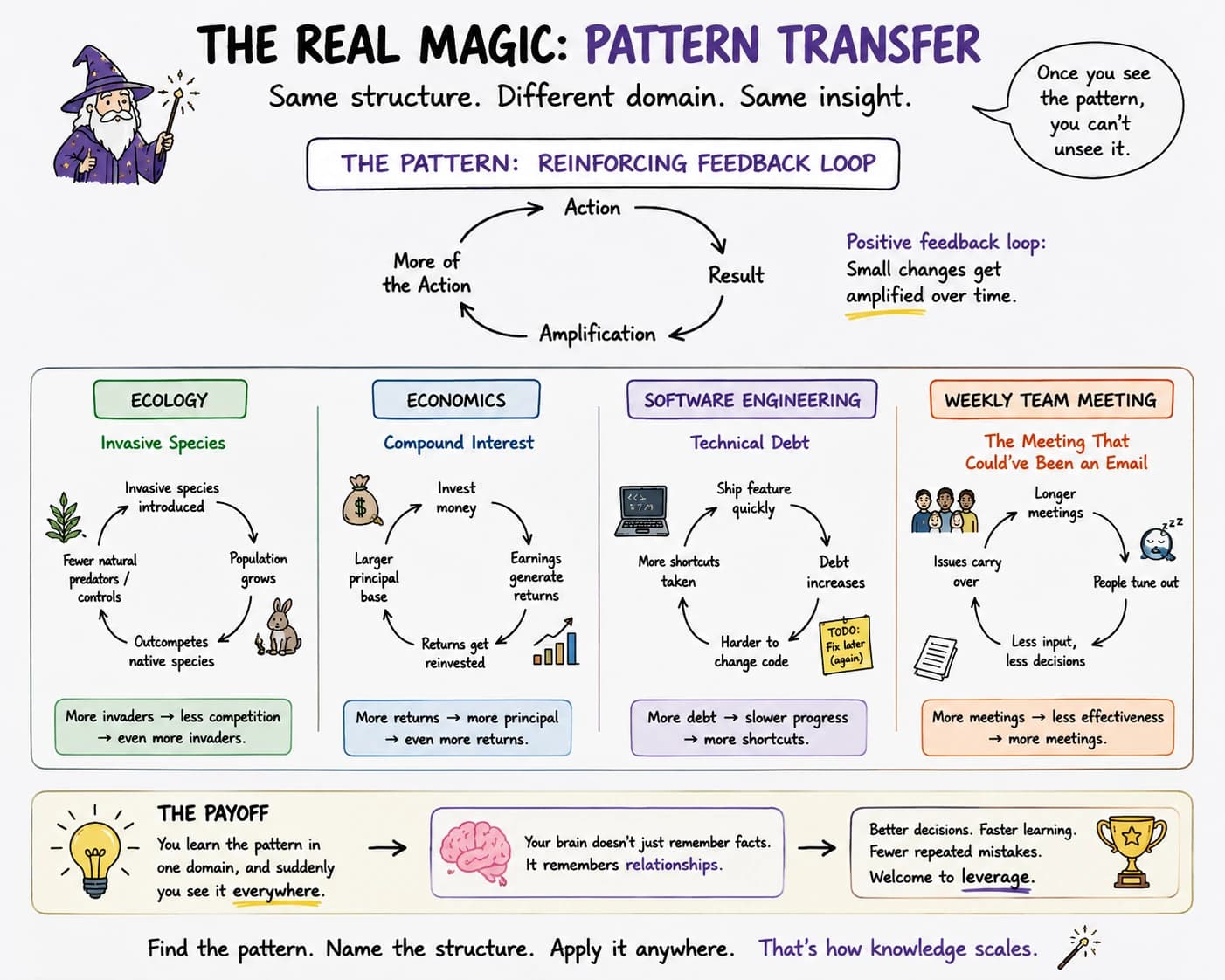
Researchers increasingly view generation as a family of complementary mechanisms rather than a single process. Semantic search activates existing knowledge, item-specific processing highlights distinctive features, relational processing links new ideas together, procedural encoding preserves the act of solving itself, and prediction error directs attention toward corrective feedback. Together these mechanisms explain why generating—even unsuccessfully—often produces stronger learning than simply seeing the correct answer.
-
Evidence remains remarkably consistent across laboratory memory research and classroom studies. Slamecka & Graf established the original phenomenon, Jacoby separated problem solving from repetition, McDaniel and colleagues expanded relational processing accounts, Crutcher & Healy emphasized semantic activation, McNamara proposed procedural explanations, while Kornell, Bjork, and colleagues demonstrated that incorrect predictions followed by immediate feedback still improve later learning. The strongest evidence concerns free recall, cued recall, and item memory, with moderate but growing support for conceptual learning and educational applications.
-
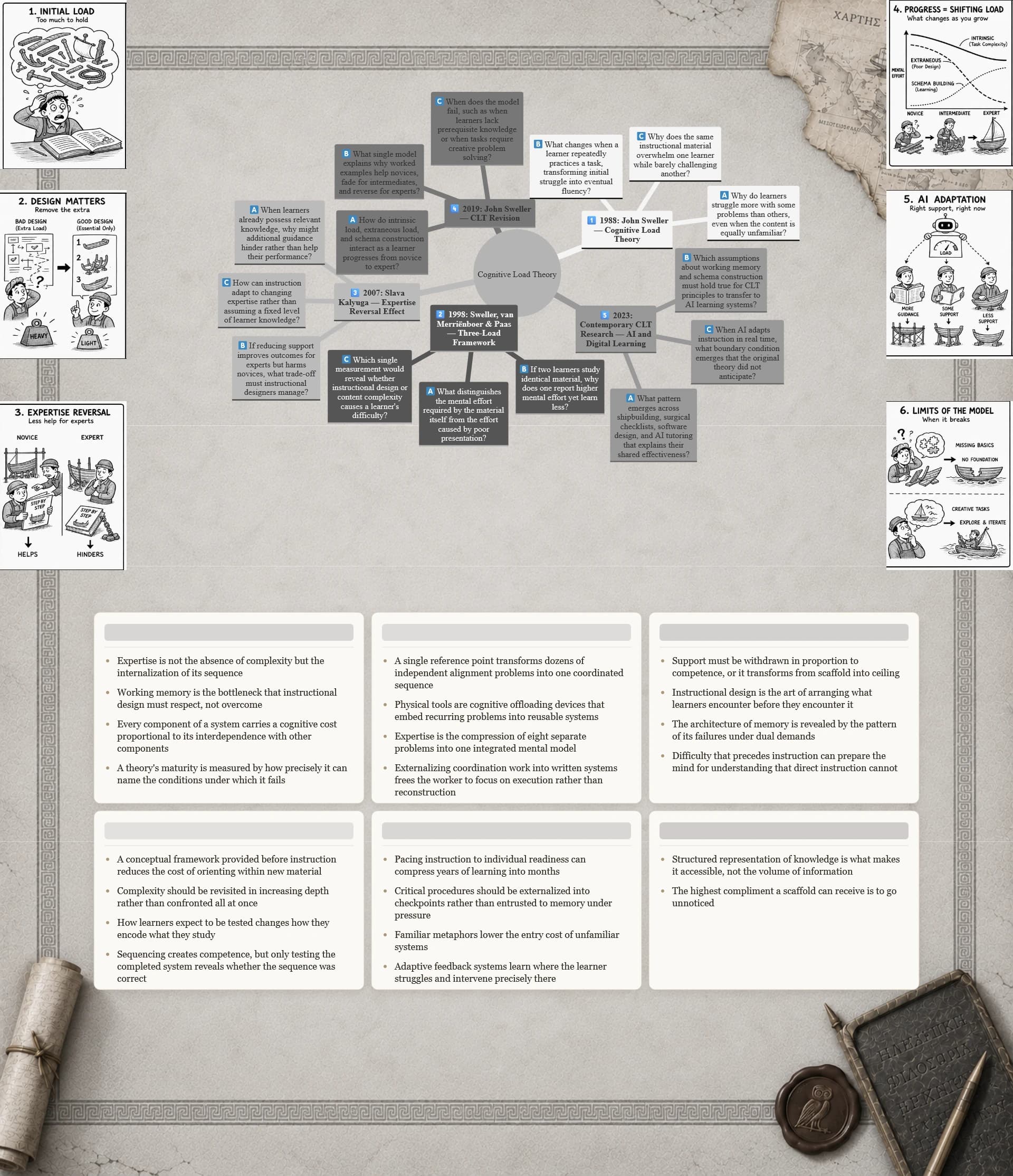
The effect grows stronger when generation is appropriately difficult but still achievable. Familiar material, meaningful cues, immediate corrective feedback, and delayed testing consistently magnify benefits, whereas unfamiliar content, meaningless nonwords, absent feedback, or tasks beyond the learner's background knowledge substantially reduce or eliminate the advantage. The pattern closely matches Bjork's framework of desirable difficulties—effort that enriches encoding rather than obstructing comprehension.
-
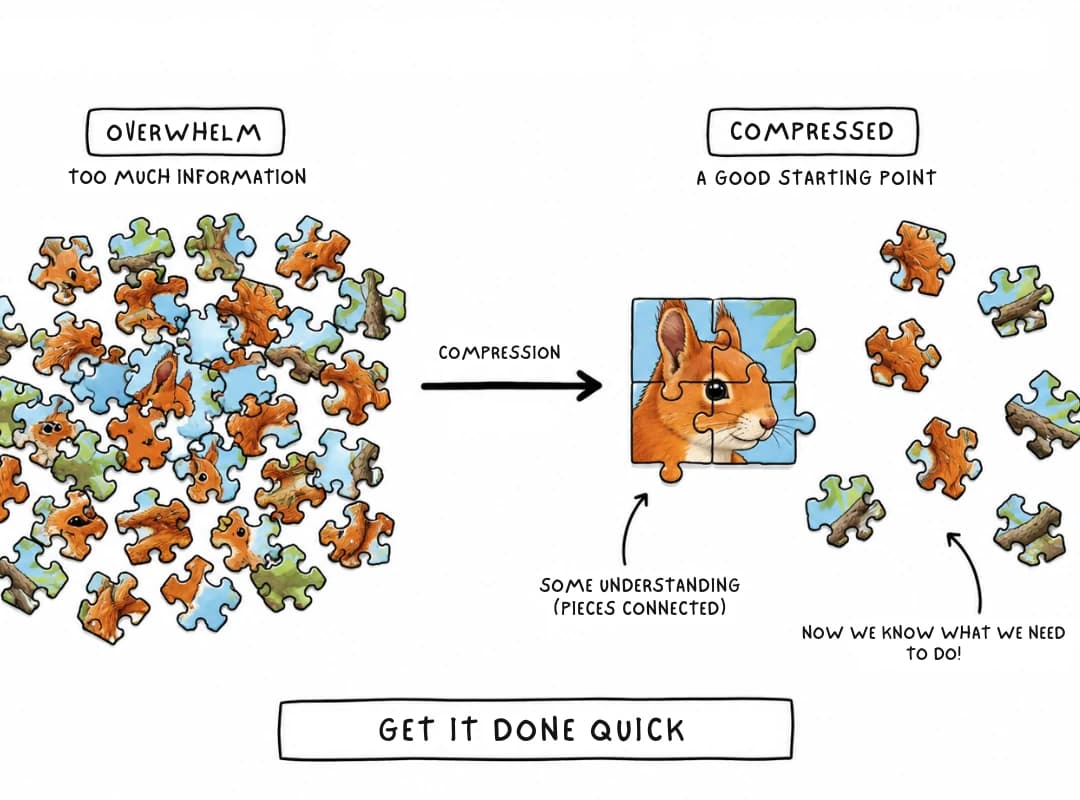
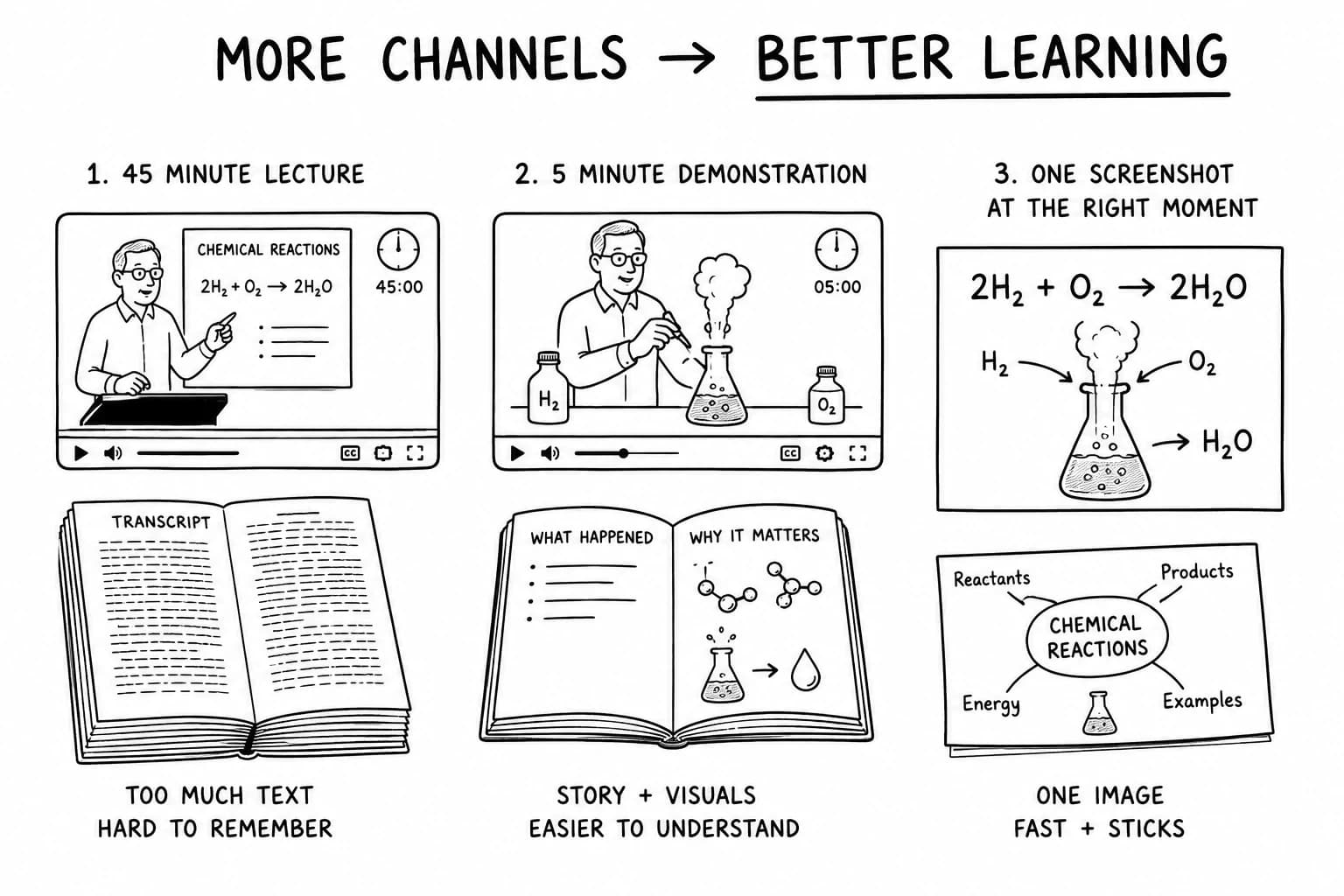
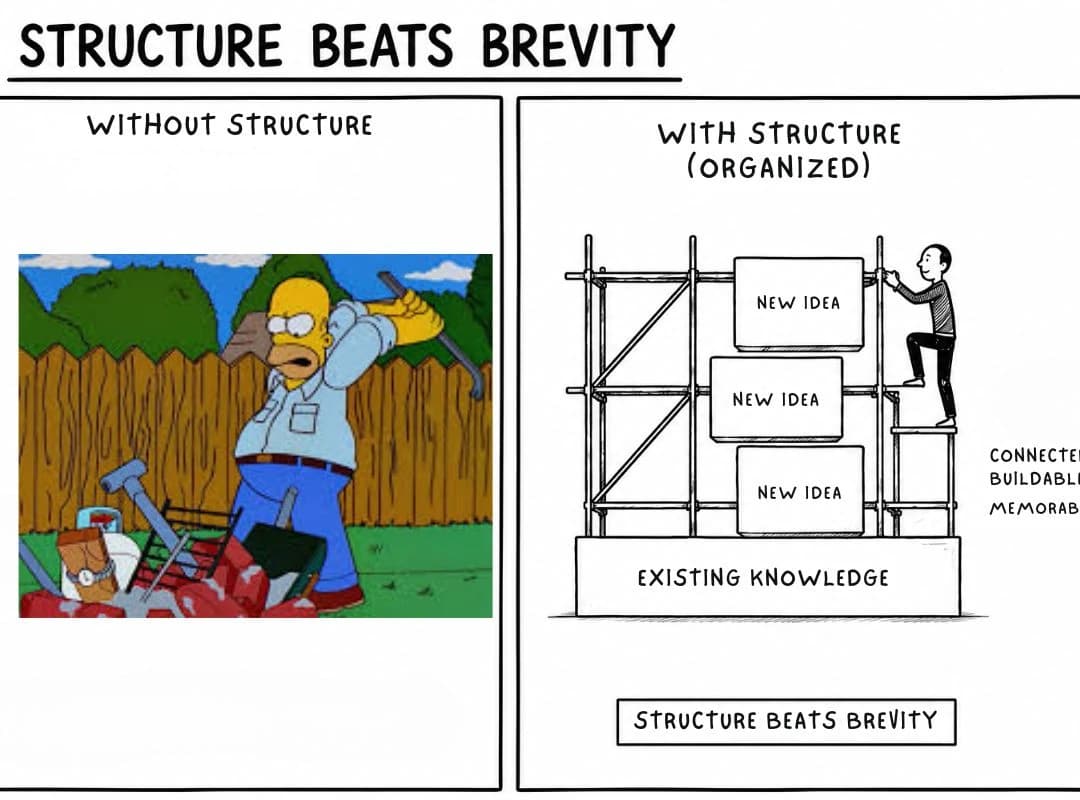
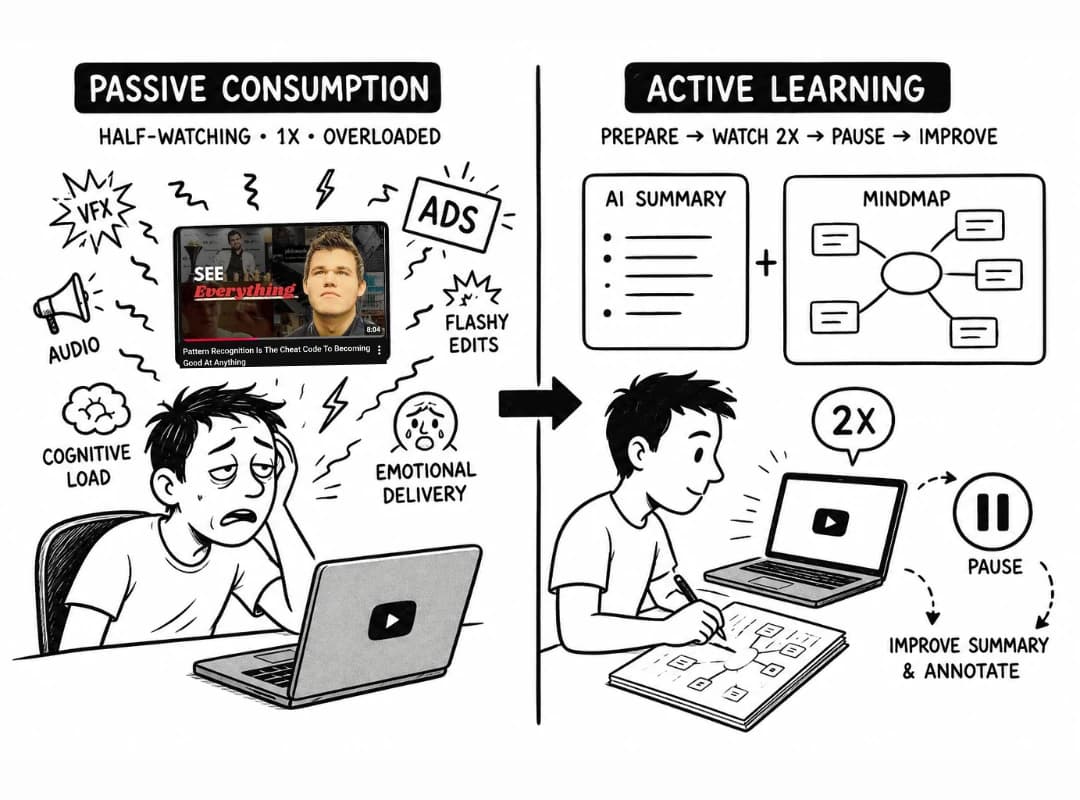
For AI-assisted learning, the design implication is straightforward: ask before telling. Prediction prompts, pre-tests, fill-in-the-gap summaries, guided questioning, and pause-and-predict interactions convert passive consumption into active construction. AI summaries, mind maps, glossaries, and advance organizers become most valuable after learners first attempt their own explanation, allowing feedback to correct misconceptions while preserving the encoding benefits created through generation.
Historical Development of the Generation Effect
| Year | Historical Contribution |
|---|---|
| 1978 | Larry Jacoby distinguishes solving a problem from merely remembering a presented solution, showing that the act of problem solving contributes independently to later memory. |
| 1978 | Slamecka & Graf formally establish the Generation Effect, demonstrating superior free recall, cued recall, and recognition memory for self-generated compared with read information across multiple laboratory experiments. |
| 1988 | McDaniel, Waddill & Einstein propose the influential three-factor account, combining item-specific processing, cue-target relational processing, and broader relational organization. |
| 1989 | Crutcher & Healy introduce the lexical activation explanation, arguing that semantic search strengthens retrieval cues by activating related concepts during generation. |
| 2000 | McNamara & Healy develop the procedural account, suggesting learners remember not only generated answers but also the procedures used to produce them. |
| 2001–2004 | Studies by Mulligan, Jurica & Shimamura, Begg, and others identify important boundary conditions, showing reduced effects for unfamiliar material, source memory, imagery-rich tasks, and nonwords. |
| 2009–2013 | Kornell, Hays, Bjork, and colleagues extend the phenomenon into education through prediction effects, pretesting, and errorful generation, demonstrating that incorrect predictions followed by feedback still enhance later learning. |
| 2013 | Bjork, Dunlosky & Kornell position generation as one of the central desirable difficulties, integrating decades of laboratory memory research with practical instructional design and modern educational psychology. |
How to Apply Generation to Advance Organizers: Design Implications and Failure Modes
Four design moves with advance organizers and pre-learning activities:
- Pre-video prediction questions after the organizer: "What will be the most important concept?" or "What question will this video answer?" — knowledge activation before instruction.
- Gap-filled mind map: hide nodes, ask learners to fill them from terms plus structure — concept maps/mind maps and graphic organizers as search scaffolds.
- Connection prediction: "What principle links these terms?" — forces relational generation over knowledge organizers.
- Confidence self-sort: rate each node 1–5, flag the weakest. Calibration plus generation in one pass — lightweight pre-reading questions and study guides pattern.
Pair with AI-generated summaries used as answers to check against, not previews to copy; interactive summaries that reveal one section only after a prediction; lesson planning that budgets 2-3 minutes of generation per video; instructional scaffolding (partial cues for novices, open prompts for intermediates); learning pathways and adaptive instruction that raise gap difficulty with demonstrated knowledge; AI tutors and learning management systems (LMS) that gate "show answer" behind an attempt; active note taking templates (cue → predict → watch → correct); guided discovery and worked examples that stop one step short. For how to use generation effect while studying, generation effect examples, best learning techniques: cue-plus-gap, predict, compare, correct — every time.
Workflow in five phases. Organizer exposure → generation prompt → brief reflection (prediction visible) → video (confirms or contradicts) → post-video comparison ("how did it match?"). These are reusable instructional design patterns.
Six failure modes. Too unfamiliar paralyzes novices. Too easy reduces generation to reading aloud. Too hard discourages without encoding. No feedback wastes the error signal. Uncorrected errors encode misinformation. Added load overflows working memory when the organizer is already dense.
Open questions. Optimal difficulty calibration per knowledge level? Conceptual versus item-only benefits? Novice scaffolding that preserves generation without giving answers? Open versus constrained versus multiple-choice formats? Partial-answer cuing ("The main concept is ___") versus open construction?
Generation Effect Moderators, Rivals and Evidence: When It Works and When It Fails
1. Generation Effect Examples: Why Does Self-Generation Beat Passive Reading for Long-Term Memory?
In 1990, Daniel J. Burns of Lafayette College conducted four experiments manipulating categorical structure while participants read or generated responses and later completed free-recall, cued-recall, or recognition tests. Generation advantages shifted with the retrieval task and list structure, showing that self-generation improves memory selectively through the information encoded during generation rather than through a universal memory boost.
| Audience / Industry / Use Case | Research Finding → Your Next Rep |
|---|---|
| University study-skills programs | Categorical structure altered the effect: when lists had little relational structure, generation produced large free-recall and recognition benefits, whereas highly structured lists shifted the benefit toward cued recall. The generation effect depends on whether semantic search, item-specific processing, or relational processing matches the final test. |
| Corporate technical training | Generation strengthened stimulus–response information while its benefit changed across recognition, free recall, and cued recall. Training should make the learner reconstruct the same type of knowledge later required on the job. |
| Professional certification preparation | The experiments showed that generation can produce different outcomes for different retrieval demands, making retrieval practice most defensible when practice and assessment share the same information structure. Measure delayed recall in the target format. |
2. Is Incorrect Generation Harmful? Why Errorful Generation Plus Immediate Feedback Improves Memory
In 2019, Tina Seabrooke, Timothy Hollins, Christopher Kent, Andy Wills and Chris Mitchell at British universities tested five experiments in which learners guessed definitions of rare English words or Euskara nouns before receiving the correct answers. Errorful generation improved later recognition and some forced-choice measures, while cued recall and associative recognition showed little or no advantage, demonstrating that corrective feedback strengthens item learning more reliably than associative learning.
| Audience / Industry / Use Case | Research Finding → Your Next Rep |
|---|---|
| Language-learning platforms | Errorful guesses followed by feedback improved recognition of both the cue and target for rare words, demonstrating prediction error, corrective feedback, and semantic encoding at the item level. Pretest unfamiliar vocabulary, reveal the answer, then measure recognition rather than claiming stronger word-pair associations. |
| Vocabulary instruction | The benefit survived when correct targets were tested against novel foils, indicating that generation can increase target familiarity beyond simple exposure. The practical loop is guess → feedback → re-encounter, with item recognition as the measurable outcome. |
| Medical terminology training | Associative recognition and cued recall did not reliably improve despite stronger item recognition, establishing a boundary condition for errorful generation. Use generation for terminology acquisition while separately testing whether the learner can reconstruct the relationship between a term and its definition. |
3. How Much Prior Knowledge Is Required? Schema Theory, Semantic Memory and Familiar Material
In 2008, Bethany Rittle-Johnson of Vanderbilt University and Alexander Kmicikewycz studied third graders learning multiplication through answer generation or calculator-provided answers during a class period. Generation interacted with prior knowledge: students with lower initial arithmetic knowledge benefited more, while the advantage diminished as prior knowledge increased, showing that semantic memory and existing schemas moderate the value of generation.
| Audience / Industry / Use Case | Research Finding → Your Next Rep |
|---|---|
| Elementary mathematics | Low-prior-knowledge students showed greater accuracy after generating multiplication answers, linking prior knowledge, generation, and schema acquisition to subsequent arithmetic performance. Pretesting can identify learners for whom production is most likely to add value. |
| Adaptive learning systems | The generation advantage decreased as prior knowledge increased, making learner knowledge a meaningful calibration variable. Adjust the degree of scaffolding according to pretest performance and compare later performance on studied and unstudied problems. |
| Skills-training programs | The study extended generation beyond laboratory word lists into classroom arithmetic and related unstudied problems. A generation workflow becomes more defensible when the learner possesses enough semantic hooks to attempt the task while still having meaningful room for improvement. |
4. How Long Should Generation Attempts Last? The Inverted-U Desirable Difficulty Curve
In 2000, Danielle S. McNamara of Old Dominion University and Alice F. Healy investigated generation across three experiments using simple and difficult multiplication problems. Generation produced a larger answer-memory effect for simple problems, while generation accuracy itself moderated difficult-problem performance, showing that generation difficulty and cognitive effort do not form a simple “harder is better” curve.
| Audience / Industry / Use Case | Research Finding → Your Next Rep |
|---|---|
| Mathematics instruction | Simple multiplication produced a larger generation effect than difficult multiplication, challenging a pure desirable difficulty explanation. Difficulty should be calibrated around successful generation. |
| Programming education | Generation accuracy mattered more when arithmetic problems were difficult, illustrating the importance of working memory, task difficulty, and successful production. Keep the missing step recoverable enough that learners can construct an answer and receive diagnostic feedback. |
| Professional certification | The experiments found that generation benefits depended on whether learners could reinstate the procedures used during study. Measure both answer accuracy and later procedural recall. |
5. Generation Effect vs Testing Effect vs Retrieval Practice: Does Test Format Match Matter?
In 1992, Daniel J. Burns reported seven experiments examining generation under different final-memory tests and relational structures. Generation produced advantages on recognition and cued recall under some conditions while free recall could reverse the effect, demonstrating transfer-appropriate processing: generation strengthens information that matches the operations and relationships required during later retrieval.
| Audience / Industry / Use Case | Research Finding → Your Next Rep |
|---|---|
| University examinations | Generation improved some cued-recall and recognition outcomes while free recall could favor previously read material, showing that encoding specificity, generation, and retrieval format interact. Practice should reproduce the information structure required by the examination. |
| Technical certification | Generation enhanced stimulus–response processing while interfering with response-relational organization in some free-recall conditions. Assess both individual facts and relationships when certification requires interconnected knowledge. |
| Professional problem solving | The experiments showed that generation effects were strongest when the final test reinstated relevant study operations. Build practice around the actual reasoning procedure required in transfer tasks and measure performance on structurally similar problems. |
6. When Should Teachers Provide Hints? Feedback Presence, Timing and Error Correction
In 2024, Yeray Mera, Nataliya Dianova and Eugenia Marin investigated the pretesting effect by varying whether corrective feedback followed unsuccessful guesses immediately or after 24 or 48 hours. Pretesting consistently improved recall over read-only learning, immediate feedback produced larger effects than delayed feedback, and the benefit persisted even when feedback was delayed, establishing both a timing advantage and a robustness boundary.
| Audience / Industry / Use Case | Research Finding → Your Next Rep |
|---|---|
| Online learning platforms | Pretesting produced higher recall than read-only learning across feedback schedules, linking generation, retrieval, and corrective feedback into a durable learning sequence. Ask for an answer before revealing the solution and retain the prediction for later comparison. |
| Language instruction | Immediate feedback produced a larger pretesting effect than delayed feedback, with Experiment 2 showing 74.8% recall after immediate feedback versus 58.0% after two-day-delayed feedback. Prioritize prompt correction when infrastructure permits. |
| Large-scale corporate training | The pretesting advantage survived 24- and 48-hour feedback delays, showing that delayed correction can retain meaningful value when immediate intervention is operationally expensive. Measure delayed cued recall. |
7. Does the Generation Effect Work for Everyone? Age, ADHD, Dyslexia, Gifted Learners and Working Memory Capacity
In 2004, Laurence Taconnat and Michel Isingrini at the University of Tours examined generation through anagrams, rhymes and semantic associates in young, elderly and very old adults under full and divided attention. Phonological generation benefited young adults more selectively, while semantic-associate generation survived divided attention across age groups, showing that age and attentional resources interact with the generation rule.
| Audience / Industry / Use Case | Research Finding → Your Next Rep |
|---|---|
| Adult education | Phonological generation produced a stronger age-dependent pattern than semantic generation, demonstrating that working memory, attention, and generation format jointly determine performance. Prefer semantic cues when learners face limited attentional resources. |
| Accessibility-oriented learning design | Divided attention eliminated the rhyme-generation advantage for young adults while semantic-associate generation remained significant. The evidence supports adapting the cognitive operation itself. |
| Cognitive rehabilitation research | Very old, elderly and young participants showed different generation patterns depending on the encoding rule. Separate performance by task type and age before interpreting a weak generation effect as a general failure of retrieval. |
8. Is It Just Time on Task? Laboratory Studies vs Classroom Studies and Ecological Validity
In 1994, Paul Foos, Joseph Mora and Sharon Tkacz tested generation through student-created outlines and study questions with 260 college students across two experiments. Generation effects appeared in natural study settings for test items students themselves targeted, while total test scores could obscure the effect because untargeted items diluted the comparison, demonstrating ecological validity alongside a measurement boundary.
| Audience / Industry / Use Case | Research Finding → Your Next Rep |
|---|---|
| University study-skills programs | Students who generated their own outlines or study questions performed better on targeted test items than students receiving experimenter-generated materials. Generation, retrieval practice, and learner-selected targets survived outside tightly controlled word-list experiments. |
| Exam-preparation products | Yoked comparisons showed that the benefit could not be explained simply by exposure to student-generated materials. Evaluate performance on targeted content separately from total scores so measurement does not bury the generation signal. |
| Classroom assessment | The effect appeared in a natural learning setting while total test performance could mask it. Track targeted-item retention and delayed recall. |
9. Generation Effect vs Levels of Processing: Is Deeper Reading Enough?
In 1991, Ian Begg, Ede Vinski, Linda Frankovich and Brian Holgate at McMaster University compared generation with different forms of reading and imagery-based processing. Generation outperformed poorly processed reading, while effective imagery-based reading eliminated the advantage, showing that generation is one route to meaningful encoding.
| Audience / Industry / Use Case | Research Finding → Your Next Rep |
|---|---|
| Reading instruction | Generation exceeded pronunciation-based reading but not imagery-based reading, showing that levels of processing, semantic encoding, and generation can converge on similar memory outcomes. Compare generation against meaningful processing rather than against weak rereading alone. |
| Professional knowledge work | Participants predicted that generated items would be better remembered even when effective reading produced equivalent actual memory. Separate metacognition from storage strength by testing delayed recall. |
| Instructional design | The study demonstrates that generation is not uniquely responsible for every memory advantage attributed to it. Build generation where it adds distinctive retrieval work and use effective elaboration where it produces comparable encoding. |
10. Why Does Active Recall Feel Harder But Work? Distinctiveness, Effort Heuristic and Metacognition
In 2019, John T. West and Neil W. Mulligan at the University of North Carolina examined judgments of learning across repeated retrieval trials in prospective and retrospective memory. After practice, participants became relatively underconfident about their future memory, showing that subjective difficulty can rise while objective learning improves and making confidence calibration a separate measurement problem.
| Audience / Industry / Use Case | Research Finding → Your Next Rep |
|---|---|
| Self-directed learners | Repeated retrieval produced underconfidence with practice, meaning learners could judge their growing memory ability too pessimistically. Record confidence before checking answers and compare it with delayed recall. |
| Adaptive tutoring systems | The underconfidence pattern appeared in both prospective and retrospective memory after the judgment procedure was aligned with prior metamemory research. Separate metacognition, retrieval success and confidence calibration when selecting future practice. |
| Professional certification | Repeated practice can make subjective effort feel larger relative to perceived mastery even as memory improves. Use objective delayed recall and transfer performance as the primary outcome while retaining confidence as a calibration signal. |
11. Does It Improve Understanding or Just Memory? The Source and Context Memory Cost
In 2004, Neil W. Mulligan of the University of North Carolina conducted 12 experiments comparing generated word fragments such as “hot-c__” with intact read pairs such as “hot-cold” while testing item and contextual memory. Generation consistently improved item memory but did not generally improve context memory, and it disrupted memory for target-word color while leaving several other contextual attributes unchanged.
| Audience / Industry / Use Case | Research Finding → Your Next Rep |
|---|---|
| Legal education | Generation strengthened item memory without reliably strengthening context memory, separating knowledge of a rule from knowledge of where or how it was encountered. Test both rule recall and source/context reconstruction when provenance matters. |
| Medical education | Color-context memory could be disrupted while location and background context remained unaffected, demonstrating that episodic memory contains separable components. Add context-reinstatement questions when learners must remember source, setting or diagnostic circumstances. |
| Knowledge-management systems | The experiments show that generation can selectively strengthen the target while leaving surrounding information unchanged. Store and retrieve both the core fact and its evidence context when later decisions depend on provenance. |
12. Hippocampus, LTP and Neuroplasticity: What Is the Neuroscience of Generation?
In 2013, Zachary Rosner, Jeremy Elman and Arthur Shimamura at the University of California, Berkeley used fMRI while participants generated synonyms from word fragments or read complete synonym pairs. Generation improved later recognition and recruited a broad network spanning prefrontal, posterior cortical and parahippocampal regions, providing neural evidence for more extensive encoding activity during self-production.
| Audience / Industry / Use Case | Research Finding → Your Next Rep |
|---|---|
| Neuroscience-informed learning platforms | Generated words produced stronger later recognition and broader neural encoding activity than read words. The evidence supports generation as an encoding manipulation while leaving stronger claims about LTP or dopamine mechanisms as theoretical rather than directly demonstrated. |
| Medical and psychology education | Activity involved inferior and middle frontal regions alongside posterior cortical and parahippocampal areas. A generation → encoding → consolidation workflow is biologically plausible, while the study itself measured encoding and later recognition rather than sleep-dependent consolidation. |
| Deep-learning study routines | Generation activated a distributed network rather than a single “memory center.” Repeated production can be treated as an encoding-demand manipulation and evaluated through delayed recognition. |
13. Mind Maps, Concept Maps and Dual Coding: How Visual Scaffolds Reduce Cognitive Load
In 2024, Sina Lenski, Mirlinda Mustafa and Jörg Großschedl studied 129 secondary-school biology students who constructed concept maps either with the learning material available or from memory after concept-mapping training. Retrieval-based mapping produced lower map quality but greater elaboration and learning performance, alongside higher perceived intrinsic cognitive load, showing that visual organization can become retrieval practice when the source is removed.
| Audience / Industry / Use Case | Research Finding → Your Next Rep |
|---|---|
| Secondary-school biology | Retrieval-based concept mapping produced lower map quality yet stronger learning and elaboration than study-based mapping. Concept mapping, retrieval practice, cognitive load, and elaboration need to be evaluated together. |
| University STEM courses | Removing the source forced learners to reconstruct nodes and relationships from memory, increasing intrinsic load while improving learning outcomes. Use blank-map reconstruction when the goal is retrieval. |
| Knowledge-visualization software | The study separates visual artifact quality from learning value: lower-quality maps can accompany better learning. Measure delayed conceptual performance alongside map quality when evaluating visual learning systems. |
14. Can You Overuse Generation? Prior Knowledge as Critical Moderator and Expertise Reversal Effect
In 2008, Bethany Rittle-Johnson and Alexander Kmicikewycz compared generated and calculator-provided multiplication answers in third-grade classrooms while measuring prior knowledge. Generation benefited lower-knowledge learners most strongly and its advantage diminished as prior knowledge rose, providing direct evidence that the value of open generation depends on the learner’s existing schema rather than increasing monotonically with expertise.
| Audience / Industry / Use Case | Research Finding → Your Next Rep |
|---|---|
| Elementary mathematics | Lower-prior-knowledge students benefited more from generating answers, while the advantage declined with increasing prior knowledge. Expertise, schema acquisition, and generation justify stronger scaffolding when learners lack prerequisite representations. |
| Adaptive tutoring | Prior knowledge moderated the generation advantage, making pretesting a useful control variable for instructional sequencing. Start with constrained generation when prerequisite knowledge is weak and expand openness as independent solution construction becomes reliable. |
| Professional upskilling | The study demonstrates a knowledge-dependent boundary rather than a universal rule that “more generation is better.” Compare performance across learners with different starting schemas before increasing task openness or removing support. |
15. What Subjects Benefit Most? Mathematics, Medical Education, Language Learning, Programming and Law
In 1998, Danielle McNamara and Alice Healy extended generation beyond simple verbal materials by studying multiplication skill and nonword vocabulary acquisition. Generation produced a multiplication advantage under some difficulty conditions and improved acquisition of novel vocabulary associations, demonstrating that production can extend into procedural and semantic learning when the task supports meaningful retrieval operations.
| Audience / Industry / Use Case | Research Finding → Your Next Rep |
|---|---|
| Mathematics education | Multiplication problems produced generation advantages under experimentally defined conditions, extending the phenomenon from word memory to skill acquisition. Practice can require learners to construct answers. |
| Language learning | Participants learned associations between unfamiliar vocabulary terms and familiar English nouns, with generation improving acquisition. Semantic memory, production and associative encoding can support vocabulary construction beyond familiar-word recall. |
| Technical skills training | The work extended generation toward procedural learning. For programming, engineering or technical work, measure whether generating solution procedures improves later performance on structurally related tasks. |
16. Spaced Repetition, Flashcards, Feynman Technique or Generation: Best Evidence-Based Study Technique?
In 2019, Neil Mulligan, S. Adam Smith and Zachary Buchin tested generation across three experiments using multiple study lists followed by a single end-of-session recall test. Generation remained robust across pure and mixed list designs for both perceptual letter-transposition and semantic-antonym tasks, while comparison with testing-effect research revealed parallel retrieval-based properties rather than evidence for one universally superior study method.
| Audience / Industry / Use Case | Research Finding → Your Next Rep |
|---|---|
| Study-product design | Generation remained effective under both pure and mixed-list designs when all lists were followed by a single final recall test. Generation, retrieval practice, and experimental design interact with assessment structure, making delayed standardized evaluation essential. |
| Spaced-repetition systems | The study found generation effects for both perceptual and semantic tasks, showing that the phenomenon is not restricted to one cue type. Use varied prompts while preserving the required retrieval operation and measure retention after spacing. |
| Professional learning programs | The authors identified parallels between generation and testing effects, supporting a combined retrieval architecture. A practical system can combine production, spacing and testing while evaluating each component through delayed recall and transfer. |
Generation Effect in Practice: Designing AI Learning Workflows That Ask Before They Tell
The generation effect shifts instructional design from answer-first delivery to attempt-first learning. Across education, corporate training, healthcare, engineering, and AI tutoring systems, the same principle applies: learners should generate an answer before receiving the correct one. This transforms summaries, mind maps, glossaries, quizzes, and advance organizers from passive reference materials into generation scaffolds that activate prior knowledge, strengthen memory encoding, improve long-term retention, and create richer retrieval cues. For AI-powered learning systems, the engineering decision is clear: adopt generation conditionally. Prediction prompts, constrained blanks, and guided questioning should precede explanations, while adaptive learning systems calibrate difficulty to prior knowledge, guarantee corrective feedback, and progressively personalize prompt complexity. The remaining research questions concern optimization rather than direction—finding the best prompt formats, AI-generated versus human-authored prompts, calibration rules, and longitudinal effects—making organizer-embedded randomized trials the next frontier.
Generation Effect in Practice: AI Workflows That Ask Before They Tell — Applied Guides
1. How to Check Prior Knowledge Before Teaching? Adaptive Instruction for Schools and Corporate Onboarding
In 1988, Donna Recht and Lauren Leslie studied 64 junior-high students divided by reading ability and baseball knowledge while recalling and summarizing a baseball passage. Prior knowledge produced significant advantages across verbal recall, nonverbal reconstruction, summarization and idea-importance judgments, with no interaction between prior knowledge and reading ability. ([EBSCO OpenURL][1])
| Audience / Industry / Use Case | Research Finding → Your Next Rep |
|---|---|
| Secondary-school literacy | High-baseball-knowledge students reconstructed the game more successfully verbally and nonverbally, demonstrating how prior knowledge, schemas and semantic memory constrain comprehension; profile domain knowledge before instruction and compare closed-book reconstruction against the pretest baseline. ([EBSCO OpenURL][1]) |
| Corporate onboarding | Prior knowledge significantly improved delayed summaries after an interpolated task, showing that schema activation and adaptive instruction can preserve information beyond immediate recall; segment onboarding by diagnostic knowledge level and measure delayed summary accuracy. ([ERIC][2]) |
| Professional certification | Prior knowledge improved every measured outcome without interacting with reading ability, separating capability from general reading skill; use domain-specific diagnostics to set difficulty and evaluate gain within matched knowledge bands. ([EBSCO OpenURL][1]) |
2. Advance Organizers That Make Learners Predict: Faster Orientation With AI Summarization
Jim C. Snapp and John A. Glover of Ball State University reported three experiments in 1990 with middle-school and college students who read and paraphrased advance organizers before studying material and answering study questions. Organizers improved lower-order answers in Experiment 1 and higher-order answers in Experiments 2–3, showing stronger constructed responses after structural orientation. ([Taylor & Francis Online][3])
| Audience / Industry / Use Case | Research Finding → Your Next Rep |
|---|---|
| Middle-school science | Paraphrasing the organizer increased correct answers to lower-order questions, linking advance organizers, terminology and semantic memory through structural orientation; place a concise concept frame before the lesson and compare factual-question accuracy with an organizer-free cohort. ([Taylor & Francis Online][3]) |
| University humanities | Middle-school learners produced better higher-order answers when organizers preceded study, indicating that schema activation and prediction can organize later reasoning; require a paraphrased organizer before reading and score explanation quality on higher-order questions. ([Taylor & Francis Online][3]) |
| AI learning platforms | College students likewise constructed significantly better higher-order answers after organizer exposure, connecting prediction, associative memory and advance organizers to constructed knowledge; surface the structural map before content and evaluate subsequent inferential-answer quality. ([Taylor & Francis Online][3]) |
3. Interactive Mind Maps With Hidden Nodes: From Isolated Facts to Medical and Engineering Transfer
In 2002, Kuo-En Chang, Yao-Ting Sung and Ine-Dai Chen at National Taiwan Normal University tested three concept-mapping strategies with 126 fifth graders: map correction, scaffold fading and map generation. Map correction improved both comprehension and summarization, while scaffold fading improved summarization, demonstrating that visual structure and graduated support affect different outcomes. ([DOI][4])
| Audience / Industry / Use Case | Research Finding → Your Next Rep |
|---|---|
| School science | Map correction improved both text comprehension and summarization, showing how relational processing, dual coding and generative learning can expose missing conceptual links; use partially incorrect maps for reconstruction and score comprehension plus summary quality. ([DOI][4]) |
| Medical education | Scaffold fading specifically strengthened summarization, indicating that progressively removing visual scaffolding and retrieval cues can shift learners toward independent relational representation; reduce supplied nodes across cases and compare reconstructed summaries across stages. ([DOI][4]) |
| Engineering training | Three mapping conditions revealed that identical “mind mapping” labels conceal different cognitive demands, making generative learning, schema construction and conceptual integration operationally distinct; track map completion, relation accuracy and subsequent explanation quality separately. ([National Taiwan Normal University][5]) |
4. Concept Frameworks for Deep Learning: Generating Linking Principles for Constructivism and Meaningful Learning
In 1989, Michelene Chi and colleagues at the University of Pittsburgh analyzed students studying worked examples of Newtonian mechanics through think-aloud self-explanations. Students who generated explanations linking solution actions to principles developed more example-independent knowledge, whereas weaker learners produced fewer explanations, monitored understanding less accurately and remained dependent on examples. ([DOI][6])
| Audience / Industry / Use Case | Research Finding → Your Next Rep |
|---|---|
| University physics | Strong learners generated explanations that connected solution actions with principles, demonstrating elaborative interrogation, self-explanation and relational processing as mechanisms for example-independent knowledge; require “why does this step work?” explanations and assess transfer to unseen problems. ([DOI][6]) |
| Engineering education | Weaker learners relied heavily on worked examples while producing fewer conceptual explanations, showing that constructivism, schema construction and meaningful learning require active linking rather than example exposure; collect explanation traces and compare independent problem-solving performance. ([DOI][6]) |
| Technical certification | Accurate monitoring accompanied richer self-explanation and stronger principle understanding, connecting metacognition, causal explanation and deep learning; insert explanation checkpoints after worked examples and measure whether later solutions remain correct when surface features change. ([DOI][6]) |
5. Learning Summaries That Force Recall: Gap Completion Beats Rereading and Highlighting
In 1978, Norman Slamecka and Peter Graf at the University of Toronto conducted five experiments with 96 undergraduates comparing self-generated words with words simply read. Generation consistently outperformed reading across free recall, cued recall, recognition and confidence measures, establishing a robust generation effect across multiple encoding and testing conditions. ([DOI][7])
| Audience / Industry / Use Case | Research Finding → Your Next Rep |
|---|---|
| University students | Generated words produced superior free and cued recall, showing how retrieval practice, generation and encoding strength reinforce memory beyond passive exposure; convert summaries into blanks and evaluate reconstruction against rereading before examinations. ([DOI][7]) |
| Corporate compliance | Generation remained superior across different encoding rules and presentation schedules, demonstrating that test-enhanced learning and successive relearning survive changes in surface procedure; require employees to reconstruct policy clauses and compare delayed recall with read-only review. ([DOI][7]) |
| AI study systems | Generation improved recognition and confidence as well as recall, showing that generative learning, retrieval cues and encoding variability affect both memory performance and subjective certainty; log generated-answer accuracy separately from recognition accuracy to expose false fluency. ([DOI][7]) |
6. Glossaries as Retrieval Cues: Language Learning, Duolingo, Wordle and Everyday Vocabulary
In 1983, Carl E. McFarland Jr., Edward Duncan and Jan Marie Bruno studied children in Grades 2, 3, 5 and 7 generating or studying semantic exemplars and rhymes before recall and recognition tests. Generation emerged earlier for semantic recognition at age seven, for semantic recall at nine, phonetic recognition at eleven and phonetic recall at thirteen. ([ScienceDirect][8])
| Audience / Industry / Use Case | Research Finding → Your Next Rep |
|---|---|
| Primary language learning | Semantic generation produced a substantial recognition benefit as early as age seven, linking terminology, semantic memory and generation to developmentally appropriate vocabulary encoding; ask learners to produce category examples before definitions and test recognition afterward. ([ScienceDirect][8]) |
| Secondary vocabulary instruction | Semantic generation benefited recall by age nine while phonetic generation required older learners, showing that encoding variability, cue-dependent memory and developmental readiness shape retrieval; pair new terms with meaning-based examples before sound-based drills. ([ScienceDirect][8]) |
| Language-learning applications | Phonetic generation became a strong recognition facilitator at eleven and recall facilitator at thirteen, demonstrating that retrieval cues and transfer-appropriate processing depend on the eventual test; match vocabulary-generation tasks to the intended assessment format. ([ScienceDirect][8]) |
7. Structured Learning Modules That Link New Ideas: Adaptive Learning and Scaffolding Novices
In 2009, Ron Salden and colleagues at Carnegie Mellon University and the University of Freiburg compared standard tutoring with fixed and adaptive fading of worked examples in both laboratory and vocational-classroom experiments. Adaptive fading produced higher laboratory transfer immediately and after one week, while the classroom study showed a delayed advantage over problem solving, with no extra posttest time. ([Wiley Online Library][9])
| Audience / Industry / Use Case | Research Finding → Your Next Rep |
|---|---|
| Vocational mathematics | Adaptive example fading produced laboratory transfer means of .52 versus .41 for competing conditions and retained an advantage after one week, linking scaffolding, mastery learning and cognitive apprenticeship to transfer; fade worked examples according to demonstrated competence and assess delayed transfer. ([Wiley Online Library][9]) |
| Intelligent tutoring systems | Adaptive fading improved immediate transfer without increasing posttest time, showing that adaptive learning and student modeling can alter support efficiency; trigger example removal from learner performance and track transfer per minute. ([Wiley Online Library][9]) |
| Corporate technical onboarding | Classroom learners showed a delayed adaptive-fading advantage over problem solving despite environmental noise and attrition, demonstrating a zone-of-proximal-development boundary around support; retain graduated examples and judge mastery with delayed procedural and conceptual transfer. ([Wiley Online Library][9]) |
8. Knowledge Frameworks for Durable Understanding: Item-Specific, Relational and Semantic Search
In 1977, C. Donald Morris, John D. Bransford and Jeffery J. Franks conducted three experiments manipulating semantic versus rhyme acquisition and matching recognition tests. Semantic encoding produced superior standard recognition, rhyme encoding produced superior rhyme recognition, the pattern survived delayed testing, and Experiment 3 showed the effect did not depend on repeated rhyme exposure. ([ScienceDirect][10])
| Audience / Industry / Use Case | Research Finding → Your Next Rep |
|---|---|
| Medical education | Semantic acquisition beat rhyme acquisition on standard recognition, demonstrating how relational processing, semantic search and schema theory strengthen memory when retrieval requires meaning; organize terminology by mechanisms and test conceptual relationships. ([ScienceDirect][10]) |
| Professional certification | Rhyme acquisition outperformed semantic acquisition when the final test required rhyme recognition, establishing transfer-appropriate processing and encoding specificity as boundaries on generic “deep processing”; align study operations with the eventual retrieval demand. ([ScienceDirect][10]) |
| Knowledge-management systems | The same pattern appeared on immediate and delayed recognition, while rhyme repetition did not explain the effect, separating item-specific processing, relational processing and durable encoding from simple exposure frequency; evaluate frameworks with delayed tests using the intended retrieval operation. ([ScienceDirect][10]) |
9. Retrieval Practice Resources for Exams and Workplace: Aviation, Military, Sales and Safety Training
In 2008, Nicholas Cepeda and colleagues studied more than 1,350 participants learning factual material with study gaps reaching 3.5 months and final tests delayed up to one year. Longer spacing initially improved retention before declining at excessive intervals, and the optimal gap became proportionally shorter as the final retention interval lengthened. ([Association for Psychological Science][11])
| Audience / Industry / Use Case | Research Finding → Your Next Rep |
|---|---|
| Safety and compliance training | Longer interstudy gaps initially improved final retention, establishing spacing effect, retrieval practice and successive relearning as a temporal design problem; schedule recurring retrieval rather than repeating material consecutively and measure delayed compliance recall. ([Association for Psychological Science][11]) |
| Aviation training | The optimal interval depended on the eventual test delay, showing that interleaving, spacing and retrieval strength must be calibrated to operational memory horizons; align recurrent checks with the next certification or operational interval and compare retention at that horizon. ([Association for Psychological Science][11]) |
| Sales enablement | Optimal spacing shifted as the retention interval increased, demonstrating that distributed practice and durable retrieval require schedule adaptation; distribute product, competitor and objection retrieval across the expected selling cycle and measure delayed scenario performance. ([Association for Psychological Science][11]) |
10. Integrated AI Learning Module: Organizer to Prediction to Feedback Workflow That Scales
In 2020, Faria Sana and colleagues at Athabasca University and McMaster University ran three laboratory experiments using five neuroscience passages to compare learning objectives, pretesting and feedback. Learning objectives improved final performance, multiple-choice pretesting produced the highest performance, and adding feedback to pretest responses unexpectedly reduced final performance relative to pretesting without feedback. ([PubMed Central (PMC)][12])
| Audience / Industry / Use Case | Research Finding → Your Next Rep |
|---|---|
| University LMS design | Learning objectives raised final performance from .47 in control to .55 when interpolated, linking advance organizers, prediction and schema activation to orientation; place structural objectives before content and compare final comprehension against an objective-free control. ([PubMed Central (PMC)][12]) |
| AI tutoring systems | Multiple-choice pretesting produced the highest final performance among the tested objective formats, showing how generation, retrieval and active learning turn orientation into a learning event; require an answer attempt before explanation and measure post-module retention. ([PubMed][13]) |
| Corporate microlearning | Feedback immediately after pretesting reduced final performance in Experiment 3, creating an important feedback, retrieval and cognitive-load boundary; separate prediction from explanation when appropriate and compare delayed retention across feedback conditions. ([PubMed][13]) |
11. Knowledge Gap Analysis: Detecting Misconceptions With Metacognition and Self-Regulated Learning
In 2002, Leonid Rozenblit and Frank Keil at Yale University conducted Studies 1–12 examining people’s confidence in explanatory knowledge across mechanisms, facts, procedures and narratives. The illusion of explanatory depth was strongest for mechanistic explanations, while later studies examined domain differences and the mechanisms producing overconfidence. ([PubMed Central (PMC)][14])
| Audience / Industry / Use Case | Research Finding → Your Next Rep |
|---|---|
| Science education | People showed especially strong overconfidence for mechanistic explanations, connecting metacognition, self-explanation and illusion of explanatory depth to misconception detection; require mechanism-level explanations before instruction and compare confidence with explanation accuracy. ([PubMed Central (PMC)][14]) |
| Engineering training | The illusion persisted across multiple explanatory domains, showing that confident verbal familiarity can conceal weak semantic search and conceptual schemas; collect confidence ratings before explanations and flag large confidence–accuracy gaps for remediation. ([PubMed Central (PMC)][14]) |
| Professional certification | Studies 7–10 examined differences in overconfidence across knowledge domains, demonstrating a measurable knowledge-gap analysis signal beyond raw correctness; maintain confidence-calibration records and retest explanations after correction rather than relying on self-assessed mastery. ([PubMed Central (PMC)][14]) |
12. Adaptive Learning Profiles: Bayesian Knowledge Tracing, Deep Knowledge Tracing and Personalized Tutoring
In 2018, Ye Mao, Chen Lin and Min Chi at North Carolina State University compared Bayesian Knowledge Tracing, Intervention-BKT and LSTM models across physics and probability tutoring datasets. BKT variants performed better for post-test prediction, LSTM variants better predicted learning gains, and skill discovery allowed BKT to predict post-test performance from the earliest 50% of sequences. ([Journal of Educational Data Mining][15])
| Audience / Industry / Use Case | Research Finding → Your Next Rep |
|---|---|
| Adaptive STEM tutoring | BKT and BKT+skill discovery outperformed competing models for post-test prediction, connecting knowledge tracing, adaptive testing and learner modeling to mastery estimation; update skill probabilities after responses and evaluate prediction against subsequent post-test performance. ([Journal of Educational Data Mining][15]) |
| AI learning platforms | LSTM and LSTM+skill discovery achieved stronger accuracy, F1 and AUC for learning-gain prediction, showing that deep knowledge tracing and sequential modeling capture different information from mastery estimation; use model choice according to the intervention target and validate both prediction and learning gain. ([Journal of Educational Data Mining][15]) |
| Personalized tutoring analytics | BKT+skill discovery reliably predicted post-test scores using only the earliest 50% of training sequences, while LSTM reached comparable learning-gain prediction using roughly 70%, demonstrating early prediction and adaptive prompting; trigger intervention from partial histories and validate against later outcomes. ([Journal of Educational Data Mining][15]) |
13. AI Study Sessions That Ask Before Telling: Socratic Tutoring With ChatGPT for Studying
In 2021, Lasang Jimba Tamang and colleagues at the University of Memphis ran a randomized controlled trial with 105 undergraduate computer-science students comparing free self-explanation, Socratic questioning and prediction-only instruction across Java code examples. Learning gains were .30 for free explanation and .59 for Socratic tutoring, while prior-knowledge groups showed no significant gain difference within either intervention. ([NSF Public Access Repository][16])
| Audience / Industry / Use Case | Research Finding → Your Next Rep |
|---|---|
| Introductory programming | Socratic tutoring produced .59 learning gain versus .30 for free self-explanation, connecting Socratic questioning, self-explanation and generative learning through guided attention; ask concept-specific questions before revealing code explanations and compare equivalent pre/post code-prediction scores. ([NSF Public Access Repository][16]) |
| AI coding tutors | The study used six Java examples covering precedence, conditionals, loops, arrays and objects, demonstrating how active note-taking, retrieval and human-AI collaboration can target executable mental models; require prediction before explanation and score output prediction on structurally equivalent programs. ([NSF Public Access Repository][16]) |
| Programming bootcamps | Free self-explanation produced measurable gains while Socratic guidance produced larger gains, with no significant low-versus-high prior-knowledge difference within either intervention; preserve adaptive questioning and retrieval while evaluating learning gain across baseline-knowledge bands. ([University of Memphis Digital Commons][17]) |
14. Learning Analytics Dashboard: Measuring Effect Sizes, Replication and Transfer Over Time
In 2015, the Open Science Collaboration coordinated high-powered replications of 100 experimental and correlational studies from three psychology journals using original materials where available. Ninety-seven percent of originals were statistically significant, 36% of replications were significant, replication effects averaged roughly half the original magnitude, and 47% of original effect sizes fell within replication confidence intervals. ([DOI][18])
| Audience / Industry / Use Case | Research Finding → Your Next Rep |
|---|---|
| Learning-science research teams | Replication effects averaged .197 versus .403 for originals, demonstrating why effect sizes, replication and external validity matter beyond statistical significance; dashboard intervention effects with confidence intervals and compare replicated estimates. ([DOI][18]) |
| Corporate learning analytics | Only 36% of replications reached statistical significance despite 97% of originals doing so, showing how measurement, statistical significance and replication checks expose fragile learning claims; preregister evaluation criteria and track replication status alongside immediate performance. ([DOI][18]) |
| University instructional-design programs | Forty-seven percent of original effect sizes fell within replication confidence intervals and 39% were judged to replicate subjectively, demonstrating that meta-analysis, internal validity and transfer evidence require multiple indicators; maintain dashboards separating effect magnitude, uncertainty and replication agreement. ([DOI][18]) |
Socrates called himself a midwife because he delivered nothing and assisted everything. The slave boy in the Meno remembered the square because he had built it. Hand learners the pantry and one missing step — then let the video do the tasting.