What Is Scaffolding in Education? From Japanese Swordsmiths to AI Learning Systems
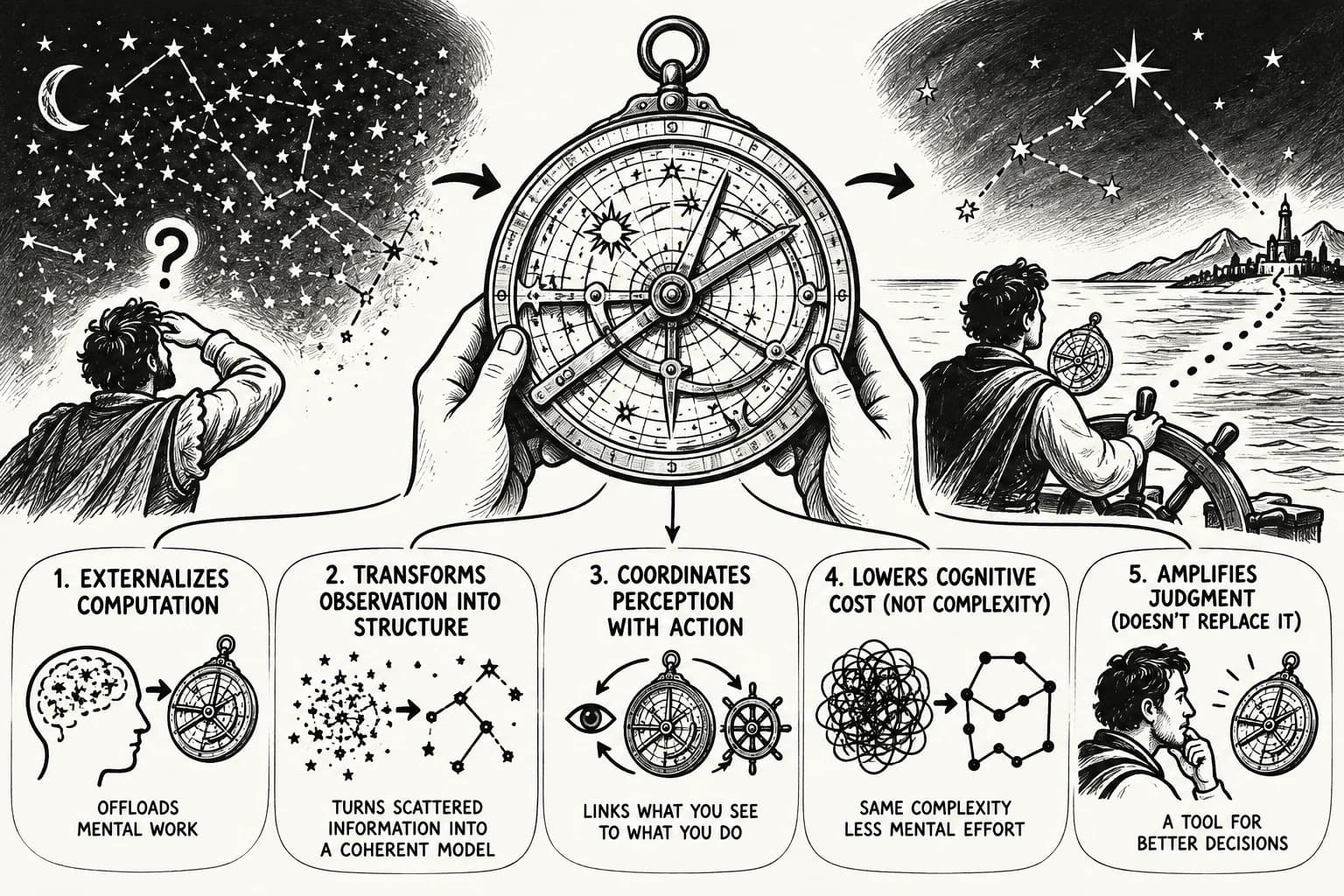
A Japanese swordsmith never expected an apprentice to forge a blade on the first day. For years the novice tended the charcoal fire, sorted steel, polished finished swords, and watched thousands of hammer strikes before shaping even a small section alone. With each season the master withdrew another layer of guidance until the apprentice no longer borrowed another craftsman's judgment. The support existed to disappear. That philosophy captures instructional scaffolding, educational scaffolding, and scaffolded instruction more precisely than any definition alone. Lev Vygotsky's Zone of Proximal Development (ZPD) explains why learners first succeed with assistance before succeeding independently, while Wood, Bruner & Ross (1976) transformed that insight into a framework of temporary instructional support, guided learning, adaptive instruction, cognitive apprenticeship, and the gradual release of responsibility. Modern AI tutoring systems, adaptive learning platforms, mind maps, concept maps, knowledge graphs, and instructional design should follow the same apprenticeship model—reducing unnecessary cognitive load, strengthening schema construction, cultivating self-regulated learning, and progressively fading support until independent performance becomes the learner's own craftsmanship.
Five Principles That Define Authentic Scaffolding
-
Scaffolding begins where the learner stands. Effective instructional scaffolding calibrates support to the learner's Zone of Proximal Development (ZPD) through guided learning, adaptive instruction, dynamic assessment, and instructional contingency, ensuring every challenge remains achievable with assistance while steadily expanding competence development.
-
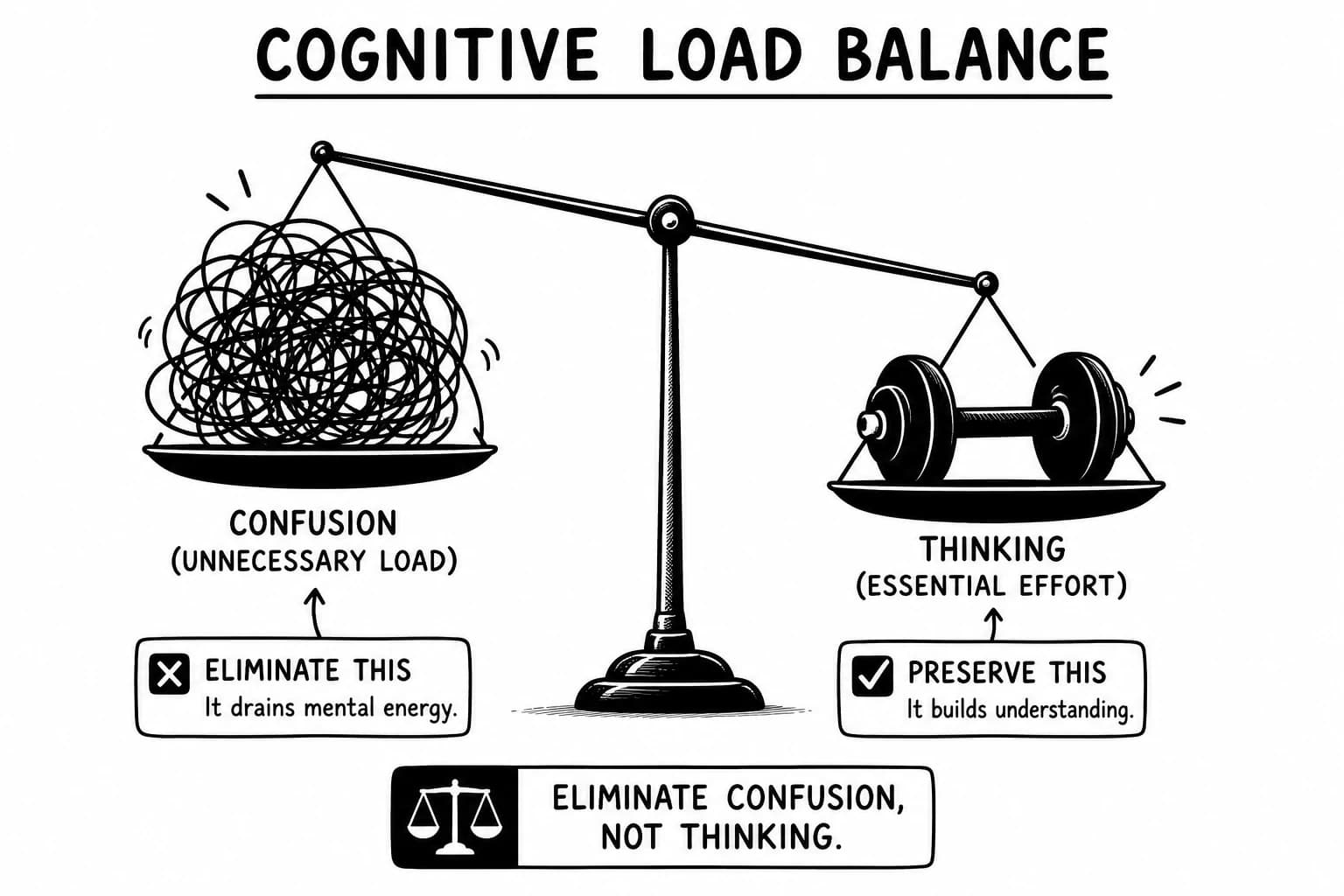
Support removes unnecessary burden, not meaningful challenge. High-quality mind maps, advance organizers, concept maps, knowledge graphs, and other instructional supports reduce extraneous cognitive load, preserve productive struggle, strengthen schema construction, improve working memory efficiency, and promote durable schema acquisition rather than effortless familiarity.
-
External guidance becomes internal expertise. Through repeated modeling, prompting, feedback, guided problem solving, and cognitive apprenticeship, learners develop metacognition, self-regulated learning, learning autonomy, and transferable mental models that gradually replace external instructional support.
-
Fading defines true scaffolding. Authentic scaffolded instruction systematically removes hints, worked examples, prompts, and demonstrations through the gradual release of responsibility (I Do → We Do → You Do), transferring ownership from teacher to learner while preventing dependency.
-
Success is measured by independence. The strongest AI tutoring systems, adaptive learning platforms, and instructional design frameworks evaluate transfer of responsibility, performance transfer, knowledge transfer, and unaided problem solving rather than time spent receiving support, because the highest-quality scaffold is the one that quietly disappears.
Historical Development of Scaffolding in Education
| Era / Period | Historical Development | Educational Contribution | Modern Learning Science Keywords |
|---|---|---|---|
| 1930s | Lev Vygotsky formulates the Zone of Proximal Development (ZPD) (published posthumously in Mind in Society, 1978). | Learning first occurs through guided social interaction before becoming independent performance. | Zone of Proximal Development, social constructivism, guided learning, mediated learning, learning autonomy |
| 1950s–1960s | Jerome Bruner develops the Language Acquisition Support System (LASS) and extends Vygotsky's ideas into cognitive development. | Demonstrates how structured guidance accelerates language acquisition and conceptual growth. | instructional support, guided participation, language acquisition, constructivist learning, learning support strategies |
| 1976 | Wood, Bruner & Ross coin instructional scaffolding through their block-building experiments. | Defines scaffolding as temporary, contingent, adaptive support designed to fade as competence develops. | instructional scaffolding, temporary instructional support, contingent support, competence development, student independence |
| 1980s | Palincsar & Brown develop Reciprocal Teaching. | Demonstrates scaffolded questioning, prediction, clarification, and summarization that progressively transfer responsibility to learners. | reciprocal teaching, guided questioning, self-regulated learning, metacognition, learning progression |
| 1990s–2000s | Educational technology introduces computer-supported scaffolding, intelligent tutoring systems, and hypermedia learning environments. | Digital systems begin adapting instructional support dynamically across complex learning tasks. | technology-enhanced learning, adaptive learning, computer-supported scaffolding, AI tutoring, instructional technology |
| 2002 | Saye & Brush distinguish hard scaffolding from soft scaffolding. | Separates preplanned instructional supports from responsive teacher interventions. | hard scaffolding, soft scaffolding, adaptive instruction, instructional design, teacher scaffolding |
| 2004 | Pea reframes scaffolding as distributed intelligence while Azevedo et al. demonstrate scaffolding within hypermedia learning. | Expands scaffolding across teachers, peers, digital tools, and intelligent learning environments. | distributed cognition, hypermedia learning, AI learning environments, learning technologies, guided discovery |
| 2010 | Van de Pol, Volman & Beishuizen publish a landmark review of classroom scaffolding research. | Identifies the three defining characteristics of authentic scaffolding: contingency, fading, and transfer of responsibility. | instructional scaffolding research, implementation fidelity, classroom effectiveness, instructional contingency, transfer of responsibility |
| Modern AI Era | Adaptive tutoring, AI learning assistants, personalized learning systems, and intelligent educational software. | AI increasingly personalizes instructional support while attempting evidence-based automated fading based on learner progress. | AI tutoring systems, adaptive scaffolding, personalized learning, learning analytics, educational AI, knowledge diagnostics |
How Effective Is Scaffolding? Effect Sizes and When It Helps Most
In the workshops of Hon'ami Kōetsu, the celebrated Japanese sword polisher and connoisseur of the early Edo period, an apprentice did not begin by forging an entire katana. The master controlled the most demanding stages, released one responsibility at a time, then stepped away as judgment, precision, and confidence emerged—a living illustration of instructional scaffolding, guided learning, adaptive instruction, and the gradual release of responsibility centuries before those terms existed. Modern educational scaffolding follows the same pattern. When contingent support, carefully timed fading, and genuine transfer of responsibility align within the Zone of Proximal Development (ZPD), the effectiveness of scaffolding is consistently positive across learning gains, academic achievement, knowledge retention, transfer of learning, metacognitive development, and student engagement. Van de Pol, Volman & Beishuizen (2010) concluded that adaptive support outperforms fixed instruction precisely because it responds to the learner rather than the lesson, while reciprocal teaching—one of the clearest implementations of authentic scaffolding—regularly reports moderate-to-large effect sizes (d ≈ 0.30–0.80) for reading comprehension. No single instructional scaffolding effect size captures the field because outcomes depend on implementation fidelity, teacher responsiveness, adaptive scaffolding, and the timing of responsibility transfer, yet the pattern remains remarkably consistent: scaffolding helps most when it removes extraneous cognitive load without removing productive struggle, keeps complex tasks inside the learner's ZPD, and disappears at the moment independent performance can carry the work alone, just as the master's guiding hand gradually leaves the apprentice's blade to stand on its own.
Factors, Rivals, and Evidence at a Glance
What Is Scaffolding in Education and Does It Improve Learning?
In 2006, Katherine McNeill, David Lizotte, Joseph Krajcik, and Ronald Marx studied 331 seventh-grade students during an eight-week project-based chemistry unit, comparing continuous written scaffolds with support that faded across investigations. Both groups improved in constructing claims, evidence, and reasoning, but the faded group produced stronger reasoning when scaffolds were removed. ([Taylor & Francis Online][1])
| Audience / Industry / Use Case | Research Finding → Your Next Rep |
|---|---|
| Secondary-school science teachers | All students improved in scientific explanations, covering claim, evidence, and reasoning; the comparison was continuous versus faded written scaffolding. The result supports contingent scaffolding, gradual release, and transfer of responsibility when the target is independent explanation rather than supported completion. Measure unaided explanation quality after scaffold removal. ([Taylor & Francis Online][1]) |
| Project-based STEM programs | On posttest items without scaffolds, the faded group produced stronger reasoning than the continuously supported group. The finding demonstrates why fading can preserve the productive difficulty of constructing explanations instead of allowing permanent support to carry part of the task. Compare scaffolded and unaided reasoning scores. ([ERIC][2]) |
| Curriculum designers | The intervention made an explanation model explicit first, then varied whether written scaffolds remained detailed or diminished across investigations. The sequence links modelling → guided practice → fading to later independent performance. ([Taylor & Francis Online][1]) |
How to Scaffold for Novices vs Experts Without Causing Expertise Reversal?
Jana Reisslein, Robert K. Atkinson, Patrick Seeling, and Martin Reisslein of Arizona State University tested 160 learners using example–problem, problem–example, and fading procedures for series and parallel circuit analysis, separating learners by prior knowledge. Low-prior-knowledge learners benefited most from example–problem instruction, whereas high-prior-knowledge learners benefited most from problem–example sequencing, demonstrating a prior-knowledge interaction. ([ScienceDirect][3])
| Audience / Industry / Use Case | Research Finding → Your Next Rep |
|---|---|
| Secondary-school engineering teachers | Low-prior-knowledge learners benefited most from example–problem sequencing when learning electrical circuits. Worked examples, prior-knowledge diagnostics, and calibrated scaffolding belong earlier in skill acquisition when learners lack usable schemas. ([ScienceDirect][3]) |
| University engineering instructors | High-prior-knowledge learners benefited most from problem–example sequencing, while the alternative arrangements did not produce a uniform advantage. The result demonstrates expertise reversal: the same support density should not automatically be retained after schemas develop. ([ScienceDirect][3]) |
| Adaptive learning-system designers | The study found no overall main effect of instructional procedure, but learner prior knowledge changed which sequence was most beneficial. A practical mastery check should determine whether the system presents an example first or asks the learner to attempt the problem before revealing one. ([ScienceDirect][3]) |
Contingent Scaffolding vs Fixed Support: Soft vs Hard Scaffolding Explained
Ching-Huei Chen and colleagues studied 254 secondary students across individual and collaborative game-based learning conditions, varying scaffolding and learning structure. Their analysis found effects of scaffolding on motivation and learning performance, while hard scaffolding moderated the relationship between soft scaffolding and performance. ([ScienceDirect][4])
| Audience / Industry / Use Case | Research Finding → Your Next Rep |
|---|---|
| Secondary-school game-based learning | Scaffolding affected both motivation and learning performance across individual and collaborative conditions. The finding supports combining hard scaffolds with task interaction rather than assuming that a fixed worksheet or prompt alone constitutes effective support. ([ScienceDirect][4]) |
| Digital-learning product teams | Hard scaffolding moderated the relationship between soft scaffolding and learning performance. The result gives empirical support for combining pre-built structures with adaptive, situation-specific support. ([ScienceDirect][4]) |
| Collaborative-learning programs | The experiment separated individual-control, individual-scaffold, collaborative-control, and collaborative-scaffold conditions. This makes contingent support, social interaction, and fixed scaffolds experimentally separable. ([ScienceDirect][4]) |
When Should Scaffolding Be Removed? Fading and Gradual Release Guide
In 2006, Jana Reisslein, Martin Reisslein, and Patrick Seeling compared static fading with adaptive fading for high-school students learning introductory electrical-circuit analysis. Adaptive fading transferred more problem-solving responsibility only after a successful attempt and produced significantly better retention and transfer without requiring more learning time or instructional material. ([Wiley Online Library][5])
| Audience / Industry / Use Case | Research Finding → Your Next Rep |
|---|---|
| High-school engineering teachers | Adaptive fading produced higher retention than fixed-sequence fading. Support was withdrawn according to successful problem-solving rather than according to an identical schedule for every learner, directly operationalizing contingent release. ([Wiley Online Library][5]) |
| Engineering-training programs | Adaptive fading also produced higher transfer performance than static fading. The result connects gradual release with the ability to use circuit-analysis knowledge beyond the immediately supported practice format. ([Wiley Online Library][5]) |
| Corporate technical-training designers | The adaptive condition achieved better retention and transfer without more learning time or instructional material. Thus, adaptive fading changed the allocation of support. ([Wiley Online Library][6]) |
Scaffolding Mathematics vs Reading vs Science: Subject Examples That Work
McNeill, Lizotte, Krajcik, and Marx's 2006 chemistry study placed 331 seventh graders in an eight-week project-based unit requiring scientific explanations, with either continuous or fading written support. Students improved across claim, evidence, and reasoning, while the faded condition produced stronger reasoning on unsupported posttest items. ([Taylor & Francis Online][1])
| Audience / Industry / Use Case | Research Finding → Your Next Rep |
|---|---|
| Middle-school science departments | The chemistry intervention improved claim, evidence, and reasoning, showing that scaffolding activities can target the structure of disciplinary explanations rather than generic task completion. Assess each explanation component before and after the instructional sequence. ([ERIC][2]) |
| STEM curriculum publishers | Students receiving faded rather than continuous written support produced stronger reasoning without scaffolds. This supports designing templates and demonstrations that become less explicit as students acquire the target explanatory structure. ([Taylor & Francis Online][1]) |
| Teacher-development programs | The study used an explicit instructional model followed by repeated investigations with different levels of written support. That sequence provides a concrete lesson-plan pattern: model the disciplinary structure, provide guided practice, then measure independent explanation. ([Taylor & Francis Online][1]) |
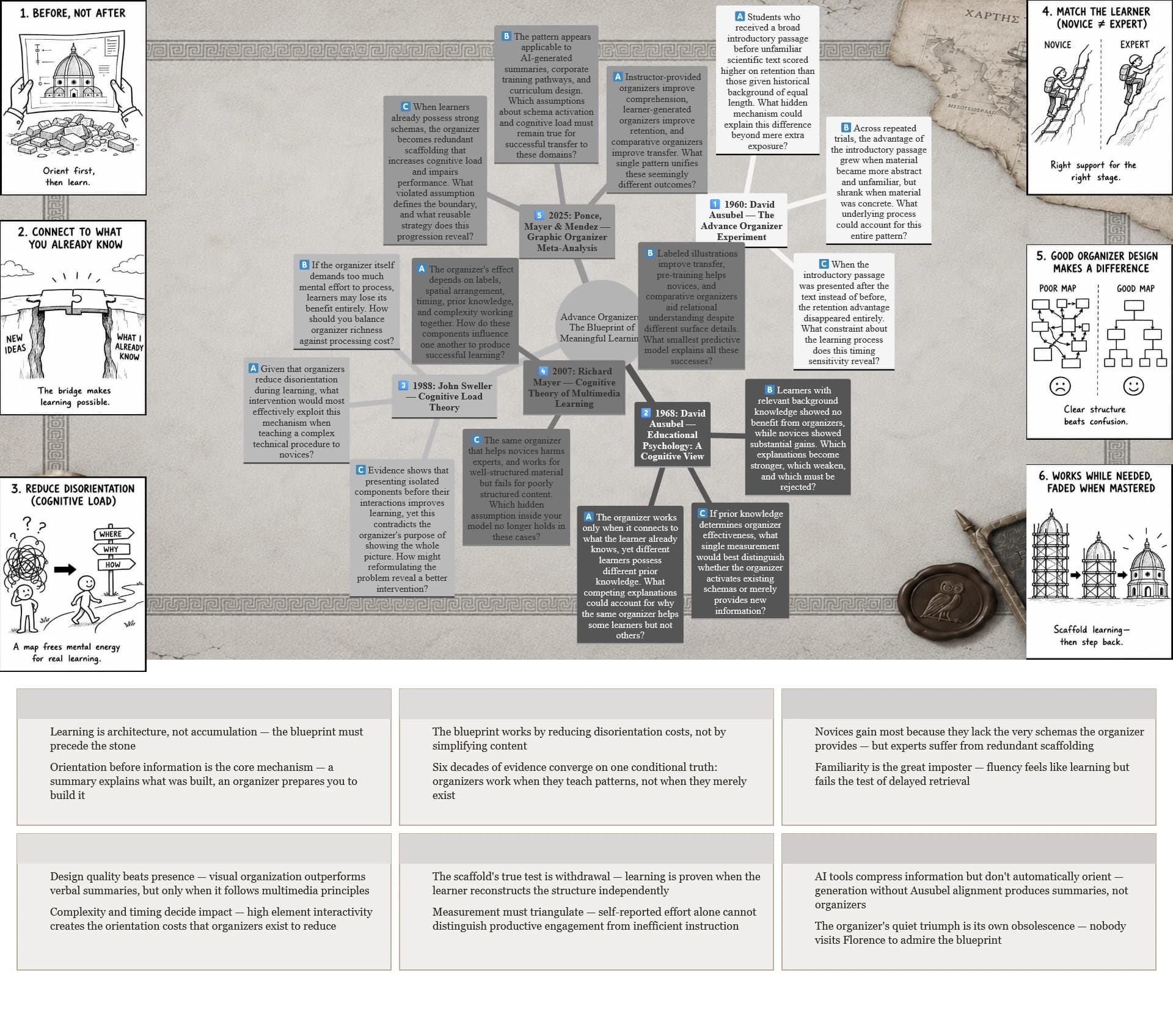
Scaffolding and Cognitive Load: How Advance Organizers Free Working Memory?
Michael E. Bernard of the University of Melbourne studied 225 fifth- and sixth-form students learning a taxonomy of behaviour-management concepts, comparing advance organizers, post organizers, and instructional sequencing. Both advance and post organizers improved retention of superordinate–coordinate–subordinate relationships, while organizers did not improve initial learning of individual concepts and instructional sequence had no effect. ([Sage Journals][7])
| Audience / Industry / Use Case | Research Finding → Your Next Rep |
|---|---|
| Secondary-school teachers | Both advance organizers and post organizers improved retention of the relationships among concepts. The finding supports using a concept map or hierarchical structure to organize relationships before or after detailed content, with delayed retention as the outcome. ([Sage Journals][7]) |
| Corporate compliance trainers | Organizers did not significantly improve initial learning of the individual concepts, but they affected retention of the taxonomy. This distinguishes reduced organizational burden from immediate acquisition and supports evaluating long-term recall, not only end-of-session performance. ([Sage Journals][7]) |
| Instructional-design teams | Changing the sequence in which the concepts were taught did not influence learning or retention, while organizers did affect relational retention. The evidence favors pre-organizing relationships over assuming that rearranging presentation order alone will construct schemas. ([Sage Journals][7]) |
ZPD vs Scaffolding vs Guided Discovery: What's the Difference?
Sun-Geun Baek and Kyoung Jin Kim at Seoul National University conducted a 2003 quasi-experiment with 59 four- and five-year-old children learning number concepts, comparing four weeks of dynamic-assessment-based instruction with general instruction. Dynamic-assessment instruction significantly improved number-concept learning for both ages, with F=12.34 for four-year-olds and F=20.03 for five-year-olds. ([ResearchGate][8])
| Audience / Industry / Use Case | Research Finding → Your Next Rep |
|---|---|
| Early-childhood mathematics | Four-year-olds receiving dynamic-assessment-based instruction showed a significant learning effect, F=12.34, p<.01. The procedure operationalized the ZPD through assessment, mediation, and retesting rather than treating independent pretest performance as the complete measure of capability. ([ResearchGate][8]) |
| Kindergarten intervention programs | Five-year-olds also showed a significant effect, F=20.03, p<.01. The finding demonstrates that dynamic assessment can combine diagnosis with scaffolding. ([ResearchGate][8]) |
| Learning-potential assessment | Among five-year-olds, the experimental group's mean score rose from 12.24 to 16.17, whereas the control group's mean rose from 12.24 to 13.00. The difference illustrates the practical value of using ZPD-sensitive mediation to convert assessment information into instruction. ([ResearchGate][8]) |
Can Scaffolding Build Metacognition and Self-Regulated Learning?
Bracha Kramarski, Zemira Mevarech, and Marsel Arami of Bar-Ilan University studied 91 seventh graders in 2002, comparing cooperative mathematics learning with and without metacognitive instruction. The metacognitive condition significantly outperformed cooperative learning alone on authentic and standard tasks, with gains occurring among both lower- and higher-achieving students. ([ResearchGate][9])
| Audience / Industry / Use Case | Research Finding → Your Next Rep |
|---|---|
| Secondary-school mathematics | COOP+META outperformed cooperative learning alone on authentic mathematical tasks, with effect sizes of .39–1.00 across several solution criteria. Metacognitive scaffolding through comprehension, connection, strategic, and reflection questions supported planning, monitoring, and evaluating during unfamiliar problems. ([ResearchGate][9]) |
| Mathematics intervention programs | The treatment also improved standard tasks; lower- and higher-achieving students both benefited, with lower achievers showing a larger standard-task effect size of 1.93 versus 1.06 for higher achievers. The finding indicates that metacognitive support was not restricted to novel authentic tasks. ([ResearchGate][9]) |
| Problem-solving curricula | On authentic tasks, the metacognitive condition improved reference to all data, organization, and information processing, while the lower-achieving group did not show a significant advantage on making and justifying an offer. That boundary matters when measuring self-regulated learning: gains were not uniform across every reasoning component. ([ResearchGate][9]) |
Teacher Scaffolding vs Peer Scaffolding vs Collaborative Scaffolding?
Robert E. Slavin of Johns Hopkins University experimentally separated cooperative rewards, group task structure, and focused instructional scheduling among 336 fourth- and fifth-grade students learning language mechanics over nine weeks. Cooperative rewards improved performance relative to traditional rewards, whereas group tasks produced lower performance than individual tasks, and the focused schedule contributed to achievement. ([Taylor & Francis Online][10])
| Audience / Industry / Use Case | Research Finding → Your Next Rep |
|---|---|
| Elementary-school cooperative-learning programs | Cooperative reward structures produced greater achievement than traditional rewards. The finding shows that collaborative scaffolding depends partly on how interdependence is structured, not merely on placing students into groups. ([Taylor & Francis Online][10]) |
| Peer-tutoring coordinators | Group task structure performed worse than individual task structure in this experiment, despite the broader cooperative framework. The result cautions against assuming that peer scaffolding automatically improves learning; task structure must preserve productive individual engagement. ([Taylor & Francis Online][10]) |
| School instructional-design teams | A focused instructional schedule was an important component of achievement. Thus teacher scaffolding, peer interaction, and collaborative structures need an instructional sequence. ([Taylor & Francis Online][10]) |
Scaffolding vs Differentiation vs Tutoring vs Direct Instruction?
David J. Leach and Susan W. Siddall compared four parent-delivered reading methods with 40 Grade-1 children in 1990: hearing reading, paired reading, pause–prompt–praise, and direct instruction. Parents implemented their assigned approach for 10–15 minutes each school day over ten weeks, and the study found faster progress under paired reading and direct instruction than under simply hearing children read. ([Murdoch Research Portal][11])
| Audience / Industry / Use Case | Research Finding → Your Next Rep |
|---|---|
| Grade-1 family-literacy programs | Additional instructional strategies in paired reading and direct instruction produced faster reading progress than simply hearing the child read. The comparison demonstrates that tutoring gains depended on what the adult actually did during the reading interaction. ([Murdoch Research Portal][11]) |
| Parent-training programs | The study separated hearing reading from approaches that added explicit intervention, including pause, prompt, praise and direct instruction. This provides a concrete distinction between passive support and active scaffolding within a reading task. ([ResearchGate][12]) |
| Early-literacy service providers | Parents received brief training in the intervention procedures and then implemented them at home while children continued normal school instruction. The design demonstrates a tutoring intervention operating alongside ordinary instruction. ([ResearchGate][12]) |
Retrieval Practice + Scaffolding: How Quizzes Replace Visual Supports?
In 2018, Fiechter and Benjamin developed diminishing-cues retrieval practice and later tested adaptive-cues retrieval practice across six experiments using English–Iñupiaq word pairs. Adaptive cues helped when standard retrieval practice was ineffective, while adaptive, diminishing-cue, and standard retrieval produced similar memory enhancement when testing itself was already effective; diminishing cues required the least practice time. ([PubMed][13])
| Audience / Industry / Use Case | Research Finding → Your Next Rep |
|---|---|
| University language courses | Across six experiments, adaptive-cues retrieval practice was more effective than diminishing-cues retrieval practice when standard retrieval was ineffective. Adaptive scaffolding can supply help at the point of failed retrieval. ([PubMed][13]) |
| Corporate vocabulary and compliance training | When standard retrieval was already effective, adaptive, diminishing-cue, and standard retrieval produced approximately equivalent memory enhancement. This demonstrates a boundary condition: additional scaffolding is not automatically useful when learners can already retrieve successfully. ([PubMed][13]) |
| Mobile-learning designers | Diminishing-cues retrieval produced comparable enhancement while requiring the least practice time in the relevant comparisons. A practical fading workflow can reduce cues across repeated quizzes while preserving the testing effect. ([PubMed][13]) |
Over-Scaffolding Mistakes: Why Experts Learn Less With More Support?
Jonathan G. Tullis, Robert L. Goldstone, and Andrew J. Hanson at Indiana University tested different assistance schedules on a novel mouse-movement task in 2015, including constant, no, probabilistic, alternating, and faded assistance. Constant assistance improved performance during training relative to no assistance but produced the worst unassisted test performance, while faded assistance produced the best unassisted performance. ([PubMed][14])
| Audience / Industry / Use Case | Research Finding → Your Next Rep |
|---|---|
| Motor-skill training programs | Constant assistance produced better training performance than no assistance but subsequently produced the worst unsupported performance. The over-scaffolding result shows why immediate fluency cannot substitute for independent performance. ([PubMed][14]) |
| Professional simulation training | Faded assistance produced the best unassisted test performance among the tested schedules. Fading changed the relationship between supported practice and later autonomy. ([PubMed][14]) |
| Skills-training software | The experiment included constant, probabilistic, alternating, faded, and no-assistance schedules, allowing assistance amount and timing to vary independently. The relevant dependency measure was unassisted performance, so training systems should test the skill after removing support. ([Taylor & Francis Online][15]) |
Concept Maps vs Mind Maps vs Graphic Organizers: Which Scaffold Works?
Pasana Chularut and Teresa K. DeBacker studied 79 ESL students in a randomized pretest–posttest experiment in 2004, comparing concept mapping with individual study plus discussion. The concept-mapping group showed significantly greater gains across achievement, self-monitoring, knowledge-acquisition strategies, and self-efficacy, with outcomes moderated by English proficiency. ([ScienceDirect][16])
| Audience / Industry / Use Case | Research Finding → Your Next Rep |
|---|---|
| University ESL programs | Concept mapping produced greater gains in achievement than individual study plus discussion. The finding supports using a structured concept map to externalize relationships among ideas while studying English-language texts. ([ScienceDirect][16]) |
| Academic-language support programs | The concept-mapping condition also produced greater gains in self-monitoring and knowledge-acquisition strategies. The map functioned as more than a visual summary: constructing relationships created a metacognitive activity around comprehension. ([ScienceDirect][16]) |
| Multilingual higher education | The study found a significant interaction involving method, time, and English-proficiency level for achievement, self-monitoring, and self-efficacy. That boundary means knowledge visualization should be evaluated across proficiency levels. ([ScienceDirect][16]) |
AI Scaffolding in Education: Can Adaptive Tutors Do Contingent Fading?
In 2026, Chrysanthi Melanou and Maik Beege studied 175 first-semester university students using generative AI as a tutor under full-scaffolding, light-scaffolding, and no-scaffolding conditions. All groups improved in knowledge, critical thinking, and reflective use, but the three scaffolding conditions did not significantly differ, leaving the value of scaffolding intensity in short AI-supported sessions unresolved. ([MDPI][17])
| Audience / Industry / Use Case | Research Finding → Your Next Rep |
|---|---|
| University AI-literacy courses | Across all conditions, students improved in knowledge, critical thinking, and reflective AI use, while motivation remained stable. The result demonstrates learning during AI tutoring but does not establish that external scaffolding caused those gains. ([MDPI][17]) |
| Higher-education AI-tutor designers | Full scaffolding combined Goal–Context–Constraints prompting, iterative refinement, source verification, and reflection; light scaffolding retained only the initial prompting structure. Neither significantly outperformed the other or the control, so adaptive fading cannot yet be inferred from scaffolding intensity alone. ([MDPI][17]) |
| AI-learning evaluation teams | Intrinsic and extraneous cognitive load decreased across the session, while no significant between-condition differences appeared. The study supports measuring cognitive load, critical thinking, reflective use, and knowledge gain. ([MDPI][17]) |
The evidence also exposes an important knowledge gap: several claims about “soft beats hard,” optimal fading rates, or AI achieving genuine contingency are stronger than the individual historical experiments establish. The studies above support specific relationships under specific conditions; they do not establish a universal scaffolding schedule across learners, subjects, or AI systems. ([link.springer.com][18])
Scaffolding in AI Learning Tools: From Amakuni's Broken Swords to Adaptive AI Scaffolding
According to Japanese tradition, the swordsmith Amakuni Yasutsuna stood outside his workshop as Emperor Mommu's soldiers returned from battle. Too many carried broken swords. The failure was not the warriors; it was the support hidden inside the steel. Amakuni withdrew for weeks, reworked every stage of forging, folding, tempering, and differential hardening, then presented stronger blades that survived the next campaign. His workshop illustrates instructional scaffolding better than most classrooms. The forge supplied exactly the support the steel required at each stage, but no hammer remained attached to the finished katana. In the same way, AI scaffolding, adaptive AI tutors, AI learning assistants, intelligent tutoring systems, educational AI, adaptive learning platforms, mind maps, concept maps, knowledge graphs, and instructional design should provide temporary instructional support, contingent guidance, adaptive instruction, and cognitive apprenticeship that gradually disappear through fading, knowledge tracing, learner modeling, and transfer of responsibility. A learning system that never removes its support resembles a sword that cannot leave the anvil: perfectly assisted, permanently unfinished.
Scaffolding Across AI Learning Workflows
How to Assess Prior Knowledge Before Scaffolding? Diagnostic Tools for Teachers
Paul Ayres, a cognitive-load researcher at the University of New South Wales, studied 13-year-old students learning a mathematical task under isolated-element, integrated-task, and mixed conditions, with learners distinguished by prior knowledge. ([Wiley Online Library][1]) The part-task approach reduced cognitive load for everyone but improved learning only for low-prior-knowledge learners, while higher-prior-knowledge learners learned more from integrated tasks, demonstrating that scaffolding effectiveness depends on diagnosed readiness rather than support intensity alone. ([Wiley Online Library][2])
| Audience / Industry / Use Case | Research Finding → Your Next Rep |
|---|---|
| Secondary-school mathematics | Isolating interacting mathematical elements lowered cognitive load, but the learning benefit appeared only among low-prior-knowledge learners; use a Prior Knowledge Profile, mastery checks, and dynamic assessment to distinguish learners before selecting part-task scaffolding, then compare post-test performance with integrated-task instruction. ([Wiley Online Library][1]) |
| Corporate technical upskilling | Higher-prior-knowledge learners performed significantly better with fully integrated tasks, whereas novices benefited from isolated elements, showing why a fixed learner model can miscalibrate adaptive learning; route learners by diagnostic performance and measure subsequent task accuracy. ([Wiley Online Library][1]) |
| Adaptive-learning platforms | The mixed strategy failed to benefit either prior-knowledge group, while isolated and integrated instruction produced different effects by readiness; this provides a concrete boundary condition for knowledge diagnostics and personalized education: test whether the assigned support improves independent performance. ([Wiley Online Library][2]) |
How Do Advance Organizers Reduce Cognitive Overload for Faster Comprehension?
Joseph T. Lawton, an educational psychologist, reported a 1977 experiment with 60 six-year-olds and 60 ten-year-olds randomly assigned to organizer and control conditions while learning classification rules and subject-matter concepts. ([Sage Journals][3]) The organizer groups learned both types of concepts relative to controls, six-year-olds showed accelerated logical operations, and sequential transfer occurred between related concepts and logical operations, although task complexity constrained performance. ([Sage Journals][3])
| Audience / Industry / Use Case | Research Finding → Your Next Rep |
|---|---|
| Elementary-school curriculum design | Organizer-supported learners acquired both high-order classification rules and subject-matter concepts, linking concept previews, schema construction, and hard scaffolding before detailed instruction; place the organizing structure before the new material and assess concept acquisition against a comparable no-organizer condition. ([Sage Journals][3]) |
| Early-years mathematics | Six-year-olds using the experimental instruction advanced in logical operations beyond the expected developmental stage, suggesting that an advance organizer can provide structure for reasoning; measure performance on the same logical operations before and after instruction. ([Sage Journals][3]) |
| LMS-based professional learning | The study found sequential transfer between related subject-matter concepts and logical operations, but task complexity seriously affected performance; use AI advance organizers to expose the conceptual structure first, then test whether learners apply it to a related task. ([Sage Journals][3]) |
Mind Maps for Scaffolding Writing, Reading, and Revision?
Phillip B. Horton and colleagues at the Florida Institute of Technology published a 1993 meta-analysis of 19 studies examining concept mapping in science instruction, synthesizing achievement and attitude outcomes across different science subjects and comparison conditions. ([Wiley Online Library][4]) The analysis found positive effects on achievement and attitudes, stronger achievement differences in biology, and smaller effects when concept maps were compared with placebo activities rather than traditional controls. ([ResearchGate][5])
| Audience / Industry / Use Case | Research Finding → Your Next Rep |
|---|---|
| Secondary-school science | Across 19 studies, concept maps produced positive achievement effects, supporting mind maps, knowledge graphs, and scaffolding as ways to externalize relationships rather than isolated facts; use a map during instruction and compare subsequent concept-test performance with ordinary instruction. ([ResearchGate][5]) |
| Biology education | Achievement differences were strongest in biology, where hierarchical and relational organization fits the structure of the subject particularly well; use AI concept maps to expose relationships among biological concepts, then require independent reconstruction to test whether the structure was learned rather than copied. ([ResearchGate][5]) |
| Professional training and revision | Concept-map effects were smaller against placebo activities than against traditional controls, showing that some benefit may come from active engagement rather than mapping alone; combine dual coding with active reconstruction and evaluate whether unaided maps preserve more relationships than passive rereading. ([ResearchGate][5]) |
How to Scaffold Knowledge Transfer: From Near Transfer to Far Transfer?
A 2017 randomized study by researchers in physiotherapy education compared concept-map completion with concept-map study after learners studied worked examples of clinical reasoning for electrotherapeutic treatment decisions. ([PubMed Central (PMC)][6]) Concept-map completion produced significantly better near transfer (p = .010) and far transfer (p < .001), while conceptual-knowledge scores did not differ significantly, showing that reconstructing relationships can improve transfer without necessarily increasing immediate factual knowledge. ([PubMed][7])
| Audience / Industry / Use Case | Research Finding → Your Next Rep |
|---|---|
| Medical and physiotherapy education | Learners completing concept maps after worked examples outperformed map-study learners on near transfer (p = .010); concept frameworks, knowledge relationships, and transfer-appropriate processing supported reconstruction of clinical reasoning. ([PubMed][7]) |
| Clinical reasoning training | The same completion condition produced a large effect on far transfer (p < .001), where solution rationales differed from studied examples; require learners to reconstruct links among symptoms, mechanisms, and interventions, then score unfamiliar cases. ([Springer][8]) |
| University professional programs | Conceptual-knowledge scores did not significantly differ between mapping conditions despite transfer gains, separating near transfer → far transfer from simple knowledge acquisition; assess both concept recall and unfamiliar-problem performance so a transfer gain is not misreported as greater factual knowledge. ([PubMed][7]) |
How to Reduce Cognitive Overload Without Removing Productive Struggle?
Paul Ayres of the University of New South Wales studied 13-year-old students learning mathematics through isolated-element, integrated, and mixed instructional conditions. ([Wiley Online Library][1]) Isolating elements lowered cognitive load for all learners but improved learning only for low-prior-knowledge students, whereas higher-prior-knowledge students learned significantly more from integrated tasks, demonstrating an expertise-reversal boundary for load reduction. ([Wiley Online Library][2])
| Audience / Industry / Use Case | Research Finding → Your Next Rep |
|---|---|
| Novice mathematics learners | Part-task instruction reduced intrinsic cognitive load and improved learning for low-prior-knowledge learners; structured notes, chunking, and temporary scaffolding can reduce interacting elements while preserving the learner's responsibility for the next step, measured through subsequent integrated problems. ([Wiley Online Library][1]) |
| Advanced university learners | Higher-prior-knowledge students learned significantly more from fully integrated tasks than isolated elements, showing that excessive simplification can undermine learning through expertise reversal; remove unnecessary decomposition once prior knowledge permits integrated problem solving and compare post-test accuracy. ([Wiley Online Library][2]) |
| Professional development platforms | The mixed progression from isolated elements to whole tasks was ineffective for both prior-knowledge groups, indicating that merely adding intermediate stages does not guarantee productive struggle; diagnose readiness first, select the appropriate task complexity, and evaluate independent integrated performance. ([Wiley Online Library][1]) |
How to Scaffold Vocabulary for ESL and Healthcare, Engineering Students?
Yuichi Watanabe of the University of Hawai‘i studied 231 Japanese university students randomly assigned to 10 conditions involving unfamiliar foreign-language vocabulary, different marginal glosses, appositives, and a translation task, with immediate and delayed tests. ([Cambridge University Press][9]) Single- and multiple-choice marginal glosses improved vocabulary learning relative to no-cue and appositive conditions, but the two gloss types did not differ significantly and translation produced no additional effect. ([Cambridge University Press][9])
| Audience / Industry / Use Case | Research Finding → Your Next Rep |
|---|---|
| ESL and ELL programs | Both single- and multiple-choice glosses produced significantly better vocabulary outcomes than no cues, showing that glossaries, terminology lists, and directive-to-supportive scaffolding can reduce an immediate vocabulary barrier; measure delayed word recognition. ([Cambridge University Press][9]) |
| Healthcare education | Single-choice and multiple-choice glosses did not significantly differ, so increasing glossary complexity was not itself demonstrated to improve learning; provide concise domain vocabulary support and then assess independent use of terms in clinical context. ([Cambridge University Press][9]) |
| Engineering and technical onboarding | Adding a translation task produced no significant advantage despite the glossary manipulation, separating terminology access from additional task complexity; use language-learning support to establish word meaning, then measure whether learners can apply the terminology in technical explanations. ([Cambridge University Press][9]) |
Scaffolding Lesson Plans for Math, Science, History, and Coding?
Russell Gersten, Thomas Keating, and Wesley Becker of the University of Oregon reported longitudinal follow-ups of Project Follow Through students who had received Direct Instruction in grades 1–3, comparing them with local students receiving traditional education. ([ResearchGate][10]) Among 1,097 Follow Through and 970 comparison students, effects persisted into grades 5–6, with the strongest pooled effects in reading and additional differences in mathematics, science, spelling, graduation, retention, and college acceptance. ([ResearchGate][10])
| Audience / Industry / Use Case | Research Finding → Your Next Rep |
|---|---|
| Elementary literacy programs | Former Direct Instruction students showed a pooled effect of 0.51 SD on WRAT Level II reading and 0.47 SD on Level I reading, supporting sequenced learning objectives, modelling, guided practice, and checks for mastery; evaluate later reading achievement. ([ResearchGate][10]) |
| STEM curriculum teams | The longitudinal sample showed a 0.23 SD pooled effect for math problem solving and 0.23 SD for science, indicating that structured progression can extend beyond basic recall into problem solving; use worked examples, structured practice, and planned fading, then assess unfamiliar problems. ([ResearchGate][10]) |
| District-scale learning programs | Follow-up evidence showed fewer grade retentions and substantially higher college acceptance in some sites; for example, New York college acceptance was 34% versus 17% in the comparison group, demonstrating why implementation should track downstream outcomes. ([ResearchGate][10]) |
How to Build Durable Schemas With Spaced Repetition and Interleaving?
John B. Shea and Robyn L. Morgan of the University of Colorado studied 72 college students learning three motor tasks under blocked versus random practice schedules, then tested retention after 10 minutes or 10 days and transfer to tasks of equal or greater complexity. ([DOI][11]) Random practice produced poorer acquisition performance but superior retention under changed conditions and superior transfer, with the largest transfer advantage on the more complex task. ([Gwern][12])
| Audience / Industry / Use Case | Research Finding → Your Next Rep |
|---|---|
| Sports and motor-skill coaching | Random rather than blocked practice produced better delayed retention, illustrating interleaving as a way to require repeated reconstruction of the appropriate action; mix related skills after initial familiarization and measure delayed performance. ([DOI][11]) |
| Technical skills training | Random-practice learners transferred better than blocked-practice learners, consistent with durable schemas formed through variable retrieval rather than repetition of one response sequence; alternate related procedures and test an unfamiliar sequence after a delay. ([Gwern][12]) |
| Advanced professional practice | The transfer advantage was greatest when the transfer task had greater complexity, indicating a boundary relevant to deliberate practice, interleaving, and retrieval-based reconstruction: increase variation and complexity after basic execution is established, then assess performance on a harder novel task. ([DOI][11]) |
Retrieval Practice Examples: Flashcards, Exit Tickets, and AI Quizzes?
Herbert F. Spitzer of Iowa State University tested 3,605 sixth-grade students across nine Iowa cities, using approximately 600-word articles and multiple-choice retention tests scheduled at different points over 63 days. ([ResearchGate][13]) Previously tested students subsequently recalled more than students encountering their first test at the same delay; one comparison at a week found 11.8 correct answers after prior testing versus 7.9 without it, showing that testing itself altered later retention. ([PubMed Central (PMC)][14])
| Audience / Industry / Use Case | Research Finding → Your Next Rep |
|---|---|
| K–12 classroom teachers | Prior testing produced higher later recall than an equivalent first test, directly demonstrating the testing effect, retrieval practice, and long-term retention; replace some rereading with low-stakes retrieval and compare delayed scores against material first tested only at the final assessment. ([PubMed Central (PMC)][14]) |
| EdTech assessment platforms | In the Iowa study, 3,605 sixth-graders completed tests across schedules extending to 63 days, making AI quizzes, exit tickets, and spaced retrieval operational rather than merely evaluative; schedule repeated retrieval and track performance at fixed delays. ([ResearchGate][13]) |
| Corporate learning systems | Previously tested learners retained more after a one-week interval, with 11.8 versus 7.9 correct responses in one comparison; use retrieval resources after instruction and report delayed recall separately from immediate quiz performance. ([ResearchGate][15]) |
What Is the Best Instructional Design Model for Scaffolding? ADDIE vs UDL vs 4C/ID
Project Follow Through, a large U.S. federal educational research project, compared multiple instructional models across schools serving low-income communities; later longitudinal analyses by Russell Gersten, Thomas Keating, and Wesley Becker followed Direct Instruction participants against local comparison students. ([ResearchGate][10]) The longitudinal evidence showed persistent achievement differences, fewer grade retentions, and higher college acceptance in some cohorts, supporting coherent implementation and fidelity more directly than any claim that one abstract design framework universally dominates another. ([ResearchGate][10])
| Audience / Industry / Use Case | Research Finding → Your Next Rep |
|---|---|
| Corporate LMS design teams | Students exposed to the coherent Direct Instruction model retained advantages years after the initial intervention, including a 0.51 SD pooled reading effect; an integrated pathway linking advance organizers, modelling, practice, and assessment should be evaluated through longitudinal outcomes. ([ResearchGate][10]) |
| University program designers | Effects were not uniform across all domains: reading effects were strongest, while mathematics, science, language, and spelling effects were smaller; implementation fidelity needs domain-specific outcome measures. ([ResearchGate][10]) |
| Enterprise onboarding programs | Some cohorts showed downstream differences in retention and college acceptance, but site-level variation also occurred; coherent learning pathways, micro-sequencing, and progress monitoring should be evaluated across sites and cohorts. ([ResearchGate][10]) |
How to Diagnose Misconceptions With Formative Assessment?
Joseph Nussbaum and Shimshon Novick reported a 1982 classroom study of sixth-grade students learning the particulate model of gases, using an instructional sequence that first exposed students' alternative frameworks, then created conceptual conflict and finally supported accommodation. ([DeepDyve][16]) The intervention created substantial cognitive challenge but produced complete adoption of the intended conception in only 1 of 17 students, while the remainder retained intermediate or alternative conceptions, showing why diagnosis must continue after instruction rather than equating participation with conceptual change. ([ERIC][17])
| Audience / Industry / Use Case | Research Finding → Your Next Rep |
|---|---|
| Middle-school science | The study deliberately elicited alternative frameworks before teaching the scientific model, operationalizing misconception analysis, diagnostic assessment, and formative questioning as a prerequisite to remediation; score explanations for the initial conception before introducing the discrepant event. ([ERIC][18]) |
| Science teacher education | Only 1 of 17 students adopted the intended conception completely, while others occupied intermediate conceptions or retained misconceptions, showing that a single posttest can hide persistent knowledge gaps; repeat diagnostic probes after instruction and classify the actual conception rather than simply marking answers correct. ([ERIC][17]) |
| Adaptive learning systems | The researchers found that learners could progress through intermediate conceptions rather than moving directly from misconception to scientific understanding; use a diagnostic → formative → mastery loop that detects intermediate states and adapts subsequent explanations, with conceptual-response categories as the measurable outcome. ([ERIC][17]) |
Adaptive Hint Systems: How AI Scaffolds Math, Coding, and Critical Thinking?
Ekaterina Kochmar and colleagues at Korbit Technologies, the University of Cambridge, ÉTS Montréal, and McGill/Mila evaluated automated personalized feedback in a dialogue-based intelligent tutoring system using 796 annotated student–system interactions from 183 machine-learning students in early 2020. ([PubMed Central (PMC)][19]) Personalized hint selection based on student profiles and prior attempts produced significantly higher learning gains before second attempts for the deep-personalization condition, while generated explanations and mathematical hints provided additional useful interventions. ([PubMed Central (PMC)][19])
| Audience / Industry / Use Case | Research Finding → Your Next Rep |
|---|---|
| AI coding tutors | Personalized interventions selected from the learner's profile and latest solution attempt improved subsequent solution success relative to baseline, directly illustrating adaptive hint systems, soft scaffolding, and learner-state modelling; expose only the next useful hint and measure correctness on the subsequent attempt. ([PubMed Central (PMC)][19]) |
| Machine-learning education platforms | The experiment covered 796 student–system interactions from 183 learners, with deep personalization outperforming baseline significantly before second attempts (p = .03005); use knowledge tracing or comparable learner-state signals to select hints and evaluate immediate correction separately from delayed learning. ([PubMed Central (PMC)][19]) |
| AI educational dashboards | Wikipedia-based explanations produced comparable learning gains to personalized explanations, while experts judged a large proportion of mathematical hints useful; recommendation systems, personalized explanations, and hints can coexist, but their delayed conceptual benefit requires separate assessment because the experiment primarily measured post-hint success. ([PubMed Central (PMC)][19]) |
Fading Instructional Support Without Creating Dependency?
Janneke van de Pol, Monique Volman, Frans Oort, and Jos Beishuizen studied 30 social-studies teachers and 768 students aged 12–15 in an authentic classroom experiment on scaffolding, varying support contingency and students' independent working time. ([DOI][20]) Low-contingent support worked better when independent working periods were short, whereas high-contingent support worked better when independent working periods were long, showing that effective fading depends on when learners are expected to work independently rather than simply reducing help on a fixed schedule. ([Vrije Universiteit Amsterdam][21])
| Audience / Industry / Use Case | Research Finding → Your Next Rep |
|---|---|
| Secondary-school group learning | The 768-student study found that increasing support contingency was accompanied by increased independent working time, linking progressive disclosure, contingent scaffolding, and learner autonomy; monitor independent work periods alongside support use. ([DOI][20]) |
| Adaptive learning systems | Low-contingent support was more effective when independent work periods were short, whereas high-contingent support became more effective when independent work periods were long; gradual release needs to respond to learner activity. ([Vrije Universiteit Amsterdam][21]) |
| Professional performance support | Higher contingent support increased students' appreciation of support, while achievement depended jointly on contingency and independent work; evaluate over-scaffolding, help frequency, and unaided performance together so fading does not become a proxy metric for learning. ([DOI][20]) |
How to Measure Scaffolding Success? Independence Dashboards and Learning Analytics
Janneke van de Pol and colleagues' 2015 experimental classroom study directly measured achievement, task effort, support contingency, and independent working time among 768 students in 30 classes. ([DOI][20]) The study showed that scaffolding effectiveness depended on contingency and independent working time, demonstrating that measuring support delivery alone cannot establish learning success; outcomes must include what learners accomplish under changing levels of assistance. ([Vrije Universiteit Amsterdam][21])
| Audience / Industry / Use Case | Research Finding → Your Next Rep |
|---|---|
| Corporate training analytics | The study measured achievement alongside independent working time rather than treating support exposure as success, supporting independence dashboards, progress monitoring, and criterion-referenced assessment; report unaided task performance alongside help frequency to distinguish capability from assisted completion. ([DOI][20]) |
| Education analytics teams | Higher contingency did not produce one uniform achievement effect: its value depended on how long groups worked independently, showing why learning analytics should join support-use data with learner performance and task effort. ([Vrije Universiteit Amsterdam][21]) |
| Performance-support platforms | The researchers also measured students' appreciation of support and found higher appreciation with greater contingency, while achievement remained conditional on independent work; combine scaffold usage, independent accuracy, and delayed or unaided assessments before declaring a support system effective. ([DOI][20]) |