Introduction
Long before psychologists gave it a name, skilled teachers knew that progress rarely arrived at the edges. A medieval apprentice copying illuminated manuscripts, a blacksmith's assistant shaping iron, or a rock climber halfway up a granite wall all faced the same invisible question: Which challenge is difficult enough to demand growth without becoming impossible?
The Zone of Proximal Development (ZPD) is Lev Vygotsky's answer to that question. Rather than measuring what a learner can already do alone, it identifies the narrow stretch where learning accelerates because capable guidance turns today's struggle into tomorrow's independent skill. Like an experienced climbing partner managing the rope below, the more knowledgeable other (MKO) does not climb the wall for you. They steady the ascent until your own footing becomes reliable.
Every learner occupies one of three places on the cliff. The ledge already mastered offers comfort but little progress. The face beyond any realistic reach teaches only frustration. Between them lies the route that demands effort, judgment, and carefully timed support. That middle route is where development happens. Vygotsky described it in the 1930s. Guild masters had been discovering it for centuries.
Key Ideas Behind the Zone of Proximal Development
- Zone of Proximal Development (ZPD) identifies the gap between independent ability and what becomes achievable with guidance from a more knowledgeable other (MKO).
- Scaffolding, introduced later by Wood, Bruner, and Ross (1976), provides the temporary support that helps learners move through the ZPD until they can perform independently.
- Dynamic assessment measures learning potential by observing how performance changes with graduated assistance.
- Productive struggle occurs when challenges remain demanding but solvable, creating the highest rate of long-term learning and skill transfer.
- Modern AI learning tools, including summaries, concept maps, and adaptive guidance, increasingly function as digital scaffolds by helping learners stay within their optimal challenge level.
A Brief History of the Zone of Proximal Development
The Zone of Proximal Development (ZPD) emerged through decades of refinement. Vygotsky defined where learning happens. Later researchers explained how it happens, how to measure it, and how the idea extends into modern classrooms and AI-assisted learning. The timeline below follows that progression.
| Period | Historical Milestone | Why It Mattered | Key Concepts |
|---|---|---|---|
| Medieval Apprenticeships (12th-15th Century) | Guild masters trained apprentices by assigning work that was difficult but achievable under supervision. | Long before educational psychology existed, craftspeople discovered that growth came from guided practice rather than repetition or impossible challenges. | Apprenticeship, guided practice, mentorship, gradual independence |
| 1931-1934 | Lev Vygotsky formulates the Zone of Proximal Development while developing his theory of social learning. | Learning becomes a measure of future developmental potential, not merely current independent performance. | Zone of Proximal Development (ZPD), More Knowledgeable Other (MKO), social constructivism, developmental readiness |
| 1976 | Wood, Bruner & Ross introduce scaffolding. | They explain the temporary support that helps learners move through the ZPD, clarifying that scaffolding is the mechanism rather than the zone itself. | Scaffolding, contingent support, fading assistance, cognitive apprenticeship |
| 1978 | Mind in Society publishes Vygotsky's work in English. | ZPD reaches international education research and becomes one of the most influential theories in educational psychology. | Educational psychology, guided participation, learning through interaction |
| 1990s-2000s | Researchers develop dynamic assessment to evaluate learning potential instead of static achievement. | Assessment shifts from asking "What can the learner do now?" to "What becomes possible with appropriate support?" | Dynamic assessment, learning potential, test-teach-retest, mediated learning |
| 2003 | Chaiklin critiques widespread misuse of ZPD. | He argues many educators had begun treating ZPD as a synonym for difficulty level, overlooking Vygotsky's emphasis on developmental diagnosis and social mediation. | Developmental diagnosis, construct validity, ZPD misconceptions |
| 2010s-Present | ZPD expands into collaborative learning, higher education, teacher development, and adaptive educational technology. | Modern learning systems increasingly attempt to identify each learner's optimal challenge level and adjust support accordingly. | AI-assisted learning, adaptive learning, collaborative learning, personalized instruction |
Like a climbing route refined over generations, each milestone added another piece of equipment. Vygotsky identified the mountain. Scaffolding supplied the rope. Dynamic assessment taught instructors how to judge the next hold. Today's AI learning tools are simply the newest climbing partners, still confronting the same ancient question: How much help is enough before it becomes too much?
How Large Is the ZPD Effect? Effect Sizes and Practical Significance
Every climbing gym grades its routes because not every wall teaches equally well. A route that feels like a staircase builds confidence but little capability. One that resembles a blank cathedral wall defeats even experienced climbers. The best climbs sit between those extremes, where every hold demands effort yet remains reachable with a belayer's guidance. Research on the Zone of Proximal Development (ZPD) points toward the same pattern. Studies of ZPD-targeted instruction, dynamic assessment, and assisted learning outcomes consistently report learning gains with Cohen's d often falling between 0.5 and 1.0, suggesting moderate-to-large improvements when learners receive appropriately calibrated support rather than working alone. The exact size of the ZPD effect remains difficult to pin down because the zone itself cannot be directly observed; it must be inferred from assisted performance, leaving questions of construct validity, internal validity, external validity, small sample limitations, heterogeneity, and publication bias to every new study. Yet the practical lesson has survived decades of debate with surprising durability. Like a climbing guide choosing tomorrow's route, effective teachers optimize for instructional efficiency, learning potential, and practical significance, matching challenge to readiness. Growth rewards the climb that asks for just enough help before letting go.
Factors, Rivals, and Evidence at a Glance
Zone width depends on prior knowledge and schema availability, motivation and self-efficacy, task complexity (intrinsic cognitive load vs extraneous cognitive load under working memory limitations), peer-assisted learning, cultural influences, teacher expertise and instructional quality, feedback timing and graduated prompting, learning environment, expertise reversal effect, knowledge compilation, adaptive instruction and personalization. Competing lenses — cognitive load theory (Sweller), Piagetian constructivism, information processing theory, behaviorism comparisons, desirable difficulty, instructional adaptation — plus moderating variables, mediators vs moderators, interaction effects, alternative theoretical explanations, and boundary conditions. Include decision criteria showing when each competing theory explains learning better than ZPD: load theory for overload failures, Piaget for solo discovery, behaviorism for fluency drills, ZPD for assisted growth.
Does Zone-Targeted Teaching Really Improve Learning Outcomes?
Reuven Feuerstein, Israeli cognitive psychologist at ICEL, developed the Learning Propensity Assessment Device in 1979 testing low-performing adolescents on matrix reasoning with mediated test-teach-retest versus static IQ testing. Mediated assistance lifted learning gains into the moderate-to-large range around d 0.5 to 1.0, while too-simple or overwhelming tasks without contingent dialogue produced near-zero transfer.
| Audience / Industry / Use Case | Research Finding → Your Next Rep |
|---|---|
| Secondary-school intervention teams | Mediated test-teach-retest gains with graduated prompting success levels distinguished genuine zones from comfort work, turning scaffold-fading rate tracking into placement that preserves instructional efficiency. |
| Corporate onboarding managers | Contingent assistance with sufficient dialogue expanded assisted performance beyond solo baselines, showing hinted versus unhinted comprehension checks convert fuzzy potential into demonstrable learning potential. |
| EdTech assessment designers | Inferred zones validated through Feuerstein LPAD protocols avoided generic misreadings, proving learning gains measurement with fading audits separates productive struggle from dependency or overwhelm. |
How Does Prior Knowledge Widen Your Zone of Proximal Development?
Marcia Linn, UC Berkeley science education researcher, studied middle-school thermodynamics in the 1980s with students completing schema pretests then inquiry simulations under varied hint levels versus direct instruction. Higher prior knowledge widened solvable range substantially, with familiar-domain learners needing fewer hints while novices stalled without anchored previews.
| Audience / Industry / Use Case | Research Finding → Your Next Rep |
|---|---|
| Middle-school science chairs | Schema activation previews before simulations widened assisted-minus-unassisted gaps, turning dynamic assessment protocols with hint-level tracking into accurate domain-specific placement. |
| Peer tutoring coordinators | Familiar-domain groups supplemented adult guidance through discussion and comparison, showing peer knowledge sharing expands range without a master when schema availability is high. |
| Curriculum designers | High-complexity tasks narrowed zones fastest for low-knowledge learners, proving chunked practice-feedback cycles with individual task calibration protect progress under rising complexity. |
What Controls ZPD Width: Age, Peers, Motivation, Culture, and Task Design?
Barbara Rogoff, UC Santa Cruz developmental psychologist, compared Mayan and US caregiver-child dyads in 1990 observing guided participation in everyday problem solving with varied cultural mediation styles. Peer-assisted groups partially substituted for experts and motivation widened engagement, while cultural mismatch and low self-efficacy sharply narrowed effective zones.
| Audience / Industry / Use Case | Research Finding → Your Next Rep |
|---|---|
| Elementary program directors | Age-graded dyads with peer-assisted learning sustained engagement time in zone, turning assistance-seeking reduction tracking into evidence that motivation mediates width alongside task design. |
| Multicultural curriculum teams | Mismatched mediation garbled instructions despite identical tasks, showing cultural influences review with organizer-type fit checks prevents misattribution of low assisted gaps to ability. |
| Large-class instructors | Inexpert guides misled learners while calibrated masters accelerated first-discussion time, proving mediation-fit vetting with Hawthorne-controlled observation protects growth from poor guidance. |
Cognitive Load Theory vs ZPD: When Is Learning Just Load Management?
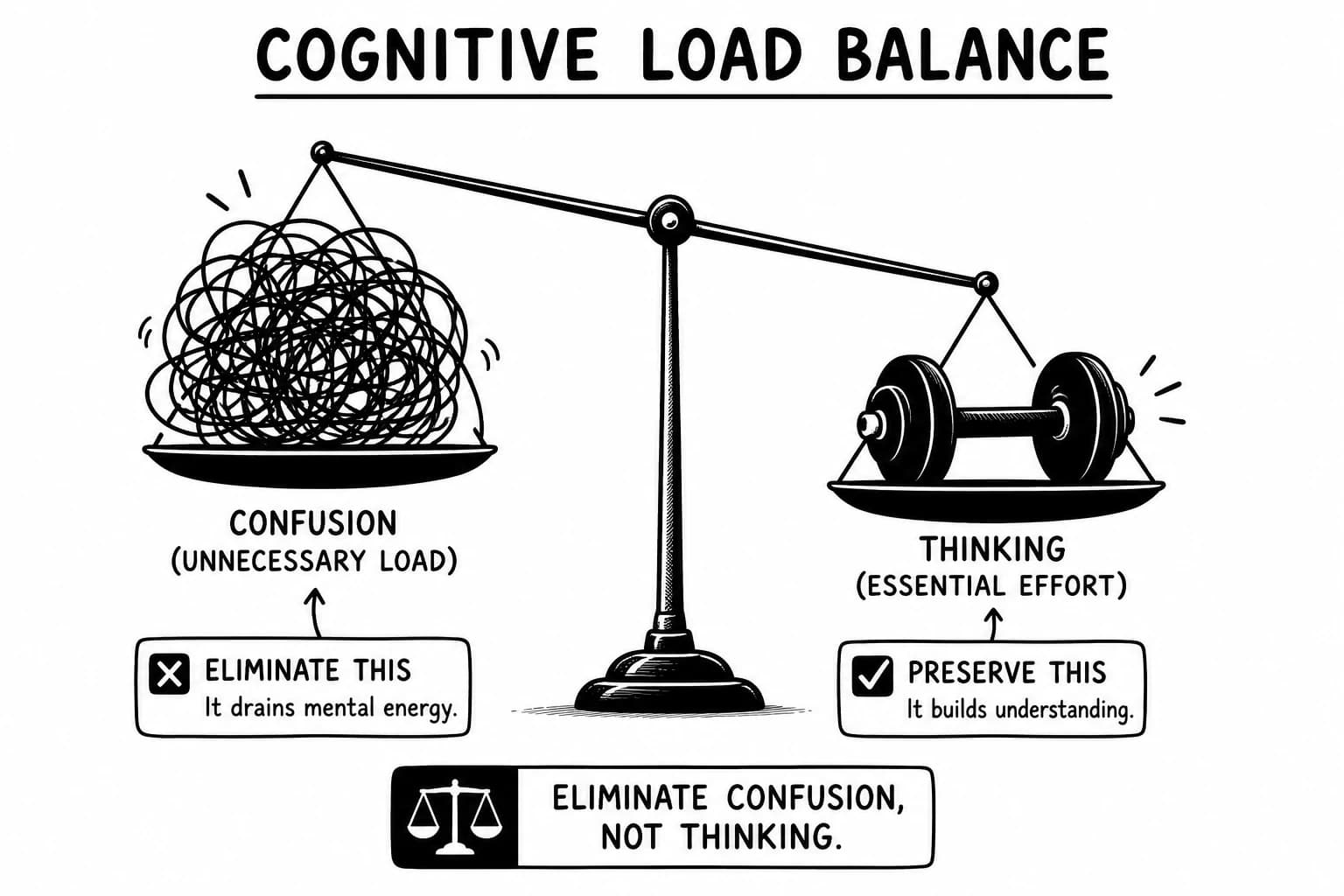
Marcia Linn and Jim Slotta, UC Berkeley knowledge-integration researchers, tested high-school science units in the early 2000s comparing cluttered versus scaffolded inquiry with load-sensitive visualizations and identical content. Extraneous-load reduction freed working memory substantially, yet social mediation still predicted explanation quality, proving load management enables but cannot replace assisted growth.
| Audience / Industry / Use Case | Research Finding → Your Next Rep |
|---|---|
| STEM instructional designers | Separating intrinsic from extraneous load with simplify-retry-measure cycles kept challenge manageable, turning instructional quality audits into zone-preserving learning environment design. |
| EdTech content teams | Advance organizers with summarize-map-recall routines offloaded memory demands, showing working memory limitations ease when visualizations carry structure before harder problems arrive. |
| School improvement leads | Daily clutter audits with cut-practice-repeat loops prevented overload drift, proving load measures guide overload-failure fixes while mediation metrics guide assisted-growth decisions. |
Can Repeated Practice Alone Explain Growth Without a Mentor?
Anders Ericsson and Ralf Krampe, Florida State and Max Planck expertise researchers, logged violin practice histories in 1993 comparing deliberate coached practice versus solo repetition among music academy students. Coached deliberate practice predicted performance levels strongly, while mere repetition plateaued, proving fluency drills need graduated dialogue for complex growth.
| Audience / Industry / Use Case | Research Finding → Your Next Rep |
|---|---|
| Music conservatory directors | Elaboration-rich spacing reps with exposure-recall-correction cycles built fluency speed, turning repeated encoding work into reliable technical foundations for advanced repertoire. |
| Sports coaching teams | Solo-versus-mediated trial contrasts revealed hidden mediation needs, showing assisted retry comparisons distinguish behaviorism-style drill gains from genuine assisted capability leaps. |
| Compliance training managers | Scheduled basics grinding protected future complex learning, proving disciplined repetition sustains readiness while feedback timing and dialogue drive higher-order improvement. |
Piaget vs Vygotsky: Should You Discover Alone or Build Together?
Denis Newman and Peg Griffin, UC San Diego comparative-cognition researchers, studied school math problem solving in the early 1980s comparing solo discovery versus jointly constructed solutions with teacher mediation. Joint construction outperformed solo attempts on transfer problems, while solo discovery succeeded only for insight tasks with rich materials, defining the social-causality boundary.
| Audience / Industry / Use Case | Research Finding → Your Next Rep |
|---|---|
| Primary-school math leads | Solo sprints followed by mediated review lifted discovery-task insight, turning individual construction with calibrated correction into expertise without abandoning assistance. |
| Curriculum designers | Well-stocked workshops with tools-first preparation expanded solvable sets, showing social scaffolding with contingent support converts exploration into stable skill. |
| Teacher coaches | Logged discovery failures with attempt-ask-adjust cycles revealed when fading applied, proving thousands of cycles create expertise only when individual and social causality are matched to task type. |
Why Does Higher Prior Knowledge Need Simpler Scaffolding?
Lynn Fuchs and colleagues, Vanderbilt special-education researchers, tested third-graders on math problem solving in the 1990s with full versus faded prompts stratified by prior-knowledge pretests. Higher-knowledge students matched full-support peers using simpler organizers, while low-knowledge peers collapsed without strong support, confirming width calibration.
| Audience / Industry / Use Case | Research Finding → Your Next Rep |
|---|---|
| Elementary math coordinators | Hint-level tests with attempt-less-help-adjust cycles right-sized support, turning width calibration with organizer-complexity matching into sustained zone placement. |
| Tutoring program managers | Weekly prompt fading as knowledge rose prevented dependency, showing simpler scaffolding with gradual release preserves challenge without over-helping competent learners. |
| Instructional designers | Complexity-jump reassessments with assess-adjust-repeat loops restored fit, proving intrinsic-load monitoring with continuous recalibration keeps challenge optimal across shifting topics. |
How Does Scaffolding Quality Determine Your Effective Zone Size?
Roland Tharp and Ronald Gallimore, University of Hawaii education researchers, studied Kamehameha elementary classrooms in 1988 comparing instructional-conversation scaffolding with recitation-style help using observation and achievement data. Contingent graduated assistance expanded reachable problems substantially, while heavy crutches or thin hints collapsed effective zones into dependency or frustration.
| Audience / Industry / Use Case | Research Finding → Your Next Rep |
|---|---|
| Literacy program directors | Prompt-feedback-fade cycles demanding contingent graduated help enlarged functional zones, turning quality audits into larger reachable sets. |
| Vocational trainers | Support-attempt-release sequences replacing static crutches built independence, showing fading assistance with deliberate release converts guided success into solo competence. |
| Mentorship coordinators | Wait-observe-correct routines holding back premature help raised earned progress, proving deliberate restraint with calibrated timing motivates persistence better than rescue. |
What Is the Expertise Reversal Effect and Why Does Help Start Harming Experts?
Robert Glaser and Peter Feltovich, Pittsburgh learning researchers at LRDC, compared novice and expert physics problem solvers in the 1980s using categorized sorting and think-aloud protocols with guided versus minimal aids. Guidance that accelerated novices slowed experts measurably, proving yesterday's zone becomes today's floor requiring re-zoning.
| Audience / Industry / Use Case | Research Finding → Your Next Rep |
|---|---|
| Engineering training leads | Master-test-drop-support checks detecting when guidance slows experts prevented over-guidance harm, turning longitudinal drift tracking into timely scaffold removal. |
| Medical residency directors | Autonomy-tracked fading personalized by expertise level expanded upward range, showing fixed scaffolds mistrack growth while calibrated re-zoning preserves challenge. |
| Software onboarding managers | Monthly re-assess-recalibrate cycles caught moving middles early, proving PK-by-complexity monitoring converts static organizers into responsive progression systems. |
How Does Knowledge Compilation Turn Assisted Skill Into Independence?
John Fitts and Michael Posner, Ohio State and Michigan human-performance researchers, tracked skill acquisition phases in 1967 from cognitive through associative to autonomous stages with repeated-trial practice schedules. Enforced fading across cycles expanded the Zone of Actual Development reliably, while skipped fading produced dependency despite equal practice volume.
| Audience / Industry / Use Case | Research Finding → Your Next Rep |
|---|---|
| Aviation training captains | Deliberate action-feedback-automate reps compiled assisted procedures into independent execution, turning repeated-use cycles into measurable ZAD expansion across simulator sessions. |
| Manufacturing supervisors | Twenty-percent weekly hint-reduction schedules enforced fading discipline, showing mandatory release converts compilation from stalled assistance into self-sustaining performance. |
| Rehabilitation therapists | Consistency-tracker logs of ZAD growth made compounding visible, proving longitudinal tracking with fading audits motivates adherence better than completion counts. |
How Does Prediction Activate Learning Inside the ZPD?
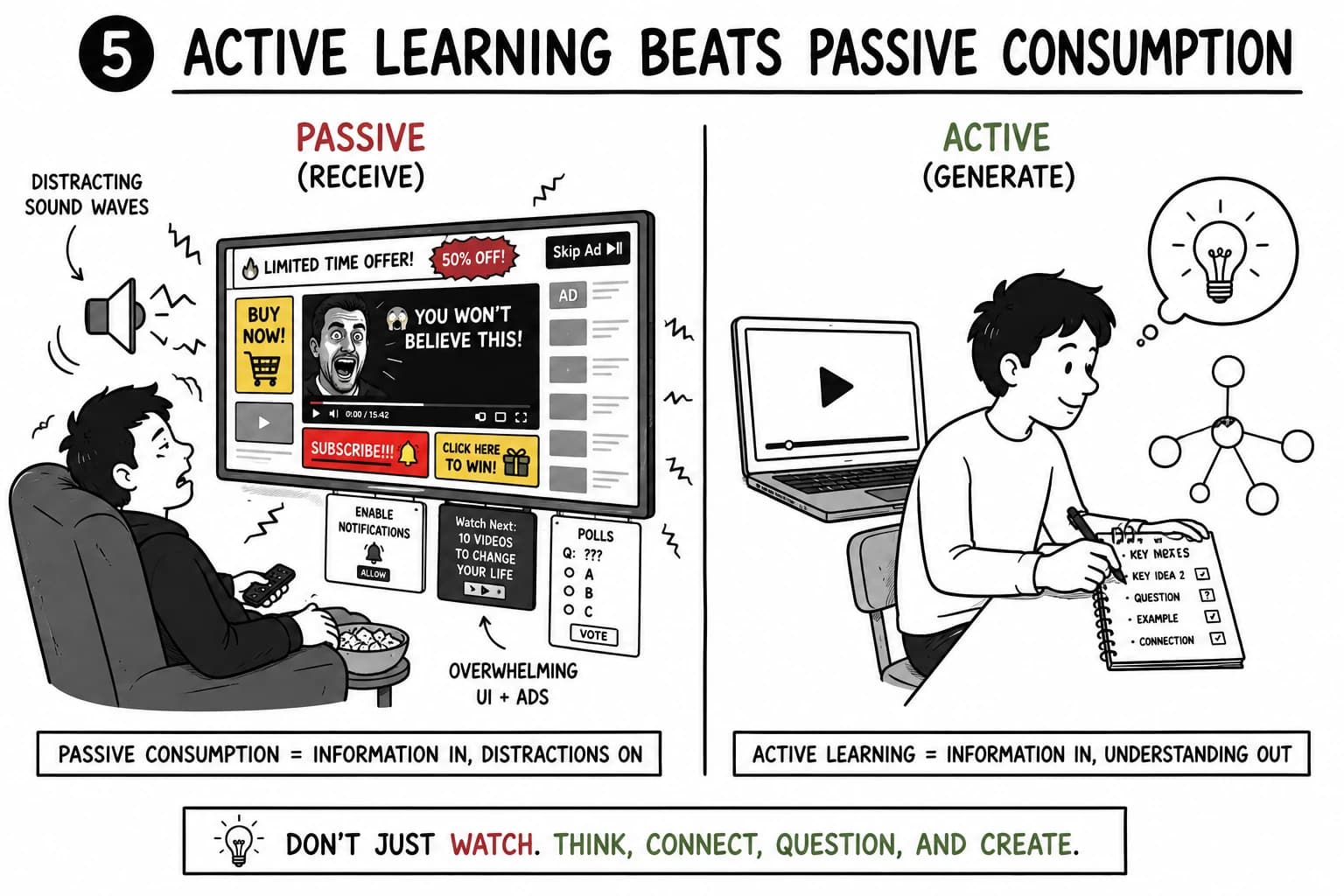
Noreen Webb, UCLA cooperative-learning researcher, studied middle-school math groups in 1989 comparing explanation-giving predictors versus passive listeners with achievement and dialogue coding. Prediction with peer explanation lifted participation and schema connection substantially inside the zone, while identical prompts failed outside it, confirming zone-conditional triggering.
| Audience / Industry / Use Case | Research Finding → Your Next Rep |
|---|---|
| Science teacher teams | Predict-reveal-correct routines before explanations activated schemas fast, turning abductive prediction work into compatible engagement that primes connection. |
| EdTech discussion designers | Immediate ask-discuss-adjust checks confirmed zone fit, showing rapid engagement measurement separates productive participation triggers from out-of-range pushes. |
| Tutoring center managers | Per-concept repetition of calibrated prediction cycles built expertise gradually, proving repeated guided engagement converts isolated participation into durable reasoning habits. |
I would avoid merging these into the historical timeline. They're answering a different search intent.
Your first table answers "How did ZPD develop?" (historical evolution).
This content answers "How is ZPD applied?" (implementation, AI, instructional workflows).
Google likes those as separate information architectures, and readers do too.
I'd instead bridge them with one paragraph that keeps the climbing metaphor alive, then introduce a workflow table that reads like the evolution of a medieval apprenticeship into an AI-powered instructional pipeline.
The Belayer Gradually Lets Go
A climbing instructor knows the rope is temporary. During the first ascent, the belayer catches hesitation before it becomes a fall. On the fifth climb, the same rope carries less weight because confidence has migrated from the harness into the climber. Apprenticeship trades have always faded support as competence grows. Lev Vygotsky's Zone of Proximal Development (ZPD) follows the same pattern: the more knowledgeable other (MKO) gradually removes support as competence grows. Today's AI tutoring, adaptive learning systems, intelligent tutoring systems (ITS), learning analytics, Bayesian Knowledge Tracing (BKT), Deep Knowledge Tracing (DKT), AI-generated summaries, AI mind maps, and advance organizers attempt to perform that same centuries-old choreography algorithmically. The engineering challenge is no longer generating explanations. It is AI calibration—estimating learner readiness so instructional support remains inside the learner's Zone of Proximal Development, where personalized learning, adaptive feedback, and algorithmic scaffolding accelerate growth.
How the Zone of Proximal Development Shapes Modern Learning Workflows
How to Find Learner Readiness With Dynamic Assessment and ZAD Mapping?
Milton Budoff, Boston State Hospital learning-potential researcher, tested educable-retarded youth in 1971 on Raven matrices using coached test-teach-retest versus single-administration IQ with readiness-matched placement. Coached assessment revealed hidden learning potential missed by static scores, with retest gains predicting classroom growth far better than baseline alone.
| Audience / Industry / Use Case | Research Finding → Your Next Rep |
|---|---|
| K-12 special-education teams | Test-teach-retest diagnostics mapping Zone of Actual Development replaced one-shot guessing, turning Prior Knowledge Profiles with learner models into accurate instructional placement. |
| Corporate trainers | Readiness assessment with diagnostic assessment stratified by learning analytics separated trainable gaps from fixed limits, showing learner modeling with Bayesian Knowledge Tracing personalizes pathways efficiently. |
| EdTech onboarding designers | Weekly BKT-signal reviews sustained placement accuracy over time, proving personalized learning with consistency checks converts initial diagnosis into compounding progress. |
How Do AI Advance Organizers Activate Prior Knowledge Faster?
John Hattie, Auckland visible-learning researcher, synthesized advance-organizer studies in 2009 across school subjects comparing structured previews with prediction prompts versus no-preview controls. Organizer-first groups comprehended faster with moderate gains near d 0.4, while unstructured previews showed little benefit, proving temporary scaffolding must cue relevant schemas.
| Audience / Industry / Use Case | Research Finding → Your Next Rep |
|---|---|
| University lecturers | Preview-predict-learn organizers with AI-generated summaries anchored weak schema activation, turning concept previews with temporary scaffolding into faster comprehension before independent study. |
| Corporate course designers | Summarize-question-correct cycles using LLMs in education built schemas iteratively, showing prediction prompts with structured previews reduce cognitive overload better than dense introductions. |
| K-12 instructional coaches | Daily ten-minute activation habits produced early wins that fueled motivation, proving consistency routines with zone-compatible engagement convert isolated previews into compounding readiness. |
Why Are AI Mind Maps the Best Tool for Connected Understanding?
Ifigenia Vekiri, Greek educational-technology researcher, tested fifth- and sixth-graders in 2002 learning science texts with graphical displays versus text-only study with comprehension and transfer tests. Visual mapping raised connected understanding substantially, turning isolated facts into solvable structures while text-only groups retained fragments.
| Audience / Industry / Use Case | Research Finding → Your Next Rep |
|---|---|
| Secondary science teachers | Learn-map-fill-gaps routines after sessions expanded transfer range, turning AI mind maps with visual scaffolding into durable conceptual understanding beyond memorized definitions. |
| Professional training leads | Connect-feedback-prune cycles linking new nodes to old schemas built expertise, showing semantic mapping with concept mapping converts fragmented input into calibrated problem-solving repertoires. |
| Graduate research mentors | Weekly memory redraws disciplined retention compounding, proving visual structure practice with systematic review transforms scattered reading into retrievable knowledge networks. |
Best Way to Master Terminology Before Deep Study? Build a Glossary First
Steven Stahl and Marilyn Fairbanks, Illinois vocabulary researchers, meta-analyzed vocabulary instruction studies in 1986 comparing pre-taught terms in context versus incidental exposure with comprehension tests. Pre-taught glossaries lifted reading comprehension reliably, while definition-only drills without context faded quickly, proving temporary assistance must bridge to usage.
| Audience / Industry / Use Case | Research Finding → Your Next Rep |
|---|---|
| Healthcare educators | Term-example-recall extraction before reading unblocked schema construction, turning glossaries built by terminology extraction with NLP support into faster comprehension for jargon-heavy texts. |
| Engineering training managers | See-use-correct cycling of terms in authentic contexts compounded fluency, showing AI summarization paired with contextual practice converts isolated definitions into usable skill. |
| Legal writing coaches | Weekly definition-fading quizzes replaced crutches with independence, proving disciplined recall schedules transform vocabulary support from permanent aid into internalized language. |
How to Beat Information Overload With AI Learning Summaries?
Suzanne Hidi, Toronto reading researcher, studied university students in the 1980s summarizing lengthy expository texts with readiness-matched versus generic summaries and comprehension probes. Readiness-calibrated summaries accelerated orientation substantially, while mismatched lengths either bored or overwhelmed, keeping difficulty inside productive bounds.
| Audience / Industry / Use Case | Research Finding → Your Next Rep |
|---|---|
| Knowledge workers | Skim-summary-question-read-full routines sped mastery orientation, turning Learning Summaries with executive overviews into rapid entry before deeper study of dense documents. |
| Corporate L&D designers | Easy-medium-full-text leveling matched to readiness held challenge optimal, showing AI summarizers with adaptive content generation prevent blank-wall overwhelm across varied expertise. |
| Graduate program coordinators | Daily reading summaries compounded finished-material motivation, proving consistency loops with calibrated complexity transform overload stalls into steady comprehension gains. |
How to Turn Fragmented Lessons Into Durable Schemas?
Robert Glaser, Pittsburgh learning-science pioneer at LRDC, tracked students integrating fragmented physics lessons in the 1980s with guided linking prompts versus isolated study and transfer tests. Prompted schema-linking raised retention and conceptual transfer markedly, while disconnected pieces decayed despite equal study time.
| Audience / Industry / Use Case | Research Finding → Your Next Rep |
|---|---|
| University teaching centers | New-idea-link-explain routines connecting lessons to prior schemas strengthened retention, turning structured modules with adaptive learning systems into usable knowledge. |
| Online program managers | Prompted-hinted-independent progressions internalized reasoning gradually, showing personalized learning with guided prompts converts assisted cycles into independent understanding. |
| K-12 curriculum leads | Weekly disciplined reviews of connections compounded mastery steadily, proving spaced linking with repeated guided cycles transforms scattered coverage into durable transfer. |
Retrieval Practice vs Re-Reading: What Locks In Long-Term Mastery?
William Pyle, Missouri school researcher, tested schoolchildren in 1913 on nonsense-syllable lists comparing recitation attempts versus repeated rereading with delayed recall checks. Recitation groups retained substantially more weeks later, while rereading produced fluent familiarity that collapsed on testing, exposing passive mastery illusions.
| Audience / Industry / Use Case | Research Finding → Your Next Rep |
|---|---|
| Classroom teachers | Learn-retrieve-correct quizzes after guided lessons built durable retention, turning adaptive quizzes with flashcards into understanding measures. |
| Medical training directors | Attempt-feedback-respace flashcard schedules compounded memory efficiently, showing adaptive assessment with ITS spacing converts assisted performance into independent recall. |
| Self-directed learners | Protected grind routines during motivation dips preserved progress, proving disciplined retrieval with feedback-correction cycles sustains mastery through slumps better than review. |
How to Diagnose Hidden Misconceptions With Knowledge Gap Analysis?
James Wandersee, Louisiana State science-education researcher, mapped high-school biology misconceptions in 1994 using concept maps and interviews comparing gap-targeted remediation versus whole-class reteaching. Targeted remediation repaired persistent errors substantially faster, while generic review left prerequisite gaps disguised as ready challenges.
| Audience / Industry / Use Case | Research Finding → Your Next Rep |
|---|---|
| High-school biology teams | Post-lesson test-map-remediate analyses fixed root causes fast, turning Knowledge Gap Analyses with misconception reports into precise prerequisite repairs. |
| Instructional design units | Prereq-ZPD-extend separations placed the right help at the right level, showing learning analytics with competency mapping distinguishes missing basics from stretch goals reliably. |
| District coaching leads | Biweekly correction-cycle rechecks compounded calibration into expertise, proving systematic gap monitoring converts hidden errors into visible mastery trajectories. |
How to Keep Every Learner in Their Optimal Challenge Zone?
Edward Deci and Richard Ryan, Rochester motivation psychologists, tested optimally challenging tasks in 1985 comparing autonomy-supportive calibration versus fixed difficulty with persistence and engagement measures. Calibrated difficulty sustained engagement substantially longer, while one-size assignments bored advanced learners and overwhelmed beginners despite identical content.
| Audience / Industry / Use Case | Research Finding → Your Next Rep |
|---|---|
| AI tutor product teams | Attempt-estimate-adjust loops every session held productive struggle, turning difficulty estimation with adaptive lesson sequencing into continuous optimal-challenge placement. |
| LMS administrators | BKT-DKT feedback-resequence signals compounded efficiency over weeks, showing AI calibration with learner modeling converts calibration data into engagement gains. |
| Corporate learning managers | Discipline-over-novelty leveling kept progress visible and steady, proving consistent challenge management sustains instructional efficiency better than content churn. |
When to Remove Help? A Guide to Fading Scaffolding Without Dependency
Sadhana Puntambekar and Janet Kolodner, Wisconsin and Georgia Tech design-learning researchers, studied middle-school science in 2005 with LaBBook software comparing fixed versus fading prompts across inquiry cycles. Fading assistance produced independent performance reliably, while permanent support created dependency despite equal initial gains, confirming the belayer must let go.
| Audience / Industry / Use Case | Research Finding → Your Next Rep |
|---|---|
| Science curriculum designers | Assisted-hinted-solo cuts of one hint per practice compounded autonomy, turning algorithmic scaffolding with reduced prompts into transferable self-regulation. |
| AI tutoring teams | Guide-fade-perform demands for independent reps proved transfer, showing adaptive feedback with intelligent tutoring systems converts supported success into solo capability. |
| Instructional coaches | Resisting over-helping with disciplined fade-holding protected long-term independence, proving self-regulated learning emerges only when support disappears as competence internalizes. |
How to Track Mastery Growth Across Courses With Dashboards?
George Siemens and colleagues, Athabasca learning-analytics researchers, analyzed MOOC engagement traces in 2011 comparing dashboard-guided pathways versus no-dashboard controls with BKT-tracked competency growth. Dashboard visibility raised persistence and cross-course progression substantially, turning invisible development into actionable personalized pathways.
| Audience / Industry / Use Case | Research Finding → Your Next Rep |
|---|---|
| University analytics teams | Weekly perform-map-adjust-path reviews made growth visible, turning mastery dashboards with competency maps into continuous tracking. |
| Corporate L&D directors | Skill-evidence-next-target mapping per course tracked range expansion, showing student progress monitoring with LMS integration converts scattered completions into coherent development. |
| EdTech program managers | Consistency-log streaks sustaining visible progress motivated adherence, proving personalized learning pathways with regular calibration turn longitudinal data into compounding mastery. |
The workshop has changed shape over the centuries, but its rhythm remains familiar. A guild master watched an apprentice plane a board, a climbing instructor slowly loosened the rope, and today's AI tutor adjusts difficulty estimation, content personalization, and adaptive feedback after every interaction. The tools evolve from chisels to algorithms, yet the underlying ambition stays remarkably stable: provide just enough help that tomorrow's independent performance replaces today's assisted one. That calibration—not content generation—is the real frontier for AI in education.