Samuel Morse's Telegraph Network (1844): The Network Matters More Than the Message
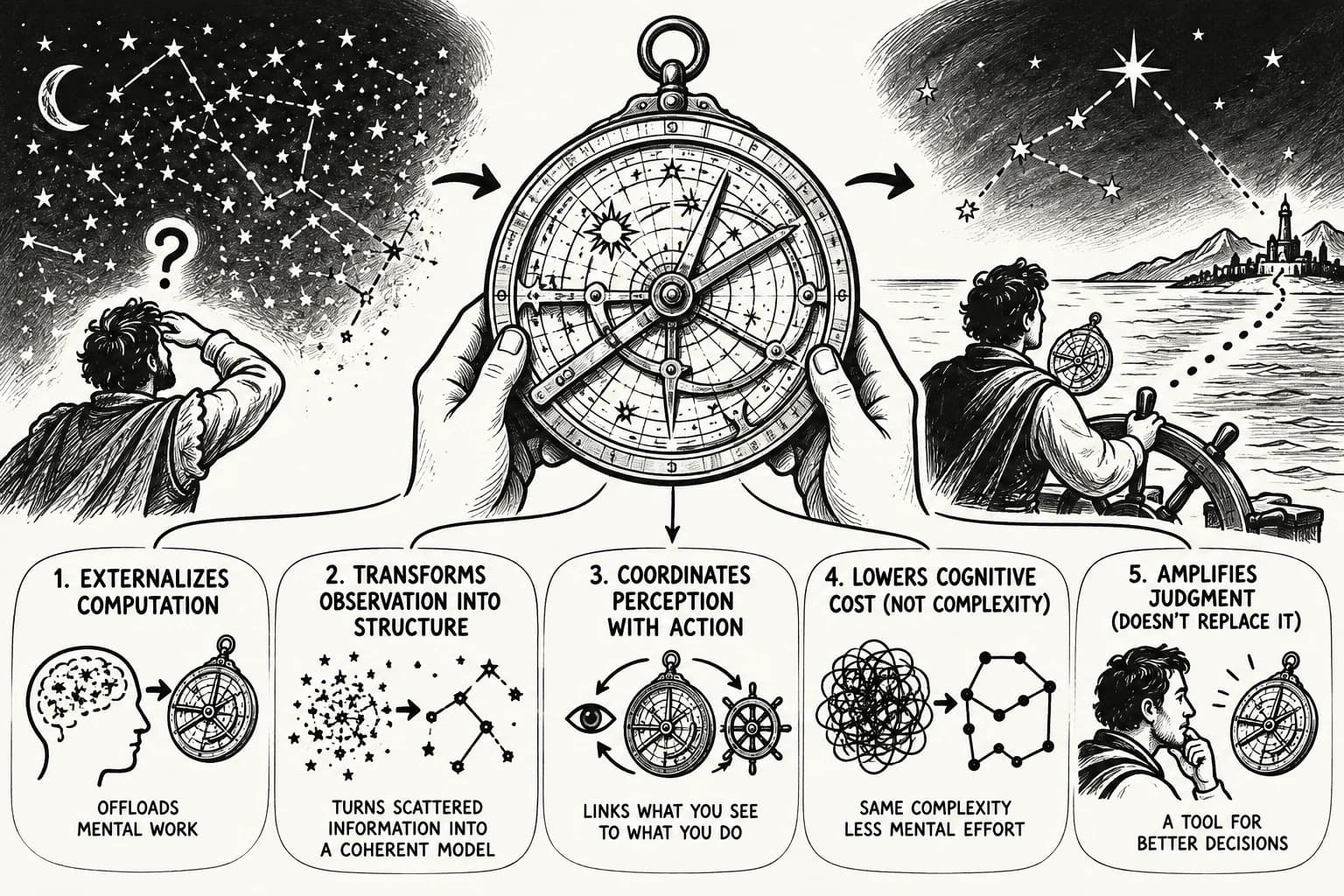
When Samuel Morse tapped "What hath God wrought" from Washington to Baltimore in 1844, history celebrated the first successful long-distance telegraph message. The larger achievement was the network itself. Every new telegraph office, copper wire, and relay station made every existing connection more valuable. A message leaving Washington did not travel in isolation. It flowed through an interconnected system where nearby stations were reached first, busy junctions accelerated communication, and expanding routes made future messages faster still. The telegraph transformed isolated towns into a living network whose power emerged from relationships.
More than a century later, Ross Quillian's semantic network model, Collins & Quillian's hierarchical semantic memory, and Collins & Loftus's spreading activation theory proposed that human memory operates in much the same way. Semantic memory consists of interconnected concept nodes joined by semantic links, where activating one idea automatically increases the accessibility of related ideas through spreading activation. Modern AI advance organizers, concept maps, knowledge graphs, and AI-generated summaries exploit this architecture by activating relevant concepts before learning begins, improving knowledge representation, semantic priming, knowledge organization, natural language understanding, and long-term comprehension. Learning succeeds because the network is prepared before the message arrives.
How Samuel Morse's Telegraph Network Explains Semantic Network Models
-
Building the Network (Knowledge Representation) — Morse's invention was an interconnected communication system. Likewise, semantic network models, semantic memory, knowledge representation, concept nodes, and semantic links organize knowledge through relationships.
-
Routing Messages Through Connected Stations (Hierarchical Organization) — Early telegraph traffic followed organized routing paths that reduced redundancy and simplified long-distance communication. Likewise, Quillian semantic memory, hierarchical semantic networks, cognitive economy, inheritance hierarchies, and taxonomic organization efficiently organize conceptual knowledge by storing shared properties only once.
-
Electricity Spreads Automatically (Spreading Activation) — Once transmitted, electrical current naturally propagated through connected wires without manually activating every destination. Likewise, spreading activation theory, semantic priming, activation propagation, weighted semantic links, and automatic semantic activation allow one activated concept to prepare many related concepts simultaneously.
-
Busy Telegraph Hubs Respond Faster (Association Strength) — Major relay cities handled messages more rapidly because they possessed more active connections than isolated stations. Likewise, highly connected concepts become hubs within associative memory, graph-based cognition, knowledge organization, semantic accessibility, and long-term semantic memory, making related information easier to retrieve.
-
Preparing the Network Before Transmission (AI Advance Organizers) — Telegraph operators tested batteries, relays, and transmission lines before sending critical messages so the network was already energized. Likewise, AI advance organizers, AI-generated summaries, concept maps, terminology previews, semantic priming in education, and pre-training activate relevant conceptual pathways before instruction, reducing cognitive effort and improving learning efficiency.
The Evolution of Semantic Network Models Through the Telegraph Network
| Historical Telegraph Network | Advancement in Semantic Network Models |
|---|---|
| 1844 – Samuel Morse Builds the Telegraph Network — The first successful telegraph demonstrated that communication becomes dramatically more efficient when information travels through an interconnected network of relay stations. Every additional office strengthened the entire system. | The Core Insight — Semantic memory, knowledge representation, and semantic network models depend on connected concept nodes and semantic links, where meaning emerges from relationships. |
| 1967 – Ross Quillian Maps Semantic Memory — Like a national telegraph system composed of interconnected offices, Quillian proposed that human knowledge could be represented as a network of connected concepts. | Quillian Semantic Memory introduced semantic network models, knowledge representation, concept nodes, semantic links, hierarchical semantic memory, and one of the earliest computational models of human memory. |
| 1969 – Collins & Quillian Optimize the Routes — Telegraph companies reduced duplication by routing messages through efficient relay networks. | Hierarchical Semantic Networks introduced cognitive economy, inheritance hierarchies, and taxonomic organization, allowing shared properties to be stored once and inherited throughout the semantic hierarchy. |
| 1971 – Busy Telegraph Routes Reveal Association Matters — Operators observed that well-traveled routes often delivered messages faster than rarely used official pathways because traffic naturally concentrated along stronger connections. | Meyer & Schvaneveldt's Semantic Priming demonstrated that semantic relatedness, associative memory, and reaction time depend more on meaningful associations than rigid category membership, exposing limitations in purely hierarchical models. |
| 1975 – Collins & Loftus Transform the Network into a Living Grid — The mature telegraph system resembled a flexible communication web where electrical signals spread according to connection strength. | Spreading Activation Theory replaced rigid trees with weighted semantic links, activation propagation, semantic distance, activation decay, automatic semantic activation, and semantic accessibility, explaining how concepts become primed throughout long-term semantic memory. |
| Today – AI Prepares the Network Before Learning Begins — Modern communication networks continuously prepare routes before information arrives, minimizing delay across billions of connected devices. | AI Advance Organizers, AI-generated summaries, knowledge graphs, concept maps, semantic priming, and natural language understanding activate relevant semantic networks before instruction, improving comprehension, retrieval, transfer, and knowledge organization. |
Benefits of Semantic Priming for Comprehension
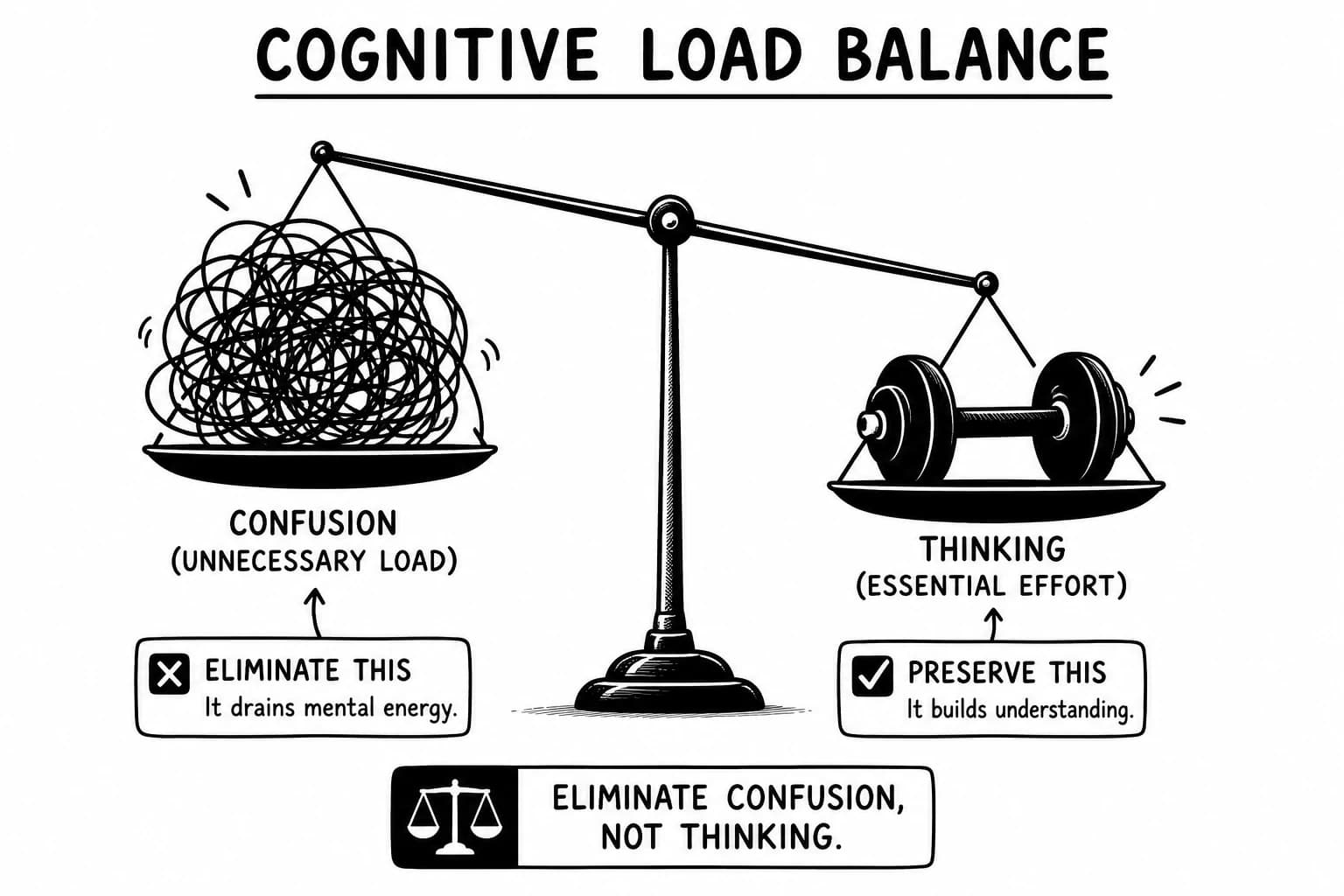
When Samuel Morse transmitted the first telegraph message—"What hath God wrought"—between Washington and Baltimore in 1844, the words traveled quickly because the network had already been built. Engineers did not construct copper wires after the signal was sent; they prepared the connections beforehand so electricity could move effortlessly from one relay station to the next. Semantic priming works much the same way inside semantic memory. An advance organizer, AI-generated summary, or concept map pre-activates concept nodes and semantic links, improving reading comprehension, learning comprehension, lexical access speed, and semantic processing efficiency before instruction begins. Familiar terminology reaches consciousness faster, reducing recognition latency and lowering extraneous cognitive load while freeing working memory for concept integration, mental model construction, knowledge integration, meaningful learning, knowledge transfer, and deeper reasoning, exactly as described by Sweller's Cognitive Load Theory, Ausubel's meaningful learning, Mayer's Multimedia Learning, Novak & Gowin's concept mapping, and Paivio's Dual Coding Theory. The empirical signal is consistently positive: semantic priming typically produces moderate-to-large effects (d ≈ 0.50–0.80), strong associative pairs often reach 0.70–1.20, cross-modal priming remains smaller (0.20–0.40), and advance organizers generally improve comprehension in the 0.30–0.60 range. Like Morse's telegraph, the benefit comes less from making the message itself faster than from ensuring the network is already energized before it arrives. The remaining uncertainties are structural rather than theoretical—individual semantic networks differ across learners, laboratory word-pair priming may not fully predict complex lectures, the ideal interval between organizer and instruction remains unresolved, and strategic expectancy can strengthen or occasionally override the automatic current of spreading activation.
Factors, Rivals, and Evidence — Upskilling Guide
What Is Semantic Priming and How Does Spreading Activation Improve Comprehension?
In Swinney's (1979) cross-modal priming experiments, college students heard sentences containing ambiguous words such as "bugs" while making lexical decisions to visual probes at two points: immediately after, or three syllables later. Both meanings primed instantly; only the context-appropriate meaning stayed facilitated three syllables later — automatic spreading activation across semantic links, followed by rapid activation decay, sustains fluent comprehension.
| Audience / Industry / Use Case | Research Finding → Your Next Rep |
|---|---|
| Speech-language pathologists | Probes tied to either meaning of "bugs" were primed the instant it was spoken — associative strength activates every linked concept node automatically, outside listener control. Benchmark word-recognition speed with cross-modal lexical decision baselines in milliseconds. |
| Computational linguists | Roughly one second later, only the context-fitting sense kept its facilitation — activation decay prunes irrelevant semantic links within three syllables. Weight sense-ranking models to decay candidate nodes unless sentential context reinforces them. |
| Simultaneous interpreters | Post-test questions showed listeners never noticed the non-contextual sense, though it had measurably primed — automatic activation precedes awareness across semantic links. Drill pre-attentive sense-monitoring: capture candidate senses before committing to output. |
How to Assess Prior Knowledge Threshold to Activate Semantic Networks Before Teaching?
Reading researchers Pearson, Hansen and Gordon (1979) gave fourth graders a spider-knowledge pretest before a spider passage, then compared explicit and implicit comprehension questions across high- and low-knowledge readers. Prior knowledge — not general reading ability — best predicted comprehension, especially on implicit, inferential questions, proving that pre-activating existing semantic networks gates what new teaching can reach.
| Audience / Industry / Use Case | Research Finding → Your Next Rep |
|---|---|
| Elementary reading teachers | High-knowledge readers answered implicit spider questions far better while explicit-question gaps stayed small — schema activation supplies the missing links inferences require. Run a two-minute free-association pretest per topic and group by node density before lessons. |
| Corporate onboarding designers | Pretest knowledge outpredicted general reading ability on the same passage — declarative retrieval cues stored in long-term memory outweigh generic aptitude. Screen new hires' domain vocabulary first and route zero-knowledge staff into primer modules. |
| Museum educators | Low-knowledge children missed inferences despite comparable decoding — isolated nodes starve semantic networks, and unfamiliar terms diffuse attention instead of priming it. Front-load exhibits with concrete anchor facts before interpretation panels ask visitors to infer. |
Best Advance Organizer Format: How Much Overlap, Timing and Concreteness Maximizes Retrieval?
At Bell Telephone Laboratories, Frase (1969) had college students read prose passages whose paragraphs were either conceptually clustered under superordinate headings or scrambled, then compared free recall. Clustered, hub-first text produced more recall, and readers' reproductions mirrored the input hierarchy — structural organization alone, not extra content, drove retrieval gains, the mechanism a 7–12 node advance organizer exploits.
| Audience / Industry / Use Case | Research Finding → Your Next Rep |
|---|---|
| Technical documentation writers | Hierarchically clustered paragraphs yielded more free recall than scrambled versions of identical content — degree centrality, not added material, improves retrieval. Draft hub-first: one superordinate heading per section, every link labelled, pruned past 15 nodes. |
| E-learning instructional designers | Readers reproduced the input clustering in order — retrieval pathways form along whatever structure is presented. Open each module with a 7–12 node map of high semantic overlap, central nodes first, then test within minutes. |
| University lecturers | Central superordinate ideas dominated recall while scattered details faded — fan effect dilution sinks low-centrality terms, and long delays invite decay. Cap lecture slides at one hub concept and prune misleading headings that pull activation away. |
Hierarchical Semantic Memory vs Spreading Activation: Which Explains Memory Better?
Conrad (1972) timed undergraduates verifying property statements such as "A canary can sing," contrasting hierarchical storage level against how often concept–property pairs co-occur in word-association norms. Verification speed tracked co-occurrence frequency rather than taxonomic depth — associative strength and semantic distance over weighted links predict retrieval better than strict cognitive economy, vindicating spreading activation.
| Audience / Industry / Use Case | Research Finding → Your Next Rep |
|---|---|
| SEO taxonomy managers | "Canary–sing" pairs verified fastest when the pairing occurred frequently, regardless of taxonomic level — associative strength, not classification depth, drives retrieval. Build site taxonomies from search co-occurrence data instead of pure category logic. |
| Knowledge-graph engineers | Rare concept–property pairings stayed slow at every level — long semantic distance costs milliseconds that inheritance alone cannot buy. Weight graph edges by corpus co-occurrence and audit retrieval latency before shipping ontologies. |
| Vocabulary curriculum designers | Frequent pairings overrode the stored-level predictions of cognitive economy — high-frequency semantic links beat structural neatness. Sequence lessons around real co-occurrence phrases so each new word attaches to strong, already-weighted associations. |
Automatic vs Controlled Priming: How Strategic Expectancy Amplifies Activation?
Neely (1977) had undergraduates make lexical decisions after category primes at 250- versus 700-ms SOAs, instructing them to expect members of a different category than the prime named. Unexpected related words primed automatically at short SOA (tens of milliseconds), while conscious expectancy at 700 ms produced several-fold larger facilitation, with active inhibition of non-expected categories — both currents coexist.
| Audience / Industry / Use Case | Research Finding → Your Next Rep |
|---|---|
| Cognitive assessment clinicians | Related targets were faster at 250 ms even though never expected — automatic priming that attention cannot block. Keep sub-second SOAs in priming assessments so scores index associative activation rather than test-taking strategy. |
| UX attention researchers | At 700 ms, expected-but-unrelated categories (building parts after BIRD) gained several-fold larger facilitation — strategic expectancy amplifies activation beyond the automatic baseline. Randomize SOA and relatedness proportions so participants cannot predict and inflate effects. |
| Media-effects policymakers | Non-expected related targets became slower than neutral at long SOA — inhibition suppresses categories outside current expectancy. Evaluate subliminal-persuasion claims against this ceiling: automatic gains are millisecond-scale and vanish without strategic attention. |
Shared Features or Associative Links: What Really Drives Semantic Similarity?
Smith, Shoben and Rips (1974) timed undergraduates verifying statements like "A robin is a bird" versus "A penguin is a bird," modeling each concept as defining plus characteristic features. Typical exemplars verified substantially faster, and feature-sharing false statements drew the slowest rejections — semantic similarity arises from overlapping characteristic features, extending node-and-link accounts rather than rivaling them.
| Audience / Industry / Use Case | Research Finding → Your Next Rep |
|---|---|
| Knowledge-graph engineers | "A penguin is a bird" verified slower than "A robin is a bird" — graded characteristic-feature overlap, not binary category membership, drives similarity. Annotate graph entities with weighted semantic features, not just class edges. |
| E-commerce search teams | False statements sharing characteristic features (bat-as-bird cases) produced the slowest rejections and most errors — overlap fools verification when defining features go unchecked. Tune similarity models to weigh defining features, cutting lookalike-product misclassification. |
| Assessment item writers | Latencies tracked semantic-similarity ratings better than taxonomic distance — feature comparison, not node-hopping, underlies category judgments. Write distractors sharing surface features so items separate deep conceptual knowledge from typicality-based guessing. |
Schema Theory vs Semantic Networks: Are Schemas Just Dense Knowledge Clusters?
Graesser, Woll, Kowalski and Smith (1980) had college students listen to scripted stories (restaurant visits, doctor appointments), then take recognition tests on actions that were presented or merely typical. Students confidently "recognized" typical actions that never occurred, while verbatim memory concentrated on atypical events — schemas operate as dense knowledge clusters whose slots generate inferences, fully compatible with spreading activation.
| Audience / Industry / Use Case | Research Finding → Your Next Rep |
|---|---|
| Scenario-based training designers | Listeners "remembered" typical actions never presented — script slots auto-fill during discourse comprehension, generating confident false memories. Flag expected versus actual steps in simulations so learners register what happened, not what usually happens. |
| Cognitive-interview trainers | Atypical actions earned the strongest verbatim recognition — the script pointer + tag mechanism binds deviations into dense local clusters. Train interviewers to mine deviations first, where accurate episodic traces concentrate. |
| Clinical vignette writers | Recognition shifted with typicality level across scripts — graded activation within the cluster yields gist for typical events, verbatim traces for rare ones. Vary action typicality inside exam vignettes to separate schema-driven guessing from real recall. |
How to Tailor Concept Density to Prior Knowledge for Maximum Transfer?
Patel and Groen (1986), medical-cognition researchers publishing in Cognitive Science, had expert physicians read hypertension case histories, give diagnoses, and explain their reasoning. Correct diagnoses came with causally organized forward reasoning and weak recall of diagnosis-irrelevant details, while errors coincided with backward chaining and verbatim, fragmented recall — tailored causal density, not information volume, drives transfer.
| Audience / Industry / Use Case | Research Finding → Your Next Rep |
|---|---|
| Medical educators | Experts diagnosing correctly often failed to recall case details irrelevant to the causal chain — schema automation compresses declarative memory into explanatory structure. Teach forward-reasoning chains in case sessions; score explanation coherence, not fact recitation. |
| Clinical simulation designers | Erroneous diagnoses tracked backward reasoning: verbatim recall stayed intact while explanations collapsed — dense but unlinked nodes fragment under pressure. Build simulations around atypical presentations and grade causal chaining rather than final-answer accuracy. |
| Health-AI decision-support teams | On non-typical cases even experts abandoned pattern recognition for deliberate backward chaining — automaticity has boundary conditions. Design decision support that surfaces causal alternatives whenever presentations depart from training-typical patterns. |
Why Relational Quality, Dual Coding and Generative Work Beat Dense Maps?
Van Meter (2001) had ninth graders read a science passage on a mechanical device, one group constructing labeled drawings while reading. Drawing groups outperformed read-only peers on questions demanding relational understanding, and scores tracked how completely drawings captured key components and links — generative visual-verbal work beats density because relational quality, not node count, directs activation.
| Audience / Industry / Use Case | Research Finding → Your Next Rep |
|---|---|
| Secondary science teachers | Learner-built diagrams beat passive reading on relational-understanding questions — generative work forces dual coding of visual and verbal representations. Swap copied textbook figures for predict-then-draw tasks that label every link between components. |
| Engineering educators | Scores followed drawing completeness: missing components or unlabelled relations predicted weak performance — relational quality, not diagram density, steers comprehension. Grade sketches on explicit link labels and prune past 15 nodes before overload diffuses activation. |
| Corporate workshop facilitators | Drawings missing the device's pivotal relations yielded comprehension no better than read-only peers — a boundary condition: generative work pays only when relational quality survives. Pair sketchnoting with a required link checklist, then audit retention against a read-only comparison. |
A telegraph operator in the nineteenth century learned a lesson that modern semantic networks, knowledge graphs, and concept maps quietly rediscover every decade: messages travel fastest through well-connected relay stations rather than wandering across isolated wires. Human memory behaves with similar economy. A handful of high-centrality concepts acts as relay hubs, allowing spreading activation to reach neighboring ideas before instruction arrives, while concept map design, semantic mapping, and knowledge visualization determine whether that signal races through the network or dissipates into noise. Today's AI concept mapping, adaptive learning systems, and retrieval augmented generation (RAG) automate what skilled teachers have practiced for generations—identifying the concepts that carry the most traffic and arranging them into structures that reduce cognitive load, strengthen dual coding, and improve learning efficiency.
Task / Workflow Upskilling System
How to Create 5-Minute AI Advance Organizers That Prevent Priming Decay?
In Nungester and Duchastel's 1982 Journal of Educational Psychology experiment, students read a prose passage after taking a pretest on its content, after a posttest, or with no test, with retention measured one week later. Pretesting before study matched posttesting and both beat untested controls on delayed retention — pre-activating retrieval pathways produced priming durable enough to survive the delay.
| Audience / Industry / Use Case | Research Finding → Your Next Rep |
|---|---|
| Corporate L&D designers | A pretest before reading matched a posttest's one-week retention — advance organizers work because early retrieval pre-activates semantic links, letting spreading activation greet new content rather than decay first. Open each module with a scored five-minute preview, then track week-later recall against no-preview controls. |
| EdTech assessment engineers | Retrieval testing beat rereading the same passage for delayed retention — encoding strengthens through output, not re-exposure, and the forgetting curve bends only when activation is refreshed. Replace recap slides with three-item checkpoints every learner answers before new material. |
| University curriculum committees | The clearest benefit appeared one week later, where untested readers' priming had decayed — timing matters less than reactivation before content begins. Pair each unit's advance organizer with a spaced posttest to measure whether comprehension speed holds at delay. |
Mind Map vs Concept Map vs Semantic Network: Which Builds Transfer Faster?
Physics education researchers Roberta Hardiman, Rachelle Dufresne and José Mestre (1989), at the University of Massachusetts Amherst, trained novice students to sort mechanics problems either by solution principle or by surface similarity, then tested problem solving. Principle-trained novices solved markedly more problems and began classifying like experts — explicit hierarchical links, not surface association, build transfer.
| Audience / Industry / Use Case | Research Finding → Your Next Rep |
|---|---|
| University STEM instructors | Novices trained to sort problems by solution principle outperformed surface-similarity peers on solving — explicit conceptual links and a shallow concept hierarchy beat associative clustering, exactly what concept maps formalize. Run weekly principle-sorting drills, then score accuracy on untrained problems. |
| Medical educators | After analogical mapping training, novices categorized like experts, grouping cases by underlying principle rather than surface features (pulleys, springs) — schema formation shrinks conceptual distance across cases. Grade case discussions on diagnosis-category naming before treatment selection. |
| Adaptive-tutor designers | Gains concentrated on problems from trained categories — transfer followed only where hierarchical links existed, showing retrieval pathways don't generalize across semantic distance. Sequence practice so each new cluster attaches to a trained hub before independent solving. |
Knowledge Framework Templates That Turn Fragmented Facts Into Durable Schemas
In Weston A. Bousfield's 1953 University of Connecticut experiment, subjects heard 60 randomly ordered words drawn evenly from four categories — animals, names, vegetables, professions — then free-recalled. Recall emerged in same-category runs far above chance and totaled roughly a third of the list — only organized, linked knowledge survives retrieval; unlinked fragments decay.
| Audience / Industry / Use Case | Research Finding → Your Next Rep |
|---|---|
| Corporate L&D curriculum architects | Recall clustered by category far above the chance level despite random input — schema automation emerges when hierarchical plus associative links, not presentation order, structure knowledge. Sequence each module's facts into explicit category frames, then measure recall clustering as the outcome metric. |
| Library metadata specialists | Recall order traced the category tree rather than list order — retrieval pathways traverse organized links, the same logic faceted classification and controlled vocabulary impose on search. Audit user query sequences to expose missing cross-links in the classification. |
| Nursing program directors | Only about a third of the 60 words were recalled, with isolated items dropping out — concept density beyond available links starves schema formation. Cap each framework at mutually linked concepts and test whether every fact has two or more retrieval cues. |
AI Concept Mapping Pipeline: How to Summarize Long Documents Into Hub Concepts for RAG and Learning?
Walter Kintsch and Teun A. van Dijk (1978), University of Colorado text-comprehension researchers, had readers free-recall prose passages immediately and after delays, scoring each proposition's structural importance. Delayed recall shed peripheral micropropositions while central macropropositions survived — hub concepts are what endure in memory, so summarization pipelines should extract high-importance hubs first.
| Audience / Industry / Use Case | Research Finding → Your Next Rep |
|---|---|
| RAG pipeline engineers | Delayed recall resembled a summary: central macropropositions persisted while peripheral micropropositions vanished — retrieval quality depends on hub concepts extracted before chunking. Rank proposition importance first, embed hubs, and measure hub-query versus detail-query hit rates. |
| Enterprise search teams | Even immediate recall rose with proposition importance — working-memory cycling privileges high-centrality content, the logic behind extract-then-embed knowledge engineering. Index summary-level content ahead of full text so searches land on hubs first. |
| EdTech content teams | Long documents exceeded readers' processing cycles, so tail content decayed first — chunk for working-memory limits, not just token counts. Publish hub-first briefs per module and audit week-later recall of hubs against peripheral details. |
Best Terminology Lists for Faster Vocabulary Learning and Lexical Access?
Stanford psychologist Richard C. Atkinson (later president of the University of California) and Michael Raugh (1975) taught college students 120 Russian words via the keyword method — a sound-alike English cue plus an interactive image — against conventional study. Keyword learners scored 72% versus 46% on Russian, a companion high-school study hit 88% versus 28% in Spanish, with advantages persisting weeks later.
| Audience / Industry / Use Case | Research Finding → Your Next Rep |
|---|---|
| Language-app designers | Keyword learners translated 72% of Russian words versus 46% under conventional study — a phonological keyword binds the node-to-label association while an interactive image adds visual-verbal integration for faster lexical access. Pair every glossary term with a sound-alike cue and image, then benchmark translation latency. |
| Medical terminology instructors | High-school Spanish learners reached 88% versus 28% with the same method — opaque labels gain most when memory encoding fuses dual-coding imagery with the label. Anchor drug and anatomy terms to concrete keywords and pictures, testing both recognition and production. |
| Corporate glossary publishers | Keyword advantages persisted across weeks of delayed tests — elaborative rehearsal at encoding, refreshed through spaced retrieval, kept associations accessible. Schedule term re-quizzing at expanding intervals and measure week-later definitions rather than day-one scores. |
How to Link New Concepts to Existing Knowledge During Instruction?
John Clement's 1993 experiments at the University of Massachusetts Amherst confronted students' belief that a rigid table exerts no upward force, using anchoring intuitions and bridging cases such as flexing boards. Correct explanations rose several-fold over baseline and comparison instruction — anchoring new nodes to existing intuitions along short semantic paths drives genuine conceptual integration.
| Audience / Industry / Use Case | Research Finding → Your Next Rep |
|---|---|
| Secondary physics teachers | Nearly every student already grants that a compressed spring pushes back — existing knowledge schemas hold grounded intuitions with high semantic relatedness to the target. Pretest each concept for a live anchor before instruction and track correct explanation rates afterward. |
| Engineering faculty | Students rejected the spring–table link until intermediate flexing boards bridged the gap — activation propagates only along shortest paths, so sequence examples from anchor to target. Insert bridging cases between the familiar and the formal, scoring stepwise acceptance. |
| Science curriculum publishers | A single analogy without bridging left the misconception intact — inference across long conceptual distances fails, and semantic integration collapses when links are skipped. Audit lesson sequences for missing intermediate nodes wherever prior-knowledge surveys show stable wrong beliefs. |
Retrieval Practice System That Strengthens Semantic Retrieval Before Decay?
In Arthur I. Gates's 1917 Columbia University Teachers College studies, schoolchildren memorized prose and poetry under fixed ratios of reading to recitation, from all reading to nearly all reciting, with recall tested immediately and after delays. Recitation-dominant learners recalled markedly more at every delay, and the advantage widened over time — retrieval during study strengthens pathways against decay that rereading leaves untouched.
| Audience / Industry / Use Case | Research Finding → Your Next Rep |
|---|---|
| K-12 teachers | Recitation groups outperformed all-reading groups on delayed recall — retrieval practice during study builds retrieval pathways that rereading never touches. Convert review sessions into low-stakes self-quizzing and compare week-later scores with rereading controls. |
| Board-exam prep providers | Gains peaked when recitation consumed most of each study period — a dose-response boundary showing retrieval, not exposure, drives long-term retention. Structure flashcard blocks so answering, not re-reading, fills the time budget, then track retention curves. |
| Language-app developers | The recitation advantage widened as delay lengthened — rehearsed pathways resist decay and interference while untested ones fade. Pair each new lesson with expanding-interval retrieval of prior vocabulary and measure forgetting slopes per item. |
How to Build Integrated Learning Modules That Align Activation to Assessment?
In B. F. Skinner's 1954 Harvard Educational Review program, teaching machines presented arithmetic in small steps requiring an active answer at every frame, with immediate confirmation and self-pacing, against conventional workbook instruction. Two fourth-grade pupils reportedly finished a year's arithmetic in roughly half the usual time with near-zero errors — aligning each activation to an immediate assessment checkpoint compounds comprehension.
| Audience / Industry / Use Case | Research Finding → Your Next Rep |
|---|---|
| MOOC platform designers | Every frame demanded an overt answer before advancing — retrieval practice embedded directly in content flow, with response data usable as learning analytics. Split videos into two-minute segments gated by one scored item, and watch segment-level error data flag weak hubs. |
| Compliance training teams | Immediate confirmation of each answer kept responding error-free, preventing misconceptions from compounding across units — corrective loops aligned activation to assessment throughout. Deliver instant right/wrong feedback item-by-item and measure error rates per module. |
| Military and aviation trainers | Self-pacing through mastery-gated small steps let two pupils finish a year's work in about half the usual time — standardized, scalable sequencing without instructor dependence. Gate each unit on a mastery quiz before the next unlocks, tracking time-to-mastery. |
Knowledge Gap Analysis: How to Find Misconceptions Blocking Spreading Activation?
Stella Vosniadou and William Brewer (1992), University of Illinois cognitive psychologists, interviewed first-, third-, and fifth-graders about the earth's shape and gravity, coding answers as initial, synthetic, or scientific models. Misconceptions emerged as coherent synthetic models — hollow-sphere, dual-earth — that reinterpreted new evidence, so remediation must target the model, not isolated errors.
| Audience / Industry / Use Case | Research Finding → Your Next Rep |
|---|---|
| Elementary science curriculum developers | Wrong answers formed coherent synthetic models, not random gaps — structured misconceptions operate as disconnected clusters that spreading activation cannot correct piecemeal. Code learners' explanations into models before each unit, then re-teach the hub belief rather than the surface error. |
| Science teacher PD providers | Children absorbed photographs and astronaut reports into their existing model without noticing contradiction — semantic drift reinterprets new evidence until the model itself is challenged for conceptual change. Probe with direct counter-evidence questions and track whether learners flag the conflict. |
| Science museum educators | Scientific models increased only gradually across grades despite schooling — exposure alone leaves wrong semantic links intact. Follow exhibits with model-confirmation interviews weeks later, measuring whether the corrected structure persists. |
Concept Centrality Analysis: How to Find Hub Concepts That Carry Most Learning Traffic?
Albert-László Barabási and Réka Albert (1999), University of Notre Dame network scientists, analyzed the web graph (325,729 pages), movie-actor collaborations, and the US power grid against random-graph predictions. Degree distributions obeyed power laws driven by preferential attachment — a few hub nodes dominate connectivity — so node importance must be measured, not assumed, before structuring knowledge.
| Audience / Industry / Use Case | Research Finding → Your Next Rep |
|---|---|
| Curriculum architects | Hubs arose from preferential attachment — concepts introduced early and connected often accumulate disproportionate links, mirroring node importance in learning traffic. Score candidate concepts by degree centrality before building an organizer and measure how much activation the top hubs actually carry. |
| SEO link analysts | Degree distributions followed power laws, not the bell curves of random graphs — most pages are peripheral while a few hubs capture visibility, the logic PageRank formalizes. Weight internal-link structures toward identified hubs and prune low-value tail nodes. |
| Graph database teams | The growth-plus-attachment model predicted which nodes became hubs — centrality shifts as the network grows, so static rankings decay. Re-run degree, betweenness, and closeness scoring on each content cycle and monitor hub drift. |
Knowledge Graph Synchronization Guide for Consistent Curriculum and Enterprise Knowledge?
From 1985, Princeton cognitive psychologist George A. Miller and Christiane Fellbaum built WordNet at the university's Cognitive Science Laboratory, ultimately grouping 155,287 English words into 117,659 synsets linked by typed semantic relations. One meaning, one node — synsets resolved duplicate terms, hyponymy preserved hierarchy, and polysemous forms mapped to multiple synsets, the design logic for synchronizing terminology at scale.
| Audience / Industry / Use Case | Research Finding → Your Next Rep |
|---|---|
| Enterprise taxonomy managers | WordNet collapsed synonyms into single synsets — entity resolution ensuring one concept, one node, the precondition any controlled vocabulary needs. Merge duplicate terms across business units into synset-style nodes and audit the duplicate rate each release. |
| Publishing content-ops leads | A hyponymy backbone carried the hierarchy while meronymy and antonymy added cross-cutting links — linked-data logic where one relation type never suffices. Type every connection (is-a, part-of, opposes) in the ontology instead of relying on tree position alone. |
| E-commerce catalog teams | The same word form mapped to multiple synsets — separating polysemy from surface form prevents ambiguity-driven misclassification. Index products by underlying concept, not label string, and measure misrouting on ambiguous query terms. |
Semantic Knowledge Dashboards That Turn Searchable Information Into Recallable Knowledge?
In 1986, University of Chicago information scientist Donald R. Swanson showed via MEDLINE that two disjoint literatures — dietary fish oils and Raynaud's syndrome — contained no citations linking them despite extensive publication on each side. Bridging concepts (blood viscosity, platelet aggregability) predicted that fish oil could alleviate Raynaud's, a hypothesis later clinically supported — connecting searchable fragments is what converts information into recallable knowledge.
| Audience / Industry / Use Case | Research Finding → Your Next Rep |
|---|---|
| Medical librarians | Two mature literatures coexisted with zero citations between them — topical authority lives inside clusters, and nothing surfaces cross-cluster facts without deliberate semantic search design. Run periodic co-citation gap audits and log candidate bridges for expert review. |
| Literature-based discovery engineers | Intermediate concepts — blood viscosity, platelet aggregability — formed the B in Swanson's A-B-C bridge, turning disconnected clusters into a traversable graph. Build dashboards exposing shared intermediate entities via entity-based search and measure how many surfaced links survive expert screening. |
| Pharmacovigilance analysts | The literature-derived prediction was later supported by clinical testing — a discovery only possible because the search converted fragments into testable knowledge. Pair each flagged A-C link with a monitored validation pipeline tracking confirmation outcomes. |