What Is Generative Learning Theory? Why Understanding Is Constructed, Not Delivered
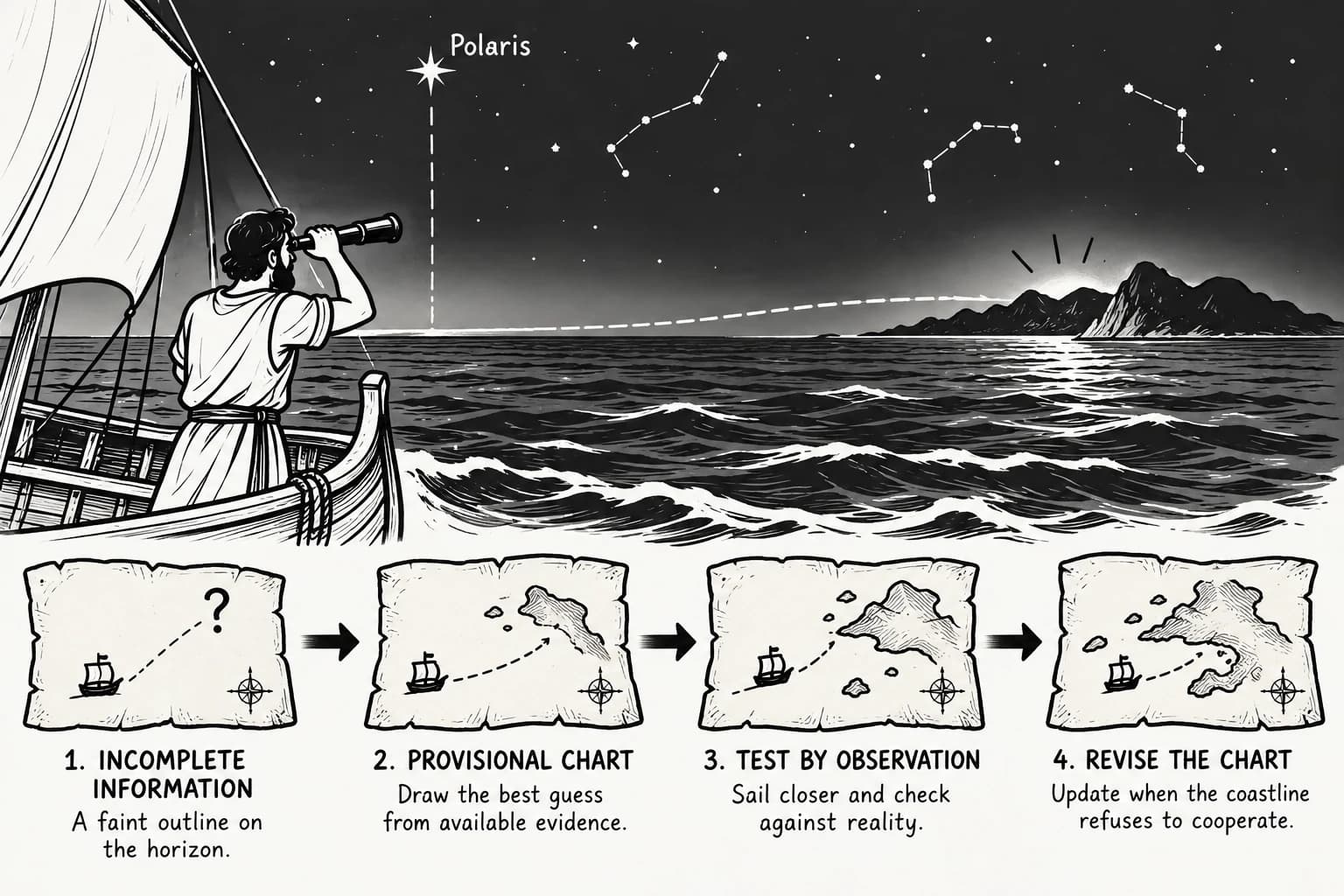
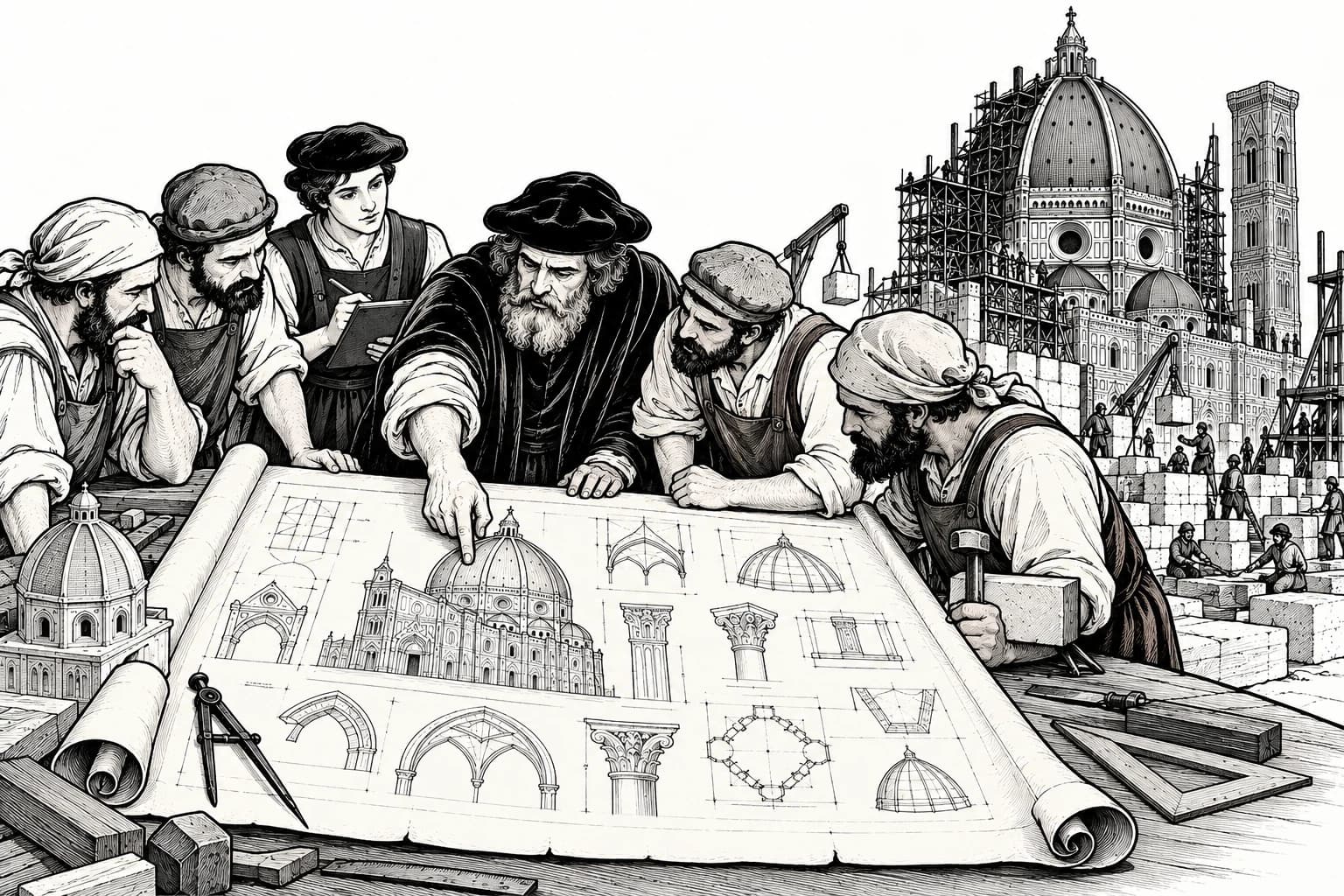
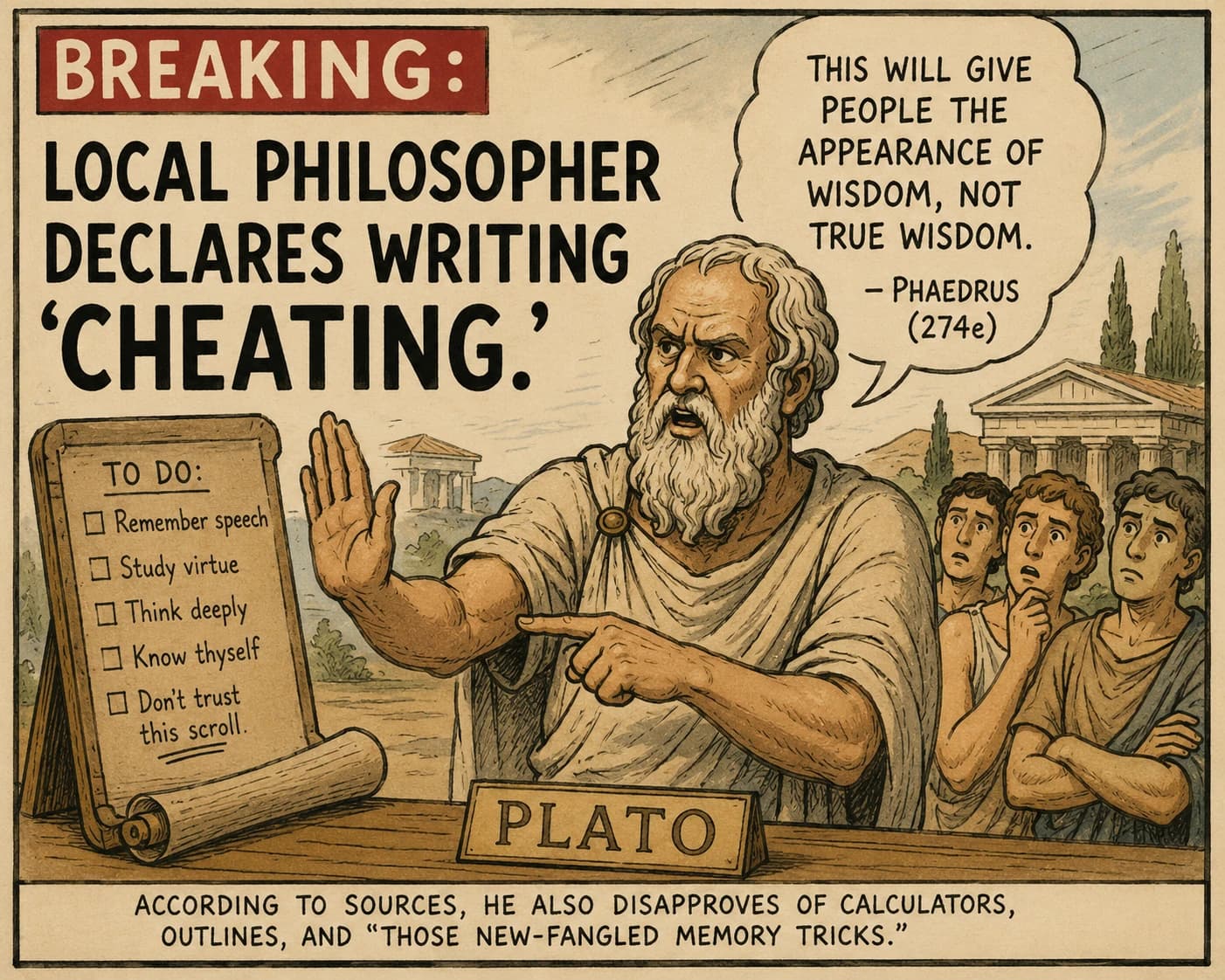
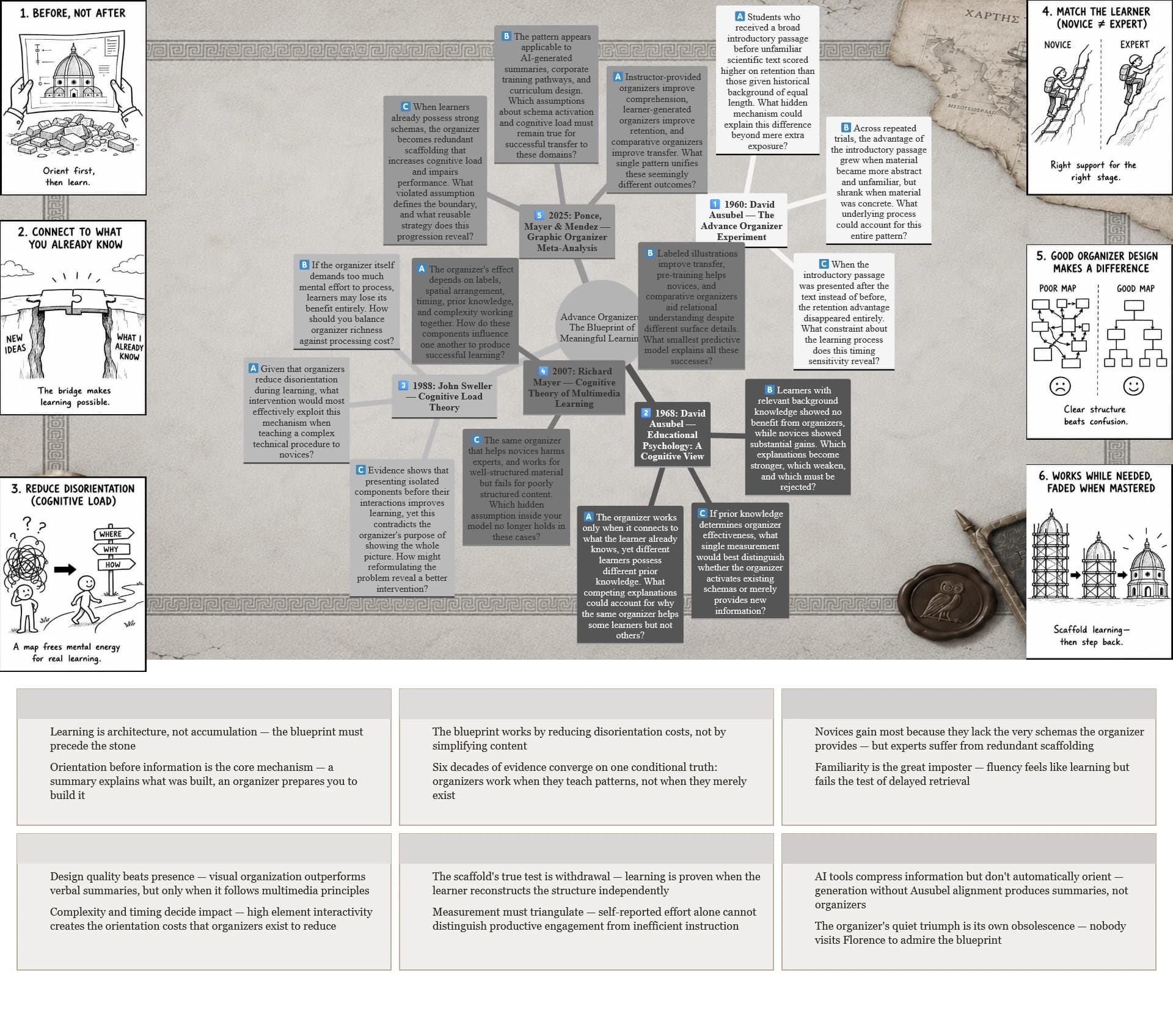
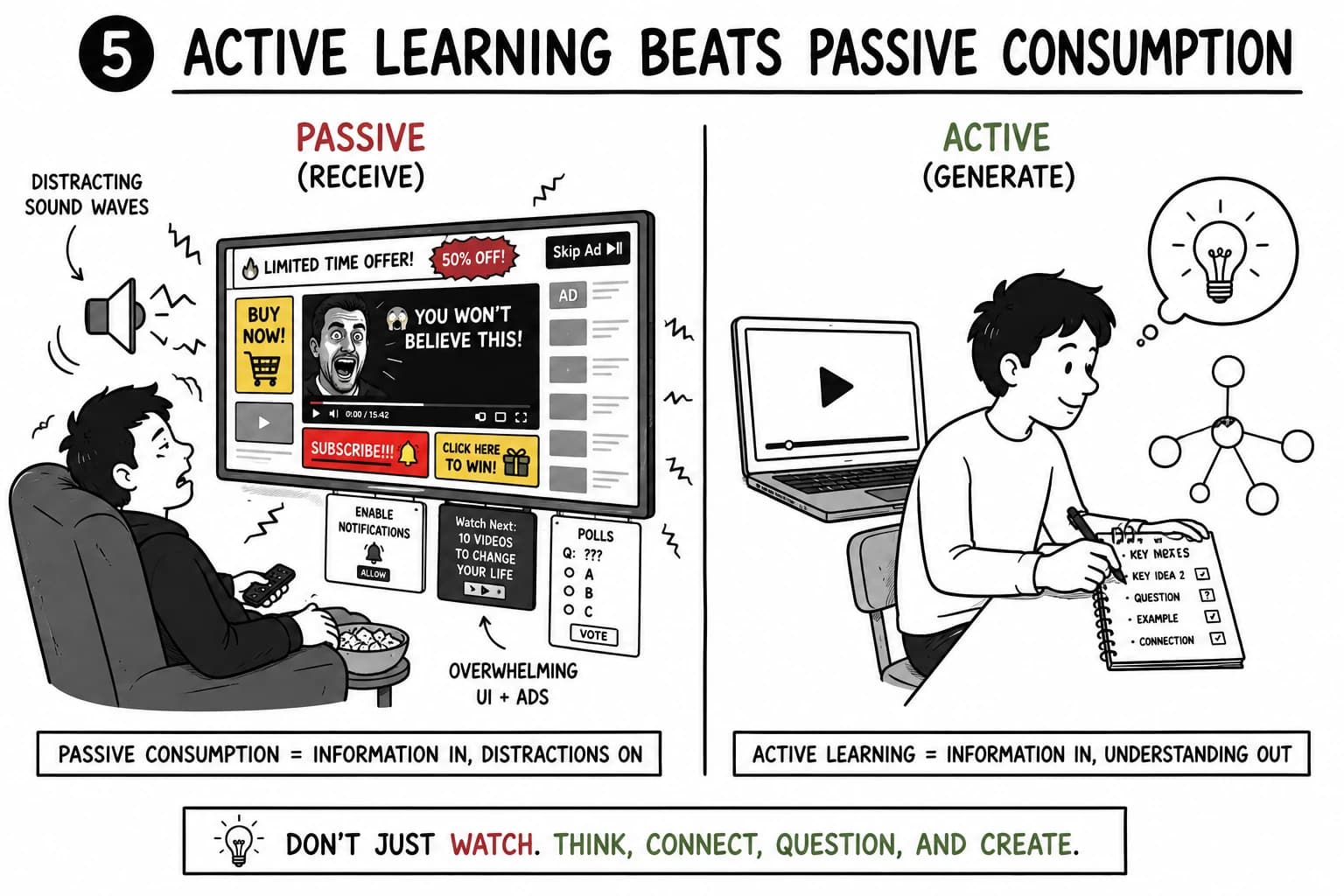
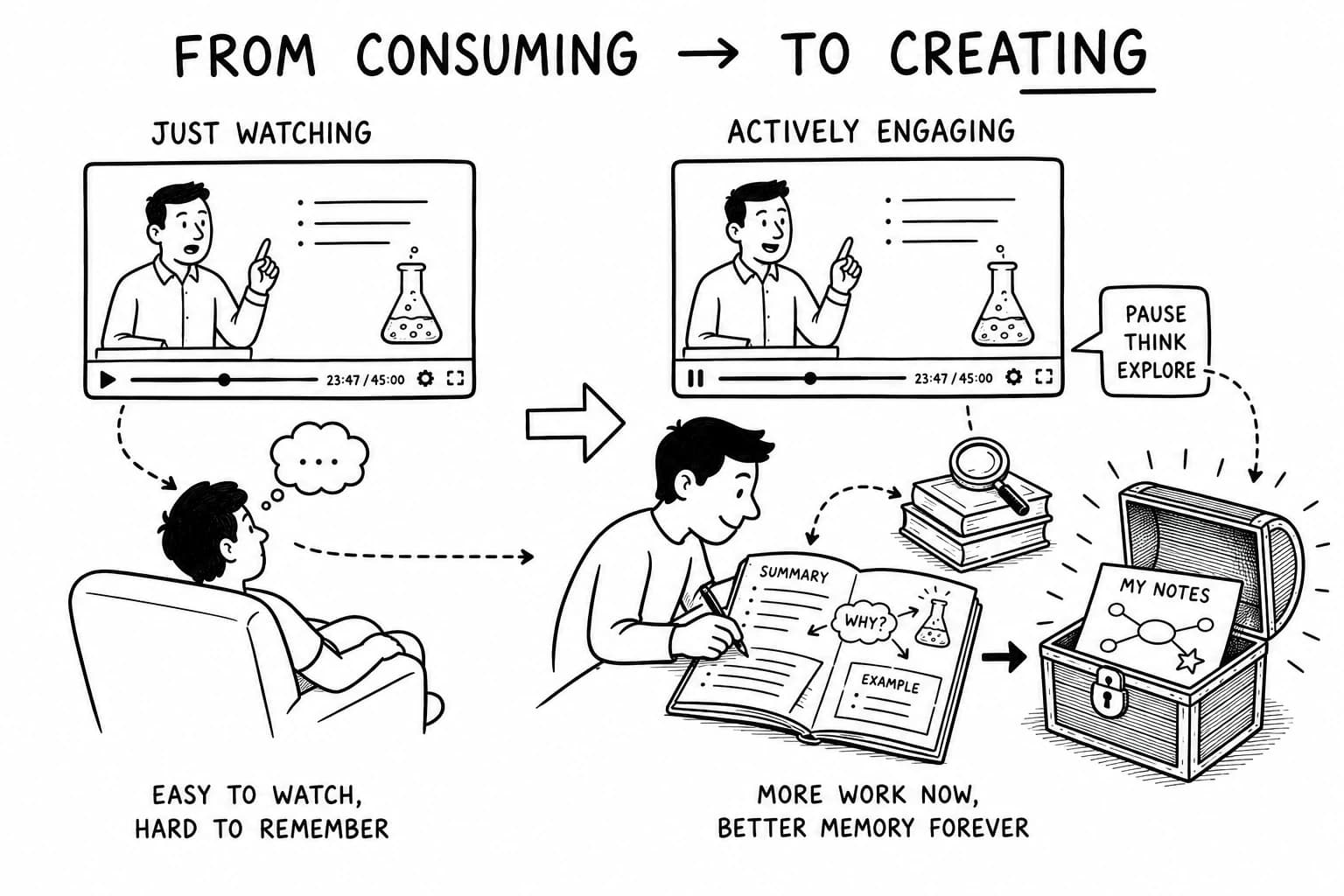
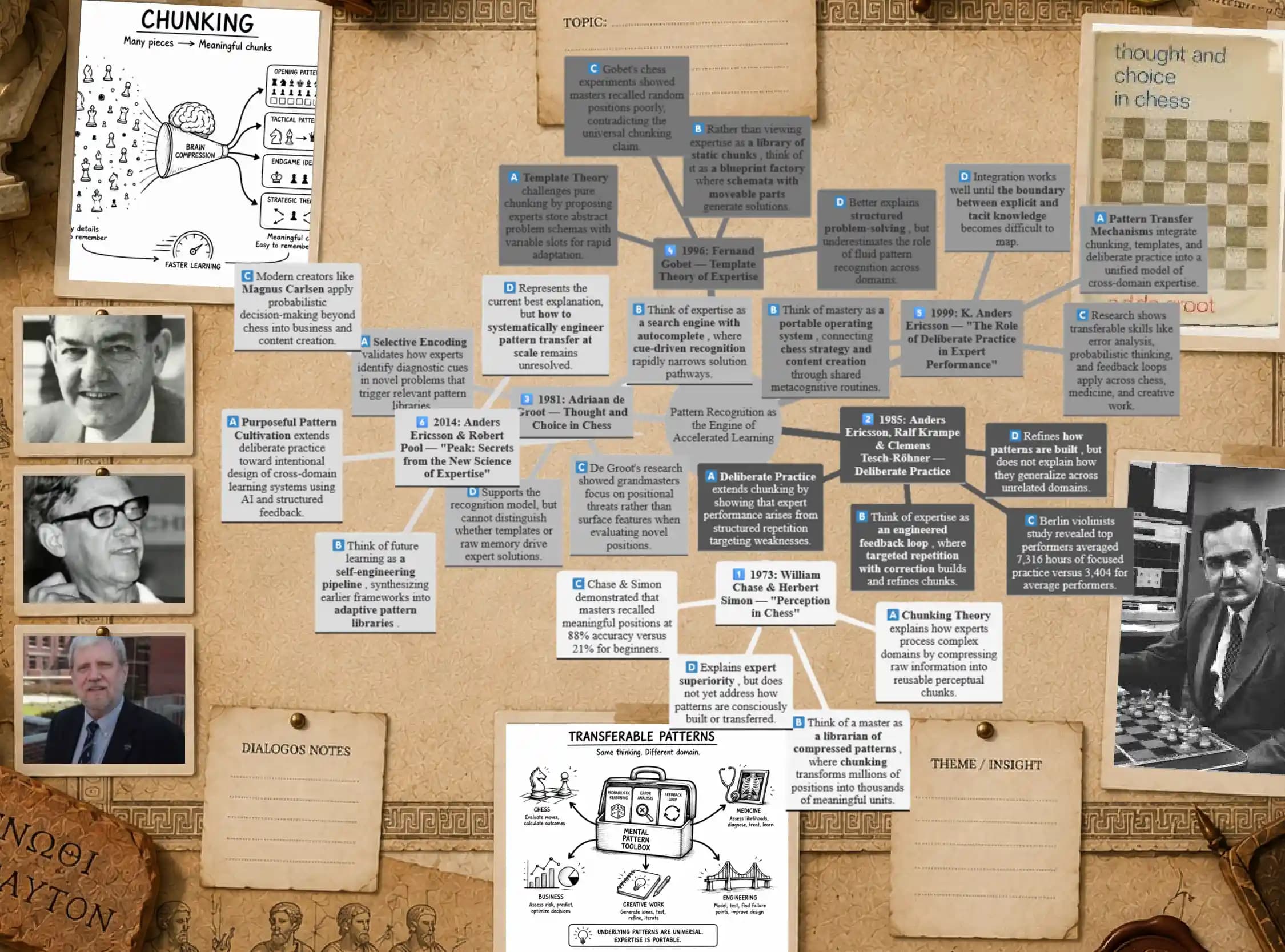
For centuries, education oscillated between copying and constructing. Medieval scholars could reproduce texts word for word yet fail to grasp their meaning, while debate, questioning, analogy, and explanation transformed the same material into durable understanding. Generative Learning Theory, developed by Merlin C. Wittrock (1974; 1990), explains why: learners do not passively absorb knowledge—they actively generate meaning by connecting new information to prior knowledge. Every prediction, explanation, question, analogy, summary, or concept map becomes another connection woven into existing schemas. Wittrock positioned it as a process of knowledge construction, meaning making, and schema integration, an idea that now underpins modern educational psychology, learning sciences, constructivism, and multimedia learning.
-
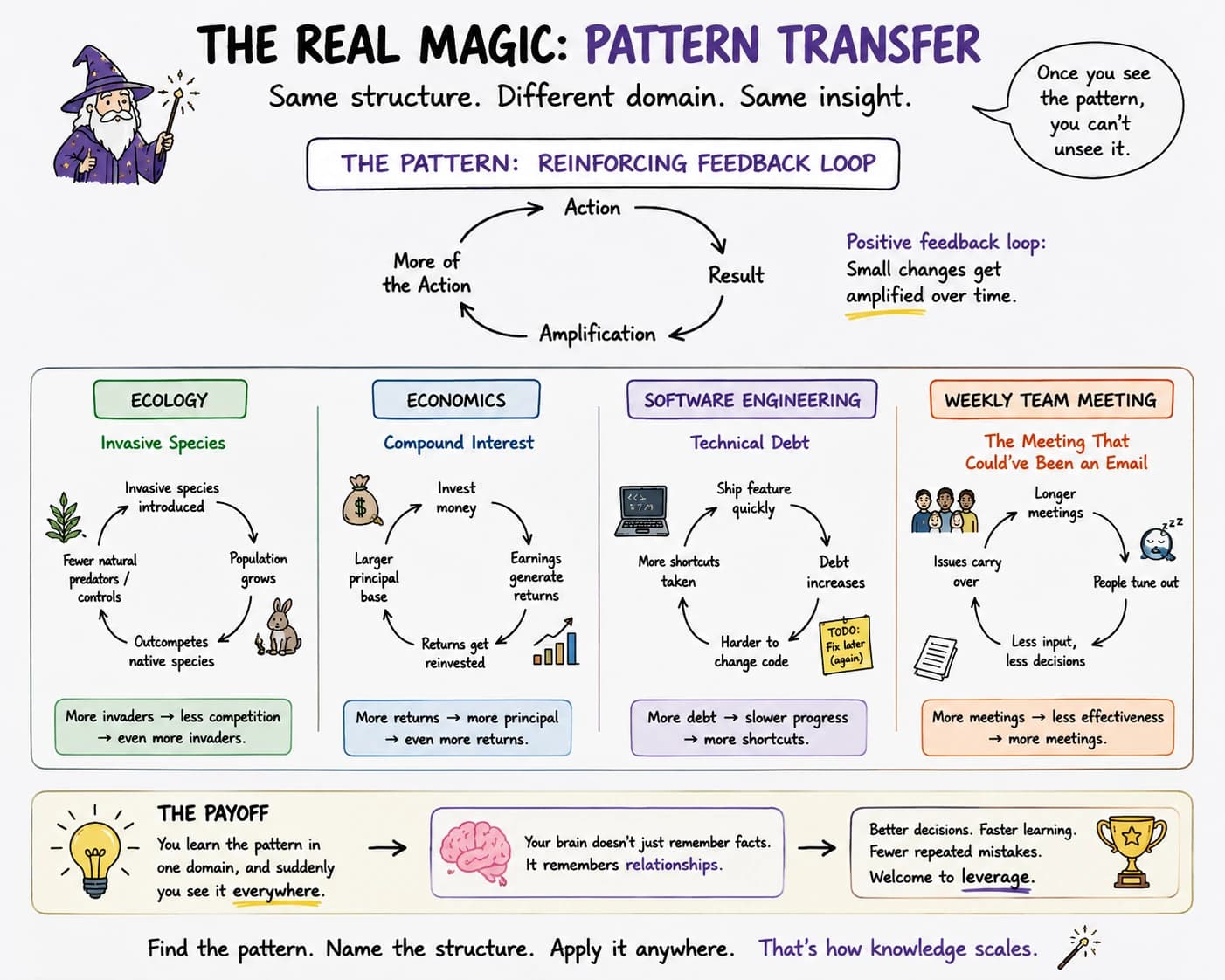
Generative learning begins when learners actively build relationships rather than consume explanations. New information becomes meaningful only after it is connected to existing schemas, mental models, and cognitive structures through activities such as prediction, explanation, elaboration, questioning, summarization, imagery, and analogy. Understanding emerges from construction, not exposure, making active learning, meaningful learning, and constructive processing central.
-
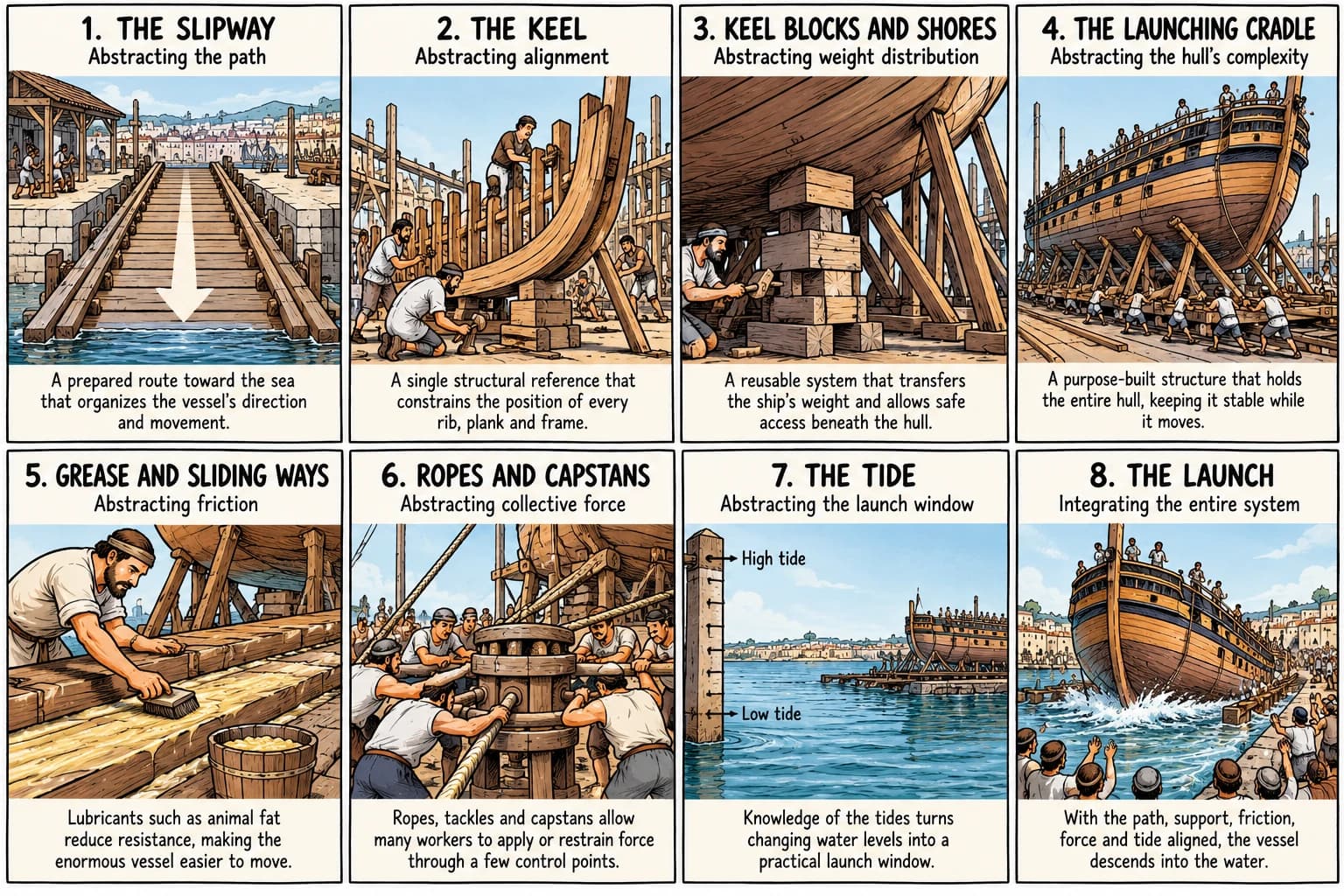
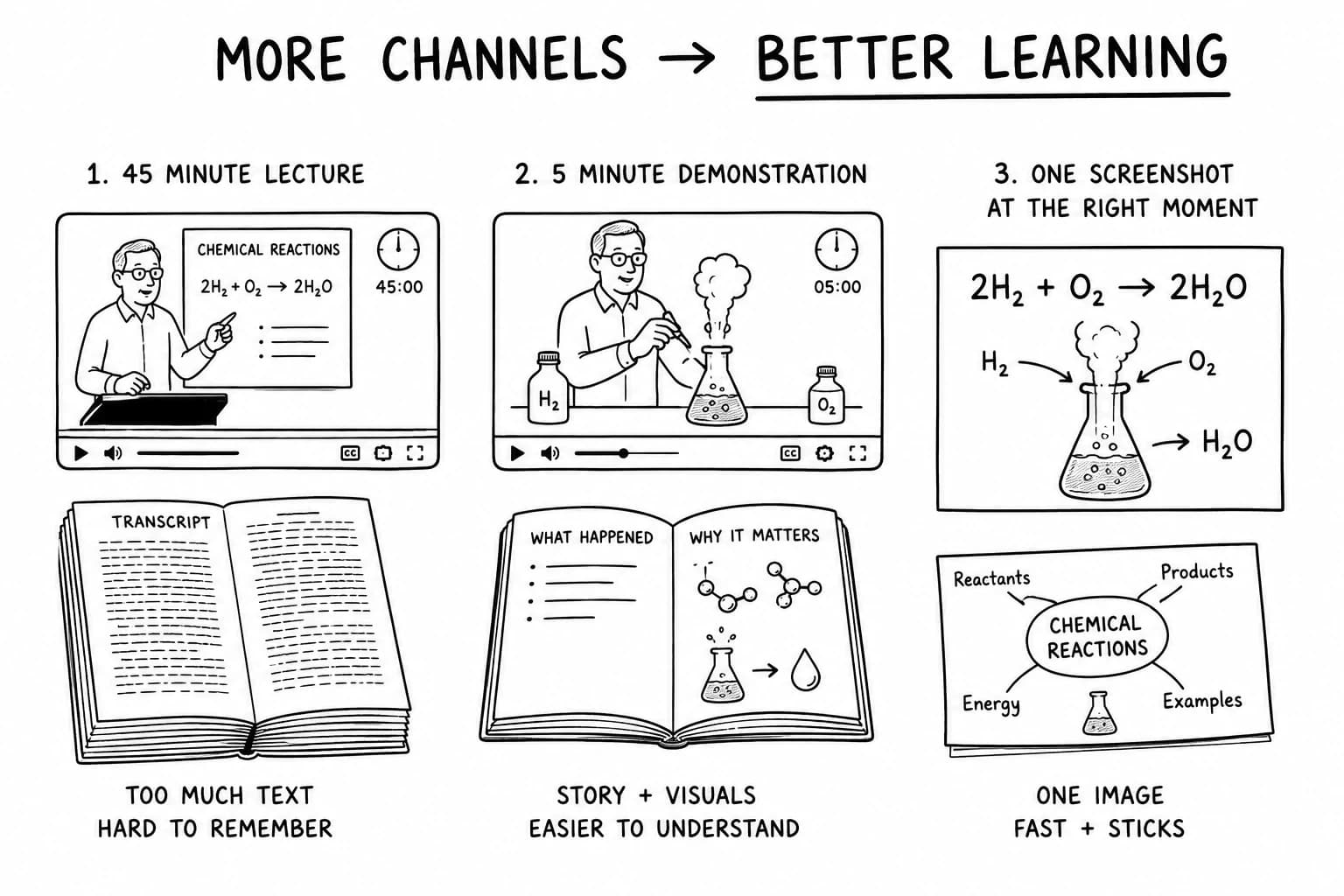
The theory extends classical constructivism into practical instructional design. While Piaget described schema formation, Vygotsky emphasized social scaffolding, Bruner promoted discovery learning, and Ausubel introduced advance organizers, Wittrock identified the moment-to-moment cognitive actions learners perform during comprehension. Later, Richard Mayer's SOI model (Select–Organize–Integrate) translated these principles into multimedia learning, showing how text, narration, graphics, and prior knowledge combine into coherent mental representations.
-
Research supporting generative learning comes from multiple complementary traditions. Wittrock's theoretical framework is reinforced by the generation effect (Slamecka & Graf), the self-explanation effect (Chi et al.), elaborative interrogation (Pressley et al.), retrieval practice (Roediger & Karpicke), desirable difficulties (Bjork), and levels of processing (Craik & Lockhart). Together they consistently demonstrate that generating relationships, explanations, and predictions produces deeper comprehension, stronger retention, and greater transfer than passive rereading.
-
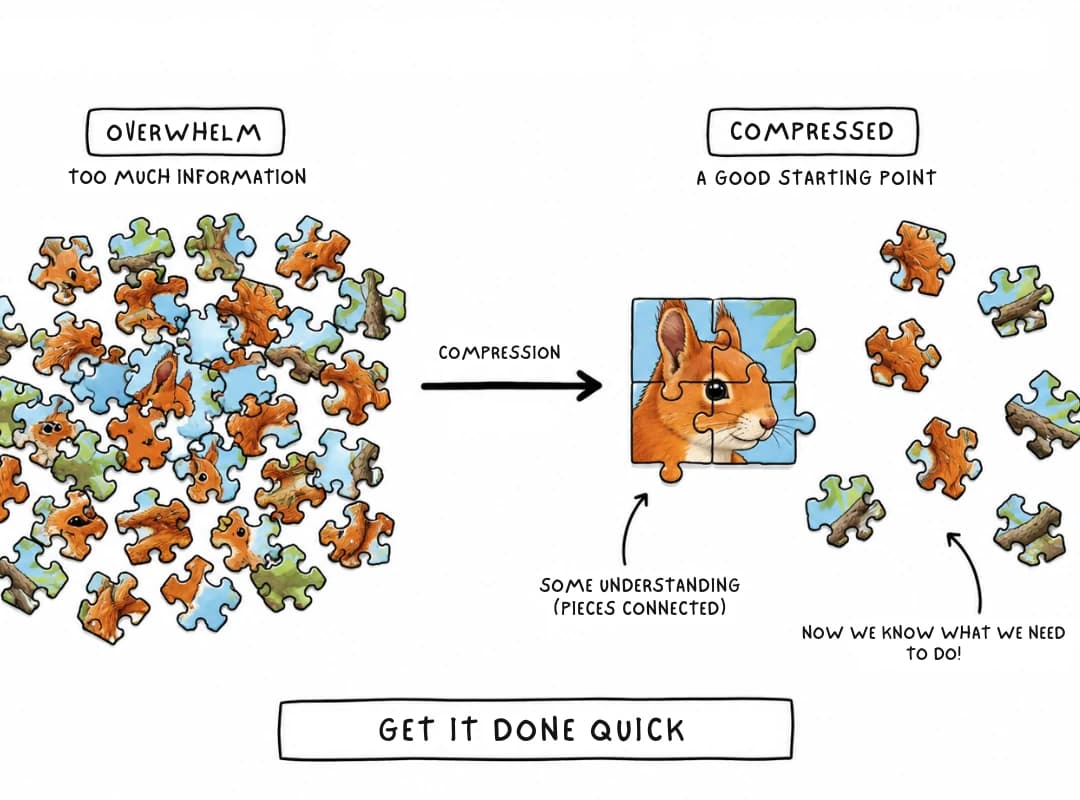
Learning occurs through a sequence of cognitive processes that progressively transform information into understanding. Learners first allocate selective attention, organize incoming information within working memory, activate relevant semantic networks, construct relationships through elaborative encoding, and finally integrate new concepts into long-term memory through schema construction and knowledge integration. Prediction, questioning, summarization, concept mapping, imagery, and explanation each strengthen different stages of this generative process.
-
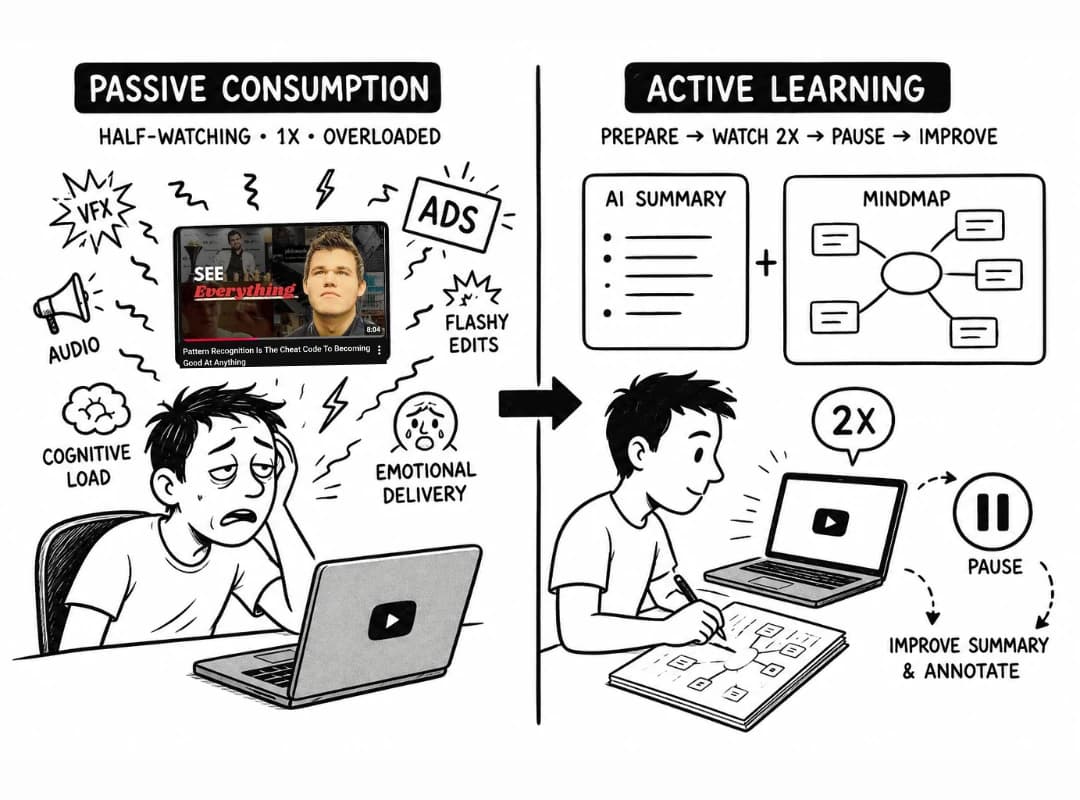
The implications for AI-assisted learning are substantial. AI summaries, advance organizers, glossaries, and mind maps should function as scaffolds for learner construction rather than finished products. AI tutors should prompt learners to predict, explain, summarize, and connect ideas before presenting expert answers. This shifts AI learning systems from information delivery toward genuine generative learning, allowing adaptive instruction to strengthen comprehension, retention, and knowledge transfer.
Historical Development and Research Foundations of Generative Learning Theory
| Year | Research Milestone | Contribution to Generative Learning Theory |
|---|---|---|
| 1968 | David Ausubel – Meaningful Learning & Advance Organizers | Established that new knowledge is learned by connecting it to existing cognitive structures, providing the theoretical foundation for schema activation, meaningful learning, and prior knowledge activation. |
| 1974 | Merlin C. Wittrock – Reading as a Generative Process | Introduced Generative Learning Theory, proposing that comprehension results from learners actively generating relationships between new information and existing knowledge. |
| 1978 | Slamecka & Graf – Generation Effect | Demonstrated that self-generated learning, active generation, and learner-produced responses produce stronger memory encoding and long-term retention than passive reading. |
| 1987 | Pressley et al. – Elaborative Interrogation | Showed that asking learners to explain why ideas are true strengthens knowledge construction, semantic processing, and conceptual understanding. |
| 1989 | Chi et al. – Self-Explanation Effect | Demonstrated that learners who generate explanations achieve superior comprehension, transfer, and problem solving through constructive learning and deep processing. |
| 1990 | Wittrock – Generative Processes of Comprehension | Expanded the theory into a comprehensive model of attention, construction, integration, schema refinement, and meaning making during learning. |
| 1991 | Wittrock – Classroom Applications | Translated generative learning into instructional practice using prediction, explanation, questioning, summarization, imagery, and analogy as classroom strategies. |
| 1990s–2000s | Richard Mayer – SOI Model & Multimedia Learning | Operationalized Wittrock's ideas for multimedia learning, showing that learners must select, organize, and integrate verbal and visual information into coherent mental models. |
| 2000s–Present | Roediger & Karpicke, Bjork, Dunlosky, Learning Sciences | Connected retrieval practice, testing effect, desirable difficulties, elaborative interrogation, active recall, and productive failure into a unified evidence base supporting constructive processing, educational interventions, and evidence-based teaching strategies. |
Generation Effect Sizes and Practical Impact
A loom produces cloth because countless threads are tied into a coherent pattern, not because any single strand is exceptionally strong. Generative Learning Theory follows the same logic. Since Merlin C. Wittrock introduced the theory in the 1970s, decades of research have shown that learning becomes more durable when learners actively weave new ideas into existing knowledge. The individual threads are remarkably well tested. The generation effect consistently improves knowledge retention, conceptual understanding, and long-term memory (typically d ≈ 0.4–0.8), self-explanation often produces even larger gains (d ≈ 0.8–1.2), and elaborative interrogation adds reliable improvements in comprehension and transfer. Together these generative processes strengthen memory consolidation, storage strength, problem solving, critical thinking, near transfer, and far transfer, transforming isolated facts into connected mental models. The contrast reaches back to medieval education: scribes could reproduce a manuscript word for word, while scholars in the disputation hall remembered more because every idea had to be defended, questioned, and connected. The evidence, however, is richer than a single headline. Laboratory experiments repeatedly confirm the individual mechanisms, whereas classroom studies report smaller—though still meaningful—effects as prior knowledge, instructional guidance, learner motivation, and time reshape the learning environment. Hundreds of studies have replicated the component processes, yet Wittrock's original vision—a unified instructional system combining prediction, explanation, questioning, summarization, and integration—has rarely been tested as one complete model. The field stands on exceptionally strong evidence for its individual mechanisms, while the full theory remains an open pattern whose final weave is still being completed.
Factors, Rivals, and Evidence at a Glance
How Does the Generation Effect Improve Long-Term Memory and Transfer?
Neil W. Mulligan of the University of North Carolina and Daniel J. Peterson of Knox College (2015) compared generation, reading, and retrieval conditions across immediate and two-day delayed tests, using free recall and recognition. ([PubMed][1]) Their experiments showed that initially negative generation effects disappeared after two days while generated information exhibited less forgetting, demonstrating durable item-specific memory despite weaker immediate relational recall.
| Audience / Industry / Use Case    | Research Finding → Your Next Rep                                                                                                                                                                                                                                                                                                          |
| --------------------------------- | ----------------------------------------------------------------------------------------------------------------------------------------------------------------------------------------------------------------------------------------------------------------------------------------------------------------------------------------- |
| **Medical education**             | Immediate free recall could favor reading under conditions that disrupted interitem relational processing, while generation produced less forgetting across two days; the item-specific encoding created by generation became more durable over time. Use delayed recall to evaluate whether generated explanations survive.              |
| **Software engineering training** | In the generation condition, the immediate disadvantage disappeared after a two-day delay, showing that retrieval strength at the first test can misrepresent storage strength. Separate immediate performance from delayed retrieval when evaluating generated code explanations or architecture predictions.                            |
| **Professional certification**    | Delayed recognition retained the generation advantage even when immediate free recall showed the opposite pattern, illustrating transfer-appropriate processing and the distinction between item-specific and relational processing. Evaluate generated answers with both delayed recall and recognition rather than one immediate score. |
Why Is Self-Explanation the Highest-Leverage Strategy for Deep Comprehension?
Katerine Bielaczyc, Peter L. Pirolli, and Ann L. Brown (1995) trained 24 university students with no programming experience in self-explanation and self-regulation while they studied Lisp programming lessons, comparing explicit strategy training with a control intervention. ([Taylor & Francis Online][2]) Trained learners increased self-explanation and self-regulation substantially and showed greater programming-performance gains, linking explanation generation with problem-solving improvement.
| Audience / Industry / Use Case       | Research Finding → Your Next Rep                                                                                                                                                                                                                                                                                           |
| ------------------------------------ | -------------------------------------------------------------------------------------------------------------------------------------------------------------------------------------------------------------------------------------------------------------------------------------------------------------------------- |
| **Computer-science education**       | Explicit training increased self-explanation and self-regulation during Lisp lessons, while greater strategy use accompanied better programming performance; explanation generation converted worked material into linked procedural and conceptual representations. Evaluate learning through novel programming problems. |
| **Technical onboarding**             | Trained learners increasingly elaborated main ideas, connected concepts within lessons, and linked explanations to programming examples, demonstrating how causal explanation can turn documentation into a usable schema. Measure performance on unfamiliar procedures to capture example-independent knowledge.          |
| **Engineering knowledge management** | Strategy training increased clarification and repair of comprehension failures, showing self-explanation as a metacognitive monitoring process rather than mere paraphrase. Embed why/how prompts around technical diagrams and procedures, then assess whether employees can diagnose and solve unfamiliar cases.         |
How to Use Elaborative Interrogation and Socratic Questioning for Transfer?
Vera E. Woloshyn, Allan Paivio, and Michael Pressley (1994) studied 140 sixth- and seventh-grade students learning facts that were either consistent or inconsistent with prior knowledge, comparing ordinary reading with elaborative interrogation. ([ResearchGate][3]) Across free recall, cued recall, and immediate, 14-day, 75-day, and 180-day recognition measures, answering why questions produced significantly better memory than reading alone.
| Audience / Industry / Use Case      | Research Finding → Your Next Rep                                                                                                                                                                                                                                                                                |
| ----------------------------------- | --------------------------------------------------------------------------------------------------------------------------------------------------------------------------------------------------------------------------------------------------------------------------------------------------------------- |
| **Secondary-school science**        | Elaborative interrogation improved free and cued recall for both knowledge-consistent and knowledge-inconsistent facts, showing that semantic elaboration can attach new facts to existing semantic memory. Use why questions when introducing unfamiliar scientific relationships and evaluate delayed recall. |
| **Corporate compliance training**   | The advantage persisted across recognition tests extending to 180 days, demonstrating durable semantic integration. Replace selected definition review with why-is-this-true questions and measure retention after meaningful delays.                                                                           |
| **Medical terminology instruction** | The study's comparison of familiar and unfamiliar facts shows that elaboration can operate when learners must connect new information with existing knowledge structures. Pair terminology with causal or functional why questions and assess cued retrieval rather than recognition alone.                     |
Why Does Prior Knowledge Decide Whether Generation Helps? Novice vs Expert + Organizer Playbook
Jasmin Breitwieser of the DIPF Leibniz Institute for Research and Information in Education and Garvin Brod of DIPF and Goethe University Frankfurt (2021) compared 25 children aged 9–11 with 25 university students generating predictions or examples before numerical facts. ([DOI][4]) Children remembered more after predictions, whereas adults benefited similarly from both strategies, revealing strategy-specific cognitive prerequisites.
| Audience / Industry / Use Case        | Research Finding → Your Next Rep                                                                                                                                                                                                                                                                                                      |
| ------------------------------------- | ------------------------------------------------------------------------------------------------------------------------------------------------------------------------------------------------------------------------------------------------------------------------------------------------------------------------------------- |
| **Elementary science teachers**       | Children remembered more facts after generating predictions than examples, while adults showed similar effectiveness across strategies; prediction requires less analogical reasoning than example generation. Use prediction-first generation when schemas are thin, then increase organizer complexity as prior knowledge develops. |
| **University professional education** | Adults performed similarly after prediction and example generation, indicating that richer prior knowledge can support multiple generative routes. Diagnose prior knowledge before selecting a generation strategy.                                                                                                                   |
| **Adaptive-learning platforms**       | Pupillary measures indicated greater surprise during predictions, while example-generation effectiveness correlated with children’s analogical reasoning ability. Route learners toward prediction or example generation according to demonstrated reasoning capacity and evaluate the resulting recall separately.                   |
How Does Corrective Feedback Turn Generation Into Durable Learning?
Kathleen M. Arnold and Kathleen B. McDermott of Washington University in St. Louis (2013) separated the direct effects of retrieval practice from its indirect effects on subsequent restudy, using conditional-probability analyses across controlled recall and restudy conditions. ([PubMed][5]) Their experiments showed that unsuccessful retrieval attempts increased the effectiveness of subsequent restudy, establishing test-potentiated learning as an additional pathway through which feedback-linked retrieval can strengthen later learning.
| Audience / Industry / Use Case   | Research Finding → Your Next Rep                                                                                                                                                                                                                                                                                         |
| -------------------------------- | ------------------------------------------------------------------------------------------------------------------------------------------------------------------------------------------------------------------------------------------------------------------------------------------------------------------------ |
| **Medical educators**            | Unsuccessful retrieval attempts increased the effectiveness of later restudy, showing that an error can prepare attention for corrective information rather than simply representing failure. Use retrieve → reveal → restudy cycles and compare later recall with restudy-only practice.                                |
| **Workplace certification**      | Retrieval modified the value of a subsequent exposure, demonstrating that feedback can operate through both correction and enhanced encoding. Make incorrect answers visible before the second exposure and measure delayed retention.                                                                                   |
| **AI-assisted learning systems** | Test-potentiated learning separates the retrieval event from the later encoding benefit, providing a model for feedback loops that diagnose weak knowledge before presenting correction. Log initial errors, corrective exposure, and delayed retrieval separately so improvement is attributable to the learning cycle. |
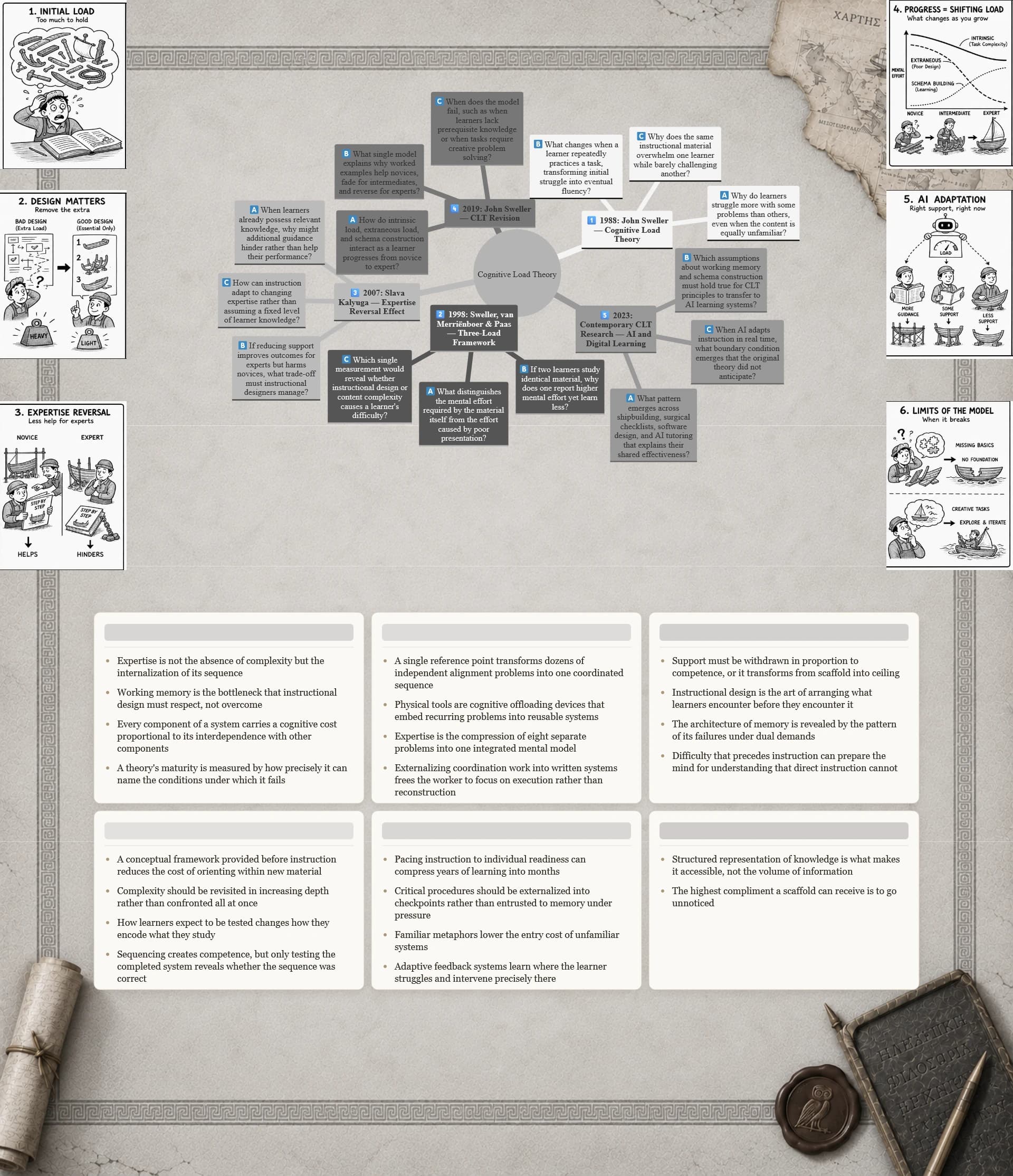
Direct Instruction vs Generative Learning: How to Avoid Novice Overload and Scaffold Like an Expert?
David Klahr of Carnegie Mellon University and Milena Nigam of the University of Pittsburgh (2004) studied 112 third- and fourth-grade children learning to design and interpret unconfounded experiments through direct instruction or discovery learning. ([Sage Journals][6]) Direct instruction produced mastery for 77% of children versus 23% after discovery, while both successful groups performed similarly on broader science-fair judgments, showing that explicit guidance can accelerate schema acquisition without eliminating transfer.
| Audience / Industry / Use Case     | Research Finding → Your Next Rep                                                                                                                                                                                                                                           |
| ---------------------------------- | -------------------------------------------------------------------------------------------------------------------------------------------------------------------------------------------------------------------------------------------------------------------------- |
| **Elementary science instruction** | Direct instruction produced mastery for 77% of children compared with 23% under discovery learning, demonstrating the value of explicit schema construction when intrinsic load is high. Teach the control-of-variables structure before requiring independent generation. |
| **Novice technical onboarding**    | The direct-instruction group reached the target procedure more reliably, indicating that novices can benefit from explicit guidance before generative problem solving. Sequence worked explanations, guided practice, and prompt fading.                                   |
| **Science curriculum design**      | Among children who mastered experimental design, direct-instruction learners performed as well as discovery learners on broader science-fair judgments, showing that explicit instruction did not prevent later application. Evaluate transfer after mastery.              |
Fluency Illusion or Real Attention? How to Tell Effort From Learning
Matthew G. Rhodes and Alan D. Castel of Colorado State University (2008) manipulated the perceptual fluency of words by presenting them in large or small fonts while participants predicted later free recall. ([PubMed][7]) Participants judged large-font words more memorable even though later recall was equivalent, demonstrating that perceptual fluency can inflate judgments of learning without improving memory.
| Audience / Industry / Use Case    | Research Finding → Your Next Rep                                                                                                                                                                                                                                             |
| --------------------------------- | ---------------------------------------------------------------------------------------------------------------------------------------------------------------------------------------------------------------------------------------------------------------------------- |
| **University students**           | Large-font words received higher judgments of learning while actual recall remained equivalent, demonstrating a fluency illusion in which perceptual ease masquerades as memory strength. Replace rereading confidence with delayed retrieval tests when evaluating mastery. |
| **Corporate learning analytics**  | The perceptual manipulation changed JOLs without changing retention, showing that confidence can track presentation fluency rather than encoding quality. Separate subjective confidence from objective retrieval in learning dashboards.                                    |
| **Technical documentation teams** | When fluency cues are unrelated to knowledge, attention and processing ease can produce misleading metamemory signals. Evaluate documentation through explanation and recall tasks, especially when deciding whether users have actually learned a procedure.                |
Generation vs Retrieval Practice: Which Builds Stronger Memory? Testing + Prediction Error Guide
Neil W. Mulligan of the University of North Carolina and Daniel J. Peterson of Knox College (2015) compared testing and generation with reading across immediate and two-day delayed free-recall and recognition tests. ([PubMed][1]) Both manipulations could initially impair free recall under conditions that disrupted relational processing, yet the disadvantages disappeared after two days and both retrieval and generation produced less forgetting than their controls.
| Audience / Industry / Use Case    | Research Finding → Your Next Rep                                                                                                                                                                                                                                                                  |
| --------------------------------- | ------------------------------------------------------------------------------------------------------------------------------------------------------------------------------------------------------------------------------------------------------------------------------------------------- |
| **Professional exam preparation** | Immediate free recall showed conditions in which testing or generation could appear inferior to restudy, while delayed testing removed the disadvantage and reduced forgetting. Schedule retrieval across delays.                                                                                 |
| **Language learning**             | Generation from semantic cues and retrieval from studied material produced parallel delay patterns, showing that retrieval strength and storage strength can diverge across time. Compare vocabulary immediately and after two days before judging a study method.                                |
| **Technical skill training**      | Delayed recognition preserved item-specific benefits even when relational free recall was initially disrupted, demonstrating that test format changes what the learning method appears to accomplish. Use both recognition and recall when diagnosing whether generated knowledge has stabilized. |
Does Saying It Out Loud Help? Production Effect, Dual Coding and Visualization
Colin M. MacLeod, Nigel Gopie, Kathleen L. Hourihan, Karen R. Neary, and Jason D. Ozubko (2010) at the University of Waterloo conducted eight recognition experiments comparing words produced aloud with words read silently. ([PubMed][8]) Producing selected words aloud improved recognition in mixed-list designs, extended to mouthed words and nonwords, and even added to an existing generation effect, indicating that production creates distinctive memory records.
| Audience / Industry / Use Case       | Research Finding → Your Next Rep                                                                                                                                                                                                                                                                |
| ------------------------------------ | ----------------------------------------------------------------------------------------------------------------------------------------------------------------------------------------------------------------------------------------------------------------------------------------------- |
| **Language learners**                | Producing selected words aloud improved recognition relative to silently read words in mixed lists, demonstrating an additional production-based encoding trace. Read key vocabulary aloud during study and compare delayed recognition of produced versus silent items.                        |
| **Technical training**               | The effect survived with pronounceable nonwords, showing that production benefits cannot depend entirely on meaningful semantic associations. Use spoken labels for unfamiliar commands, symbols, or terminology when the goal is stronger item-specific encoding.                              |
| **Knowledge workers creating notes** | Production added to an existing generation effect, indicating that semantic generation and modality-based distinctiveness can contribute independently. Convert selected generated answers into spoken explanations and measure whether recognition or recall improves beyond generation alone. |
ICAP + Levels of Processing: Are You Really Constructive or Just Active?
Rachel Lam and Kasia Muldner (2017) studied four introductory psychology classes using a 2×2 experiment comparing individual preparation with no preparation and active with constructive tasks before collaboration. ([ScienceDirect][9]) Individual preparation improved deep-learning outcomes, while active and constructive preparation produced similar overall gains, suggesting that preparation can create conditions for constructive collaboration even when the initial activity differs.
| Audience / Industry / Use Case    | Research Finding → Your Next Rep                                                                                                                                                                                                                                                                                           |
| --------------------------------- | -------------------------------------------------------------------------------------------------------------------------------------------------------------------------------------------------------------------------------------------------------------------------------------------------------------------------- |
| **University seminar design**     | Students who prepared individually before collaboration achieved better deep-learning outcomes than students who collaborated without preparation, linking preparation with constructive interaction. Require an individual question or explanation before group discussion and assess deep rather than shallow questions. |
| **Corporate workshops**           | Active and constructive preparation produced near-equal collaborative outcomes, showing that the preparation phase itself can matter more than forcing one engagement label. Give participants an individual reasoning task before discussion, then evaluate the quality of the resulting synthesis.                       |
| **Team-based technical training** | Dialogue analysis suggested that active preparation could invoke constructive engagement during collaboration, connecting selection, explanation, questioning, and knowledge co-construction. Capture pre-discussion reasoning before collaborative problem solving and measure transfer to unfamiliar cases.              |
Productive Struggle That Builds Adaptive Expertise: Desirable Difficulties Playbook
Katharina Loibl, Nikol Rummel, and colleagues developed productive-failure research around the sequence of problem solving before instruction, examining how initial struggle prepares learners to recognize and use later canonical solutions; related experiments have tested this structure across mathematics and younger learners. ([DOI][10]) The evidence supports productive failure as a mechanism for conceptual knowledge construction when the struggle is followed by targeted instruction and comparison.
| Audience / Industry / Use Case       | Research Finding → Your Next Rep                                                                                                                                                                                                                                                                                                           |
| ------------------------------------ | ------------------------------------------------------------------------------------------------------------------------------------------------------------------------------------------------------------------------------------------------------------------------------------------------------------------------------------------ |
| **Mathematics education**            | Productive-failure studies place problem solving before instruction so learners generate incomplete strategies that later become comparison points for canonical methods; the resulting struggle supports conceptual knowledge construction. Assess both initial strategies and post-instruction transfer.                                 |
| **Teacher professional development** | Productive failure makes knowledge gaps visible before explanation, creating a readiness state for subsequent instruction. Ask teachers to attempt a difficult representation or solution first, then compare their reasoning with an expert model and measure later transfer.                                                             |
| **Software-engineering upskilling**  | Initial solution attempts expose competing representations before formal instruction supplies a stable schema, making comparison and abstraction central to adaptive expertise. Preserve the initial attempt, inspect the mismatch after instruction, and test whether the learner can select the appropriate strategy on a novel problem. |
Generative Learning in Practice: From Theory to AI Learning Workflows
Generative Learning Theory transforms every learning artifact from a reference into a construction tool. Instead of delivering completed explanations, AI learning assistants, adaptive learning systems, and intelligent tutoring systems should create opportunities for learners to predict, explain, question, connect, summarize, and revise before revealing expert answers. The instructional sequence shifts from present → consume → test to elicit → construct → compare → correct → consolidate, allowing personalized learning, knowledge scaffolding, learning analytics, and adaptive prompting to continuously adjust support as expertise grows. Across education, corporate learning, medical education, engineering, online learning, and EdTech, the highest-quality learning experiences are those that require learners to actively generate meaning. The table below integrates Wittrock's principles into the complete instructional workflow, showing how every deliverable can become a vehicle for constructive learning, schema activation, knowledge integration, long-term retention, and transfer of learning.
How to Diagnose Prior Knowledge Before Teaching? Best Prior Knowledge Profile Template
Judith G. Lambiotte and Donald F. Dansereau of Texas Christian University (1992) studied 74 undergraduates learning two biology lectures with knowledge maps, outlines, or key-term lists, while accounting for high versus low prior knowledge. ([Taylor & Francis Online][1]) The results show that instructional diagnosis matters: maps helped low-knowledge learners most, whereas high-knowledge learners benefited more from lists, with maps and outlines producing more coherent recall.
| Audience / Industry / Use Case | Research Finding → Your Next Rep |
|---|---|
| University science instructors | Low-prior-knowledge students recalled most biology material with knowledge maps, while key-term lists produced the weakest recall; prior knowledge + schema activation + visual organization changed which scaffold worked. Diagnose readiness first, then compare recall across scaffold types. ([Taylor & Francis Online][1]) |
| Corporate onboarding / technical training | High-prior-knowledge learners showed the reverse pattern, with key-term lists outperforming maps; expertise + cognitive organization + adaptive scaffolding support differentiated onboarding. Segment learners by prior-knowledge assessment and compare post-training recall. ([Taylor & Francis Online][1]) |
| Learning analytics / EdTech teams | Maps and outlines produced fewer fragmented facts than lists, showing that knowledge structure + relational encoding + schema coherence affected recall organization. Track not only total correct answers but fragmentation or relational coherence when validating a learner profile. ([Taylor & Francis Online][1]) |
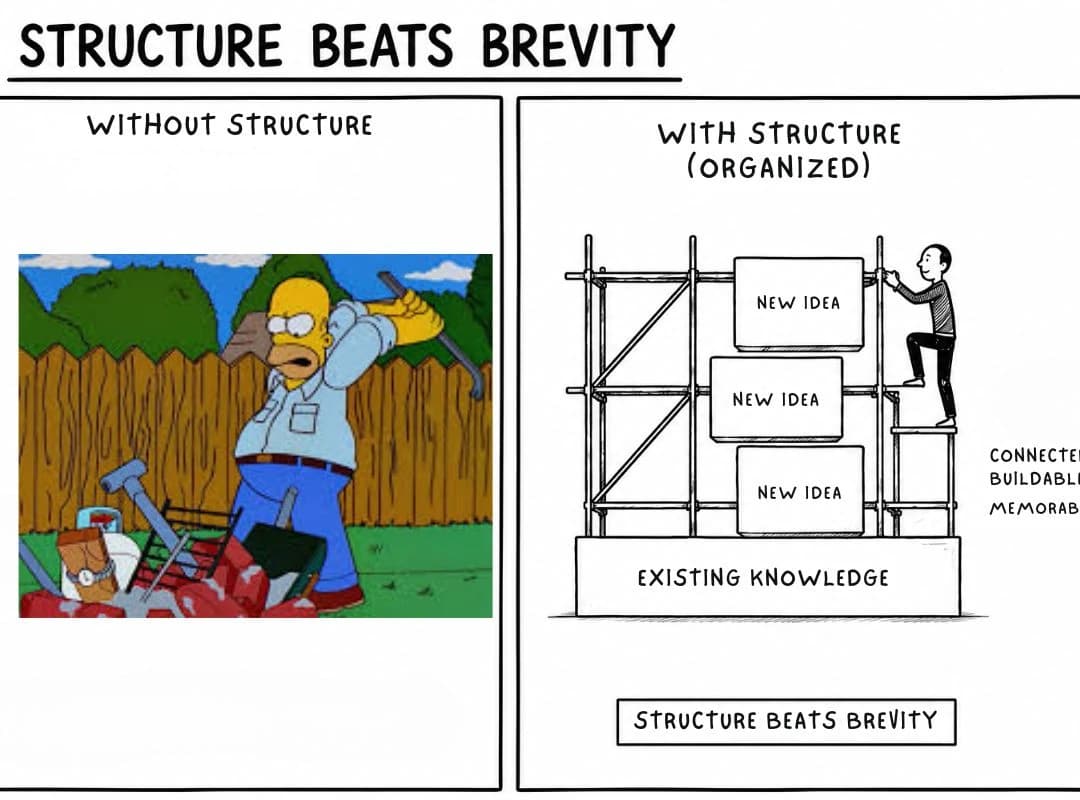
What Makes an Advance Organizer Generative? Partial Mind Maps That Force Prediction
Michael E. Bernard’s 1977 Australian Journal of Education experiment involved 225 fifth- and sixth-form students studying a taxonomy of behaviour-management concepts, comparing advance organizers, post-organizers, and instructional sequencing across immediate and delayed assessments. ([Sage Journals][2]) Organizers improved retention of relationships among concepts, while they did not improve initial learning of individual concepts and teaching sequence produced no learning advantage.
| Audience / Industry / Use Case | Research Finding → Your Next Rep |
|---|---|
| Secondary-school curriculum designers | Advance organizers strengthened retention of superordinate–coordinate–subordinate relationships, indicating that schema activation + hierarchical organization + relational encoding can make conceptual structure durable. Place a partial hierarchy before a unit and measure delayed relationship recall. ([Sage Journals][2]) |
| Corporate compliance / policy training | Organizers did not improve initial acquisition of individual concepts, while later retention improved; advance organization + generative orientation + retrieval context appears especially relevant to durable structure. Evaluate both immediate item scores and delayed relationship recall before judging the module. ([Sage Journals][2]) |
| LMS / course-sequencing teams | Changing the sequence in which the related concepts were taught produced no effect on learning or retention, while organizer placement mattered; organizational structure + conceptual hierarchy + cognitive integration should receive more design attention than cosmetic sequencing changes. ([Sage Journals][2]) |
Mind Maps + Concept Maps That Build Transfer, Not Wallpaper: How to Teach Relationships?
Daniel H. Robinson and Gregory Schraw (1994) conducted three experiments with 138 college students comparing matrices, outlines, and repeated text while testing interconcept-relation judgments under normal, reduced-time, and delayed-testing conditions. ([ResearchGate][3]) Matrices made relational judgments faster and more accurate under constrained study time, although the advantage disappeared after delayed testing, revealing a boundary on visual relational efficiency.
| Audience / Industry / Use Case | Research Finding → Your Next Rep |
|---|---|
| University STEM instructors | Matrix displays produced more accurate interconcept relations than outlines or text, showing how visualization + relational encoding + computational efficiency can expose structure quickly. Present relationships spatially when students must compare concepts, then assess relational judgments. ([ResearchGate][3]) |
| Knowledge-management / enterprise training | The matrix advantage survived reduced study time, indicating that spatial organization + relational reasoning + cognitive efficiency can compress comparison work when attention is scarce. Use structured maps for rapid orientation and measure accuracy under a fixed time limit. ([ResearchGate][3]) |
| EdTech knowledge-graph designers | The relational advantage disappeared when testing was delayed, showing that external representation + retrieval strength + durable encoding are separable outcomes. Treat a fast visual judgment as an interface metric and add delayed relational tests before claiming durable transfer. ([ResearchGate][3]) |
How to Summarize Without Killing Learning? Incomplete Summaries + Prediction Questions
Martha Davis and Richard E. Hult (1997) compared three note-taking conditions in introductory psychology: students who wrote summaries during pauses in a 21-minute lecture, students who merely reviewed notes during pauses, and students without pauses. ([Sage Journals][4]) Summary writing produced stronger delayed learning, with significant advantages over ordinary note-taking on free recall and a 12-day posttest, while pause-only review showed no comparable benefit.
| Audience / Industry / Use Case | Research Finding → Your Next Rep |
|---|---|
| University lecture courses | Writing three summaries during lecture produced higher free recall than ordinary note-taking, consistent with generative processing + summarization + elaborative rehearsal converting incoming prose into reconstructed structure. Insert short reconstruction pauses and assess free recall. ([Sage Journals][4]) |
| Corporate learning / microlearning | Summary writing also produced higher performance on the 12-day posttest, linking active reconstruction with longer-lived knowledge. Use short incomplete summaries during training and evaluate delayed retention. ([Sage Journals][4]) |
| Learning-platform designers | Pause-only note review did not differ from the no-pause control, while summary generation did; retrieval + generative annotation + active processing mattered more than simply inserting review time. Compare reconstruction prompts against passive review with identical delayed assessments. ([Sage Journals][4]) |
Glossary That Teaches Thinking: How to Turn Vocabulary Into Connected Knowledge? [Behaviorism vs Constructivism vs Connectivism Compared]
Jennifer A. McCabe of Goucher College (2015) tested learner-generated keyword mnemonics and real-life examples against instructor-provided materials while students learned neurophysiological terms and definitions in individual and small-group activities. ([Sage Journals][5]) Generating keyword mnemonics produced the strongest definitional performance immediately and after delay, while generating examples showed little comparable advantage on definition questions.
| Audience / Industry / Use Case | Research Finding → Your Next Rep |
|---|---|
| Medical and psychology educators | Learner-generated keyword mnemonics produced higher definition scores than reading instructor-provided materials at both immediate and delayed testing, demonstrating generation + semantic encoding + retrieval cues for terminology. Require each new term to receive a learner-created mnemonic and assess immediate and delayed definition recall. ([Sage Journals][5]) |
| Language-learning platforms | Learner-generated real-life examples did not match keyword-generation performance on definitional questions, showing that elaboration + semantic hooks + encoding specificity depend on the retrieval target. Match vocabulary activities to the assessment demand and separately measure definition and application performance. ([ResearchGate][6]) |
| Digital learning / collaborative training | The same overall pattern appeared in individual and small-group versions, with no meaningful activity-type effect; generative learning + retrieval practice + social format preserved the core learning pattern across delivery modes. Validate the activity using immediate and delayed quizzes. ([ResearchGate][6]) |
Best Structured Learning Module Design? Prediction → Explanation → Comparison for Flipped, Blended, MOOCs
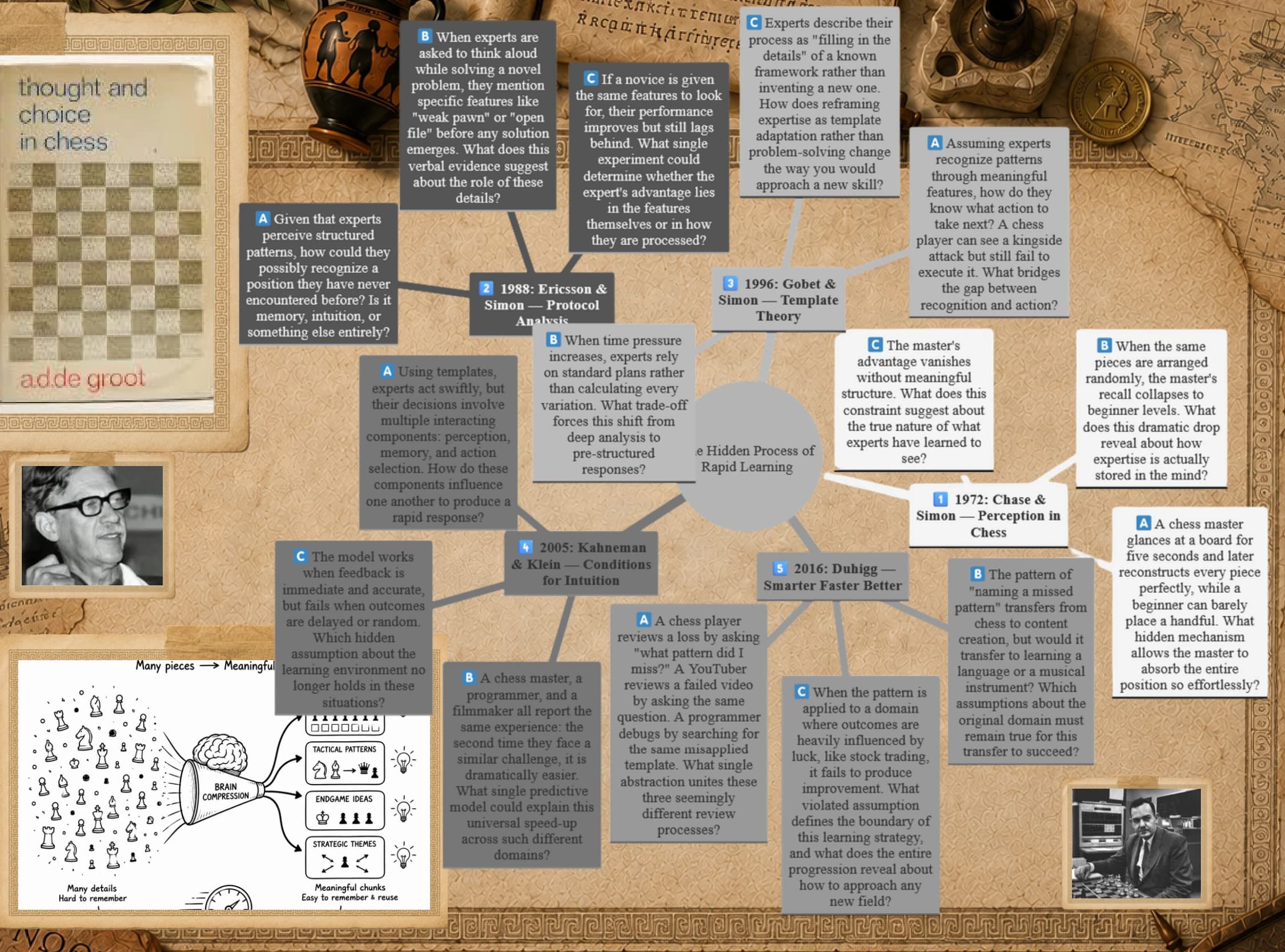
Anique B. H. de Bruin, Remy M. J. P. Rikers, and Henk G. Schmidt (2007) at Erasmus University Rotterdam studied 45 chess novices who either observed computer moves, predicted them, or predicted and verbally self-explained them during a King-and-Rook-versus-King endgame. ([ScienceDirect][7]) Prediction plus self-explanation produced better principled understanding and more successful checkmates, while prediction alone did not outperform observation.
| Audience / Industry / Use Case | Research Finding → Your Next Rep |
|---|---|
| University problem-solving courses | Prediction followed by self-explanation + comparison + principled reasoning produced better chess-move understanding than prediction alone, showing that prediction becomes more powerful when learners explain discrepancies. Require a prediction, verbal rationale, and comparison with the expert move before revealing the solution. ([ScienceDirect][7]) |
| Professional skills simulations | The prediction-and-explanation group more often successfully checkmated the opposing king, demonstrating transfer from active processing + explanation + procedural integration into performance. Convert demonstrations into predict–explain–compare cycles and score performance on a novel task. ([ScienceDirect][7]) |
| Flipped / adaptive learning systems | Prediction alone produced no advantage over observation, establishing an important boundary: prediction + retrieval + self-explanation mattered as a combined sequence. Instrument each stage separately and compare prediction-only against prediction-plus-explanation before scaling an adaptive pathway. ([ScienceDirect][7]) |
How to Build Durable Knowledge Frameworks? From Attention to Integration Cycle
Merlin C. Wittrock and Kathryn Alesandrini (1990) randomly assigned 59 learners to generate summaries, generate analogies, or simply read 50 paragraphs, then examined learning alongside analytic and holistic abilities. ([DOI][8]) Summary generation produced the highest mean score (29.8), analogy generation followed (27.2), and reading alone was lowest (22.4), with generation also changing which cognitive abilities predicted learning.
| Audience / Industry / Use Case | Research Finding → Your Next Rep |
|---|---|
| University reading-intensive courses | Summary generation produced the highest reading-test score (29.8 vs. 27.2 for analogies and 22.4 for reading), illustrating attention + organization + integration through learner reconstruction. Require concise summaries after dense readings and compare assessment performance with passive reading. ([DOI][8]) |
| Professional knowledge certification | Analogy generation produced intermediate performance and uniquely aligned learning with analytic ability, showing analogy + schema construction + relational encoding can recruit a different route into knowledge integration. Add analogy construction when the goal is conceptual abstraction and assess application to unfamiliar cases. ([Sage Journals][9]) |
| Multimodal curriculum design | Summary generation correlated with both analytic and holistic abilities, whereas reading high-imagery text relied primarily on holistic ability; generative processing + imagery + integration produced a broader learning profile. Combine concise synthesis with visual or analogical reconstruction and measure both conceptual and transfer outcomes. ([Sage Journals][9]) |
Retrieval Practice That Works: Best Quizzes, Flashcards and Prediction Tasks for Exam Prep
Andrew C. Butler of Washington University in St. Louis (2010) conducted four experiments comparing repeated testing with repeated studying after learners studied prose passages, then assessed retention and transfer one week later. ([PubMed][10]) Repeated testing outperformed repeated studying for identical questions, same-domain inference, and cross-domain inference, extending retrieval benefits beyond the exact material previously tested.
| Audience / Industry / Use Case | Research Finding → Your Next Rep |
|---|---|
| University exam preparation | Repeated testing produced stronger one-week retention than repeated studying when the final questions matched the original questions, demonstrating retrieval practice + testing effect + retrieval strength. Replace some rereading cycles with free-recall tests and compare delayed scores against restudy controls. ([PubMed][10]) |
| Professional certification programs | Testing also improved performance on new inferential questions within the same knowledge domain, showing retrieval + elaboration + transfer-appropriate processing can support more than verbatim recall. Use application questions after retrieval practice and score novel problems. ([PubMed][10]) |
| Cross-domain corporate training | Experiment 3 extended the advantage to inferential questions from different knowledge domains, providing evidence for broader transfer from repeated testing. Mix retrieval prompts across contexts and evaluate unfamiliar-domain application to distinguish durable knowledge from practiced test responses. ([PubMed][10]) |
How to Build One Integrated Learning Module That Scales for Corporate, Medical, Legal and EdTech?
Marilyn Kourilsky and Merlin C. Wittrock (1992) randomly compared generative-comprehension procedures embedded in cooperative economics classes with cooperative learning alone among lower-socioeconomic-level public high-school students. ([Sage Journals][11]) Generative teaching produced significantly greater economics learning, higher confidence in answer correctness, and lower misinformation, with all three effects reported at p < .0001.
| Audience / Industry / Use Case | Research Finding → Your Next Rep |
|---|---|
| Corporate training academies | Generative procedures produced substantially greater economics learning than cooperative learning alone (p < .0001), linking generation + collaboration + knowledge construction to measurable learning gains. Standardize a predict–explain–discuss–retrieve sequence and compare assessment gains against discussion-only training. ([Sage Journals][11]) |
| Compliance / regulated learning | Generative teaching increased confidence in answer correctness (p < .0001), showing that structured knowledge construction can alter metacognition + explanation + retrieval calibration alongside achievement. Pair confidence judgments with correctness scores to measure calibration. ([Sage Journals][11]) |
| Medical, legal and policy education | Generative procedures reduced misinformation (p < .0001), connecting active construction + corrective feedback + collaborative reasoning with more accurate knowledge. Build misconception checks into the recurring module sequence and measure error rates before and after instruction. ([Sage Journals][11]) |
How to Find and Fix Misconceptions Before They Stick? Knowledge Gap Analysis Playbook
Katinka Beker, Jasmine Kim, Martin Van Boekel, Paul van den Broek, and Panayiota Kendeou (2019) conducted two experiments in which students read refutation texts that explicitly stated misconceptions, rejected them, and supplied correct explanations before encountering new transfer material. ([ScienceDirect][12]) Refutation texts produced stronger knowledge revision and spontaneous transfer than non-refutation texts, showing that misconception diagnosis becomes more useful when correction is explicitly connected to later application.
| Audience / Industry / Use Case | Research Finding → Your Next Rep |
|---|---|
| Secondary-school science teachers | Refutation texts improved knowledge revision relative to non-refutation texts by explicitly activating an incorrect belief, refuting it, and supplying the correct explanation; metacognition + error monitoring + conceptual change become actionable through explicit misconception checks. Pretest the misconception, then retest the revised concept. ([ScienceDirect][12]) |
| Medical education / clinical reasoning | Learners exposed to refutation material showed stronger spontaneous use of revised knowledge when later text reactivated the misconception, demonstrating retrieval + error correction + transfer-appropriate processing. Reintroduce the misconception in a new case and measure whether the corrected principle is retrieved. ([ScienceDirect][12]) |
| Adaptive learning / diagnostic assessment | The experiments combined explicit revision with later transfer-text processing and transfer-problem assessment, showing that calibration + misconception detection + transfer should be evaluated beyond immediate correctness. Track the original error, corrected response, reading-time transfer signal, and subsequent application performance. ([ScienceDirect][12]) |
The copyists achieved perfection and kept little. The disputants argued and retained. The loom still stands — the only choice is whether learners watch finished cloth scroll past or tie a few knots themselves.