What Are Levels of Processing? Craik and Lockhart's Depth Theory of Memory
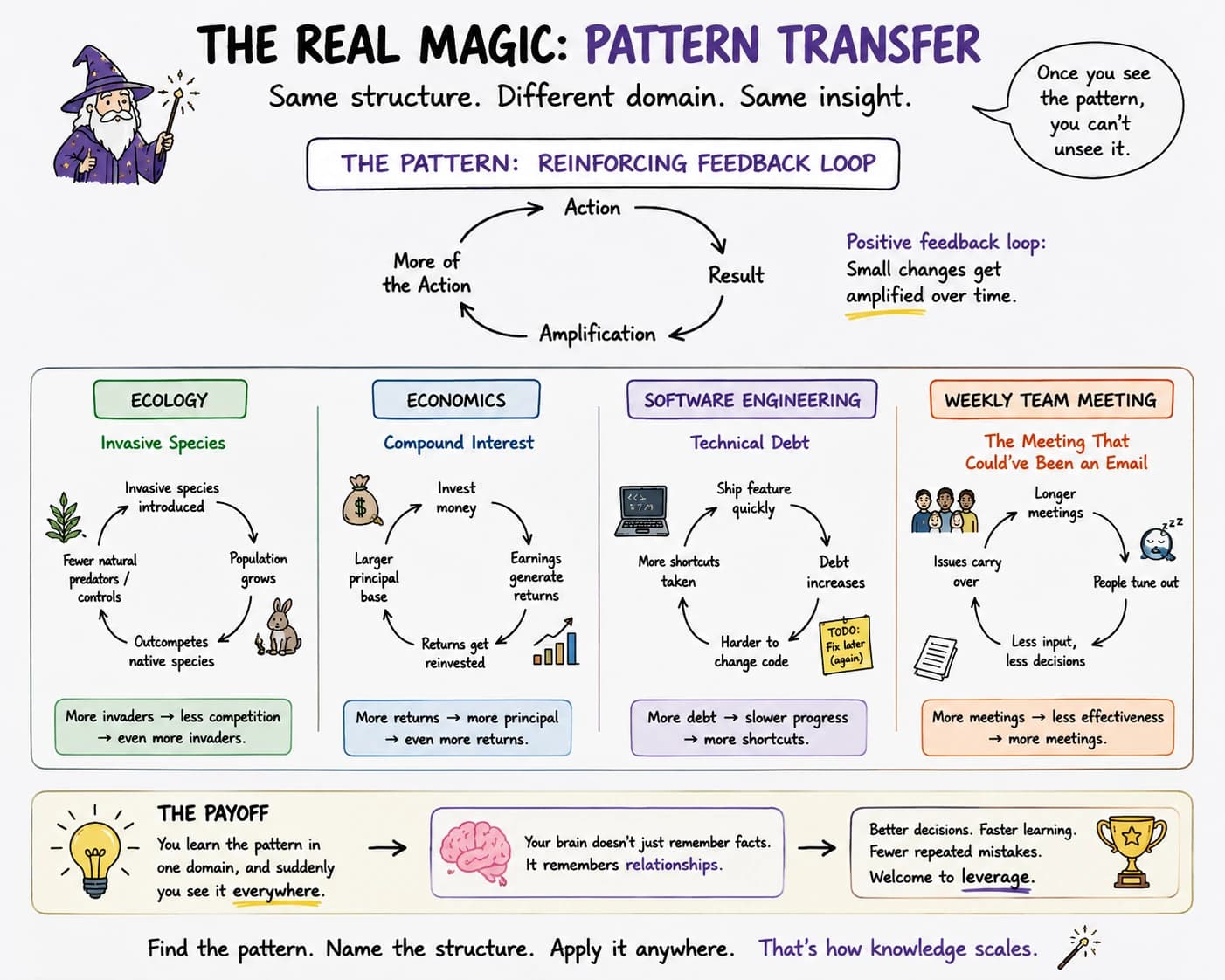
In 1972, psychologists Fergus I. M. Craik and Robert S. Lockhart challenged the dominant multi-store memory model, arguing that durable memory depends less on where information is stored than on how it is processed during memory encoding. Their Levels of Processing Theory shifted cognitive psychology away from storage boxes and toward encoding depth, showing that semantic processing consistently produces stronger long-term memory, richer knowledge integration, and better transfer than phonemic or structural encoding. Decades of memory research, cognitive neuroscience, and learning science have refined this framework, linking elaborative encoding, schema activation, working memory, dual coding, and semantic networks to durable learning while defining the boundary between simple familiarity and genuine understanding.
Key concepts
- Levels of Processing Theory explains how encoding depth predicts long-term memory and knowledge retention.
- Semantic encoding, elaborative rehearsal, and meaning construction consistently outperform maintenance rehearsal.
- Craik & Tulving's orienting task paradigm demonstrated that semantic processing dramatically improves recall.
- Transfer-Appropriate Processing (TAP) refined, rather than replaced, the original framework by emphasizing retrieval-match effects.
- Modern cognitive neuroscience, PET, and fMRI studies connect deep encoding with activation of the left inferior prefrontal cortex, hippocampal encoding, and semantic memory networks.
Historical Development of Levels of Processing Theory
| Year | Development | Key Researchers | Major Contribution | Lasting Impact |
|---|---|---|---|---|
| 1968 | Multi-Store Memory Model | Atkinson & Shiffrin | Proposed sensory, short-term, and long-term memory stores | Established the dominant storage-based view of memory before processing theories emerged. |
| 1972 | Levels of Processing Framework | Craik & Lockhart | Introduced Levels of Processing Theory, arguing that memory encoding, encoding depth, and semantic processing determine retention more than storage location. | Fundamentally reshaped cognitive psychology and modern theories of long-term memory. |
| 1975 | Orienting Task Experiments | Craik & Tulving | Demonstrated that semantic encoding, elaborative encoding, and meaning-based processing produced substantially better recall than phonemic or structural encoding. | Established the classic hierarchy of structural → phonemic → semantic processing. |
| 1977 | Transfer-Appropriate Processing | Morris, Bransford & Franks | Showed that retrieval performance depends partly on the match between encoding operations and retrieval cues, introducing Transfer-Appropriate Processing (TAP). | Refined the original theory by identifying important boundary conditions. |
| 1990 | Framework Revision | Lockhart & Craik | Recast depth of processing as a multidimensional continuum while integrating insights from encoding specificity and TAP. | Produced the modern interpretation used across educational psychology. |
| 1994 | PET Evidence | Kapur et al. | Linked deep semantic encoding with increased left inferior prefrontal cortex activity during successful learning. | Provided early neurobiological support for semantic memory encoding. |
| 1997 | Meta-analysis of Self-Reference | Symons & Thompson | Synthesized 128 studies demonstrating the powerful self-reference effect, exceeding ordinary semantic encoding. | Established self-referential processing as one of the strongest known encoding strategies. |
| 1998 | fMRI Evidence | Fletcher, Shallice & Dolan | Confirmed that semantic elaboration, working memory, and prefrontal semantic networks predict later remembering. | Strengthened neuroscientific evidence supporting deep encoding. |
| 2000 | Aging and Semantic Memory | Grady & Craik | Demonstrated that advantages of semantic processing remain robust across healthy aging. | Extended the theory beyond young adult laboratory samples. |
| 2002 | Boundary Conditions | Toichi & Kamio | Found populations where physical encoding could outperform semantic encoding under specific cognitive profiles. | Illustrated that Levels of Processing Theory has meaningful limits. |
| 2012 | Working Memory Integration | Rose & Craik | Connected working memory, episodic memory, and semantic encoding into an integrated account of successful learning. | Linked classical cognitive psychology with modern memory systems research. |
| Today | Learning Science & AI | Cognitive psychologists, educational researchers, AI learning scientists | Applies Levels of Processing, elaborative learning, schema activation, knowledge integration, and AI-generated advance organizers to instructional design and adaptive learning systems. | Guides modern evidence-based learning platforms, educational AI, and instructional design focused on durable understanding rather than superficial recognition. |
How Much Does Processing Depth Improve Memory? Effect Sizes and Evidence
Gold miners rarely become wealthy by collecting glitter from the surface. The real value lies beneath layers of rock that demand slower, more deliberate excavation. Levels of Processing Theory makes the same argument about memory encoding. Across laboratory research, semantic encoding consistently produces the strongest gains in explicit memory, with Craik & Tulving (1975) reporting effect sizes (Cohen's d) of approximately 1.0–1.5 and often nearly twice the recall of structural encoding, while broader memory research places the typical advantage between d ≈ 0.5–1.5. Rich elaborative encoding forms durable memory traces that resist the forgetting curve, strengthening long-term retention, delayed recall, and retrieval success, even when recognition accuracy approaches ceiling levels. The finding remains one of the most extensively replicated in cognitive psychology, supported by hundreds of studies, converging fMRI and PET evidence linking semantic processing to the left inferior prefrontal cortex, and decades of replication evidence. The exact magnitude varies with ecological validity, external validity, boundary conditions, individual differences, prior knowledge, age, sample size, and publication bias, explaining why laboratory effects often moderate from d ≈ 1.0 for word lists to roughly d ≈ 0.4–0.7 in authentic classroom learning while preserving the same underlying advantage.
Mining does not end when ore is discovered; the ore must be refined before it becomes something useful. Deep semantic processing follows the same progression, transforming isolated facts into connected knowledge through meaningful learning, schema construction, and elaborative encoding. It strengthens knowledge retention, durable learning, conceptual understanding, and knowledge transfer, supporting both near transfer and far transfer, critical thinking, problem solving, higher-order thinking, and the application stages of Bloom's Taxonomy across unfamiliar domains. Evidence from Grady & Craik (2000) shows that healthy aging preserves much of this semantic advantage, while the Symons & Thompson (1997) meta-analysis of 128 studies demonstrates that self-referential encoding outperforms even ordinary semantic processing by integrating new information into existing knowledge structures. For instructional designers, educators, and AI learning systems, the implication is consistent: advance organizers, prompts, and learning activities that require learners to explain relationships, connect ideas, generate examples, and relate concepts to prior knowledge invest a few additional minutes during encoding but consistently produce stronger long-term memory, more reliable knowledge transfer, and learning that remains accessible weeks, months, and even years later.
What Is Encoding Depth and Why Does Semantic Encoding Beat Shallow Processing?
Thomas S. Hyde and James J. Jenkins, University of Minnesota, reported three experiments in 1969 with 17 undergraduate groups, comparing semantic pleasantness judgments with structural letter-counting and other incidental tasks during word-list presentation. ([ResearchGate][1]) Semantic processing produced greater recall and organization, while additional presentation time and repetition failed to rescue shallow processing.
| Audience / Industry / Use Case | Research Finding → Your Next Rep |
|---|---|
| Secondary-school teachers | Semantic pleasantness judgments preserved recall and organization at roughly control levels, whereas letter-counting and other structural tasks greatly reduced both; the finding supports semantic encoding, associative memory, and memory trace organization over surface processing. ([ResearchGate][1]) |
| Corporate training designers | Doubling presentation time did not repair the recall deficit created by shallow structural processing, showing that elaborative encoding depends on the operation performed rather than exposure duration; training should measure meaning construction. ([ResearchGate][1]) |
| University instructors | Presenting the word list twice still failed to overcome shallow processing, while semantic processing produced greater recall organization; semantic encoding, semantic networks, and retrieval cues become stronger through connected meaning. ([ResearchGate][1]) |
How Does Self-Reference Supercharge Recall and Exam Performance?
T. B. Rogers, Nicholas A. Kuiper, and W. S. Kirker, University of Calgary, studied 59 undergraduates across two experiments using structural, phonemic, semantic, and self-reference judgments on trait adjectives followed by incidental recall. ([ResearchGate][2]) Self-reference produced the strongest recall, with the original experiment showing approximately .30 recall for self-reference versus .13 semantic, .07 phonemic, and .03 structural processing. ([UW Faculty Web Server][3])
| Audience / Industry / Use Case | Research Finding → Your Next Rep |
|---|---|
| University exam preparation | Self-reference produced about .30 recall versus .13 for semantic processing, showing that self-reference, prior knowledge, and autobiographical memory can add organization beyond generic semantic encoding. ([UW Faculty Web Server][3]) |
| Professional certification training | Recall increased across structural → phonemic → semantic → self-reference conditions, linking schema activation, elaboration, and retrieval success to progressively richer encoding operations. ([StudyRes][4]) |
| Medical education | Within the self-reference condition, yes-rated adjectives were recalled better than no-rated adjectives, while self-reference also required the longest response times; the pattern connects personal relevance, elaborative rehearsal, and stronger memory traces. ([StudyRes][4]) |
What Is Storage vs Encoding vs Retrieval — And Why Do Students Confuse Them?
Andrew C. Butler, Washington University in St. Louis, conducted four experiments in 2010 comparing repeated testing with repeated studying after participants learned prose passages and facts. ([PubMed][5]) Repeated testing produced stronger one-week retention and broader transfer than repeated restudying, demonstrating that retrieval can strengthen later access rather than merely measure stored knowledge. ([PubMed][5])
| Audience / Industry / Use Case | Research Finding → Your Next Rep |
|---|---|
| University lecture courses | Repeated testing produced superior retention to repeated studying when final questions matched the original questions, linking retrieval practice, retrieval cues, and storage to durable access. ([PubMed][5]) |
| Professional certification programs | New inferential questions within the same domain also favored repeated testing, showing that the benefit extended beyond reproducing the exact trained response and strengthened retrieval success. ([PubMed][5]) |
| Cross-domain skills training | Experiment 3 tested inferential questions from different knowledge domains and still found superior transfer after repeated testing, demonstrating that encoding for retrieval can support application beyond the original test format. ([PubMed][5]) |
Does Divided Attention and Cognitive Load Block Deep Processing?
Moshe Naveh-Benjamin and Matthew S. Brubaker examined divided attention during encoding in a 2019 Journal of Memory and Language study, comparing memory under full and divided attention across incidental and intentional learning conditions. ([ScienceDirect][6]) Divided attention reduced both cued and free recall, with similar disruption across encoding strategies, showing that attentional competition can impair memory even when learners are deliberately attempting deeper processing. ([ScienceDirect][6])
| Audience / Industry / Use Case | Research Finding → Your Next Rep |
|---|---|
| Software engineering training | Divided attention reduced cued recall, indicating that multitasking can weaken the retrieval pathways needed for later code application; protected attention preserves the processing capacity required for elaboration and retrieval cues. ([ScienceDirect][6]) |
| Medical simulation training | Divided attention also reduced free recall, showing that attentional competition affects spontaneous retrieval rather than only cue-supported access; uninterrupted encoding protects working memory resources needed for later independent reconstruction. ([ScienceDirect][6]) |
| Online corporate learning | The divided-attention effect remained similar under incidental and intentional learning and across reported encoding strategies, indicating that simply telling learners to process deeply cannot neutralize cognitive load, executive attention, and capacity limits. ([ScienceDirect][6]) |
How Do Material, Interval, Age, and Individual Differences Change What Works?
Lynn Hasher and Rose Zacks developed their automatic-versus-effortful memory framework in 1979 from experiments comparing younger and older adults on frequency, spatial-location, and item-memory tasks. ([Meta Science Observatory][7]) Their evidence suggested age-invariant encoding of frequency and location alongside poorer older-adult memory for item information, establishing an important boundary between relatively automatic and effortful memory operations. ([OUP Academic][8])
| Audience / Industry / Use Case | Research Finding → Your Next Rep |
|---|---|
| Age-diverse workplace training | Younger and older adults showed comparable memory for word frequency and spatial location, suggesting that some individual differences are task-specific rather than global; assessment should separate automatic attributes from effortful episodic memory demands. ([OUP Academic][8]) |
| Adult education programs | Older adults showed reduced memory for the words themselves while frequency and location remained relatively stable, illustrating how material characteristics determine age sensitivity and why semantic-cued recall should be calibrated separately from incidental information. ([OUP Academic][8]) |
| Adaptive learning platforms | Later work testing the automaticity account found that spatial memory could change with instructions, stimulus characteristics, and task demands, demonstrating a boundary condition for simple automaticity claims and supporting learner adaptation. ([PubMed][9]) |
Levels of Processing vs Multi-Store Model vs Working Memory Model: Which Should You Study?
Murray Glanzer and Anita Cunitz published their two-experiment free-recall study in 1966, manipulating presentation rate and the delay between list presentation and recall to test whether different serial-position regions reflected different storage mechanisms. ([SciSpace][10]) Faster presentation altered early-list recall while filled delays selectively reduced recency, providing behavioral evidence for separable short- and longer-term contributions to free recall. ([AbleSci][11])
| Audience / Industry / Use Case | Research Finding → Your Next Rep |
|---|---|
| Psychology students | Faster presentation increased the early-list component while leaving the end relatively stable, connecting long-term storage, primacy, and rehearsal with the multi-store account of memory. ([AbleSci][11]) |
| Curriculum designers | A delay before recall selectively reduced the recency component, showing that immediately accessible information behaves differently from more durable representations and giving working memory, retrieval, and storage distinct empirical roles. ([AbleSci][11]) |
| Learning-technology designers | The two manipulations produced dissociable serial-position effects, illustrating why multi-store models, working memory, and deeper processing answer different architectural questions. ([AbleSci][11]) |
What Is Transfer-Appropriate Processing and Encoding Specificity?
Steven M. Smith, Arthur Glenberg, and colleagues conducted a five-experiment investigation of environmental context and memory in 1978, manipulating learning and test environments and comparing free recall, cued recall, and recognition. ([DOI][12]) The experiments showed that changing and matching contexts affected recall differently across test types, demonstrating that retrieval depends partly on the relationship between encoding and testing conditions.
| Audience / Industry / Use Case | Research Finding → Your Next Rep |
|---|---|
| Emergency-response training | Variable learning environments produced higher free recall than unchanged environments, illustrating encoding variability as a source of multiple retrieval cues. ([DOI][12]) |
| Professional skills certification | Matching storage and test contexts improved cued recall, supporting encoding specificity and retrieval cues when the assessment requires reconstruction of information under conditions resembling learning. ([Björk Lab][13]) |
| University assessment design | Environmental context influenced free recall while producing no main effect on recognition in later experiments, demonstrating that transfer-appropriate processing depends on the retrieval demand and that recognition can conceal encoding-context differences. ([Björk Lab][13]) |
Can Spacing, Interleaving, and Encoding Variability Beat One Deep Exposure?
Frank N. Dempster synthesized decades of spacing research in his 1988 American Psychologist review, emphasizing empirical work comparing short and long lags between repeated exposures. ([Meta Science Observatory][14]) Experiments summarized by Dempster found roughly 25–30% recall advantages for longer spacing in prose learning, while the review highlighted spacing as the clearest classroom application among the task characteristics considered. ([Augmenting Cognition][15])
| Audience / Industry / Use Case | Research Finding → Your Next Rep |
|---|---|
| Secondary-school vocabulary programs | In one text experiment, a 48-hour lag produced significantly more idea-unit recall than 30-second, 5-minute, or 20-minute lags, linking spacing, retrieval practice, and forgetting to stronger delayed retention. ([Augmenting Cognition][15]) |
| Corporate compliance training | A second experiment found 30-minute spacing superior to 5-minute spacing, demonstrating that longer encoding intervals can create a productive retrieval challenge. ([Augmenting Cognition][15]) |
| Educational technology | The best-performing spaced conditions repeatedly showed approximately 25–30% recall advantages, supporting desirable difficulties, distributed practice, and scheduled retrieval as design principles for long-term learning. ([Augmenting Cognition][15]) |
Is It Depth Per Se or Number of Associations? Elaboration Explained
Lynne M. Reder conducted two experiments on prose memory at Carnegie Mellon in 1979, varying plausibility, attention to relevant story information, and delay while participants judged statements against previously read stories. ([ScienceDirect][16]) The results indicated that people retrieved relevant information and used it to compute judgments, supporting an elaborative, integrative account of memory. ([ScienceDirect][16])
| Audience / Industry / Use Case | Research Finding → Your Next Rep |
|---|---|
| Technical documentation teams | Participants did not behave as though each plausibility question triggered retrieval of one isolated fact; they retrieved relevant information and computed a judgment, linking elaboration, semantic networks, and associative encoding to integrated representations. ([ScienceDirect][16]) |
| Law-school instruction | Plausibility and attention manipulations affected response latencies through distinguishable retrieval and judgment phases, showing that relational encoding supplies material for later reasoning. ([ScienceDirect][16]) |
| Knowledge-management systems | Delay between story information and probing altered the judgment process, illustrating how semantic richness, elaboration, and accessible associations influence later reconstruction from connected knowledge. ([ScienceDirect][16]) |
Does More Effort Always Mean Better Memory? Time-on-Task Confound Explained
Michael W. Eysenck and M. Christine Eysenck studied processing capacity in 28 university students in a 1979 experiment using divided-attention costs as an index of processing demand across shallow, semantic, primary-memory, secondary-memory, and elaborative conditions. ([ResearchGate][17]) Deep semantic and more elaborate processing consumed greater measured processing capacity, showing that effort accompanies meaningful processing without establishing effort alone as the source of retention. ([ResearchGate][17])
| Audience / Industry / Use Case | Research Finding → Your Next Rep |
|---|---|
| University study-skills programs | Secondary-memory retrieval imposed greater processing-capacity costs than primary-memory retrieval, linking cognitive effort, processing capacity, and memory-system demands. ([ResearchGate][17]) |
| Instructional designers | Semantic processing consumed more capacity than shallow physical processing, demonstrating that semantic elaboration carries genuine cognitive cost and that increased effort can signal deeper processing without independently proving better learning. ([ResearchGate][17]) |
| Professional training analytics | More elaborate processing generated greater processing-capacity demands, showing why time-on-task should be interpreted alongside processing quality and cognitive engagement. ([ResearchGate][17]) |
Why Does Fluency Fool You? How to Diagnose Illusions, False Memories, and Gaps Before Exams?
Elizabeth Loftus and John Palmer investigated reconstructive memory in 1974 by showing participants automobile-accident films, manipulating the verb used to describe the collision, and later testing estimates and memory for details. ([Meta Science Observatory][18]) Stronger collision wording produced higher estimated speeds and influenced subsequent reports of accident details, demonstrating that post-event language can reshape memory judgments rather than merely reveal stored information.
| Audience / Industry / Use Case | Research Finding → Your Next Rep |
|---|---|
| Legal interview training | Collision wording altered estimated speed, demonstrating how source monitoring, retrieval cues, and post-event information can contaminate reports; confidence requires comparison against independent evidence. ([Meta Science Observatory][18]) |
| Journalism fact-checking | The wording manipulation influenced later accident reports, illustrating misinformation effects and false-memory construction when later information becomes incorporated into retrieval. ([Meta Science Observatory][18]) |
| Exam preparation | The experiment shows why fluent recollection can reflect reconstructed information rather than verified storage; metacognition, retrieval practice, and source checking provide stronger calibration than familiarity-driven confidence. ([Meta Science Observatory][18]) |
How Do Prior Knowledge, Schemas, and Assessment Anchor Deep Learning? [Merged 12+16]
Walter F. Chiesi, William G. Spilich, and William Voss studied domain knowledge and comprehension of baseball information in 1979 by comparing learners with different levels of prior baseball knowledge as they learned and recalled baseball passages. Their results showed that prior knowledge strongly shaped recall quantity, organization, and the ability to integrate new information into an existing knowledge structure.
| Audience / Industry / Use Case | Research Finding → Your Next Rep |
|---|---|
| Medical education | Learners with stronger domain knowledge can organize new information through existing schemas, illustrating why a prior-knowledge assessment should precede dense instruction and distinguish missing facts from missing conceptual structure. |
| STEM university courses | High-knowledge learners recalled and organized domain information more effectively, demonstrating how prior knowledge, schema activation, and semantic associations convert new facts into connected systems. |
| Corporate onboarding | Differences in prior domain knowledge changed how information was encoded and retrieved, showing why a Knowledge Profile should measure conceptual anchors before assigning identical learning sequences or interpreting assessment gaps as motivation problems. |
ICAP + Generative Learning + Dual Coding: How to Force Depth Every Time?
Lynne M. Reder’s 1979 prose experiments at Carnegie Mellon manipulated attention to story information and tested how participants generated judgments from retrieved material. ([ScienceDirect][16]) The findings show that learner-generated integration supplies a functional bridge between encoded information and later reasoning, supporting the constructive side of generative learning even though the experiment did not directly test the ICAP taxonomy.
| Audience / Industry / Use Case | Research Finding → Your Next Rep |
|---|---|
| University seminar courses | Participants retrieved relevant story information and generated plausibility judgments rather than simply locating isolated facts, connecting constructive processing, semantic integration, and retrieval into a single reasoning operation. ([ScienceDirect][16]) |
| Engineering documentation | Attention to information required for the judgment altered response behavior, showing that generative learning depends on selecting and integrating relevant representations. ([ScienceDirect][16]) |
| AI-assisted learning systems | The experiment separated retrieval from the later judgment operation, providing a useful workflow distinction: generate an explanation from retrieved information, then evaluate it; the measurable outcome is the quality and latency of the resulting judgment. ([ScienceDirect][16]) |
Brain Basis of Depth: Hippocampus, Prefrontal Cortex, Sleep, and Consolidation for Lasting Memory
Kenichi Kuriyama, Robert Stickgold, and Matthew Walker studied sleep-dependent motor learning in 57 healthy adults performing finger-tapping sequences of different lengths and coordination demands. ([PubMed Central (PMC)][19]) Overnight performance improved across all task configurations, with the largest gains for complex sequences and selectively greater improvement for the transitions that were hardest before sleep. ([PubMed Central (PMC)][19])
| Audience / Industry / Use Case | Research Finding → Your Next Rep |
|---|---|
| Surgical skills training | Five- and nine-element sequences both improved overnight without additional rehearsal, linking sleep-dependent consolidation, procedural memory, and neuroplasticity to continued skill development after practice ends. ([PubMed Central (PMC)][19]) |
| Musician and athletic training | The most complex bimanual nine-element sequence showed about 28.9% overnight speed improvement versus roughly 17–20% for simpler configurations, demonstrating that consolidation can preferentially benefit demanding procedural representations. ([PubMed Central (PMC)][19]) |
| Skill-based professional education | The slowest sequence transitions improved about 17.8% overnight while the fastest transitions improved only about 1.4%, showing that sleep, memory consolidation, and neural plasticity can selectively strengthen unresolved components. ([PubMed Central (PMC)][19]) |
Levels of Processing in the Wild: From Information Processing to Knowledge Construction
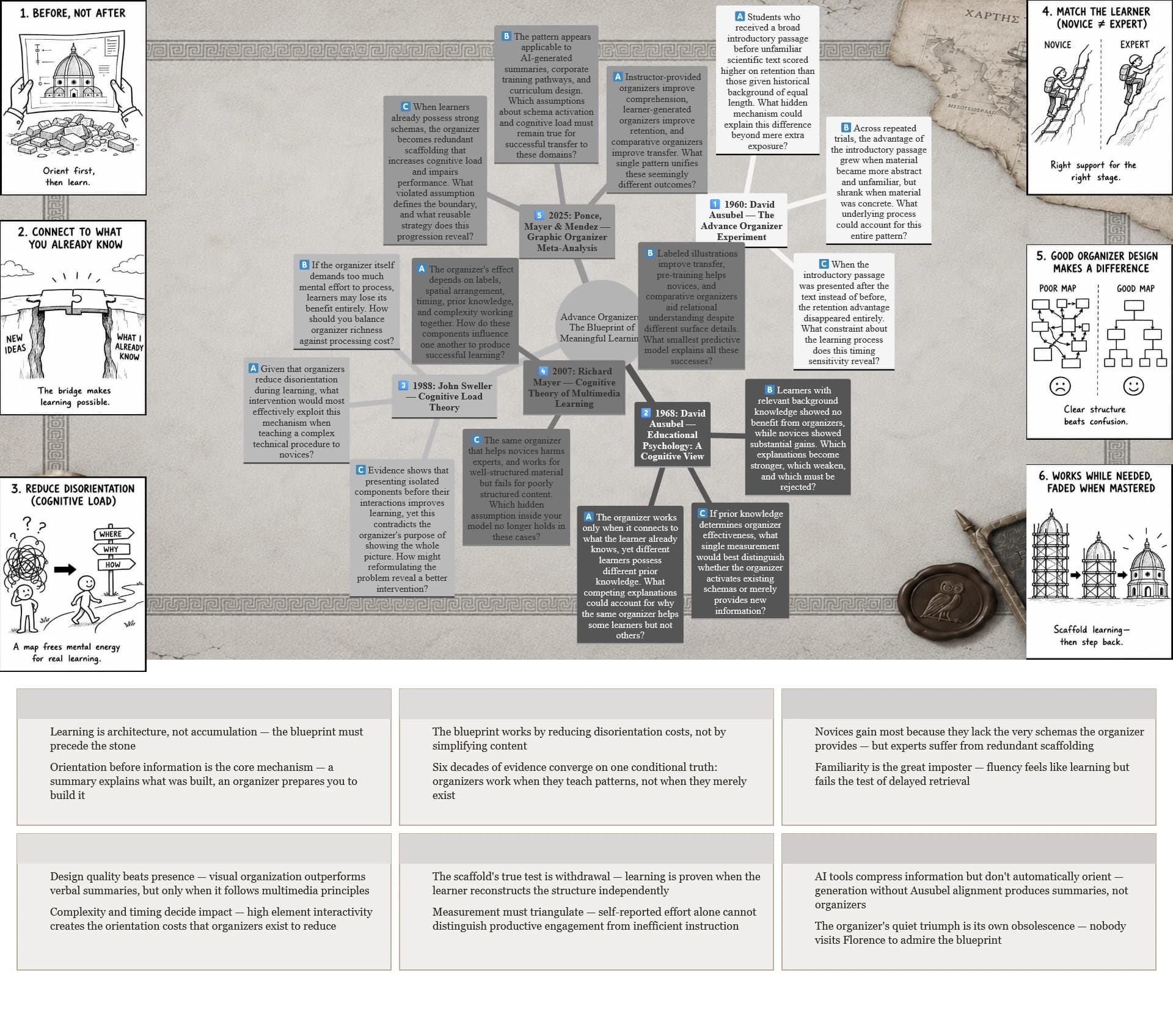
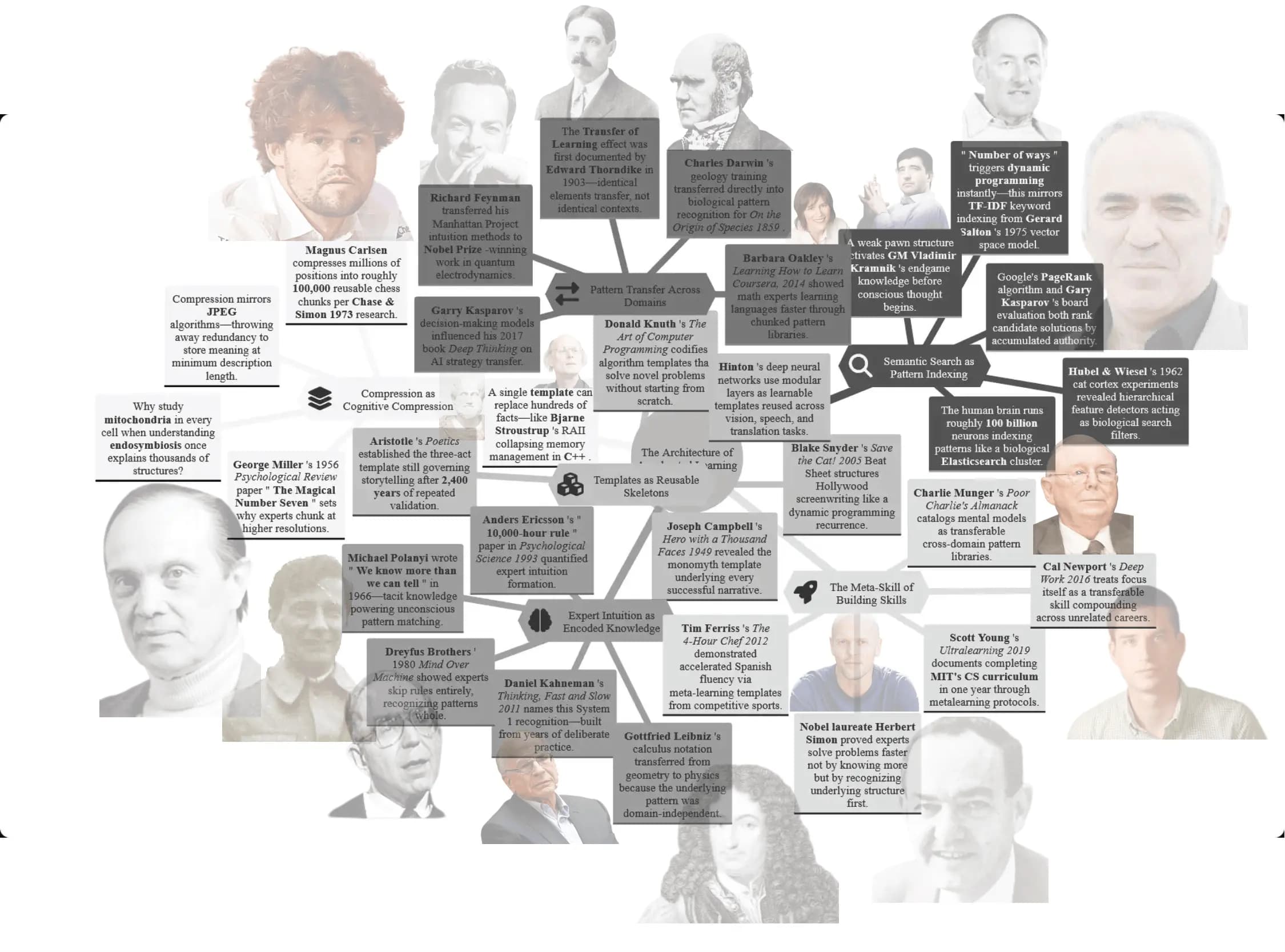
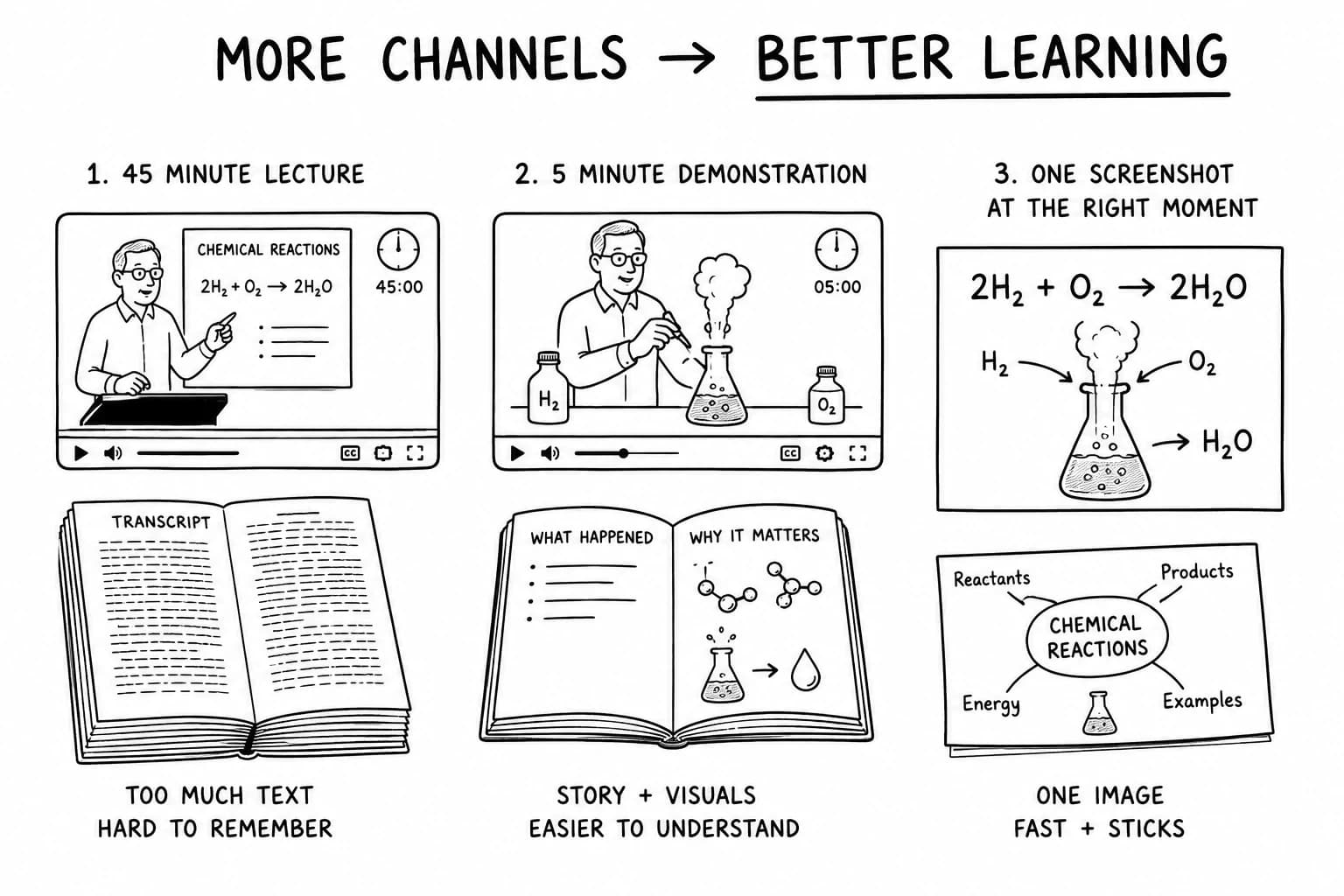
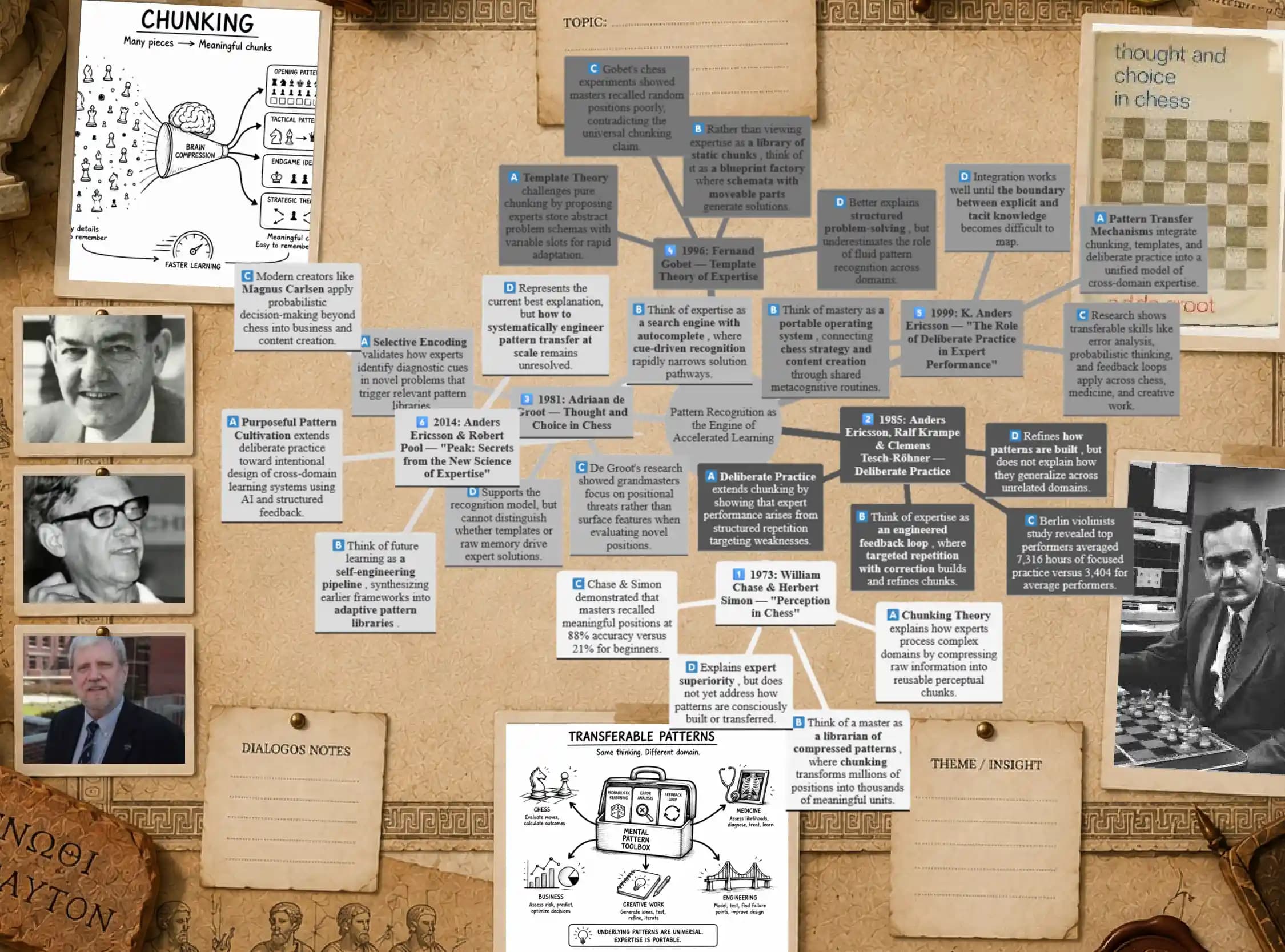
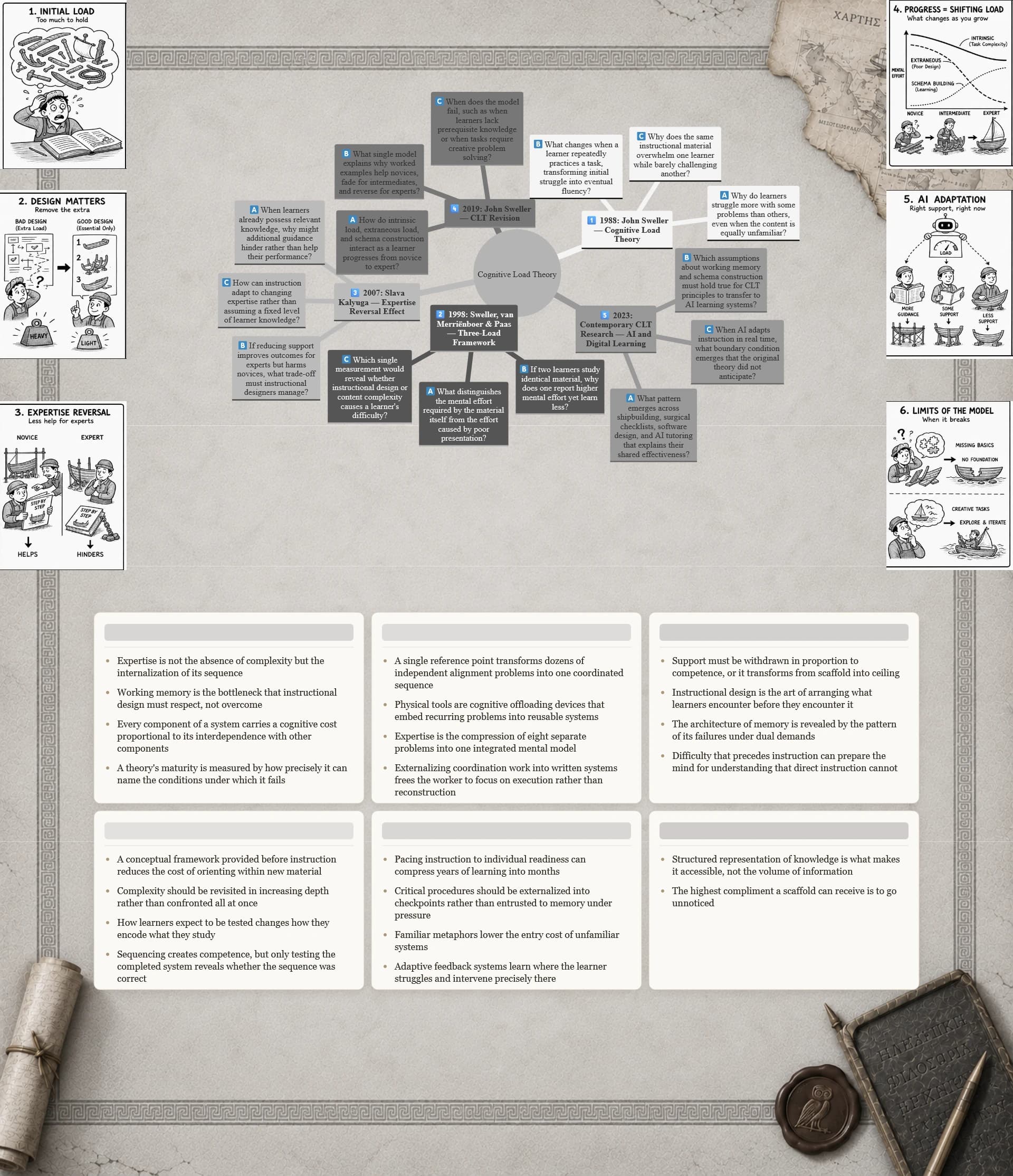
Every mining expedition begins with the same lesson: the glitter on the surface rarely pays the wages. Prospectors who skimmed riverbeds found flakes; those who followed geological seams uncovered the veins that transformed entire towns. Levels of Processing follows the same logic. Craik and Lockhart's depth of processing theory argues that memory encoding, knowledge retention, and long-term learning depend less on exposure than on the depth of semantic processing performed during learning. Across instructional design, AI learning tools, adaptive learning systems, educational technology, corporate training, and knowledge management, every learning artifact can be designed as either surface gravel that produces recognition or a productive mine that yields conceptual understanding, knowledge transfer, critical thinking, and durable memory. High-quality advance organizers, mind maps, concept maps, knowledge graphs, learning summaries, retrieval practice, and AI-generated study guides become semantic excavation tools, deliberately requiring explanation, prediction, self-reference, and elaboration so learners dig progressively deeper.
What Is an Advance Organizer That Actually Triggers Meaningful Learning?
Michael E. Bernard, University of Melbourne, tested 225 fifth- and sixth-form students in 1977 using instructional material on a taxonomy of behaviour-management concepts, comparing advance organizers, post organizers, and different instructional sequences across assessments on days 2 and 8. The organizer improved retention of superordinate–coordinate–subordinate relationships, improved retention of individual concepts, while sequencing produced no measurable learning or retention effect, supporting organizers as structural anchors for meaningful learning.
| Audience / Industry / Use Case | Research Finding → Your Next Rep                                                                                                                                                                                                                                                                                                                                                        |
| ------------------------------ | --------------------------------------------------------------------------------------------------------------------------------------------------------------------------------------------------------------------------------------------------------------------------------------------------------------------------------------------------------------------------------------- |
| **Medical educators**          | Advance and post organizers strengthened retention of relationships among related concepts even though they did not improve initial acquisition of individual concepts, showing how semantic prompting and meaningful learning can make an information structure retrievable after instruction; place the conceptual hierarchy before the lesson and measure delayed recall.            |
| **Corporate training teams**   | Organizer effects appeared in retention of superordinate–coordinate–subordinate relationships, while instructional sequence produced no significant effect, indicating that the semantic anchor mattered more than rearranging presentation order; use a compact framework before dense material and compare delayed relationship recall against the same module without the organizer. |
| **LMS and MOOC designers**     | Both advance and post organizers affected later retention, revealing that structural cues can operate before or after exposition; combine an organizer with prediction and self-explanation prompts and evaluate whether learners reconstruct relationships on a delayed assessment.                                                                                                    |
Mind Maps vs Concept Maps vs Knowledge Frameworks: How to Study Programming and Languages Deeply? [Merged]
Daniel H. Robinson and Gregory Schraw, working in educational psychology, reported three experiments in 1994 with 138 college students who searched texts, outlines, and matrices for information needed to answer factual and comparison questions under variations in study time and testing delay. Matrices accelerated retrieval of interconcept relationships and retained an efficiency advantage under reduced study time, while the advantage disappeared after delayed testing, showing that visual organization primarily accelerated relational computation rather than guaranteeing durable memory.
| Audience / Industry / Use Case                | Research Finding → Your Next Rep                                                                                                                                                                                                                                                                                               |
| --------------------------------------------- | ------------------------------------------------------------------------------------------------------------------------------------------------------------------------------------------------------------------------------------------------------------------------------------------------------------------------------ |
| **Software-engineering learners**             | Graphic matrices enabled faster answers to comparison questions than outlines or text, demonstrating that semantic networks and relational mapping can compress the computation of connections; map dependencies as explicit relations when studying architecture and assess speed on novel comparison problems.               |
| **Language-learning programs**                | Matrix and outline displays produced faster answers to factual questions than text alone, showing that organized visual structure can reduce search demands during semantic retrieval; encode vocabulary families and grammatical relationships into compact maps, then test cued recall.                                      |
| **Professional knowledge-management systems** | When study time was reduced, matrices continued to support accurate interconcept judgments, yet the advantage disappeared after delayed testing, separating immediate search efficiency from durable encoding; use maps as relational interfaces and pair them with retrieval practice when long-term retention is the target. |
How to Write Learning Summaries That Create Elaborative Encoding, Not Copying?
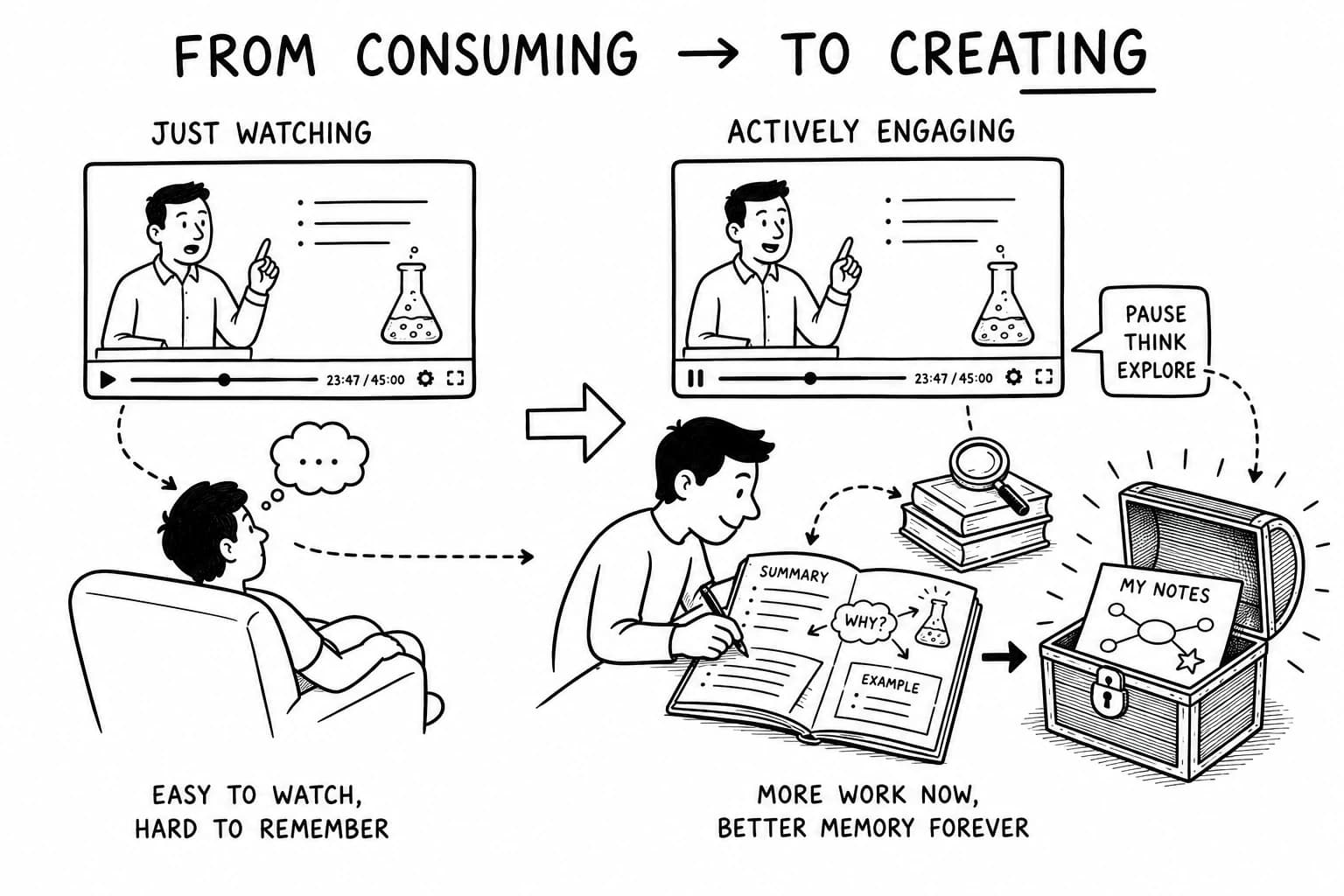
Martha Davis and Richard E. Hult reported a 1997 introductory-psychology experiment comparing students who wrote summaries during lecture pauses with students who merely reviewed notes during pauses or took notes continuously. Summary writing produced higher delayed free recall and higher performance on a 12-day posttest than continuous note-taking, whereas simply inserting pauses for review produced no comparable advantage, directly linking generative summarization with durable learning.
| Audience / Industry / Use Case          | Research Finding → Your Next Rep                                                                                                                                                                                                                                                                                                       |
| --------------------------------------- | -------------------------------------------------------------------------------------------------------------------------------------------------------------------------------------------------------------------------------------------------------------------------------------------------------------------------------------- |
| **University instructors**              | Students who wrote three summaries during pauses achieved higher free recall and delayed posttest performance than continuous note-takers, showing how elaborative encoding converts lecture material into a generative representation; replace passive pause-time review with concise own-words summaries and measure delayed recall. |
| **Corporate learning teams**            | Pause time alone produced no comparable benefit, while summary generation produced more durable learning, distinguishing generative learning from simply increasing exposure; convert lecture or webinar pauses into short semantic summaries and compare delayed knowledge retention with ordinary note review.                       |
| **Professional certification programs** | The summary condition retained its advantage after 12 days, demonstrating a delayed-memory benefit; require learners to compress each lesson into its governing ideas and examples, then evaluate retention after a meaningful interval.                                                                                               |
How to Master Vocabulary for Medicine, Law, and Language Acquisition?
Margo A. Mastropieri, Thomas E. Scruggs, and Barbara J. Mushinski Fulk, Purdue University researchers, randomly assigned 25 adolescents with learning disabilities to keyword-mnemonic or experimenter-directed-rehearsal instruction for 16 difficult vocabulary words containing eight concrete and eight abstract terms. Keyword instruction produced higher literal recall and comprehension for both concrete and abstract vocabulary, including application of newly learned terms in a different context, demonstrating semantic association plus retrieval as a bridge from terminology to transfer.
| Audience / Industry / Use Case    | Research Finding → Your Next Rep                                                                                                                                                                                                                                                                                                  |
| --------------------------------- | --------------------------------------------------------------------------------------------------------------------------------------------------------------------------------------------------------------------------------------------------------------------------------------------------------------------------------- |
| **Medical educators**             | Keyword mnemonic instruction improved recall for both concrete and abstract vocabulary, showing that contextual association and mnemonic encoding can support terminology acquisition across different word types; anchor unfamiliar clinical terms to meaningful cues and test definition retrieval separately from recognition. |
| **Law-school instruction**        | Mnemonically trained learners also outperformed rehearsal learners on comprehension, showing that vocabulary encoding can extend beyond memorizing definitions into contextual application; attach each legal term to an illustrative case or semantic cue and assess application to a new case.                                  |
| **Language-acquisition programs** | The keyword condition improved performance when learners had to apply vocabulary in a different context, connecting chunking, mnemonics, and transfer; encode each new word with an associative cue and test both forward and contextual recall.                                                                                  |
How to Build Online Modules, MOOCs, and Microlearning That Force Deep Processing?
Külli Kori, Mario Mäeots, and Margus Pedaste, University of Tartu researchers, evaluated guided reflection prompts inside the web-based Young Researcher inquiry environment with lower-secondary biology students, measuring reflection quality and inquiry skills. Guided reflection improved reflection quality and significantly improved inquiry skills involving research-question formulation, inference, and experiment planning, with development in inquiry skills associated with development in reflection quality.
| Audience / Industry / Use Case         | Research Finding → Your Next Rep                                                                                                                                                                                                                                                                                                                                |
| -------------------------------------- | --------------------------------------------------------------------------------------------------------------------------------------------------------------------------------------------------------------------------------------------------------------------------------------------------------------------------------------------------------------- |
| **Online science education**           | Guided reflection prompts improved reflection quality while inquiry performance improved in research-question formulation, inference, and experiment planning, linking self-explanation and metacognition to observable inquiry behaviour; embed reflection prompts inside the learning sequence and measure the quality of generated questions and inferences. |
| **Corporate professional development** | Improvement extended from reflection quality into planning and inference skills, showing that continual metacognitive prompting can become part of the learning activity; insert reflection after substantive decisions and assess whether learners produce stronger reasoning artifacts.                                                                       |
| **MOOC and LMS designers**             | Inquiry-skill development was significantly associated with reflection-quality development, connecting reflection, scaffolding, and active learning within the web environment; place prompts at decision points throughout a module and compare the quality of learners’ questions, inferences, and plans over time.                                           |
Retrieval Practice That Works: Free Recall, Cued Recall, and Testing Effect for Exams?
Henry L. Roediger, Pooja K. Agarwal, Mark A. McDaniel, and Kathleen B. McDermott conducted three classroom experiments with sixth-grade social-studies students to test whether quizzing improved learning and retention relative to conventional study. The experiments showed that repeated quizzing produced long-term learning benefits, with retrieval-based testing outperforming additional study on later assessments, establishing retrieval practice as an instructional learning event rather than merely an assessment device.
| Audience / Industry / Use Case       | Research Finding → Your Next Rep                                                                                                                                                                                                                                                                          |
| ------------------------------------ | --------------------------------------------------------------------------------------------------------------------------------------------------------------------------------------------------------------------------------------------------------------------------------------------------------- |
| **Secondary-school teachers**        | Three classroom experiments showed that quizzing could improve learning and retention from ordinary social-studies material, demonstrating the testing effect under authentic classroom conditions; replace some rereading with free or cued recall and compare delayed test performance against restudy. |
| **University exam preparation**      | The classroom evidence established retrieval practice as a learning intervention, connecting free recall, retrieval cues, and durable encoding; require students to reconstruct answers before reopening notes and track delayed accuracy.                                                                |
| **Corporate certification programs** | Repeated testing supported longer-term retention of course material, demonstrating why application and retrieval problems can strengthen knowledge routes beyond exposure; distribute low-stakes retrieval throughout training and measure retention after a delay.                                       |
How to Build an Integrated AI-Powered Learning System With Retrieval-Augmented Generation?
Greg Kestin, Kelly Miller, Anna Klales, Timothy Milbourne, and Gregorio Ponti at Harvard University conducted a 2025 randomized crossover experiment with 194 eligible undergraduate physics students, comparing a purpose-built GPT-4 tutor with an in-class active-learning lesson across two instructional topics. The AI-supported lessons produced median posttest scores of 4.5 versus 3.5, more than doubled median learning gains relative to the 2.75 baseline, and achieved the result in a median 49 minutes versus roughly 60 minutes of classroom time, while students also reported greater engagement and motivation.
| Audience / Industry / Use Case | Research Finding → Your Next Rep                                                                                                                                                                                                                                                                                                                              |
| ------------------------------ | ------------------------------------------------------------------------------------------------------------------------------------------------------------------------------------------------------------------------------------------------------------------------------------------------------------------------------------------------------------- |
| **University STEM programs**   | The purpose-built AI tutor produced median posttest performance of 4.5 versus 3.5 for active-learning instruction, with median learning gains more than twice as large, showing how LLM tutoring can combine semantic prompting, adaptive feedback, and guided problem solving; evaluate AI lessons with pre/post concept tests.                              |
| **Corporate LMS platforms**    | AI learners reached the measured outcome in a median 49 minutes versus roughly 60 minutes for the classroom condition, showing a potential efficiency benefit when RAG-style content grounding and pedagogical scaffolding constrain the tutor; track learning gain alongside time-on-task to distinguish productive adaptation from mere interaction volume. |
| **AI tutoring systems**        | The intervention also produced higher reported engagement and motivation, while the tutor was deliberately engineered around active-learning principles; combine knowledge-grounded responses with retrieval, reflection, and feedback loops and measure both learning outcomes and learner engagement.                                                       |
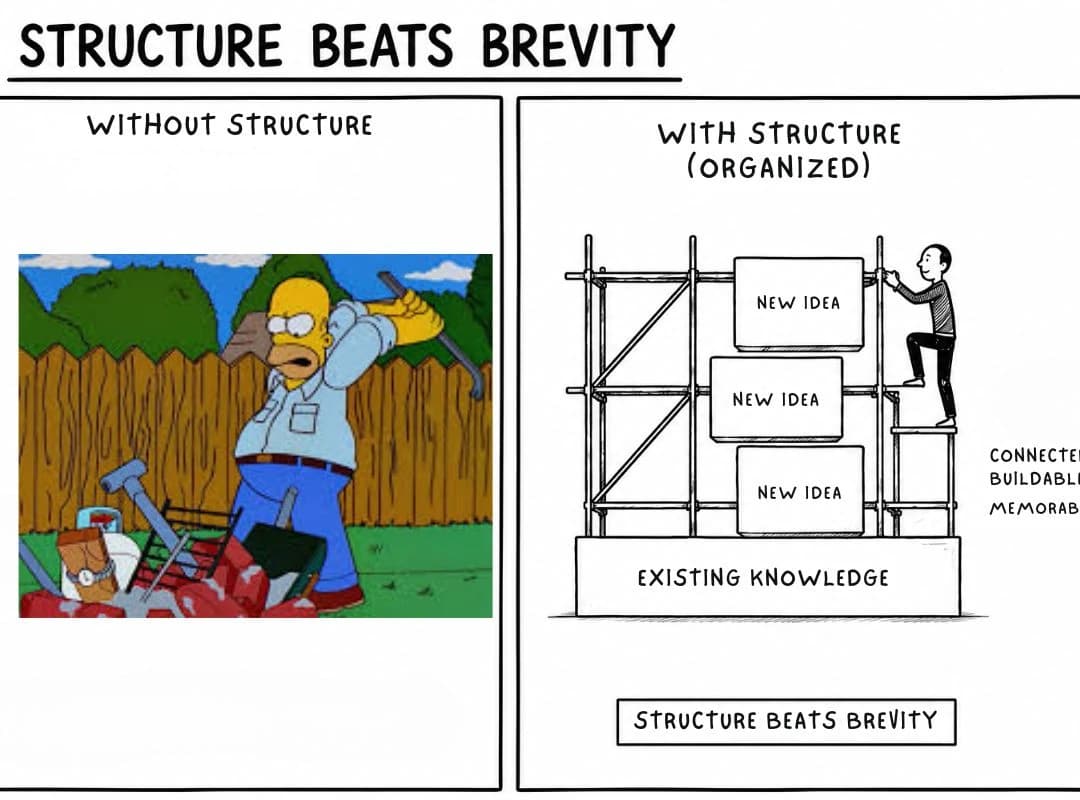
Atkinson and Shiffrin built a warehouse with three rooms and a forklift. Craik and Lockhart drained it and found a lake. Depth, not address, decides what survives. Ask learners to dive — relate, predict, explain — and the organizer stops being a shelf and becomes a bottom they can stand on.